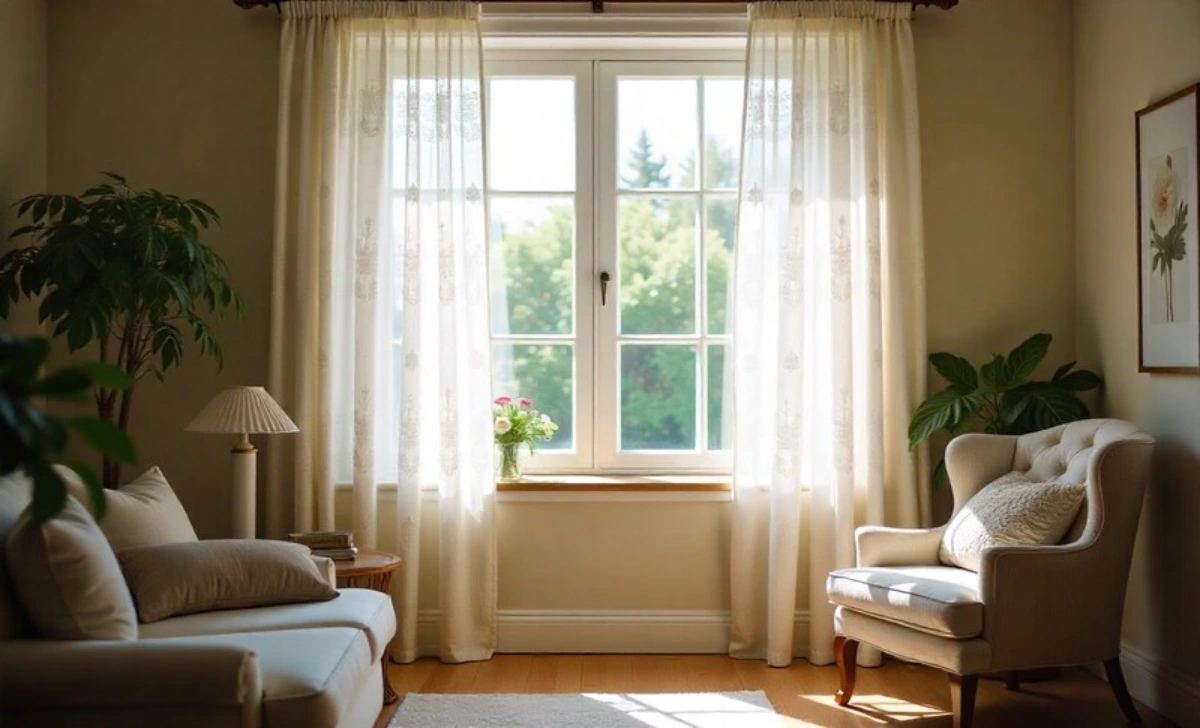
Lace curtain panels add elegance and light to any room. These sheer window treatments filter sunlight while maintaining an airy feel, making them popular for living rooms, bedrooms, and dining areas.
You’ll find lace panels in various colors, patterns, and fabrics. They work well when you want soft light diffusion without heavy drapes.
Types of Lace Curtain Panels
Lace curtains come in several styles and materials. Before choosing, consider your room’s decor and how much light control you need.
Most lace panels are translucent, allowing natural light to filter through. The fabric can be:
- Cotton (traditional, breathable)
- Polyester (durable, easy care)
- Nylon (lightweight, strong)
You can find single-layer sheers or double-lace weaves for added texture. White and cream remain the most common colors, but modern options include gray, beige, and even subtle pastels.
How to Measure for Lace Panels
Lace panels are sold by length. Measure from the top of your window frame to where you want the curtains to end.
For width, most panels come in standard sizes. Check your window width and choose panels that provide adequate coverage when hung. Account for any crown molding or ceiling trim in your measurements.
If your window is 24 inches wide with 3 inches of molding above, you need panels long enough to cover 27 inches total.
Lace Curtains vs. Semi-Sheer Curtains
Semi-sheer curtains offer lighter fabric with less pattern detail. Lace curtains provide more visual interest through their woven designs.
For privacy, lace offers slightly more coverage due to its textured pattern. Semi-sheers allow more light penetration with less visual screening.
Choose lace when you want decorative appeal with moderate light filtering. Choose semi-sheers when maximum light transmission is your priority.
Pros and Cons of Lace Panels
| Pros | Cons |
|---|---|
| Creates an elegant, soft aesthetic | Provides minimal privacy |
| Filters harsh sunlight | Offers limited insulation |
| Lightweight and easy to hang | Requires gentle cleaning |
| Complements multiple decor styles | Can snag or tear easily |
| Allows air circulation | May fade with sun exposure |
| Creates soft, diffused lighting | Limited light-blocking ability |
Lace panels work best when you prioritize style and natural light over privacy and temperature control. They pair well with blinds or heavier drapes for added functionality.
Benefits of Lace Curtains
Lace curtains soften harsh sunlight while maintaining room brightness. Natural fiber options like cotton and linen breathe well, helping air circulate.
These panels add decorative appeal without overwhelming a space. You can use them alone in low-privacy areas or layer them with other window treatments for bedrooms.
Lace curtains suit various decor styles, from traditional to cottage aesthetics.
Where to Buy Lace Curtain Panels
You can find lace panels at:
- Online retailers (Wayfair, Amazon)
- Home decor stores
- Local fabric shops
Online shopping offers the widest selection and price comparison. Local fabric stores may have unique vintage or specialty options, but they typically cost more.
Installing Lace Curtain Panels
Installation requires basic hardware: a curtain rod and mounting brackets.
Measure your window and cut panels to the desired length if needed. For rod pocket panels, slide the rod through the pocket and mount at your preferred height.
Most people hang sheer curtains at a 90-degree angle for a clean look. You can angle them slightly if you prefer a draped appearance.
Choosing the Right Window Treatment
Window treatments serve multiple purposes: privacy, light control, insulation, and decoration. Your choice should match each room’s specific needs.
Lace curtain panels work well in spaces where you want decorative filtering without blocking views or light. Consider your room’s function before selecting window treatments.
Lace panels remain a versatile option for adding softness and style to windows throughout your home.