
Key Takeaways
- Winter Garden’s heat, rain, shade, and humidity can leave exterior surfaces damp and prone to organic buildup.
- A careful inspection should precede the selection of a cleaning method.
- Pressure, low-pressure methods, and hand cleaning each suit different materials and conditions.
- Gutters, roof edges, walkways, stucco, screens, and shaded walls deserve regular attention.
- Controlling moisture sources can help reduce repeat staining and surface problems.
- A seasonal maintenance routine makes exterior upkeep more manageable.
In Winter Garden, Florida, exterior cleaning is not simply about improving curb appeal. Frequent rain, warm temperatures, landscaping, and shaded areas can combine to leave walls, walkways, gutters, and outdoor features wet longer than homeowners expect. Planning exterior house cleaning around surface conditions, drainage, and material type can help homeowners avoid preventable damage.
The safest routine starts before any hose, brush, or cleaning product comes out. A homeowner who identifies moisture problems, loose materials, failing caulk, or blocked gutters first is better prepared to choose a sensible cleaning approach and address the cause of recurring stains.
Why Winter Garden Homes Need a Different Cleaning Plan
Florida weather can create conditions that slow the drying of outdoor surfaces. North-facing walls, covered patios, areas beneath mature trees, and spaces close to dense shrubs may receive less sun and airflow. Dirt, pollen, leaves, algae, mildew, and other organic material can collect in these locations.
Not every dark or green stain is simply a cleaning problem. Recurrent staining could signal water from an overflowing gutter, a misaligned sprinkler, a roof leak, or inadequate drainage. Managing moisture is crucial, especially when growth or musty odors develop near the house.
For homeowners comparing routine approaches, exterior home cleaning should account for the property’s materials, shade patterns, nearby landscaping, and the condition of each surface, rather than treating the entire exterior the same way.
Start With a Surface Check
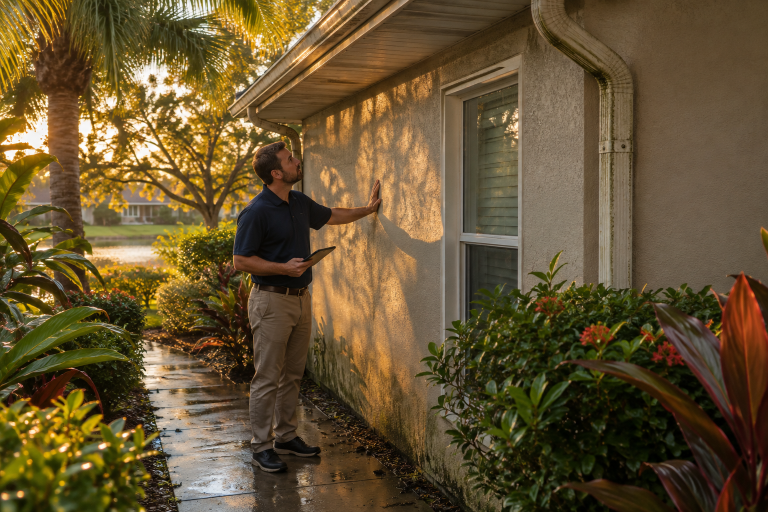
Walk slowly around the property before beginning work. Look for dark streaks, green film, chalky paint, loose caulk, rust marks, cracked trim, peeling finishes, and soft-looking wood. Check gutter lines for overflow marks, and note whether sprinkler spray reaches walls, windows, fencing, or paved areas. Taking photos during each inspection can make it easier to notice changes over time.
Choose the Right Cleaning Method
Applying more force isn’t always necessary. The cleaning approach should be chosen based on the surface type, age, finish, and type of buildup.
- Low-pressure cleaning may be more appropriate for painted, coated, delicate, or porous surfaces.
- Controlled pressure washing can be useful on certain durable hard surfaces, provided the operator maintains appropriate pressure, distance, and spray direction.
- Hand cleaning is often practical for small stains, window screens, trim, fixtures, and detailed areas.
- Extra caution is warranted around roofs, stucco, wood, older paint, loose siding, and damaged masonry.
Focus on High-Risk Areas First
- Roof edges and gutters: Clear leaves and inspect for standing water, overflow, or stains.
- Soffits and fascia: Watch for discoloration, blocked drainage, and signs of water movement.
- Stucco, siding, and trim: Look for algae-like growth, cracked finishes, and peeling paint.
- Driveways and walkways: Address slippery film, accumulated soil, and water pooling.
- Fences and decks: Inspect shaded sections for fading, dampness, and early deterioration.
- Windows and screens: Remove pollen and debris without forcing water into frames or openings.
Prepare the Property Before Cleaning
Preparation protects both the home and the people around it. Close doors and windows, move furniture and decorations, identify outlets and exterior fixtures, and keep children and pets away from the work area. Trim branches that rub against walls or block access. When using any cleaning product, read the label, confirm surface compatibility, and protect nearby plants as directed. Avoid directing water into vents, electrical equipment, loose siding, or damaged seals.
Build a Seasonal Cleaning Plan
Winter and Early Spring
Inspect roof edges, gutters, shaded walls, windows, and drainage paths. Remove leaf litter and other organic debris, then note stains that remain after seasonal rain or pollen.
Late Spring and Summer
Watch damp areas closely after afternoon storms. Check sprinkler placement, inspect walkways for slippery buildup, and look for sections that remain wet after surrounding surfaces have dried.
Fall
Clear gutters and roof valleys, inspect exterior paint and wood features, and ensure landscaping doesn’t trap moisture against walls. Properties with dense tree cover, proximity to water, or heavy shade might require more frequent inspections compared to open, sunny lots.
Common Exterior Cleaning Mistakes
- Using excessive pressure on painted, fragile, or deteriorated materials.
- Cleaning visible stains without correcting the underlying water source.
- Leaving nearby leaves, soil, and debris in place after cleaning.
- Allowing runoff to dry on windows, paint, or metal fixtures.
- Spraying directly into outlets, vents, light fixtures, or gaps in siding.
- Using products without following label instructions or compatibility guidance.
- Working in windy or rainy conditions makes water and cleaning solutions harder to control.
When to Call a Professional
Stop a do-it-yourself project when the roof is steep or fragile, ladders would be used near power lines, the ground is unstable, or surfaces are cracking, peeling, soft, or deteriorating. Professional help may also be appropriate when stains cover a large area, water appears to be entering the home, or runoff cannot be safely managed. The EPA advises homeowners to clean up mold promptly, fix the water problem, and dry water-damaged areas within 24 to 48 hours when possible.
Simple Homeowner Checklist
- Inspect the exterior every few months and after major storms.
- Check for dampness, stains, cracks, blocked gutters, and poor drainage.
- Match the cleaning method to the material and its condition.
- Protect plants, windows, fixtures, outdoor belongings, and electrical equipment.
- Correct leaks and sprinkler overspray before cleaning recurring stains.
- Use protective gear and follow all product directions.
- Seek assistance for areas that are high, steep, delicate, heavily stained, or water-damaged.
Conclusion
A safer exterior cleaning routine for a Winter Garden home depends on inspection, moisture control, proper timing, and an appropriate level of cleaning force. By paying attention to drainage, shade, landscaping, and material condition throughout the year, homeowners can address small issues before they become larger maintenance projects.