
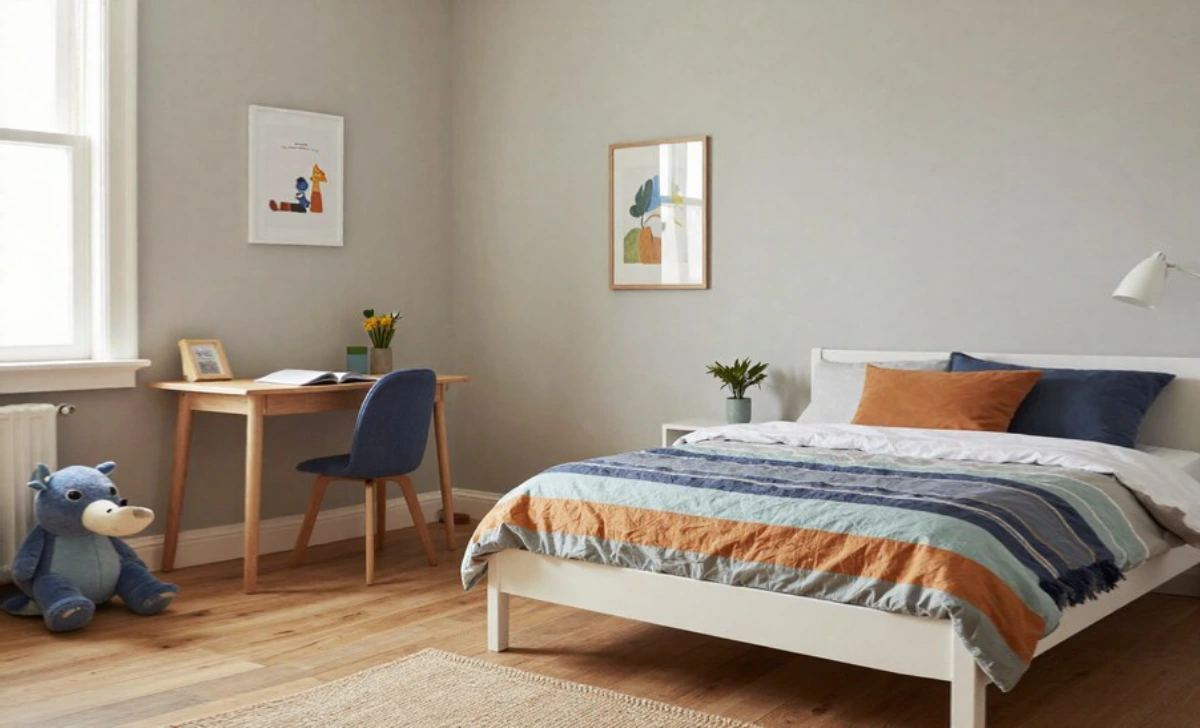
Designing a child’s bedroom presents a unique challenge. You need to balance your child’s current interests with long-term functionality, all while staying within budget. The space must work for sleeping, playing, studying, and storage.
The key is building a flexible foundation that adapts as your child grows, rather than committing to themes or trends that quickly become outdated.
Why Starting Fresh Makes a Difference
Clear the room completely before redesigning. This approach helps you see the actual space you’re working with and identify unused potential.
Removing everything lets you rethink the layout from scratch. You’ll spot wasted floor space, awkward furniture arrangements, and items your child no longer needs.
This clean slate approach also provides a natural opportunity to declutter before adding back what truly serves your child’s needs.
Design With Adaptability in Mind
Choose neutral, timeless pieces for major furniture investments. Kids’ interests shift rapidly – what captivates them at age 5 may bore them by age 7.
Save themed elements for easily changeable items like bedding, wall art, and accessories. This strategy lets you update the room’s look without replacing expensive furniture.
A white or natural wood dresser works through toddlerhood, elementary school, and teenage years. You only need to swap decorative elements to refresh the space.
Wall Treatments That Last
Painted walls offer the most flexibility for kids’ rooms. They withstand daily wear and allow for easy updates when your child’s preferences change.
Avoid character wallpaper or elaborate murals. These themed treatments look dated quickly and require significant effort to remove.
Consider these practical wall options:
Chalkboard paint on one wall creates an interactive surface for drawing and creativity. This designated space can help redirect artistic expression from other walls.
Neutral base colors provide a calm backdrop that won’t clash with changing decor. Soft grays, warm whites, or gentle beiges work well and make the room feel larger.
You can add color through removable elements rather than permanent paint choices that may need redoing in a year or two.
Choosing Practical Flooring
Flooring must handle spills, dropped toys, and high traffic. The right choice makes cleaning easier and extends the life of your investment.
Hardwood or engineered wood flooring stands up to daily abuse and cleans quickly. You can add washable area rugs for warmth and comfort without sacrificing durability.
Vinyl or laminate alternatives offer similar durability at a lower price point. Modern options come in realistic wood-look designs that resist scratches and moisture damage.
Avoid wall-to-wall carpeting in kids’ rooms if possible. Spills, stains, and ground-in dirt make carpet difficult to maintain and may require replacement sooner than hard surfaces.
Lighting for Multiple Functions
Kids’ bedrooms need different lighting levels throughout the day and evening. The same space hosts energetic play, focused homework, and bedtime routines.
Layer three types of lighting:
Overhead lighting provides general illumination for play and daily activities. Choose bright, even coverage across the room.
Task lighting supports specific activities. Position a desk lamp for homework and a reading light near the bed for nighttime stories.
Accent lighting adds comfort and ambiance. String lights, nightlights, or dimmer switches help create a calming environment before sleep.
Installing a dimmer switch on overhead lights gives you control over brightness levels throughout the day.
Selecting a Bed That Lasts
Skip themed toddler beds that your child will outgrow within two years. These specialty pieces become obsolete quickly and create unnecessary expense.
Invest in a full-size bed from the start. This approach takes your child from early childhood through their teenage years without replacement.
For younger children transitioning from a crib, use temporary bed rails or position the bed against a wall. These solutions provide safety without limiting the bed’s long-term use.
A quality mattress supports proper sleep and physical development. This investment affects your child’s daily rest and overall health more than any decorative element in the room.
Storage Solutions That Work
Kids accumulate belongings fast. Smart storage keeps the room functional and makes cleanup manageable.
Open shelving displays books and favorite toys at eye level. This visibility helps younger children independently access and return items.
Closed storage contains visual clutter. Storage bins, ottomans, and cabinets hide miscellaneous items while providing quick cleanup options.
Vertical storage maximizes space in smaller rooms. Wall-mounted shelves and tall bookcases add capacity without consuming floor area.
Anchor all tall furniture securely to the walls. This safety measure prevents tipping accidents as children climb or pull on drawers.
Use clear or labeled bins so your child can identify contents and maintain organization independently.
Furniture That Adapts
Choose pieces that serve multiple purposes or adjust as your child grows.
A desk with adjustable height transitions from craft table to homework station. This single piece serves different needs across age ranges.
Dressers without attached changing toppers work through all childhood stages. Add a portable changing pad on top for babies, then use the full surface for storage as your child grows.
Comfortable seating beyond the bed creates dedicated spaces for reading or quiet time. A sturdy chair, bean bag, or floor cushions make the room more functional.
Select furniture built to last rather than budget pieces you’ll replace in a few years.
Adding Character Without Commitment
Once you establish the foundational elements, incorporate your child’s personality through changeable decor.
Wall art updates easily without major renovation. Use frames to display your child’s artwork, posters of current interests, or removable wall decals.
Bedding transforms the room’s appearance instantly. A new duvet cover or quilt changes the color scheme and theme without touching walls or furniture.
Textiles add texture and warmth. Throw pillows, curtains, and area rugs introduce color and comfort while remaining simple to switch out.
Keep character-themed items to small, inexpensive accessories rather than major purchases.
Creating Activity Zones
Divide the room into functional areas when space allows. Defined zones help children understand where different activities occur.
A small table and chairs establish a space for crafts, puzzles, or pretend play. This contained area keeps messy activities away from the bed.
A reading corner with cushions and a bookshelf encourages quiet time. Position this zone near a window for natural light when possible.
An open floor area accommodates active play without furniture obstacles. This space adapts to building blocks, race tracks, or dance parties.
Technology Considerations
Decide whether screens belong in your child’s bedroom based on your family values and your child’s age.
If you include technology, choose devices that serve multiple purposes. A tablet can function for reading, educational games, and music rather than having separate devices.
Position any screens where you can monitor use. Avoid placing televisions or computers where they’re visible from the bed, as this can interfere with sleep routines.
Many families find keeping bedrooms screen-free supports better sleep habits and family time in shared spaces.
Safety Measures
Childproofing extends beyond babyhood. Evaluate safety concerns as your child grows and becomes more mobile.
Anchor all heavy furniture to walls using furniture straps or brackets. Dressers, bookcases, and shelving units can tip if climbed.
Cover electrical outlets until your child understands their danger. Use outlet covers or outlet plates with built-in covers.
Choose cordless window treatments to eliminate strangulation hazards. Cordless blinds and shades operate safely while maintaining privacy and light control.
Check from a child’s perspective. Get down to floor level and look for small objects, sharp corners, or pinch points you might miss from adult height.
Involving Your Child
Include age-appropriate input from your child in design decisions. This involvement creates investment in maintaining their space.
Offer limited choices to avoid overwhelming younger children. Show two bedding options or three paint colors rather than unlimited possibilities.
Let older children arrange personal items and collections. They can decide how to organize their bookshelf or display their achievements.
Respecting your child’s preferences within reasonable boundaries helps them feel ownership of their room.
Creating a Room That Works
A successful kids’ bedroom balances your practical needs with your child’s comfort and interests.
Focus on durable foundations – quality furniture, neutral walls, and practical flooring. Add personality through accessories you can update as your child develops new interests.
The goal isn’t creating a magazine-perfect space. You want a room where your child feels comfortable, sleeps well, and has room to grow and play.
With thoughtful planning and smart choices, you can design a bedroom that serves your child through multiple developmental stages without constant overhauls.