So you’ve bought your first bottle of bourbon. Maybe it was a gift, or perhaps you’re curious about what makes American whiskey so special. Either way, you’re probably standing there wondering: How exactly am I supposed to drink this?
That’s a common question. And if you want to drink bourbon beginners often struggle with finding the right approach. But don’t worry—this guide makes it simple.
Bourbon is meant to be enjoyed, not feared. With over 300 years of history behind it, this corn-based whiskey has earned its nickname as the “Spirit of America.” But unlike what some purists might tell you, there’s no single “correct” way to drink bourbon beginners can feel confident trying. The best way is the way you enjoy it.


This guide walks you through everything a first-time bourbon drinker needs to know—from choosing the right glassware to trying bourbon in cocktails, with food, and beyond. No pretension. No rules meant to intimidate. Just practical advice to help you discover what works for you.
What Makes Bourbon Different From Other Whiskeys?
Before we get into drinking methods, it helps to understand what’s actually in your glass. Bourbon is a type of American whiskey with specific legal requirements:
- At least 51% corn in the mash bill (the mixture of grains)
- Aged in new, charred oak barrels
- Distilled to no more than 160 proof (80% ABV)
- Entered into the barrel at no more than 125 proof
- Bottled at 80 proof (40% ABV) or higher
That corn content gives bourbon its characteristic sweetness—notes of vanilla, caramel, and sometimes even maple. Compare that to Scotch or rye whiskey, and you’ll immediately notice bourbon’s rounder, sweeter profile.
This matters because how you drink bourbon beginners often needs to learn that different methods either highlight or mask those flavors. And that’s entirely up to you.
Essential Glassware for Drinking Bourbon
You don’t need a cabinet full of specialized glasses. But if you want to get more from your bourbon, a couple of options help:
Rocks glass (also called an Old Fashioned or tumbler) – This is the classic short, wide glass with a thick bottom. It’s perfect for bourbon on the rocks or neat. The thick bottom keeps the drink stable, and the wide opening lets you smell the bourbon as you sip.
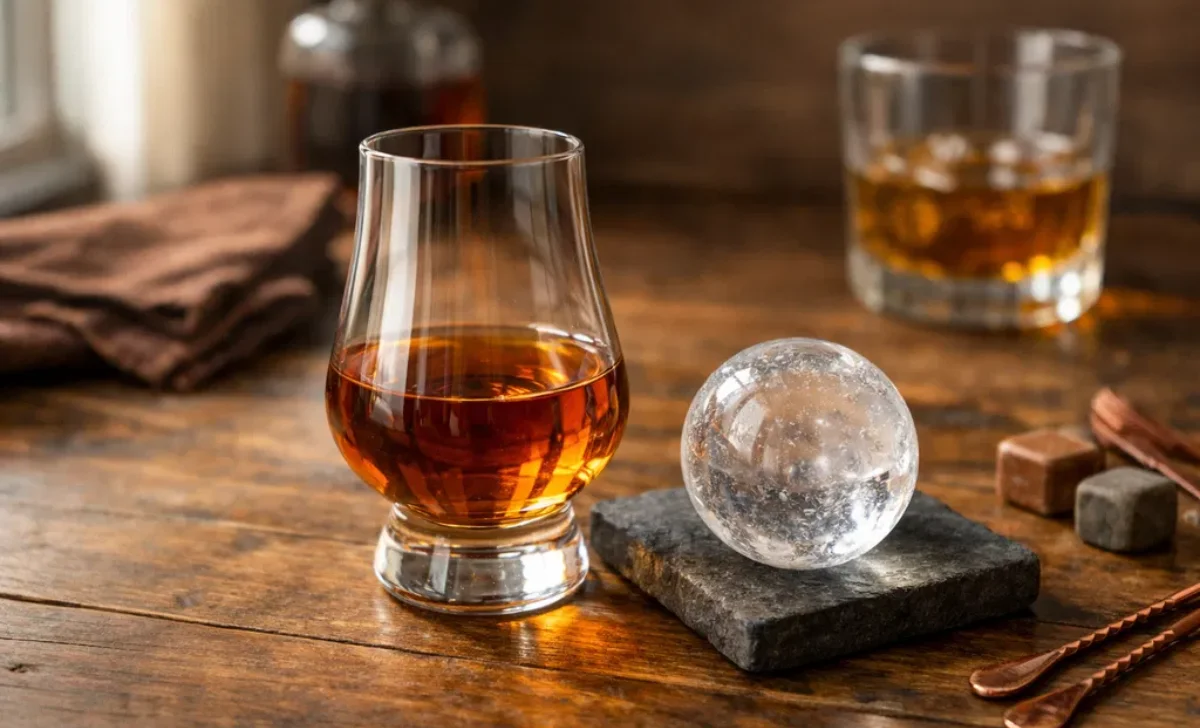
Glencairn glass – Shaped like a miniature brandy snifter with a short stem and a tapered top. This is the preferred glass for serious tasting. The narrow rim concentrates the aromas, helping you pick up subtle notes like vanilla, oak, or baking spices.
Thin-walled glasses – Surprisingly, a thin rim lets the bourbon flow smoothly onto your tongue without distraction. Many experienced drinkers prefer this over thick, heavy glassware.
What about using a regular tumbler from your kitchen cabinet? It’s fine. The bourbon will taste the same. But investing $10–15 in a proper Glencairn or rocks glass genuinely enhances the experience—especially when you’re learning to identify different flavors.
How to Taste Bourbon Using All Five Senses
Here’s something many guides skip: tasting bourbon isn’t just about taste. Experts say all five senses come into play. And once you try this approach, you’ll understand why.
Look (Sight) – Pour about 1.5 to 2 ounces (roughly 50 grams) into your glass. Hold it up to the light. What color is it? Lighter amber suggests younger bourbon or lower char levels. Deep copper or mahogany indicates longer aging. Swirl the glass gently and watch how the liquid coats the sides. Thicker “legs” that slowly drip down suggest higher alcohol content or more body.
Smell (Olfaction) – Bring the glass to your nose without sticking your nose inside. Take a short, gentle sniff. What do you notice? Vanilla? Caramel? Oak? Maybe a hint of spice or fruit? If you only smell alcohol, let the glass sit for a minute or two. The ethanol will dissipate, revealing the actual aromas.
Sip (Taste) – Take a small sip. Let it coat your tongue for a few seconds before swallowing. Notice the initial sweetness (the “attack”), then the mid-palate flavors, and finally the finish—how the taste lingers after you swallow.
Touch – Feel the weight of the glass in your hand. If you’re drinking neat, your hand warms the bourbon slightly, which opens up the aromas. Notice the texture of the liquid itself—some bourbons feel oily or syrupy, others lighter and more delicate.
Listen (Sound) – This one sounds odd, but try it. Listen to the ice cubes clink. Hear the pour. Some enthusiasts even say the sound of uncorking a bottle or the gentle swirl in a glass adds to the ritual.
The 5 Best Ways to Drink Bourbon (With Real Pros and Cons)
Now let’s get to what you came for. Each method has its place. None is “wrong.” Here’s what to expect from each.
1. Neat (Pure Form)
What it is: Bourbon poured into a glass at room temperature. Nothing added. Nothing removed.
Best for: Experienced drinkers or anyone wanting to taste the bourbon exactly as the distiller intended. Also ideal for higher-quality bottles where you want to appreciate every note.
How to do it: Pour 1.5–2 ounces into a Glencairn or rocks glass. Let it rest for a minute. Sip slowly. Do not shoot it. Do not gulp it.
Pros: You experience the full, unaltered flavor profile. No dilution means you taste the craftsmanship.
Cons: Higher-proof bourbons (over 100 proof) can feel harsh for beginners. The alcohol burn might overwhelm the flavors until your palate adjusts.
Pro tip: Don’t refrigerate bourbon. Cold temperatures mute the aromas and flavors. Room temperature (around 60–70°F) is ideal.
2. With a Splash of Water
What it is: Adding just a few drops or a teaspoon of water to neat bourbon.
Best for: Beginners, high-proof bourbons, or when you want to soften sharp notes.
How to do it: Pour your bourbon neat. Add 3–5 drops of room-temperature filtered water. Swirl gently. Taste. Add a few more drops if needed.
Pros: A tiny amount of water can “open up” the bourbon. It reduces the alcohol burn, allowing sweet notes like caramel and vanilla to shine. Spicy or oaky notes become more balanced.
Cons: Too much water will drown the flavor entirely. Start with drops, not splashes.
Why this works: Certain flavor compounds in bourbon are more soluble in water than in alcohol. A small amount of water releases those compounds, changing the profile—often for the better.
3. On the Rocks (With Ice)
What it is: Bourbon poured over one or more ice cubes.
Best for: Warm weather, casual sipping, or when you want a chilled, slightly diluted drink.
How to do it: Use one large ice cube or a sphere. Avoid small cubes or crushed ice. Pour bourbon over the ice. Sip as it slowly melts.
Pros: Chilling reduces the perception of alcohol burn. Slow melting from a large cube dilutes gradually, changing the flavor over time. Many find it smoother and more refreshing.
Cons: If you use small ice cubes (like standard refrigerator ice), they melt fast. Within a few minutes, your bourbon becomes watery and flavorless. Also, chilling mutes some of the subtle aromatic notes.
Pro tip: Buy a large silicone ice cube tray. The big cubes melt much more slowly, keeping your drink flavorful for 20–30 minutes.
4. In a Cocktail
What it is: Mixing bourbon with other ingredients to create a classic or original cocktail.
Best for: Beginners who find neat bourbon too strong, social drinking, or exploring bourbon’s versatility.
How to do it: Start with classic recipes. Here are five traditional bourbon cocktails every beginner should try:
- Old Fashioned: Bourbon, sugar, Angostura bitters, orange peel
- Mint Julep: Bourbon, fresh mint, simple syrup, crushed ice
- Whiskey Sour: Bourbon, lemon juice, simple syrup, egg white (optional)
- Manhattan: Bourbon, sweet vermouth, bitters, cherry garnish
- Boulevardier: Bourbon, Campari, sweet vermouth
Pros: Cocktails make bourbon approachable. The other ingredients balance the heat and add complexity. You can appreciate bourbon’s broad profile without being overwhelmed.
Cons: Cheap or young bourbon works fine here. Save your expensive small-batch bottles for drinking neat.
Pro tip for beginners: Use a younger, budget-friendly bourbon for cocktails. Something like Evan Williams Black Label or Wild Turkey 81 proof mixes beautifully without breaking the bank.
5. With Food (Gastronomic Pairings)
What it is: Drinking bourbon alongside or incorporated into food.
Best for: Dinner parties, curious home cooks, or anyone who loves exploring flavor combinations.
How to do it: Two approaches. First, sip bourbon while eating complementary foods. Second, cook with bourbon—it adds incredible depth to sauces, marinades, and even desserts.
Foods that pair well with bourbon:
- Dark chocolate or caramel candies
- Barbecue or grilled meats
- Sharp cheddar or blue cheese
- Pecan pie or bread pudding
- Seared steak with bourbon pan sauce
Cooking with bourbon: Add a splash to meat marinades, fish sauces, or pie fillings. Bourbon caramel sauce over ice cream is life-changing. Even a small amount in baked beans or chili adds smoky sweetness.
What to avoid: Delicate foods like raw fish or light salads. Bourbon will overpower them completely.
Understanding Bourbon Labels: What to Look For
Before you buy your next bottle, read the label. It tells you a lot about what’s inside:
Age statement – If you see “Aged 4 Years” or “8 Years,” that’s the youngest bourbon in the bottle. Older generally means deeper, more oak-influenced flavor. But young bourbon (2–4 years) has its place too—it’s often brighter and works well in cocktails.
Proof / Alcohol content – This ranges from 80 proof (40% ABV) up to barrel strength (sometimes over 130 proof / 65% ABV). Lower proof is smoother and more beginner-friendly. Higher proof packs more flavor but also more heat.
“Small batch” – Not a legal term. It generally means the distiller selected a small number of barrels (often 10–50) to bottle together. It suggests more attention to quality.
“Single barrel” – Every bottle comes from one single barrel. Each barrel tastes slightly different, so these have a unique character.
Straight bourbon – Aged at least two years with no added colors or flavors. Most quality bourbons are straight.
Common Mistakes First-Time Bourbon Drinkers Make
Avoid these, and you’ll enjoy bourbon much more:
Shooting it – Bourbon isn’t tequila or vodka. Shooting wastes the flavor and just delivers a burn. Sip.
Using tiny ice cubes – They melt instantly. Your bourbon becomes watery sadness in three minutes.
Drinking from a plastic cup – Plastic imparts off-flavors. Use glass.
Buying the cheapest bottle – Bottom-shelf bourbon (under $15) is often harsh. Spend $25–40 for a genuinely enjoyable first bottle.
Over-chilling – Icy cold bourbon loses most of its aromatic personality. Slightly cool is fine. Frozen is a mistake.
How to Train Your Palate Over Time
You won’t pick up vanilla, oak, and baking spices on your first sip. That’s normal. Palate development takes practice.
Try this: Buy two different bourbons at once. Something like Buffalo Trace (sweeter, lower rye) and Bulleit Bourbon (higher rye, spicier). Pour a small amount of each. Taste them side by side.
The difference will be obvious immediately. That contrast trains your brain to recognize specific flavor notes. Over several tasting sessions, you’ll start noticing subtle differences you never caught before.
FAQs
Isn’t bourbon just for old men in leather chairs?
Not at all. Bourbon has seen a massive resurgence across all age groups. Craft cocktail bars, young professionals, and even casual home drinkers have embraced it.
Will it burn going down?
It can, especially in higher-proof bottles. But there are ways to soften that burn—water, ice, or mixing in a cocktail.
Do I need expensive glasses to look like I know what I’m doing?
No. A clean glass of any kind works. That said, the right glassware does improve the experience.
Is it rude to mix bourbon with something?
Absolutely not. Even master distillers will tell you they enjoy bourbon in cocktails. Drink it how you like it.
Final Thoughts: There’s No Wrong Way
If you take one thing from this guide, let it be this: Drink bourbon how you enjoy it. Neat, on a large cube, in an Old Fashioned, or splashed into barbecue sauce—it’s all valid.
The “rules” you see online mostly come from personal preference, not absolute truth. A distiller who spent 12 years aging a single barrel might prefer it neat. That doesn’t mean you’re wrong for adding a drop of water or enjoying it in a cocktail.
Start with the methods here. Experiment. Find what works for your palate. And most importantly, enjoy the process. Bourbon has centuries of craft behind it, but the only opinion that matters at your kitchen table is yours.