If you’ve spent any time researching backyard upgrades, you’ve probably come across composite decking. Maybe you’ve heard friends say it’s “low maintenance” or seen ads promising it lasts longer than wood. But if you’re like most homeowners, you still have questions: Is it really worth the higher upfront cost? Does it look fake? How do you actually clean it? And what’s the deal with all those color options?
Let’s walk through everything you need to know—from creative design tricks to everyday maintenance—so you can decide if composite decking is right for your home and how to make it look stunning for years to come.
What Is Composite Decking Made Of? (And Why It Matters)
Before we get into design ideas, it helps to understand what you’re actually buying. Composite decking isn’t plastic, and it isn’t wood—it’s a blend of both.


Most composite decking is made from recycled wood fibers (often sawdust or wood chips from furniture manufacturing) mixed with plastic materials like high-density polyethylene (HDPE) or polyvinyl chloride (PVC). These ingredients are combined with heat and pressure to create boards that look and feel similar to wood but without many of wood’s weaknesses.
Here’s what that means for you as a homeowner:
- No rotting or splintering – Unlike traditional wood decking, composite boards won’t develop soft spots or give you splinters when you walk barefoot.
- Insect-resistant – Termites and carpenter ants have no interest in composite materials.
- Eco-friendly – Many brands use recycled content, which reduces demand for virgin wood and keeps plastic out of landfills.
- Minimal maintenance – You won’t need to sand, stain, or seal a composite deck.
That said, composite decking isn’t perfect. It can get hot in direct sunlight, it costs more upfront than pressure-treated lumber, and some older products had fading issues (though modern versions are much better).
Does Composite Decking Look Fake? An Honest Take
One of the most common questions people ask is whether composite decking looks obviously artificial. The honest answer: It depends on the brand and the generation of product you buy.
Early composite decks from the 1990s and early 2000s often had a flat, uniform appearance that screamed “plastic.” Today’s composites are完全不同. Many use something called “capped decking”—a protective outer layer that also carries realistic wood grain patterns, subtle color variations, and even simulated knots.
When you look at a high-quality composite board from brands like Trex, TimberTech, or Fiberon, you often have to get within a few feet to tell it isn’t real wood. And from a distance—say, from your kitchen window or a neighbor’s yard—it looks virtually identical to a well-maintained wood deck.
Creative Ways to Make Your Composite Deck Look Stunning
Now for the fun part. Once you’ve chosen composite decking, how do you make it feel like an extension of your home rather than just a flat square attached to your back door?
Use Accessories to Enhance Your Deck’s Appearance
Accessories are often overlooked, but they’re what turn a functional deck into a space you actually want to spend time in.
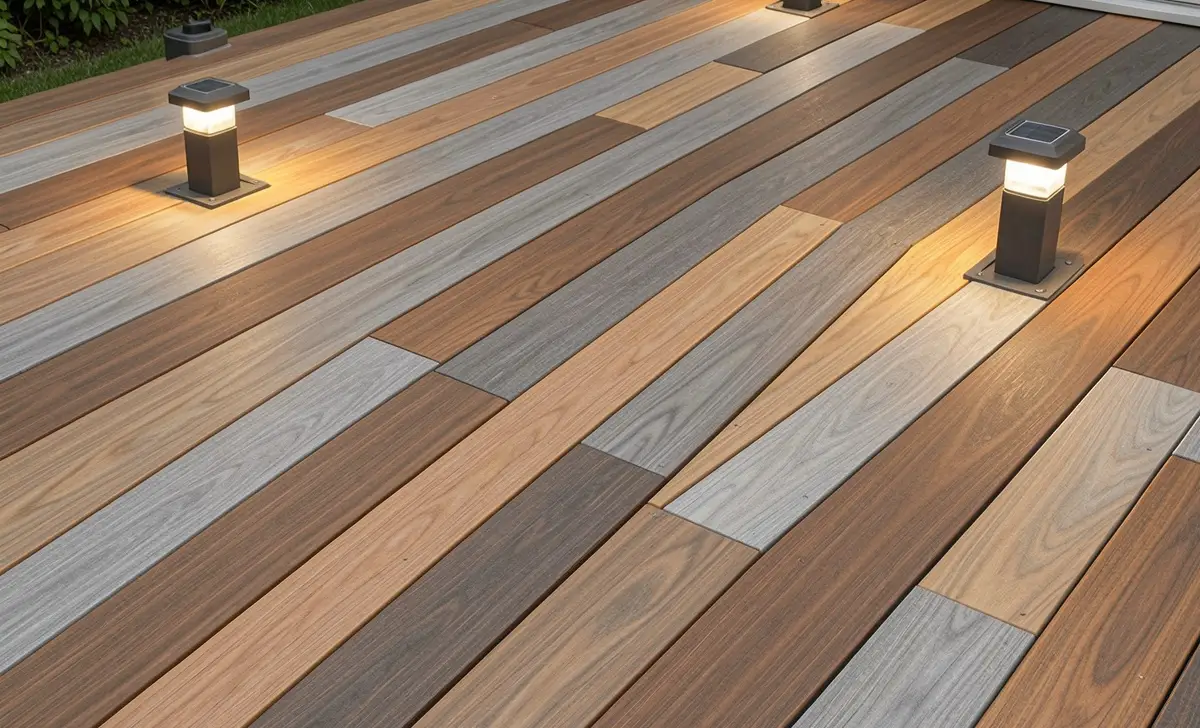
Deck lighting is one of the simplest upgrades with the biggest impact. You can install post cap lights that glow softly at night, add stair riser lights for safety and style, or string solar-powered lights along a railing. Many homeowners find that lighting completely changes how they use their deck—suddenly, evening dinners and late-night conversations feel inviting instead of dark and uninviting.
Outdoor rugs serve two purposes. First, they add color and personality. A bold, patterned rug can tie together your furniture and planters. Second, they protect the decking material from dirt, moisture, and scratches from furniture legs. Just make sure you choose a rug labeled for outdoor use so it doesn’t trap moisture underneath.
Planters and greenery bring life to any deck. You don’t need a green thumb—simple pots with herbs (basil, mint, rosemary), flowers (petunias, marigolds), or small ornamental grasses work beautifully. Some homeowners even grow cherry tomatoes or peppers in containers on their deck. Plants also help improve air quality and create a natural barrier for privacy.
Choose Furniture That Matches Your Lifestyle
Before you buy any deck furniture, ask yourself: How do I actually want to use this space?
If you entertain often, consider creating zones. A dining table and chairs near the house, a seating area with a loveseat or Adirondack chairs farther out, and maybe a small bar cart or cooler station in between.
If you primarily want a quiet retreat, focus on comfort. A deep-seated outdoor sofa, a hammock chair, or even a daybed with weather-resistant cushions can turn your deck into a nap-worthy oasis.
One tip from experienced homeowners: Always choose furniture labeled for outdoor use. Look for materials like teak, powder-coated aluminum, all-weather wicker, or recycled plastic. These resist moisture, UV damage, and temperature swings. And don’t forget storage—deck boxes or benches with hidden compartments keep cushions, toys, and tools out of sight.
Mix Decking Board Colors for Unique Patterns
Here’s where composite decking really shines compared to wood. Because composite boards are manufactured with consistent colors, you can mix and match to create patterns that would be difficult or impossible with natural lumber.
Some popular approaches:
- Checkerboard or alternating stripes – Use two complementary colors (like a warm brown and a lighter tan) in alternating rows.
- Picture framing – Use a different color for the perimeter boards than the interior field.
- Diagonal or herringbone layouts – These require more cutting and waste but create a custom, high-end look.
- Color blocking – Divide your deck into sections (dining zone, lounging zone) and use a different color for each.
If you’re unsure which colors work well together, grab a color wheel online or from a paint store. Colors opposite each other (complementary) create contrast. Colors next to each other (analogous) create harmony. And always order extra boards—color batches can vary slightly, and you’ll want matching material for any future repairs.
Add Depth with Risers and Stairs
Many decks sit close to the ground, which is practical but visually flat. If yours feels like a single-level platform, adding stairs and risers can completely change the perception of the space.
Even if you don’t need stairs to reach the ground, a single step down to a small landing or a couple of risers between zones adds architectural interest. It creates a visual illusion that the deck is larger and more intentional.
For the risers themselves (the vertical face of each step), you have options. Some homeowners use composite boards in a contrasting color. Others use metal panels, tile, or even stone veneers. This is also a great place to add stair lighting—small LED strips under each tread look fantastic at night.
Don’t forget railings and spindles. Glass panels keep views open. Cable railings look modern and minimal. Traditional wood or composite balusters feel classic. And if you have kids or pets, make sure your railing meets local building codes for spacing.
Regular Maintenance: What You Actually Need to Do
Let’s clear up a common misconception. “Low maintenance” does not mean “no maintenance.” Composite decking still needs care to look its best.
Cleaning: Plan to clean your deck at least twice a year—once in spring after the weather improves, and once in fall before winter sets in. Use a mild detergent (dish soap works fine) mixed with warm water. Scrub with a soft-bristle brush or a push broom. Rinse thoroughly with a garden hose.
Avoid pressure washers unless you use a wide fan tip and stay at least 12 inches away from the boards. Too much pressure can etch the surface or remove the protective cap layer.
Checking for damage: Every few months, walk your deck and look for loose boards, popped screws or hidden fasteners, cracks in the capped surface, or mold and mildew in shaded corners. Fix small issues immediately—a loose board can become a tripping hazard, and mold spreads quickly in damp climates.
Stain and spill management: Composite decking is stain-resistant but not stain-proof. Wipe up food, grease, or wine as soon as possible. For tougher marks, a specialized composite deck cleaner (follow the label instructions) usually does the trick. Never use acetone, paint thinner, or other harsh solvents.
Common Concerns Homeowners Have (And Honest Answers)
“Won’t composite decking get too hot to walk on?” Yes, dark-colored composite can get very hot in direct summer sun—sometimes hotter than wood. If you live in a hot climate, choose lighter colors (grays, tans, lighter browns) or plan for shade sails, umbrellas, or a covered porch.
“Is it slippery when wet?” Most capped composite boards have a textured, slip-resistant surface. They’re generally safer than wet wood, which can become slick. That said, algae or moss can grow in damp, shady spots, so clean those areas regularly.
“Can I install it myself?” Many homeowners successfully install composite decking as a DIY project. The boards cut and fasten similarly to wood, but they’re heavier and require specific hidden fasteners for best results. Watch a few installation videos before deciding. If your deck structure is complex or not perfectly level, hire a pro.
“How long does it really last?” Quality composite decking often comes with 25-year, 30-year, or even lifetime warranties. In real-world conditions, a well-maintained composite deck can easily last 25–30 years. Pressure-treated wood, by comparison, often needs replacement after 10–15 years.
Is Composite Decking Right for You?
Composite decking makes the most sense if:
- You want a deck that looks good without annual staining or sealing
- You’re willing to pay more upfront (typically 2–3x pressure-treated wood) for long-term savings
- You live in an area with termites, rot-prone soil, or high humidity
- You prefer eco-friendly building materials
It might not be the best choice if:
- You’re on a very tight budget (wood is cheaper initially)
- You love the look of aged, weathered wood (composite won’t gray evenly like cedar)
- Your deck gets full, harsh sun, and you want dark colors
Final Thoughts
A well-designed composite deck can truly transform your backyard from a forgotten space into your favorite room of the house. The key is thinking beyond just the boards themselves—lighting, furniture, plants, patterns, and stairs all work together to create something functional and beautiful.
And don’t forget the maintenance. A quick cleaning twice a year and regular inspections will keep your deck looking stunning for decades. That’s the real promise of composite decking: not a lifetime of zero work, but a lifetime of reasonable work for a space you actually enjoy using.
So go ahead. Sketch out that pattern. Pick out those solar lights. Start planning where the grill and the lounge chairs will go. Your backyard is waiting.