So you’re thinking about beginner drone buying. Maybe you’ve seen stunning aerial shots on social media, or perhaps you just want to experience the thrill of flying from your own backyard. Whatever the reason, you’re not alone. More people than ever are picking up their first drone, and the market is full of options.
But here’s the thing most beginners don’t realize: the flashiest drone with the best camera isn’t always the right choice for a first-time pilot. In fact, focusing on the wrong features can lead to frustration, crashes, and wasted money. That’s why smart beginner drone buying starts with understanding what actually matters.
This guide will walk you through everything you actually need to know when buying a drone for beginners. We’ll cover durability, range, safety, price, and the real-world questions that come up in online forums and conversations every day.


What Beginners Really Ask Before Buying a Drone
Before we dive into the details, let’s address the questions most new pilots have. These are the concerns that come up again and again in drone communities, product reviews, and discussion boards.
- “How likely am I to crash my first drone?”
- “Do I really need a $1,000 drone to learn?”
- “What happens if I fly too far away?”
- “Are cheap drones even worth buying?”
- “How do I avoid breaking it on the first day?”
These are honest, practical questions. And the answers might surprise you. Most beginner drones are designed specifically to handle mistakes. In fact, the best beginner drones are built with the understanding that you will crash. That’s not a failure—it’s part of learning. Successful beginner drone buying means accepting that your first drone is a learning tool, not a lifetime investment.
Durability: Why Your First Drone Needs to Be Tough
If there’s one feature that matters more than any other for a new pilot, it’s durability. When you’re learning to fly, you will make mistakes. You might misjudge a tree branch, lose orientation in bright sunlight, or simply push the wrong stick. That’s normal.
The best beginner drones are built to withstand a crash. Look for a drone with a body made of composite material. This isn’t just marketing talk. Composite materials absorb impact better than rigid plastics, which means your drone is more likely to bounce than shatter.
Another real-world tip: pay attention to how the battery connects. A good drone for beginners will have an easy battery swap mechanism. Why does this matter? Because when you crash, the battery can eject on impact. That’s actually a safety feature—it prevents damage to the power system. But you don’t want to struggle with clips and wires every time you need to put the battery back in.
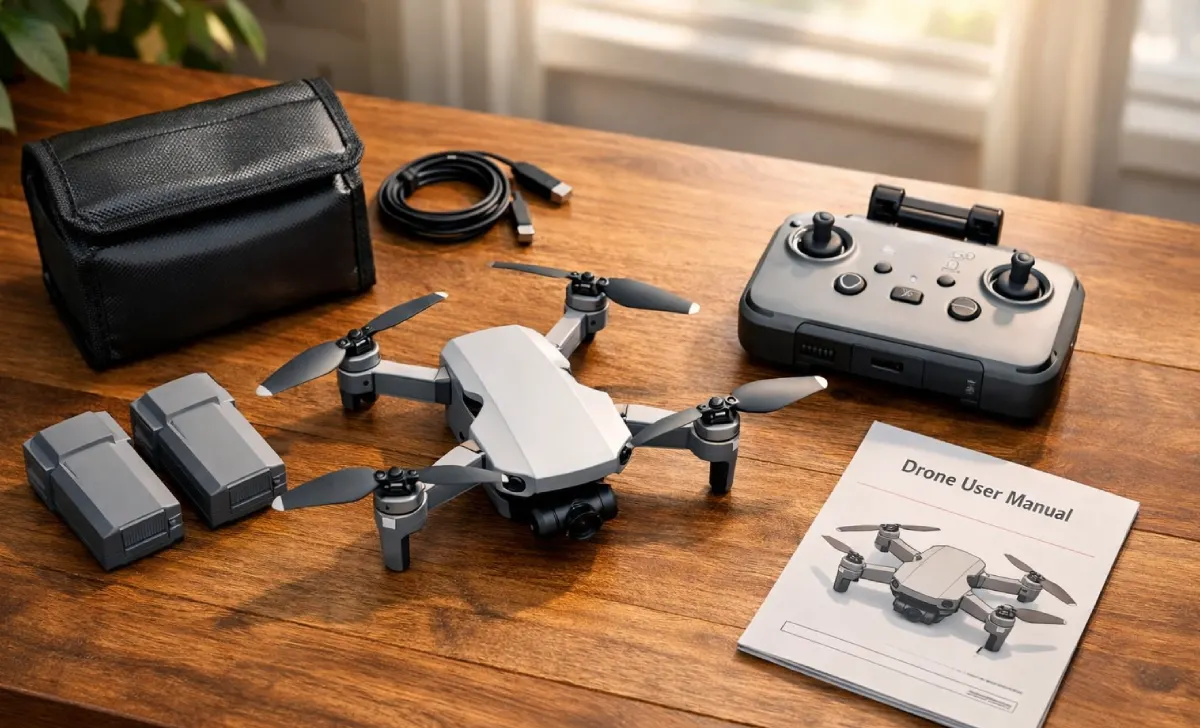
Battery life is another practical concern. Most drones last between 20 and 30 minutes on a charge. That might sound short, but in reality, 20 minutes of active flying feels much longer than you’d think. That said, experienced pilots almost always recommend getting extra batteries. There’s nothing worse than driving to a beautiful location only to run out of power after ten minutes.
One question beginners often ask is whether to buy a cheap drone or invest in a more expensive model from the start. Here’s the honest answer: a more expensive model will give you more flexibility, better sensors, and often better build quality. But you’re also more likely to crash the drone into something while learning. So there’s a trade-off. A beginner-friendly model is often the smarter choice because it’s less likely to crash and break, and if something does break, it’s usually easier and cheaper to repair.
Range: How Far Can (and Should) You Fly?
Range is one of those features that looks great on a spec sheet but doesn’t always matter in real life. The range of a drone for beginners is determined by two main factors: the controller signal strength and the transmitting technology. Higher-priced drones typically have larger ranges, and that’s fine. But here’s what most beginners don’t realize.
Legally and practically, you are required to fly your drone within visual line of sight. That means you need to be able to see your drone with your own eyes at all times. For most small drones, that’s about 1,000 to 1,500 feet away. Beyond that, even if the signal is strong, you lose orientation and can’t see obstacles like power lines or birds.
So when you see a drone advertised with a 3-4 mile range, understand that you will seldom fly that far as a recreational user. The law is clear: you can only fly drones within sight of their controllers. Keeping your drone within a visual line of sight isn’t just a suggestion—it’s the rule.
That said, a drone with a long range does have benefits. Better transmitting technology often means a more stable connection even at medium distances. You’ll experience fewer dropouts and less video lag. So don’t ignore range entirely—just don’t make it your top priority as a beginner.
For those who eventually want to fly for more advanced purposes like collecting data for 3D maps or covering large agricultural areas, a longer range becomes essential. But that’s not a beginner concern. Start with something reasonable, and upgrade later if you need to.
Safety: The Non-Negotiable Rules of Flying
Safety might sound boring, but ignoring it is the fastest way to lose your drone—or worse, hurt someone. When buying a drone for beginners, the very first thing you should do after unboxing it is read the manual. Don’t skim it. Read it. Familiarize yourself with every part and flight feature before you even charge the battery.
Here are the real-world safety rules that experienced pilots follow every single time:
- Always stay within visual sight of your drone. This prevents collisions with people, animals, buildings, and other aircraft.
- Never fly above 400 feet. This is the legal limit in most countries. Going higher risks interfering with manned aircraft and endangering wildlife.
- Avoid flying outside of visual sight lines. Even if your drone has a long-range signal, you are responsible for knowing what’s around it.
- Respect local laws. Different parks, cities, and countries have their own rules. Some areas are completely off-limits.
Another safety concern that surprises many beginners is the battery. Most drones use lithium polymer batteries. These are lightweight and have high power density, which is great for flight time. But they also require proper handling and storage. Unlike your phone battery, LiPo batteries can swell, overheat, or even catch fire if damaged or overcharged.
When not in use, store your batteries in a fireproof bag. This is a cheap investment that could save your home. Always inspect your batteries before flying. If you see any swelling, discoloration, or damage, do not use them. And always make sure the drone’s battery is fully charged before flying—taking off with a partially charged battery is a common beginner mistake that leads to unexpected landings.
If you can, buy a drone with a removable battery pack. This makes it easier to swap in fresh batteries and safer to store them separately.
Price: How Much Should You Really Spend?
Let’s talk money. This is where many beginners get stuck. Do you buy the cheapest drone available and risk poor performance? Or do you spend more and worry about crashing something expensive?
Here’s a practical approach. A beginner’s drone doesn’t need to be expensive, but it shouldn’t be a toy. The cheapest models—often under $50—are usually unstable, hard to control, and break easily. They can actually make learning harder because they don’t respond predictably.
At the same time, you don’t need to spend $1,000 on your first drone. The sweet spot for most beginners is between $250 and $500. For example, the DJI Spark has long been recommended as a great drone for beginners and intermediate pilots. It offers a flight time of 30 minutes, solid durability, and good-enough camera quality without the advanced features that drive up the price.
You can find functional drones for as little as £50 or $250. These will have basic features like altitude hold, headless mode, and one-key takeoff/landing. They’re perfect for learning the basics of flying without financial stress. But here’s the truth: you’ll likely grow out of a very cheap drone quickly. If you enjoy flying, you’ll want better range, camera quality, and stability within a few months.
So consider your goals. If you just want to try drone flying as a casual hobby, start with around $250. If you already know you want to capture video for social media or even commercial purposes, invest a bit more upfront. Just remember that your first drone doesn’t have to be your last. Many pilots keep their beginner drone as a backup or a practice unit even after upgrading.
Real-World Example: What a Good Beginner Drone Looks Like
Let’s put all of this together. A good beginner drone should have:
- A composite material body that resists impact damage
- Easy battery swap with readily available spare batteries
- Flight time between 20 and 30 minutes per charge
- A range of at least 1,000 feet (even if it’s capable of more)
- Basic safety features like automatic return-to-home and low-battery warnings
- Removable battery pack for safe storage
- Price between $250 and $500
It does not need 4K video, obstacle avoidance sensors in every direction, or a 5-mile range. Those features add cost and complexity that you won’t fully use as a beginner.
Conclusion: Your First Drone Should Be Fun, Not Frightening
When purchasing a drone as a beginner, prioritize durability, ease of operation, and value for money over flashy specs. Look for a drone with a composite body, an easy battery swap system, and a range of at least 3-4 miles (even if you’ll rarely use the full distance). Ensure safety by reading the manual from cover to cover, always staying within visual sight, and handling lithium polymer batteries with care—including storage in a fireproof bag.
With solid beginner drones starting from around $250 or £50, there’s no reason to overpay or overcomplicate things. If you follow this beginner drone buying advice, you will save money, avoid frustration, and enjoy learning to fly. Find a drone that suits your needs and budget, get plenty of practice in open spaces, and enjoy the incredible perspective that only flying can offer.
Disclaimer: This article is for informational purposes only and does not constitute professional or legal advice. Drone laws, regulations, and safety requirements vary by country and region. Always check your local aviation authority’s rules before flying. The author and publisher are not responsible for any accidents, injuries, damages, or legal issues arising from the use of drones mentioned in this guide.