Key Takeaways
- Negligent property maintenance may occur when responsible parties fail to address known or reasonably discoverable safety hazards.
- Common hazards include broken locks, damaged gates, poor lighting, uneven sidewalks, loose handrails, and obstructed exits.
- Good property design, clear sightlines, secure access points, and working lights can help improve safety.
- Parking lots, garages, entrances, and shared spaces need regular inspections and prompt repairs.
- Cameras and emergency communication systems can support safety but do not replace proper maintenance and oversight.
- Property managers should document complaints, repairs, inspection results, and follow-up actions.
- Residents and visitors should report hazards promptly and contact emergency services when facing an immediate threat.
- Whether poor maintenance constitutes negligence depends on the circumstances, including property control, notice of the hazard, and the response taken.
Negligent property maintenance describes a situation in which a person or organization responsible for a property fails to reasonably address unsafe conditions that it knew about, or should have discovered through ordinary inspection and upkeep. In Atlanta, Georgia, that can involve apartment buildings, hotels, retail centers, office properties, parking decks, and transit-adjacent spaces. Someone concerned that poor upkeep may have contributed to an injury or safety incident may wish to speak with an Atlanta transit negligence attorney about the facts of a particular situation.
Maintenance problems are not limited to cosmetic flaws. A damaged gate, a burned-out exterior light, a loose handrail, a broken lock, an uneven sidewalk, or an obstructed exit can create conditions that make a property harder to use safely. Whether a condition amounts to negligence depends on the circumstances, including who controlled the property, the nature of the hazard, notice of the problem, and the steps taken to correct it.
Table of Contents
- Why Shared-Space Safety Matters
- How Property Design Supports Safety
- Lighting, Visibility, and Access Points
- Parking Lots and Garages
- Cameras and Emergency Communication
- Maintenance and Property Management
- A Simple Safety Audit
- Common Questions
Why Shared-Space Safety Matters
People regularly rely on shared areas they do not personally maintain. Residents use hallways, elevators, mailrooms, stairwells, sidewalks, and parking areas. Visitors enter hotel lobbies, stores, medical offices, and event venues. Atlanta’s busy commercial corridors and mixed-use neighborhoods also create frequent transitions between private buildings, public sidewalks, garages, and transit stops.
Small defects can become significant when they remain unresolved. For example, a side entrance with a broken latch may allow uncontrolled access for weeks. A dark walkway can conceal a change in elevation or make it difficult for visitors to see who is nearby. No security measure can prevent every crime or accident, but consistent maintenance can reduce avoidable hazards and make problems easier to identify.
How Property Design Supports Safety
Many property owners use principles associated with crime prevention through environmental design, often called CPTED. The concept focuses on how layout, visibility, access, territorial cues, and maintenance can affect a person’s ability to observe and move through a space. The National Institute of Justice describes physical features that may reduce vulnerability in particular settings, while also recognizing that design is only one part of a broader safety effort.
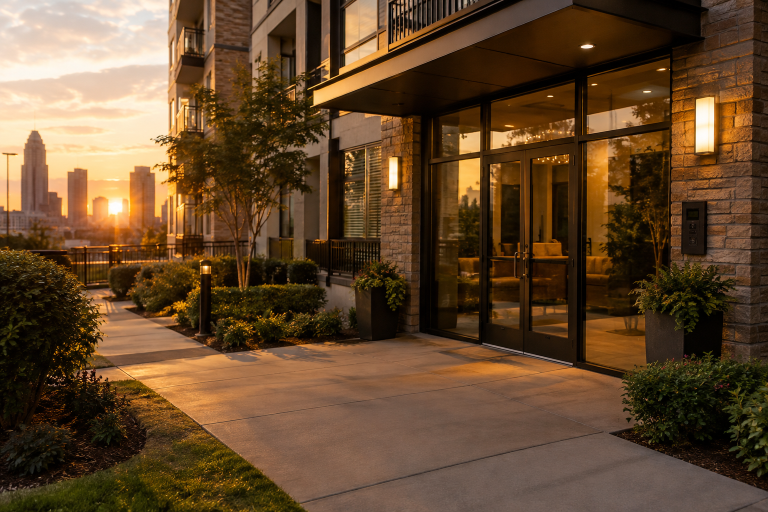
In practical terms, a well-managed property should make entrances easy to find, limit unnecessary hidden areas, distinguish public from private spaces, and receive routine care. A clean lobby, readable signs, trimmed landscaping, and working doors communicate that the area is actively monitored. Design should improve safety without turning a residential or customer-facing property into an unwelcoming environment.
Lighting, Visibility, and Access Points
Lighting deserves regular attention around entrances, stairs, elevators, walkways, dumpster areas, loading zones, and parking spaces. Burned-out bulbs, glare, lights blocked by trees, and uneven coverage can leave important routes difficult to see after dark. Nighttime inspections are especially useful because a daytime walk-through may not reveal shadows, failed fixtures, or poorly illuminated signs.
Exterior doors, pedestrian gates, garage entries, windows, intercoms, and fences also need to be inspected. Doors should close and latch as intended, locks should function, and access credentials should be updated when residents, employees, or contractors no longer need them. Propped doors, widely shared entry codes, damaged fencing, and broken call systems can undermine otherwise sound security procedures.
Reporting Conditions Clearly
A useful report identifies the exact location, date and time, the observed condition, and whether the issue appears urgent. For hazards on public streets or sidewalks, Atlanta residents and visitors can use Atlanta’s non-emergency service request system to locate appropriate city reporting options. Conditions on private property should generally be reported in writing to the owner, landlord, manager, or maintenance department when possible.
Parking Lots and Garages
Parking areas should receive the same attention as a building entrance. Useful features may include working lights, clear pedestrian paths, visible stairwell doors, unobstructed sightlines, readable directional signs, and regularly inspected emergency equipment. Landscaping near parked vehicles, sidewalks, and ground-floor doors should be maintained to avoid creating unnecessary blind spots.
Property managers should also review repeated reports rather than treating each one as unrelated. Several complaints about the same garage gate, stairwell light, or isolated corner may indicate a continuing maintenance issue. A prompt repair is important, but confirming that the repair actually solved the problem is equally important.
Cameras and Emergency Communication
Cameras can support monitoring and later investigation, but they do not replace good lighting, functional locks, trained staff, or routine inspections. If cameras are used, they should be positioned thoughtfully, tested periodically, and supported by clear policies for recording retention and privacy. Visible emergency phones, call boxes, panic buttons, and posted instructions can also help people obtain assistance when they need it.
Maintenance and Property Management
Active property management involves more than responding after an incident. Managers and owners should create a reasonable inspection schedule, document complaints, assign repairs, and follow up on completion. Conditions that often warrant timely attention include damaged railings, broken locks, blocked exits, loose pavement, malfunctioning elevators, graffiti, overgrown vegetation, and trash that obstructs access routes.
A repair log can help identify patterns. It should note the reported condition, precise location, date reported, the assigned person or vendor, the corrective action, and the completion date. Updates to residents or tenants may also build trust by showing that reported concerns were addressed rather than ignored.
A Simple Safety Audit
A basic walk-through can help residents, managers, and business operators spot conditions that need attention. Perform it once during daylight and once after dark.
- Start at the main entrance. Check lights, signs, door hardware, intercoms, and visibility around the entry.
- Follow common routes. Look for uneven surfaces, loose railings, blocked views, dark corners, and obstructed exits.
- Review access points. Confirm that doors and gates close, latch, and limit entry as intended.
- Inspect parking areas. Check stairwells, pedestrian paths, lights, emergency devices, and sightlines around vehicles.
- Check service spaces. Examine trash rooms, delivery areas, storage locations, and side entrances.
- Document concerns. Record the location, time, condition, and any prior reports before requesting follow-up.
Common Questions
Can better lighting prevent every crime?
No. Lighting can improve visibility and reduce the number of hidden areas, but it works best when paired with secure access controls, maintenance, communication, and appropriate oversight.
Are cameras enough to keep a property safe?
No. Cameras may be helpful, but they cannot repair a broken gate, replace a missing handrail, clear an exit, or ensure that staff respond to known problems.
What should someone do during an immediate threat?
Move to a safer location if possible, contact emergency services, and follow directions from trained responders. Avoid confronting a person who appears dangerous or investigating alone.
How often should a property be inspected?
The appropriate schedule depends on the property and its use, but inspections should be regular and should increase after storms, power outages, vandalism, construction, or reported hazards.
Conclusion
Negligent property maintenance can arise when avoidable safety issues are allowed to persist without reasonable attention. In Atlanta, consistent inspections, prompt repairs, good lighting, secure access points, clear reporting systems, and documented follow-up can make shared properties safer for residents, customers, employees, and visitors.