
The Critical Role of Professional Appliance Repair in Preserving Luxury Systems

We understand that high-end refrigeration systems represent a significant investment in your home. These luxury appliances provide advanced features and superior performance, often becoming the centerpiece of a modern kitchen. To protect this investment and ensure lasting efficiency, specialized maintenance is crucial.
Unlike standard units, premium refrigerators demand precise attention and understanding of their complex mechanics. When advanced issues arise, seeking expert help for Sub-Zero appliance repair Los Angeles is often necessary to maintain their sophisticated design and functionality.
This comprehensive guide will explore the unique aspects of maintaining luxury cooling systems. We will delve into diagnostic standards, essential preventative care, and advanced troubleshooting techniques. We aim to equip you with the knowledge to extend your appliance’s life and uphold its peak performance for years to come.
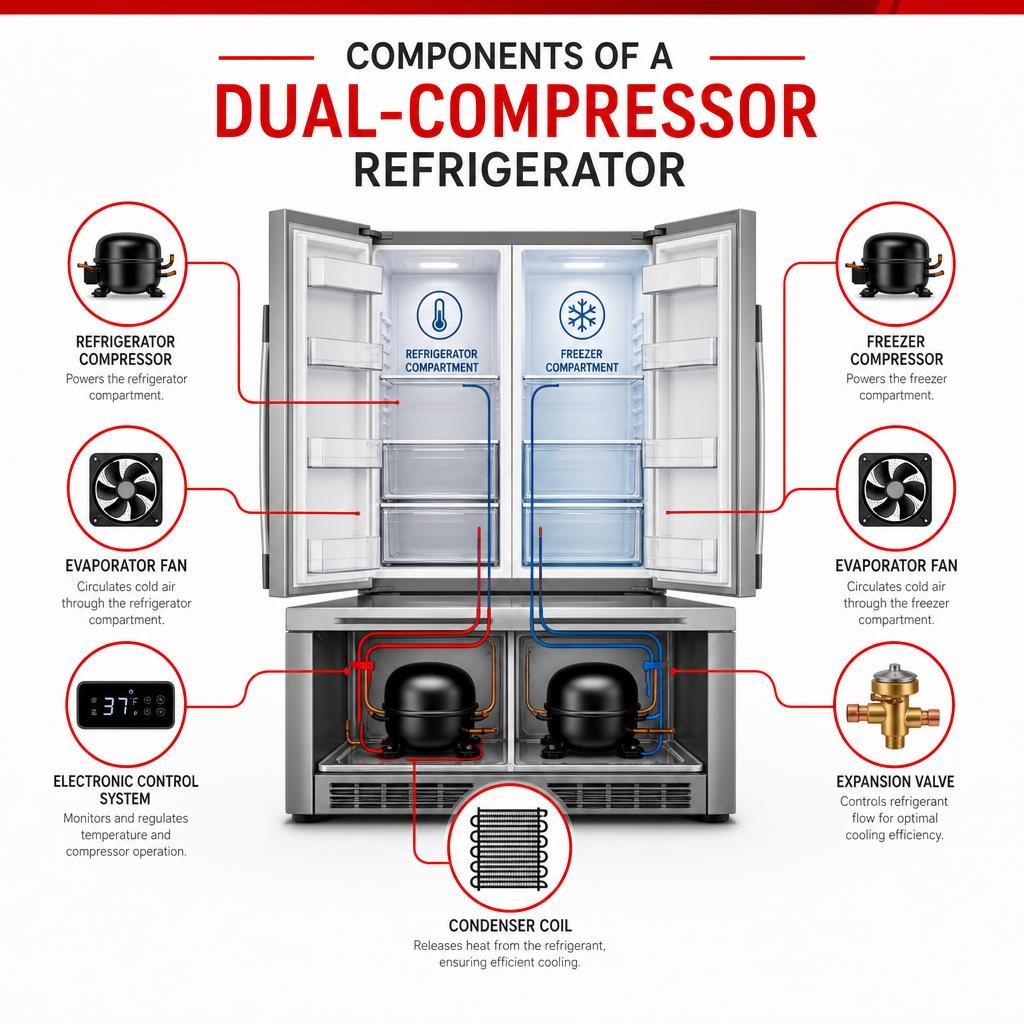
Luxury appliances are designed with meticulous engineering, often incorporating advanced technology, integrated smart features, and specialized components that set them apart from conventional models. This inherent complexity means that when issues arise, they cannot be addressed with a one-size-fits-all approach. Preserving the integrity and performance of these sophisticated systems necessitates a level of technical expertise and specialized care that only professional appliance repair services can provide.
Attempting DIY repairs on a high-end refrigerator not only risks further damage to expensive components but can also void warranties and compromise the appliance’s intricate calibration. Professional technicians possess in-depth knowledge of brand-specific designs, access to proprietary diagnostic tools, and the experience to identify and resolve complex issues accurately. This expertise ensures that repairs are not merely superficial fixes but comprehensive solutions that restore the system to its optimal operational state.
Furthermore, the seamless integration of luxury appliances into your home’s aesthetic and functional design can create significant disruption. Professional repair services understand the importance of system calibration, ensuring that after any intervention, your refrigerator continues to operate with the precision and efficiency you expect. This commitment to specialized care is paramount, much like the detailed attention required for other critical home systems, such as expert washing machine repair in Los Angeles, where complex issues also demand professional attention to maintain peak performance and longevity.
Diagnostic Standards in High-End Appliance Repair
The diagnostic process for high-end refrigeration systems is a cornerstone of effective repair. It moves far beyond simple visual inspections, delving into a systematic evaluation of the appliance’s intricate mechanisms and electronic controls. Professional technicians adhere to stringent diagnostic standards to ensure accuracy and prevent unnecessary part replacements.
This process typically begins with interpreting specific diagnostic codes displayed on the appliance’s control panel. These codes are not just random numbers; they are precise indicators programmed by the manufacturer to pinpoint specific system faults, such as sensor malfunctions, fan motor failures, or defrost circuit issues. Understanding these codes requires specialized training and access to manufacturer-specific service manuals.
Beyond error codes, technicians use advanced tools such as multimeters to perform detailed electrical testing. This involves checking voltage, current, and resistance across various components, including compressors, fans, heating elements, and control boards. Accurate multi-meter readings help confirm the integrity of electrical circuits and identify faulty components that may not be visually apparent.
Sensor calibration is another critical aspect. High-end refrigerators rely on an array of thermistors and other sensors to maintain precise temperature and humidity levels within different compartments. If these sensors are out of calibration, the refrigerator might run inefficiently, leading to temperature fluctuations that compromise food preservation. Technicians use specialized equipment to verify and, if necessary, recalibrate these sensors to factory specifications.
Crucially, when replacement parts are needed, professional services exclusively utilize OEM (Original Equipment Manufacturer) parts. These parts are identical to the components originally installed in your appliance, ensuring perfect compatibility, optimal performance, and the maintenance of the manufacturer’s warranty. The use of aftermarket or generic parts can lead to decreased efficiency, premature failure, and potentially compromise the entire system.

The Impact of Hard Water and Environmental Factors in Los Angeles
The unique environmental conditions in Los Angeles, particularly the prevalence of hard water, significantly influence the longevity and performance of high-end refrigeration systems. Understanding these factors is crucial for effective maintenance and repair.
Hard water, characterized by high concentrations of dissolved minerals like calcium and magnesium, is a common issue across much of Southern California. While often invisible to the naked eye, these minerals can wreak havoc on appliance components that come into contact with water. In refrigerators, this primarily affects the ice maker, water dispenser, and the solenoid valves that control water flow. Over time, mineral deposits can accumulate, leading to clogs, reduced water pressure, and even complete failure of these components. Scale buildup can also impair the efficiency of water-cooling systems, forcing the appliance to work harder and consume more energy.
Beyond water quality, Los Angeles’s climate, with its warm temperatures and occasional humidity fluctuations, can also impact refrigeration performance. Higher ambient temperatures require the condenser coils and compressor to work more intensively to dissipate heat, potentially leading to increased wear and tear if not properly maintained. Fluctuations in humidity can also affect door gasket integrity, leading to condensation issues if seals are compromised.
To mitigate the effects of hard water, robust water filtration systems are highly recommended. Many high-end refrigerators come with integrated filters, but external whole-house or dedicated appliance filters can provide an additional layer of protection, significantly reducing mineral buildup and extending the life of water-related components. Regular replacement of these filters is paramount.
It’s worth noting that hard water is not an exclusive challenge for refrigeration. Other major home appliances, such as washing machines, are equally susceptible to its detrimental effects. Mineral deposits can accumulate in hoses, pumps, and even the wash tub, reducing cleaning efficiency, causing unpleasant odors, and leading to premature component failure. This is why professional washing machine repair services in Los Angeles frequently address issues stemming from hard water, underscoring the importance of preventive measures and expert intervention across all your home’s essential appliances.
Essential Preventive Maintenance Protocols for Premium Refrigerators
Protecting your investment in a premium refrigerator goes hand in hand with adhering to essential preventive maintenance protocols. These routine checks and cleaning tasks are not merely about aesthetics; they are critical for ensuring optimal performance, extending the appliance’s lifespan, and preventing costly breakdowns down the line. Preventive care acts as the first line of defense against wear and tear, actively contributing to efficiency optimization and consistent functionality.
While homeowners can handle some basic tasks, professional service intervals are indispensable for a thorough inspection and specialized adjustments. Here’s a comparison of DIY maintenance tasks versus professional service intervals:
| Task / Service | DIY Frequency | Professional Service Interval | Purpose & Benefit | | (1) Condenser Coils | Every 1-3 Months | Every 6-12 Months (Professional Clean) | Ensures optimal heat dissipation, preventing compressor strain and reducing energy consumption. | | (2) Door Seal/Gasket | Every 1-2 Months | Annually (Professional Inspection) | Maintains an airtight seal, preventing temperature fluctuations, energy loss, and moisture buildup. | | (3) Water Filter | Every 3-6 Months | Annually (Professional Check) | Ensures clean water for ice and dispenser, protects water lines from mineral buildup. | | (4) Internal Components| N/A (Professional Only) | Annually (Professional Check) | Ensures internal parts (e.g., fans, drains, defrost system) are functioning correctly. | | (5) Interior Cleaning | Weekly-Monthly | Annually (Professional Check) | Prevents odors, mold growth, and ensures optimal food preservation. | | (6) Water Filter (Ice) | Every 3-6 Months | Annually (Professional Check) | Ensures pure ice production and protects ice maker components. | | (7) Internal Components| N/A (Professional Only) | Annually (Professional Check) | Ensures internal parts (e.g., fans, drains, defrost system) are functioning correctly. | | (8) Drain Pan/Tube | Monthly | Annually (Professional Check) | Prevents overflow, leaks, and potential water damage to flooring. | | (9) Electrical System | N/A (Professional Only) | Annually (Professional Check) | Ensures proper power delivery and control, preventing electrical faults and component damage. | | (10) Leveling Feet | Monthly | Annually (Professional Check) | Ensures stability, reduces vibration, and prevents strain on internal components. | | (11) Water Inlet Valve | N/A (Professional Only) | Annually (Professional Check) | Controls water flow into the refrigerator, preventing leaks and ensuring proper function. | | (12) Refrigerator Coils | N/A (Professional Only) | Annually (Professional Check) | Ensures optimal cooling performance and energy efficiency. | | (13) Refrigerator Door | Monthly | Annually (Professional Check) | Ensures proper sealing, alignment, and functionality of door components. | | (14) Freezer Door | Monthly | Annually (Professional Check) | Ensures proper sealing, alignment, and functionality of door components. | | (15) Internal Lighting | Monthly | Annually (Professional Check) | Ensures proper visibility and functionality of internal lighting system. | | (16) Condenser Fan | N/A (Professional Only) | Annually (Professional Check) | Ensures proper airflow over condenser coils, vital for efficient cooling. | | (17) Evaporator Coils | N/A (Professional Only) | Annually (Professional Check) | Facilitates heat absorption, crucial for cooling; checked for frost buildup. | | (17) Evaporator Coils | N/A (Professional Only) | Annually (Professional Check) | Facilitates heat absorption, crucial for cooling; checked for frost buildup. | | (18) Compressor | N/A (Professional Only) | Annually (Professional Check) | The heart of the cooling system; checked for noise, efficiency, and refrigerant levels. | | (19) Evaporator Fan | N/A (Professional Only) | Annually (Professional Check) | Circulates cold air inside the refrigerator, ensuring even cooling. | | (19) Evaporator Fan | N/A (Professional Only) | Annually (Professional Check) | Circulates cold air inside the refrigerator, ensuring even cooling. | | (20) Power Cord/Plug | Weekly | Annually (Professional Check) | Ensures safe electrical connection and prevents power issues. | | (20) Power Cord/Plug | Weekly | Annually (Professional Check) | Ensures safe electrical connection and prevents power issues.