Most homeowners give their garage door little thought until something goes wrong. A stuck door, a grinding noise, or a door that reverses unexpectedly are all signs that routine care has been skipped for too long. Regular Garage Door Maintenance keeps your door running reliably, protects your home’s security, and helps you avoid repairs that cost far more than the time spent preventing them.
Garage doors are one of the most frequently used entry points in a home. A door that malfunctions can leave your vehicle exposed, create a security gap, or fail at the worst possible time. Staying ahead of common issues takes minimal effort and pays off consistently over the life of the door.
Why Regular Maintenance Matters
A garage door is a mechanical system with multiple moving parts, and like any system, it degrades without consistent attention. Springs wear down, cables fray, rollers crack, and tracks shift out of alignment. Each of these issues, left unaddressed, places extra strain on the rest of the system.
Beyond mechanical wear, a poorly sealed or misaligned door affects your home’s energy efficiency. Gaps along the door’s edges let in outside air, which raises heating and cooling costs in rooms adjacent to the garage. A well-maintained door creates a better seal and reduces that energy loss.
Signs Your Garage Door Needs Attention
You don’t need to be a technician to spot early warning signs. A quick visual check every month can catch problems before they escalate.
Watch for these:
- Grinding, scraping, or rattling sounds during operation
- Slow response after pressing the opener
- A door that doesn’t close fully or reverses before reaching the floor
- Visible rust on springs, hinges, or cables
- Frayed or visibly worn cables
- Uneven movement where one side lags behind the other
Misalignment is a common culprit behind many of these symptoms. When a door runs unevenly on its tracks, the opener motor compensates by working harder than it should, which shortens its lifespan.
DIY Maintenance Tasks Worth Doing Regularly
Lubrication
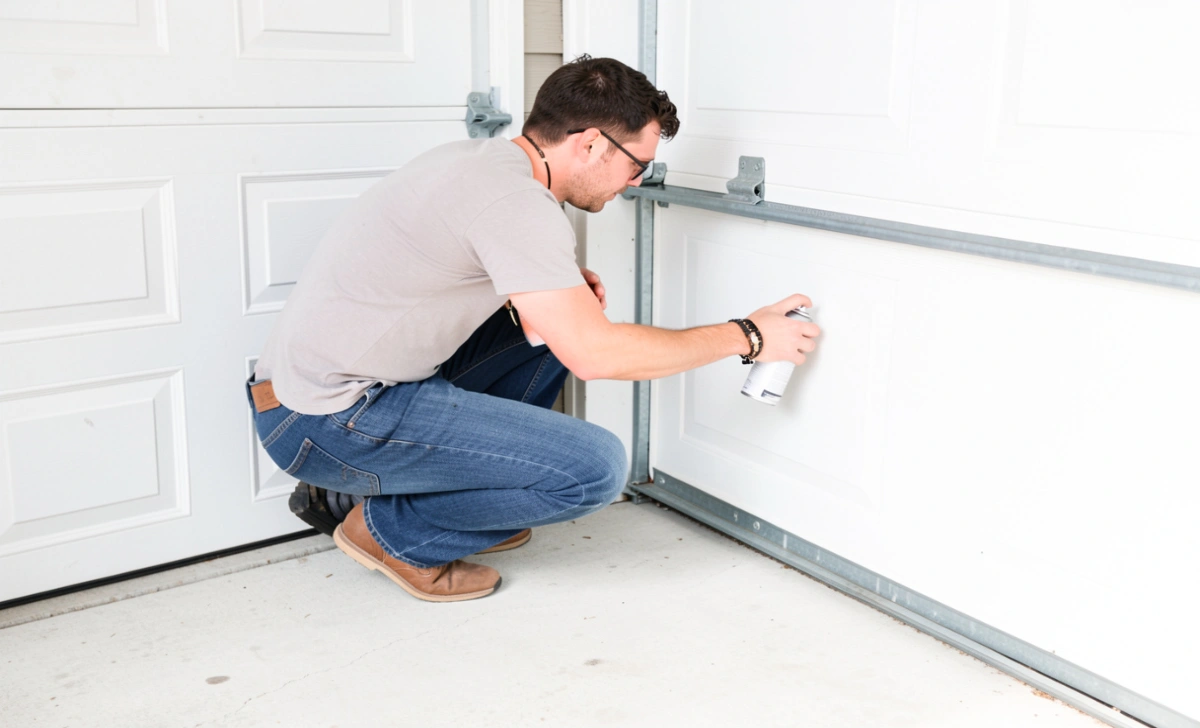
Apply a silicone-based or lithium-based lubricant to the rollers, hinges, and torsion springs every six months. Avoid using WD-40 on these parts — it’s a solvent, not a lubricant, and can dry out the components over time. Wipe down the tracks with a damp cloth rather than lubricating them, since grease on the track surface attracts debris and causes buildup.
Cleaning
Dirt accumulation on tracks can cause the rollers to skip or jam. Clear the tracks of any visible debris and wipe them clean with a dry cloth. For the door panels themselves, a mild soap-and-water solution removes grime without damaging the finish.
Balance Check
Disconnect the automatic opener by pulling the red release cord, then manually lift the door to about waist height and let go. A properly balanced door stays in place. If it drops or shoots upward, the spring tension needs adjustment. A door that’s out of balance forces the opener to compensate, accelerating wear on both the motor and the hardware.
Run this test every three to six months. It takes under two minutes and tells you a lot about the door’s condition.
Visual Inspection of Cables and Springs
Look at the cables running along each side of the door. If you see fraying, kinking, or any visible damage, stop using the door until a professional replaces it. The same applies to the springs — if a torsion spring above the door shows a gap or a visible break, don’t attempt to repair it yourself.
When to Call a Professional
Spring replacement is the clearest example of a job that requires professional handling. Torsion and extension springs operate under extreme tension. Releasing that tension without the proper tools and training can cause serious injury. If a spring breaks, the door becomes unsafe to operate manually and should be left alone until a technician arrives.
Other situations that warrant a professional:
- Cables that are frayed, snapped, or off the drum
- Extensive rust on structural components
- A bent or damaged track that won’t respond to manual straightening
- Opener issues that persist after checking the batteries and alignment of the safety sensors
Regular professional inspections — typically once a year — catch problems that a homeowner’s visual check won’t reveal. A qualified technician will test the spring tension, check the opener’s force settings, inspect the bottom weather seal, and assess the overall condition of the hardware. Finding a technician with verified reviews, proper licensing, and experience with your door’s brand and type matters more than going with the cheapest available option.
Building a Maintenance Schedule
Consistency matters more than intensity. A garage door that gets minor attention every few months outlasts one that gets a thorough overhaul every few years with nothing in between.
A practical schedule looks like this:
- Monthly: Visual check for rust, damage, and unusual sounds
- Every 3–6 months: Lubricate moving parts, clean tracks, test door balance
- Annually: Professional inspection and hardware assessment
Use a calendar app or a simple note in your phone to set recurring reminders. Logging what was done and when gives you a reference point when something changes, and it provides useful context for any technician you bring in.
Choosing Materials That Last
If you’re replacing a door or selecting hardware, material choice directly affects how much maintenance you’ll need. Steel doors with factory-applied finishes resist rust longer than bare steel. Composite and fiberglass panels hold up better in humid climates where wood warps and swells.
Weatherstripping along the bottom and sides of the door is often overlooked but plays a meaningful role in both energy efficiency and moisture control. Replace it when it shows visible cracking or compression failure — typically every few years, depending on climate and use.
Smart Features Worth Considering
Modern garage door openers increasingly include diagnostic features that send alerts when the door is left open, when unusual force is detected, or when a sensor triggers. These aren’t requirements, but they add a layer of monitoring that reduces the chance of a problem going unnoticed for days.
Remote access through a smartphone app also lets you check and close the door from anywhere, which is useful if you travel frequently or tend to leave without confirming the door is fully closed.
The Payoff of Staying Consistent
A garage door that receives regular care rarely fails dramatically. Problems surface early, when they’re cheaper and simpler to fix. Cables get replaced before they snap. Springs get adjusted before the door goes off-track. The opener runs at the load it was designed for, rather than compensating for a door that’s fighting against it.
Treating your garage door as part of your regular home maintenance routine — rather than something to deal with only when it breaks — protects both your investment and your home’s security. The time commitment is low. The return, measured in years of reliable operation and avoided repair bills, is worth it.