
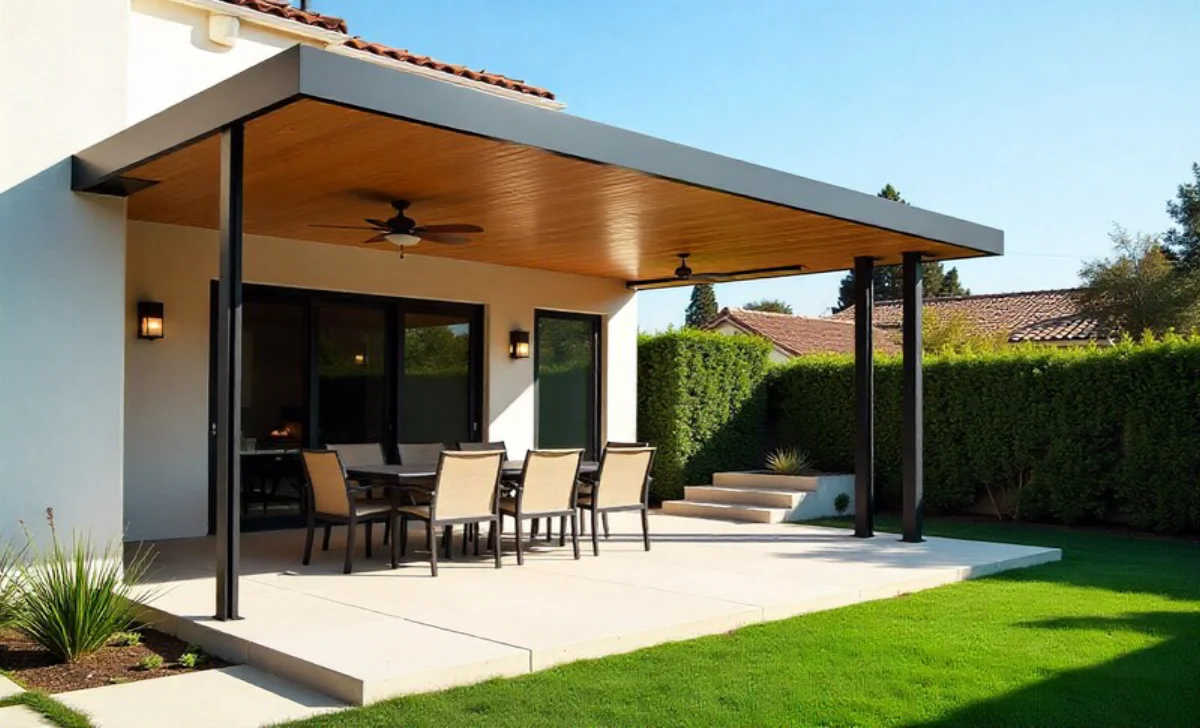
Patio covers transform your backyard into a functional outdoor living space. They provide shade for dining, cooking, and relaxing while protecting you from Los Angeles’ intense sun and occasional rain.
You can choose between partial shade designs that allow filtered light or solid covers that block sun and rain completely. Covers can attach directly to your home or stand alone anywhere in your yard.
Your material options include wood, aluminum, and vinyl. Each offers different benefits for durability, maintenance, and appearance. This guide breaks down your choices so you can select the right patio cover for your needs and budget.
Types of Patio Covers
Your first decision is whether you want an attached or freestanding structure.
Attached covers connect to your home’s exterior wall. They extend your roofline and create a porch-like feel. You can match your existing roof materials for a cohesive look.
Freestanding covers (pergolas) stand independently in your yard. You can position them near pools, outdoor kitchens, or in landscaped areas away from the house.
For shade coverage, you’ll choose between:
- Open designs with beams or latticework that provide partial shade while allowing sunlight through
- Solid covers with full panels or shingles that block sun and rain completely
Pergolas
A pergola is a freestanding patio structure with an open beam design. It doesn’t attach to your house.
Pergolas work well for outdoor kitchens, BBQ areas, and poolside spaces. You can place them wherever they fit best in your landscape.
Most pergolas use wood construction. This gives you flexibility to customize the design, stain color, and architectural style.
Wood Patio Covers
Wood covers offer the most design flexibility. You can match your home’s architecture and choose from rustic, traditional, or modern styles.
Wood requires more maintenance than aluminum or vinyl. You’ll need to reseal or restain every few years, depending on the wood type and finish.
Wood Options
Redwood resists rot and insects naturally. It weathers to a grey color over time or can be stained. It’s a premium option that lasts decades with proper maintenance.
Cedar is lighter than redwood and also resists decay. It weathers to grey faster than redwood. You can paint or stain cedar to maintain its original color.
IPE is a tropical hardwood. It’s extremely dense and durable. IPE works well for coastal properties because it resists salt air damage. It can be stained or left to age to a silvery grey.
Pressure-treated pine is the most affordable wood option. Chemical treatment makes it resistant to rot and insects. It accepts stain well but requires regular maintenance.
Douglas fir costs less than premium woods but requires more frequent maintenance. It doesn’t last as long as redwood, cedar, or IPE.
Quality matters with wood. Higher-grade lumber resists warping, splitting, and insect damage better than lower grades.
Aluminum Patio Covers
Aluminum covers cost less than wood and require minimal maintenance. They won’t rot, warp, split, or attract termites.
Many manufacturers offer lifetime warranties on aluminum structures. This makes them cost-effective over time despite higher upfront costs than some wood options.
Aluminum is the safest choice above fire pits and BBQ areas because it won’t burn.
You can choose smooth aluminum for a modern look. Some products feature embossed wood grain texture (like Alumawood) that resembles painted wood. These work well for contemporary homes but may not suit traditional architecture.
Aluminum covers can include decorative columns, recessed lighting, and gutters for solid roof designs.
Vinyl Patio Covers
Vinyl covers require almost no maintenance. They resist rot, insects, and weather damage without painting or staining.
Quality vinyl includes aluminum or steel reinforcement for structural strength. This prevents sagging and warping over time.
Vinyl costs more upfront than wood but saves money long-term through lower maintenance. Good vinyl covers last 15-20 years.
The main limitation is color choice. Vinyl comes in fewer colors than wood or painted aluminum.
Quality varies significantly between manufacturers. Some vinyl products begin deteriorating after a few years. Choose established brands with strong warranties.
Choosing the Right Material
Consider these factors:
Maintenance: Aluminum and vinyl need minimal upkeep. Wood requires regular sealing or staining.
Budget: Pressure-treated pine costs the least upfront. Aluminum and premium woods cost more initially but may save money over time.
Appearance: Wood offers the most design flexibility. Aluminum suits modern homes. Vinyl has limited color options.
Durability: All three materials last for decades when properly installed. Wood’s lifespan depends on maintenance. Aluminum and vinyl last longer with less care.
Climate: The Los Angeles sun is intense. All these materials handle heat, but aluminum stays coolest and won’t fade like some painted or stained finishes.
Professional installation ensures proper structural support, weather protection, and building code compliance. Patio cover kits exist, but installation is more complex than it appears.