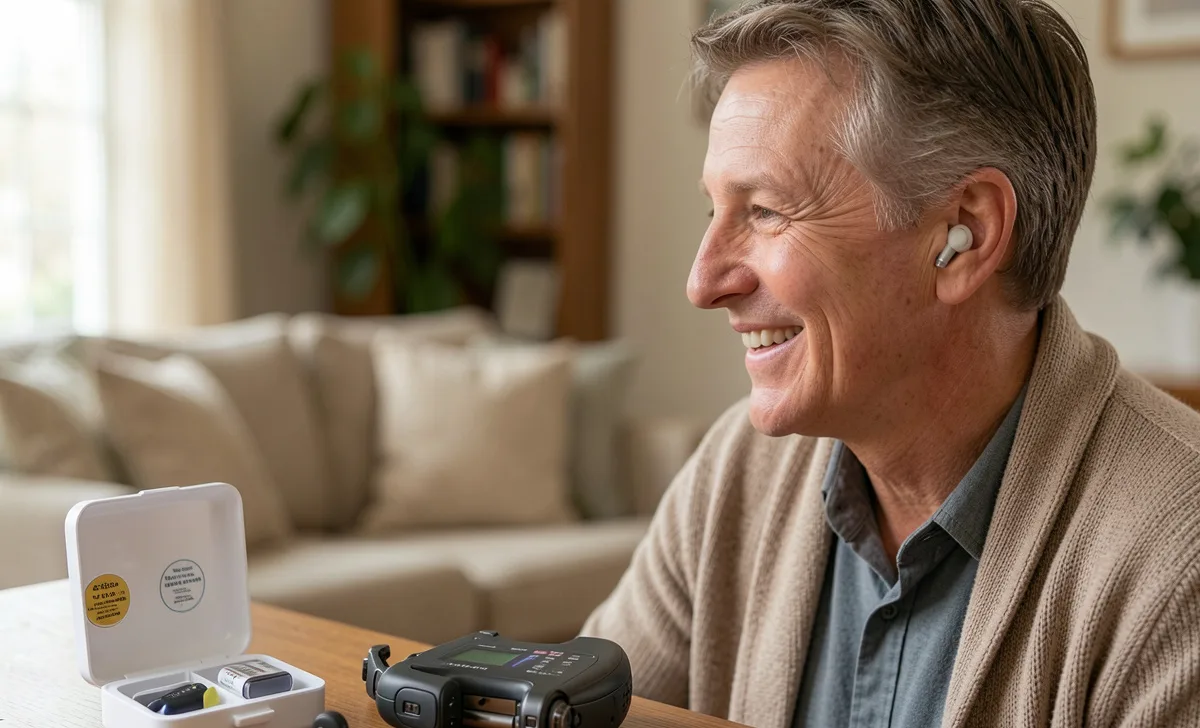
If you’re reading this, you or someone close to you is probably struggling with hearing loss. You’ve likely noticed conversations becoming harder to follow, or maybe you find yourself constantly turning up the TV volume. You’re not alone. Millions of adults face this same challenge, and hearing aid buying is often the first step toward a better quality of life.
But here’s the truth: many people don’t realize that hearing aid buying isn’t as simple as picking the smallest or cheapest option. There are real trade-offs between discretion, comfort, power, and lifestyle fit.
In this guide, we’ll walk through five critical things to consider before making a purchase. You’ll learn about different hearing aid styles like ITC, CIC, and BTE, understand common frustrations like wind noise and cleaning hassles, and get practical advice to help you consult confidently with an audiologist.
Quick Summary Table: Which Hearing Aid Is Right for You?
| Hearing Aid Type | Discretion | Best For | Main Downsides |
|---|---|---|---|
| ITC (In-the-Canal) | High | Mild to moderate loss | Not for severe loss |
| CIC (Completely-in-Canal) | Very high (nearly invisible) | Mild to moderate loss, high discretion needed | Small battery, less power |
| BTE (Behind-the-Ear) | Moderate (visible) | Mild to severe loss, earwax issues | Wind noise is more visible |
1. Discretion vs. Performance: How Invisible Do You Really Need Your Hearing Aid to Be?
One of the first questions people ask is, “Will others notice my hearing aid?” For many, the fear of looking like they wear a medical device is real. Social discomfort is a common concern, especially for first-time users or younger adults with hearing loss.
ITC Hearing Aids: A Balanced Choice for Mild to Moderate Hearing Loss
ITC (In-the-Canal) hearing aids sit partially inside the ear canal. They are discreet but not completely invisible. Their casing includes small buttons, switches, and sliders that let you adjust volume and switch programs easily. This design makes ITC hearing aids easier to clean than traditional models.
Many users appreciate that ITC devices don’t scream “hearing aid.” They fit the natural shape of your ear, so most people won’t notice them unless they look closely. They are ideal for older adults and beginners who want to stay hidden without sacrificing basic controls.
However, ITC hearing aids are best suited for mild to moderate hearing loss. If your hearing loss is more advanced, they may not provide enough power.
CIC Hearing Aids: Nearly Invisible but Less Powerful
CIC (Completely-in-Canal) hearing aids are even smaller. They sit deep inside the ear canal, making them almost invisible to others. Only a tiny removable handle is visible outside the ear. This style is extremely appealing if you want the most discreet option available.
But there’s a trade-off. Because CIC hearing aids are smaller, they use the smallest battery size and offer less amplification. They are not suitable for people with severe hearing loss. Also, their deep placement can make them tricky to remove and clean. They work best for mild to moderate loss where discretion is your top priority.
BTE Hearing Aids: More Visible but More Powerful
BTE (Behind-the-Ear) hearing aids sit outside your ear. They are more visible than ITC or CIC models. In fact, they are more likely to be spotted by others. But don’t let that turn you away. BTE devices are often the best choice for people with moderate to severe hearing loss.
Newer BTE designs are much smaller and less bulky than older versions. Even shy or self-conscious people can wear them comfortably. They are also easier to handle if you have dexterity issues like arthritis. Plus, they work well for people who produce a significant amount of earwax, since the electronic components sit outside the ear canal.
Key takeaway: If you have mild to moderate loss and want discretion, consider ITC or CIC. If you have moderate to severe loss or struggle with earwax, BTE is likely a better fit despite being more visible.
2. The Annoying Reality of Wind Noise (Especially for Outdoor Lovers)
Here’s something many first-time buyers don’t think about: wind noise. If you enjoy walking, gardening, cycling, or any outdoor activity, wind can become a real nuisance.
BTE hearing aids are more prone to wind noise because their microphones sit outside the ear. On a windy day, you might hear a constant roaring or whooshing sound that makes conversations difficult. Some users even report headaches after long exposure to wind noise.
The good news is that many modern hearing aids include features to minimize this. Some automatically adjust sound settings when wind is detected. Others use special microphone designs that block wind noise.
What you can do: Before buying, ask your audiologist about wind noise reduction features. If you spend a lot of time outdoors, try testing a BTE device on a windy day. You might also consider ITC or CIC models, which sit deeper in the ear and naturally block more wind.
3. Cleaning and Maintenance: A Hassle You Can’t Ignore
Let’s be honest. Cleaning a hearing aid is not fun. But it’s necessary. Earwax, moisture, and debris can damage your device or reduce sound quality.
Most hearing aids come with cleaning kits and maintenance instructions. You’ll need to wipe the device daily, check the microphone ports, and replace wax guards regularly.
- ITC and CIC hearing aids sit inside the ear canal, so they collect more earwax. However, they are generally easier to clean because you can see and reach the parts that get dirty.
- BTE hearing aids keep electronics outside the ear, so they stay cleaner inside the ear. But you still need to clean the earpiece and tube.
A common user complaint is forgetting to clean the device, which leads to reduced performance or costly repairs. Set a daily routine—maybe right after brushing your teeth—to inspect and clean your hearing aid.
Pro tip: Ask your audiologist for a demonstration of proper cleaning before you leave the clinic. Watch them do it, then try it yourself.
4. Smaller Hearing Aids Aren’t Always Better (Especially for Severe Loss)
There’s a popular myth that smaller equals better. That’s not true with hearing aids.
Smaller hearing aids like CIC models are great for mild to moderate loss. But if you have higher levels of hearing loss, a small device simply cannot provide enough amplification. You’ll end up frustrated, turning up the volume to maximum, and still struggling to hear.
Think of it like eyeglasses. A tiny lens can’t correct severe vision problems. Similarly, a tiny hearing aid can’t fix severe hearing loss. You need a larger, more sophisticated device with a bigger battery and a stronger processor.
Also, consider the microphone quality. Hearing aid microphones are designed to pick up speech from up to seven meters away. But sound weakens over distance. After eight meters, even normal speech becomes too soft. If you have a severe loss, a larger BTE device with directional microphones will perform much better than a tiny CIC.
Common user question: “Can I just get the smallest one so no one sees it?”
You can, but only if your hearing loss is mild. Otherwise, you’re wasting money on a device that won’t help you.
5. Social Discomfort and the Emotional Side of Wearing Hearing Aids
Let’s talk about something most articles skip: the emotional impact.
Many people delay buying hearing aids because they feel embarrassed. They worry about looking old or disabled. They fear others will treat them differently. (Keyword insertion #3)
This is completely normal. But here’s what experienced users will tell you: the relief of hearing clearly outweighs the discomfort of being seen with a device.
Start by choosing a discreet style like ITC or CIC if that helps your confidence. Or consider modern BTE devices that come in skin tones or fun colors. Some brands like Phonak offer stylish, almost jewelry-like designs.
Also, remember that hearing loss itself is often more noticeable than a hearing aid. Repeatedly asking people to repeat themselves, mishearing instructions, or withdrawing from conversations—those behaviors draw more attention than a small device behind your ear.
Real-world advice: Tell a close friend or family member about your new hearing aid. Their support makes a huge difference. And you’ll quickly realize that most people don’t notice or don’t care.
Final Words: Consult an Audiologist (Seriously)
The best thing you can do is schedule an appointment with an audiologist. They will test your hearing, discuss your lifestyle, and recommend a specific type—whether ITC, CIC, BTE, or another style like ITE (In-the-Ear).
An audiologist will also help with:
- Proper fitting and custom molds
- Adjusting volume and program settings
- Teaching you cleaning and maintenance
- Troubleshooting wind noise or feedback issues
Do not buy a cheap, one-size-fits-all hearing aid online without a professional evaluation. You’ll likely end up with a device that doesn’t fit, doesn’t work well, and ends up in a drawer.
Remember, successful hearing aid buying isn’t about finding the smallest or cheapest device. It’s about finding the right match for your specific hearing loss, lifestyle, and comfort needs.
Disclaimer: This article is for informational purposes only and does not constitute medical advice. Individual hearing needs vary. Always consult a licensed audiologist or hearing healthcare professional for a proper evaluation, diagnosis, and recommendation before purchasing any hearing aid.