

The Evolution of Commercial Real Estate Investment

By May 2026, the commercial real estate landscape will have fundamentally reshaped how businesses operate and grow. Traditional long-term leases, once the standard, are giving way to more agile and adaptable solutions. This shift is particularly evident and impactful within the dynamic fitness industry, where entrepreneurs, personal trainers, and studio owners require flexibility, affordability, and specialized infrastructure to thrive.
We are witnessing a significant evolution, moving from rigid, single-purpose facilities to versatile, multi-functional spaces. These flexible workspaces, often called MicroFlex Spaces, are designed to meet the diverse needs of modern businesses. They offer a compelling alternative for fitness professionals seeking to launch, expand, or optimize their operations without the heavy financial burdens and inflexibility of conventional commercial leases.
In this comprehensive guide, we will navigate the evolving world of commercial real estate through the lens of fitness studios. We will explore what MicroFlex Spaces are, how they specifically cater to the unique demands of fitness businesses, and the substantial benefits they offer. From cost savings and scalability to specialized layouts and essential amenities, we will provide an in-depth look at how these innovative spaces are empowering the fitness community. Understanding the nuances of these adaptable environments is key for any fitness professional looking to thrive in today’s market, and exploring options like MicroFlex fitness studio investment can be a strategic move towards sustainable growth. We will also delve into the financial advantages and future trends shaping this exciting sector.
The commercial real estate sector is undergoing a profound transformation, driven by changing work patterns, technological advancements, and a renewed focus on agility. This evolution is particularly relevant for businesses that don’t fit neatly into traditional office, retail, or industrial categories—a category that increasingly includes fitness studios. The rigid, long-term lease structures of the past are proving incompatible with the dynamic needs of modern enterprises, prompting a widespread adoption of flexible workspace solutions.
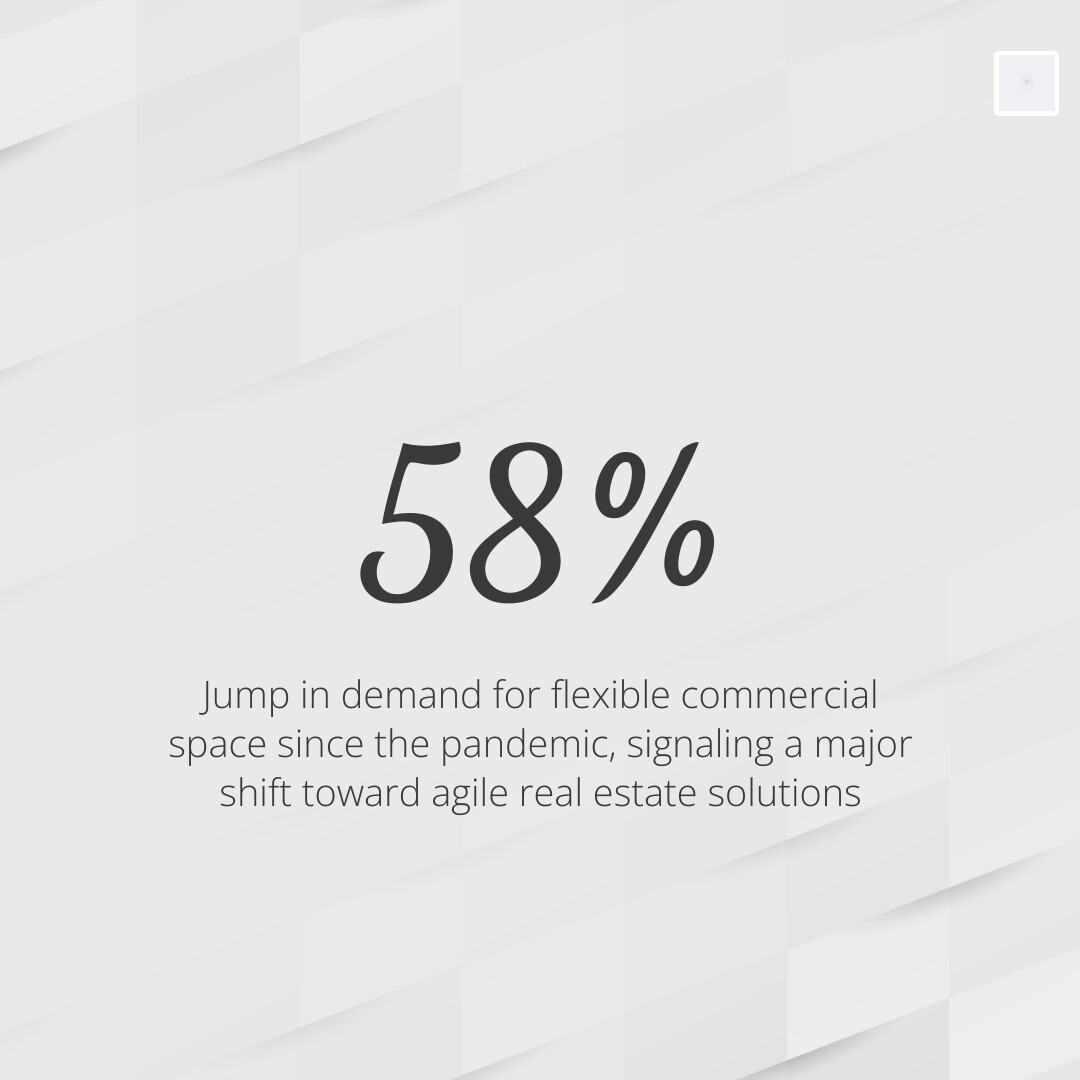
Today, an impressive 70% of companies, from solopreneurs to Fortune 500 firms, use flexible workspaces. This widespread embrace underscores a fundamental shift in how businesses approach their physical footprint. The demand for such adaptable commercial space has surged by 58% since the pandemic, a clear indicator of its growing importance. Experts project that flexible commercial space will comprise 30% of all office space by 2030, further solidifying its role as a mainstream solution.
This trend is giving rise to new asset classes and hybrid models that blur the lines between traditional property types. Warehouse-office hybrids, for instance, combine storage capabilities with professional office areas, offering a versatile solution for product-based businesses or service trades. For fitness studios, this means access to spaces that can accommodate equipment, training areas, and administrative functions all under one roof, without the need for extensive, costly build-outs. The agility offered by flexible leasing terms, often ranging from month-to-month to 1-3 years, stands in stark contrast to the decade-long commitments typically associated with traditional commercial leases, providing businesses with unprecedented control over their operational costs and plans. This adaptability is crucial for businesses looking to scale efficiently and respond quickly to market changes.
Diversifying Portfolios with Commercial Real Estate Investment
For investors and business owners alike, the rise of flexible commercial spaces offers an opportunity to enhance portfolio resilience. Niche markets, such as fitness-focused real estate, are proving to be particularly strong performers within this evolving landscape. By investing in or utilizing multi-functional spaces, businesses can attract and retain a wider range of tenants or clients, ensuring a steady stream of revenue. For a fitness studio owner, this means having a space that can host personal training sessions, group classes, and even serve as a content creation hub, all within a single, adaptable unit. This versatility enhances tenant retention and reduces vacancy rates, making it an attractive proposition for both landlords and operators. The ability to pivot and adapt the space’s use without significant capital expenditure is a key advantage in a rapidly changing economy.
Risk Mitigation in Commercial Real Estate Investment
One of the most compelling aspects of flexible workspaces for fitness studios is their inherent ability to mitigate risk. The short-term leases significantly reduce the financial exposure typically associated with commercial real estate. Instead of committing to a decade-long agreement that may outlast a business’s needs or market conditions, studios can opt for terms that align with their current growth phase. This agility helps maintain lower overhead costs and enables greater financial flexibility.
Furthermore, the concept of adaptable architecture is central to these spaces. Modern flexible workspaces are increasingly incorporating AI and IoT technologies to create environments that can adapt to individual preferences for lighting, temperature, and even desk height. While these features might seem office-centric, the underlying principle of smart systems optimizing space by analyzing usage patterns and managing real-time availability can be directly applied to fitness environments. Imagine a studio where lighting adjusts for a calming yoga session versus an energetic HIIT class, or where climate control is optimized based on occupancy. This technological integration not only enhances the user experience but also contributes to operational efficiency and sustainability. Such intelligent design helps businesses avoid the pitfalls of static, single-purpose spaces that quickly become outdated or inefficient.
Why Fitness Studios Thrive in Flexible Micro-Gym Environments
Flexible MicroFlex Spaces are uniquely positioned to serve the diverse and evolving needs of the fitness industry. They cater to a wide spectrum of fitness businesses, from independent personal trainers to specialized yoga studios, dynamic group fitness programs, and even emerging micro-gyms focused on niche markets. The core of their appeal lies in offering a professional, adaptable, and cost-effective alternative to traditional, often prohibitive, commercial leases.
The micro-gym model, in particular, has seen significant growth. These smaller, more intimate fitness environments resonate with both trainers seeking autonomy and clients desiring a more personalized experience. Personal trainers, for instance, can rent a dedicated space, such as a Private Training Studio (often around 750 sq ft), for as little as $45 per hour, allowing them to train clients without the overheads of a full-scale gym. Yoga studios and group fitness instructors benefit from dedicated spaces (e.g., a Yoga Studio at 650 sq ft for $35/hr or a Group Fitness Studio at 1250 sq ft for $55/hr) that can be rented on an hourly, half-day, or full-day basis, providing maximum scheduling flexibility.
Beyond traditional training, these spaces are also ideal for fitness content creators. The privacy and equipped environment offer an excellent setting for filming online classes, workout tutorials, or social media content, addressing the growing demand for digital fitness solutions. This flexibility empowers fitness professionals to run their businesses on their terms, retain full profit from their services, and build their brand in a dedicated, professional setting.
Here’s a comparison highlighting the advantages:
Feature Traditional Gym Lease Flexible Micro-Gym Space (e.g., MicroFlex) Lease Term Typically 5-10+ years, rigid Hourly, daily, monthly, 1-3 years; highly adaptable Upfront Costs High (security deposit, build-out, equipment purchase) Lower (deposit, minimal build-out, equipment often rented/shared) Overhead High (rent, utilities, maintenance, insurance, staff) Lower (bundled fees, often includes utilities/internet) Scalability Difficult to scale up or down quickly Easy to scale (add/reduce hours, move to larger/smaller unit) Equipment Purchase/lease all equipment Bring own, or use existing equipment in some shared models Maintenance Tenant responsibility Often handled by space provider Privacy Shared gym floor, limited private options Dedicated private training rooms, studios Business Autonomy Limited by gym rules/structure Full autonomy over business, branding, clients Location Flexibility Fixed location for lease duration Option to move between locations or expand to new markets Cost Savings Minimal Significant, up to 60% compared to traditional Specialized Layouts for Wellness Professional.s
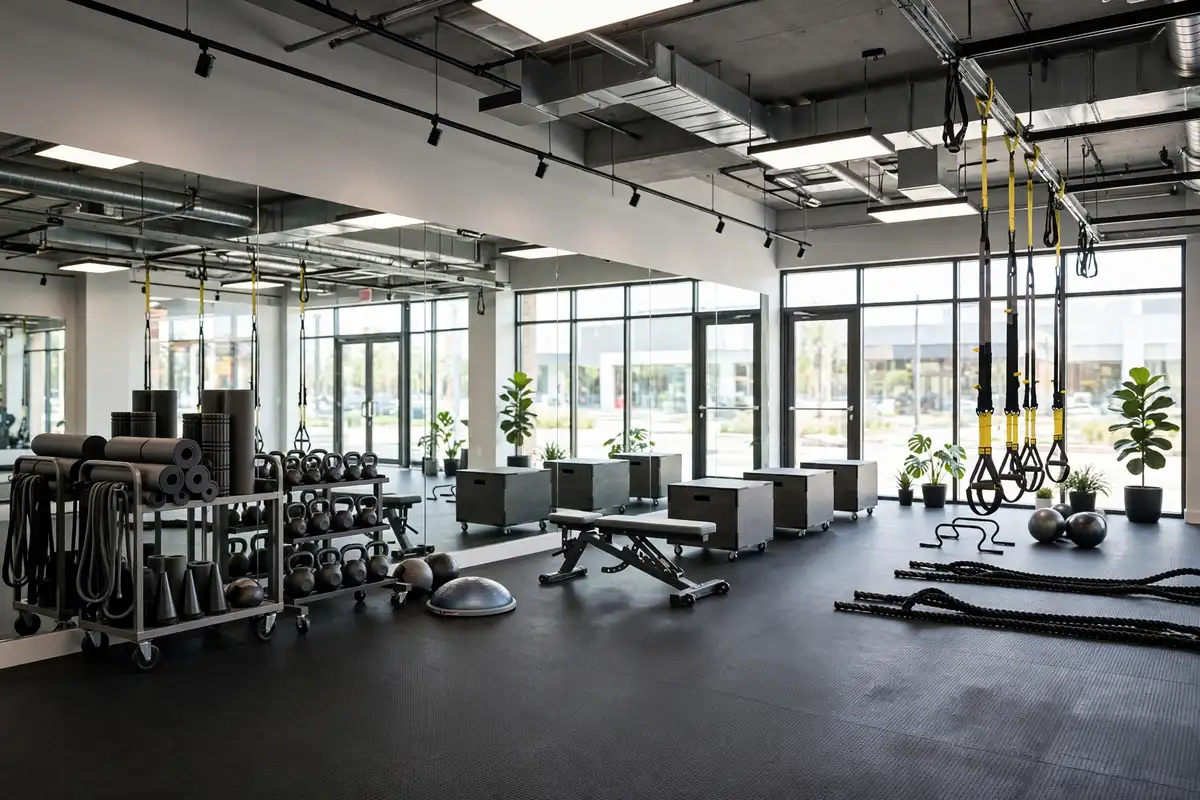
The design of MicroFlex Spaces is inherently advantageous for fitness operations. They often feature high ceilings, typically 14 to 18 feet, which are crucial for dynamic activities like martial arts, CrossFit, and even aerial yoga. These open floor plans provide ample room for various equipment setups and movement, allowing studios to customize their space to fit their specific training methodologies.
Equipment compatibility is another key consideration. While some flexible spaces may offer basic equipment, the design typically allows fitness professionals to bring in their specialized gear, including weight racks, cardio machines, yoga props, and TRX systems. This adaptability ensures that the space can evolve with the studio’s offerings and client needs, without requiring structural changes or expensive renovations. The focus is on providing a robust shell that can be easily transformed into a vibrant and functional fitness environment.
Solving the Personal Trainer Pain Point
For many personal trainers, the journey from working within a large gym to establishing an independent business is fraught with challenges, primarily around space, privacy, and financial commitment. MicroFlex Spaces directly address these pain points, offering a clear path to entrepreneurial freedom.
Firstly, they provide a professional third space that is neither home nor a crowded commercial gym. This physical separation is vital, especially in a post-pandemic world where remote work burnout is a real concern, often driven by the blurring lines between personal and professional life. A dedicated studio allows trainers to focus without domestic distractions, enhancing their professional image and client experience.
Secondly, privacy is paramount for effective personal training and content creation. Flexible studios offer a private, controlled environment where trainers can work one-on-one with clients, ensuring discretion and focused attention. This is also invaluable for fitness content creators who need a quiet, well-lit, and equipped space to film without interruptions or concerns about public gym rules.
Finally, MicroFlex Spaces empowers trainers with full business autonomy and profit retention. Instead of sharing a percentage of their earnings with a gym or being bound by restrictive contracts, trainers can rent space on their terms, keeping 100% of their revenue. This model fosters a stronger sense of ownership and enables trainers to build their brand, cultivate their client base, and scale their business at their own pace, transforming their passion into a sustainable, profitable venture.
Infrastructure Requirements for Modern Wellness Facilities
The success of any fitness studio, especially in a flexible workspace model, hinges on robust, reliable infrastructure. MicroFlex Spaces are designed to meet these critical needs, ensuring fitness professionals have the necessary amenities to operate efficiently and deliver a high-quality experience for their clients.
Essential infrastructure elements include:
- HVAC Systems: Adequate heating, ventilation, and air conditioning are crucial for maintaining a comfortable and healthy environment, especially during strenuous workouts.
- High-Speed Internet: Reliable, fast internet is non-negotiable for booking systems, music streaming, online coaching, and content creation.
- Loading Access: Roll-up doors and loading docks facilitate the easy movement of equipment, whether it’s for initial setup or bringing in specialized gear for workshops.
- Ample Parking: Sufficient parking is vital for clients and staff, especially for studios offering group classes. MicroFlex locations often feature generous parking to accommodate multiple tenants and their visitors.
- 3-Phase Power: For studios utilizing heavy-duty fitness equipment, access to 3-phase power is a significant advantage, providing the necessary electrical capacity.
- Sound Insulation: While not always a standard feature in light industrial flex spaces, some providers are incorporating improved sound dampening to minimize noise transfer between units, a benefit for quieter practices like yoga or Pilates, and to prevent disruption from high-impact activities.

Adaptable Architecture and Smart Systems
The next generation of flexible workspaces is characterized by adaptable architecture and the integration of smart systems. While the research often highlights AI and IoT for office environments—optimizing lighting, temperature, and desk height—these principles are highly transferable to fitness studios. Imagine smart lighting that adjusts from bright, energetic tones for a HIIT class to soft, warm hues for a meditation session. Or climate control that automatically optimizes based on the number of people in a studio, enhancing comfort and energy efficiency.
These smart systems not only create a more personalized and comfortable environment for clients but also offer operational efficiencies for the studio owner. By analyzing usage patterns, spaces can be optimized for energy consumption, and real-time availability can be managed more effectively. This focus on sustainability and user experience aligns perfectly with the values of many modern wellness businesses, providing a cutting-edge advantage.
Strategic Alabama Locations for Fitness Expansion
MicroFlex Spaces strategically position themselves in high-growth areas, offering prime locations for fitness studios looking to establish or expand their presence. In Alabama, key markets include Birmingham-Irondale and Auburn-Opelika, with upcoming expansions in Birmingham-Hoover and Huntsville-Madison. These locations are chosen for their accessibility, local community engagement, and potential for business growth.
For instance, MicroFlex FLEX ULTIMATE units in Birmingham-Irondale start at $1,805 per month, offering an accessible entry point for businesses. The Irondale location at 3274 Crestwood Blvd, Irondale, AL 35210, provides excellent connectivity to the greater Birmingham area. Similarly, the Auburn-Opelika location at 2920 Wyndham Industrial Dr, Opelika, AL 36804, boasts direct access to major highways, simplifying commuting for clients and staff, and streamlining shipping for equipment and supplies. These strategic placements ensure that fitness studios are not only easily reachable but also benefit from proximity to amenities like dining, retail, and other business services, contributing to a vibrant ecosystem. You can explore more about their offerings in these regions by visiting their dedicated pages on flexible office space in Birmingham or affordable studio space options.
The Alabama Market Advantage
The Alabama market presents a fertile ground for small businesses, including fitness studios. Small businesses accounted for 55% of total net job creation from 2013 to 2023, highlighting the state’s supportive environment for entrepreneurial ventures. This robust small business ecosystem, combined with regional connectivity and a growing population, makes locations like Birmingham-Irondale and Auburn-Opelika particularly attractive.
The focus on minimizing commuter traffic and serving residents, as seen in the planning for commercial footprints in communities like Ivanhoe Village (which includes fitness studios in its village center retail spaces), reflects a broader trend of integrating commercial spaces seamlessly into community life. This means fitness studios in MicroFlex locations are often situated where their target clientele lives and works, enhancing visibility and client acquisition. As demand for flexible commercial space continues to grow nationwide, Alabama’s strategic embrace of this model positions it as a leader in supporting diverse businesses, including the burgeoning fitness sector.
Why MicroFlex is the Best Alternative for Fitness Professionals
MicroFlex Spaces stand out as an optimal solution for fitness professionals due to their tailored approach and comprehensive support. They offer move-in-ready, customizable units that empower entrepreneurs to design their ideal fitness environment without the typical headaches and capital expenditure of traditional commercial real estate. From a simple personal training studio to a vibrant group fitness space, the flexibility to adapt the layout and amenities is a core advantage.
MicroFlex is built for “makers, movers, and entrepreneurs—the electricians, woodworkers, photographers, trainers, and innovators who keep America running.” This philosophy underscores their commitment to supporting diverse businesses, with fitness professionals being a key focus. They provide an environment where trainers can launch, build, and grow their fitness businesses with unparalleled freedom.
The entrepreneurial support extends beyond just space. For instance, some MicroFlex offerings include complimentary business-coaching calls to help fitness professionals navigate the complexities of starting and scaling their ventures. This holistic approach, combined with the professional credibility that comes with a dedicated commercial address, positions MicroFlex as more than just a landlord—they are a partner in growth.
With Alabama-exclusive locations in thriving communities like Birmingham-Irondale and Auburn-Opelika, and upcoming sites in Birmingham-Hoover and Huntsville, MicroFlex offers convenient, accessible options for fitness businesses. The ability to scale operations by adding more hours, expanding into larger units, or even opening additional locations within the MicroFlex network provides a clear pathway for growth without the disruption of an entirely new relocation. This makes MicroFlex an ideal choice for fitness professionals seeking an affordable, flexible, and supportive environment to thrive in May 2026 and beyond.
FAQs
What types of fitness businesses are best suited for flexible spaces?
Flexible spaces, particularly MicroFlex units, are ideal for a wide range of fitness businesses. This includes independent personal trainers, specialized yoga and Pilates instructors, small-group fitness coaches (for HIIT, boot camps, and dance fitness), martial arts schools, and even fitness content creators who need a private, equipped space for filming. Their adaptable nature also suits niche studios focused on specific modalities such as barre, cycling, or recovery services.
How do flexible lease terms support fitness studio scalability?
Flexible lease terms are a game-changer for scalability. Instead of being locked into a long-term, fixed-size lease, fitness studios can opt for hourly, daily, monthly, or short-term (1-3 year) agreements. This allows them to:
- Start Small: Launch with minimal overhead, renting space only when needed.
- Test New Concepts: Pilot new classes or services without significant financial risk.
- Expand Gradually: Easily increase rented hours or move to a larger unit within the same facility as their client base grows.
- Adapt to Demand: Adjust their space needs seasonally or in response to market fluctuations to avoid costly unused space. This agility enables businesses to grow organically and sustainably.
What infrastructure features are most important for a micro-gym setup?
For a micro-gym, several infrastructure features are paramount. High ceilings (14-18 feet) are crucial for dynamic movements and equipment. A durable, easy-to-clean floor is essential for hygiene and safety. Robust HVAC systems ensure client comfort, while reliable high-speed internet supports booking, music, and online operations. Ample parking is a must for client convenience. Additionally, good lighting, secure entry, and potentially some level of sound dampening contribute significantly to a professional and effective training environment. Access to 3-phase power can also be important for certain types of heavy-duty fitness equipment.
Conclusion
The commercial real estate landscape, as of May 2026, has unequivocally shifted towards flexibility, adaptability, and cost-efficiency. For the fitness industry, this evolution is not just a trend but a transformative opportunity. MicroFlex Spaces embody this future, offering fitness studios and independent trainers a dynamic alternative to traditional, often prohibitive, commercial leases.
By providing specialized layouts, solving common pain points for personal trainers, and offering robust infrastructure in strategic Alabama locations, MicroFlex empowers fitness professionals to launch, grow, and thrive. The financial benefits, including significantly reduced overhead and the ability to retain full profits, coupled with the support for scalability, make this model particularly compelling. As flexible commercial space continues its rapid growth, projected to comprise a substantial portion of the market by 2030, fitness-focused flexible workspaces are poised to become the cornerstone of sustainable growth for wellness businesses.
For any fitness professional looking to navigate the modern commercial real estate market, embracing the agility and support offered by flexible solutions is not just a smart move—it’s a strategic imperative. Ready to explore what’s possible for your fitness business? Discover the ideal environment for your studio or training practice today by exploring MicroFlex locations and finding the perfect space to build your legacy.