You just finished cleaning your grill after a great weekend cookout. You close the lid, walk away, and hope it stays clean and ready for next time. But then comes the rain, the morning dew, the blazing sun, or—depending on where you live—snow and ice.
Without a good BBQ cover, your investment starts fading, rusting, or collecting debris.
Walk into any home improvement store or search online, and you’ll find dozens of options. Sizes like XL and XXL cover, materials like PVC vs polyester, and features like handles, straps, or zip-up sides. It gets confusing fast.
After testing and researching covers for over eight years, I’ll walk you through exactly how to choose the right BBQ cover for your needs—without the fluff.
Let’s start with the most common questions people ask.
What Real Buyers Are Asking (Before They Buy)
Over the years, I’ve seen the same concerns pop up again and again in customer reviews and forum discussions:
- “Will this cover fit my grill if I have side shelves?”
- “Is a cheap $20 cover good enough for summer?”
- “How do I stop mold and condensation under the cover?”
- “Do I really need UV protection if my grill is under a patio?”
- “Why do some covers rip after one winter?”
These are valid concerns. Let’s answer them as we go through the 10 most important factors—plus a few you might not have considered.
1. Start with the Size of Your BBQ Grill
This seems obvious, but it’s the most common mistake. People buy a cover that fits the main body of the grill, but forget about side shelves, thermometer housings, or tank holders.
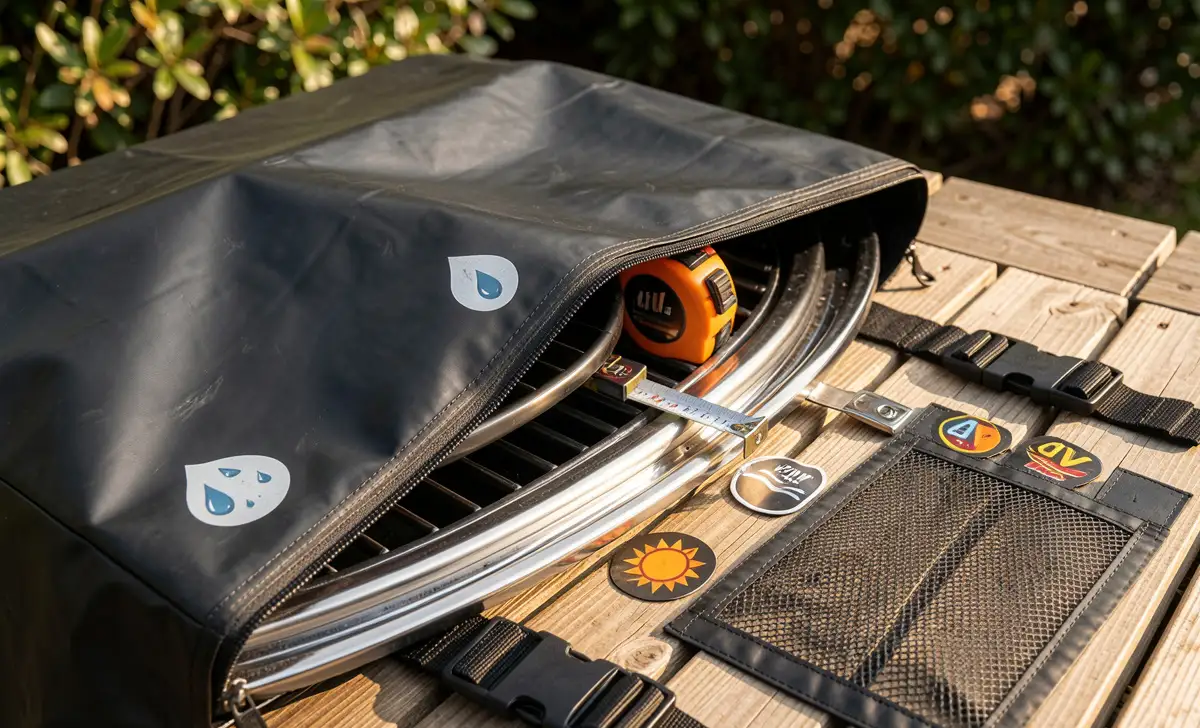
What to do: Measure your grill’s width, depth, and height. Include any attached side shelves or accessories. If you have a larger-than-average grill, consider an XL or XXL size cover.
Pro tip: Don’t buy a cover that fits like a tight t-shirt. You want 2–4 inches of extra space on each side. Why? Air needs to circulate slightly, and a tight cover can trap moisture against the metal.
Reader question answered: Yes, you absolutely need to account for side shelves. Look for covers labeled “full-size” or “with side shelf compatibility.”
2. Material Type: PVC vs Polyester (and Why It Matters)
You’ll mainly see two material types: PVC and polyester. Each has trade-offs.
| Feature | PVC | Polyester |
|---|---|---|
| Durability | High | Medium |
| Weather resistance | Excellent (snow, ice, heavy rain) | Good for light/moderate weather |
| Weight | Heavier | Lighter |
| Cost | Higher ($60–$200) | Lower ($20–$60) |
| Best for | Harsh winters, year-round outdoor storage | Mild climates, seasonal use |
Real-world experience: I’ve used a heavy-duty PVC cover through two Midwest winters. It held up against ice and snow without cracking. My neighbor bought a polyester cover for the same climate, and it tore within six months.
If you live in an area with harsh winters, spend the extra money on PVC. If you’re in a moderate climate and store your grill under a porch, polyester will serve you just fine.
3. Level of Protection You Actually Need
Not everyone needs the same cover. Ask yourself:
- Harsh winters with snow and ice? You need a heavy-duty, waterproof, cold-resistant cover (PVC recommended).
- Rainy climate (Pacific Northwest, Florida, etc.)? Focus on fully waterproof covers with sealed seams.
- Hot, sunny summers (Arizona, Texas)? Prioritize UV protection to prevent fading and plastic degradation.
- Humid climate (Southeast US)? Breathability becomes critical to stop condensation and mold.
- Mild, four-season climate? A mid-range polyester cover will work well.
One size does not fit all. Match the cover to your worst weather, not your best day.
4. Waterproofing vs Water-Resistant: Know the Difference
This confuses a lot of people. Here’s the truth:
- Water-resistant – Handles light rain and morning dew, but prolonged heavy rain will seep through.
- Waterproof – Uses sealed seams and a special coating (like PVC or heavy-duty vinyl) that keeps water out entirely, even in downpours.
If you live in a rainy climate, choose a fully waterproof cover. Look for terms like “100% waterproof,” “sealed seams,” or “heavy-duty waterproof backing” in the product description.
Real user concern addressed: “My cover says water-resistant, but my grill still got wet inside.” That’s because water-resistant isn’t enough for heavy rain. Upgrade to waterproof.
5. UV Protection – Not Just for Summer
You might think UV protection only matters in July. But the sun damages materials year-round, even on cloudy days.
Why UV protection matters: Without it, polyester fades and becomes brittle. PVC can crack after prolonged sun exposure. Your grill’s paint or stainless steel can also fade or discolor.
What to look for: A cover rated for UV protection (look for UPF or UV-stabilized materials). This is especially important if your grill sits in direct sunlight for more than 3–4 hours daily.
Reader question answered: “Do I need UV protection if my grill is under a patio?” Yes, because UV rays reflect off concrete, decks, and walls. It’s less intense, but still damaging over time.
6. Breathability – The Silent Killer of Grills
This is the most overlooked factor. People buy a waterproof cover, seal it tight, and then three months later open it to find mold, mildew, and rust.
Why? Condensation. Temperature changes cause moisture to form under the cover. If the cover isn’t breathable, that moisture has nowhere to go.
Solution: Look for covers with built-in air vents (usually mesh panels with flaps) or breathable fabric that allows air circulation while still blocking rain.
If you live in a humid climate, breathability is non-negotiable. Otherwise, you’re basically creating a greenhouse of rust on your grill.
7. Ease of Use – Small Details Matter Big
You’ll use this cover every time you grill (or at least you should). If it’s a hassle, you’ll stop using it.
Features that make life easier:
- Handles or straps – Pull them to remove the cover without grabbing wet, dirty fabric.
- Zip-up sides – Great for tight spaces. You can open one side without removing the whole cover.
- Elastic hem – Keeps the cover from blowing off in the wind.
- Fastening straps (buckles or Velcro) – Essential for windy areas. They secure the cover to grill legs.
Real-world advice: If you grill often (3+ times per week), prioritize handles and easy removal. If you live in a windy area, don’t skip fastening straps.
8. Warranty – A Sign of Confidence
Most BBQ covers come with a one-year warranty. Some better brands offer three-year or even five-year warranties.
Why this matters: A longer warranty usually means the manufacturer trusts their material and construction. It also protects your investment if seams split or fabric tears prematurely.
What to check: Read warranty terms carefully. Some cover “wear and tear” but not “damage from weather.” Others are more comprehensive.
Recommendation: For covers over $50, look for at least a 2-year warranty. For premium PVC covers, a 3–5 year warranty is reasonable.
9. Weight and Storage – Think About the Off-Season
Covers range from light polyester (under 2 lbs) to heavy-duty PVC (5–10 lbs).
- Lightweight covers – Easy to handle, fold small for off-season storage. Best for seasonal use.
- Heavy covers – More durable but bulkier. If you store your cover in a garage or shed during winter, make sure you have space.
Reader concern addressed: “My cover is so heavy I never want to take it off.” That’s a sign you might prefer a mid-weight option. Balance durability with daily usability.
10. Color, Style, and Brand – The Finishing Touches
These won’t protect your grill, but they matter for satisfaction.
- Color: Black, tan, and green are the most popular. Black hides dirt best but gets hotter in the sun. Tan and green stay cooler but show stains.
- Style: Full covers go over the entire grill, including side shelves. Partial covers only protect the cooking surface. For most people, a full cover is the right choice.
- Brand: Stick with reputable names like Classic Accessories, Weber, Kingkong, or Unicook. Read reviews on Amazon or Home Depot before buying.
Pro tip: Don’t trust brand names alone. A recognizable brand with a 3-star average rating is worse than an unknown brand with 4.5 stars from 2,000 reviews.
11. Don’t Ignore Customer Reviews
Reviews are your best real-world data. But you have to read them the right way.
What to look for in reviews:
- Photos of the cover on similar grills (size checks)
- Comments about durability after 6–12 months (not just unboxing)
- Mentions of specific weather conditions (wind, snow, heavy rain)
- Repeated complaints (multiple people saying “seams ripped” = red flag)
What to ignore: One-star reviews from people who bought the wrong size. Five-star reviews written after one day of use.
12. Price vs Value: What Should You Really Spend?
BBQ covers range from $20 to $200. Here’s a realistic breakdown:
| Price Range | What You Get | Best For |
|---|---|---|
| $20–$40 | Basic polyester, water-resistant, light-duty | Occasional use, mild climate, covered storage |
| $40–$80 | Good polyester or entry PVC, UV protection, vents | Regular use, moderate climate, some sun exposure |
| $80–$150 | Heavy-duty PVC, fully waterproof, UV-stabilized, straps/zippers | Frequent use, harsh winters, full sun, windy areas |
| $150–$200 | Premium materials, long warranty, custom fits | High-end grills, year-round outdoor storage |
My honest take: Most home grillers will be happy in the $50–$90 range. That’s the sweet spot for quality without overspending. If your grill costs over $1,000, spend $100+ on the cover. Protect your investment.
13. Special Considerations for Gas vs Charcoal Grills
Most covers work for both, but there are differences:
- Gas grills – Often wider with side burners. Look for covers with extra width and heat resistance near the side burner area.
- Charcoal grills – Usually round or kettle style. Many are taller. Make sure the cover height matches.
Check the product listing – Many covers specify “for gas grills” or “for charcoal/kettle grills.”
14. How to Make Your BBQ Cover Last Longer
Even the best cover needs care. Here’s what works:
- Clean it twice a year – Hose it off with mild soap. Let it dry completely before storing.
- Don’t put it on a hot grill – Wait until the grill is cool. Hot metal + plastic cover = melted mess.
- Store it properly off-season – Fold, don’t crumple. Keep in a dry place away from rodents.
- Check for tears – Patch small holes early with vinyl repair tape.
Common mistake: People leave covers on the ground when not in use. Ground moisture and UV exposure kill covers fast. Hang it or store it properly.
15. When to Replace Your BBQ Cover
No cover lasts forever. Signs it’s time for a new one:
- Cracks or tears in the fabric
- Seams splitting
- Water pools inside after rain
- Faded, brittle material (UV damage)
- Straps or buckles broken
Typical lifespan: Good polyester cover = 2–3 years. Quality PVC cover = 4–6 years. Less if left in direct sun year-round.
Conclusion: The 30-Second Summary
Choosing the right BBQ cover comes down to four things:
- Size – Measure your grill, including side shelves. Look for XL or XXL if needed.
- Material – PVC for harsh winters and heavy use. Polyester for mild climates and budgets.
- Protection level – Waterproof + UV protection + breathability for most people.
- Budget – $50–$90 is the value sweet spot. Spend more to protect expensive grills.
The one thing you shouldn’t skip: Breathable vents. Condensation damage is real, and it’s the #1 reason grills rust under perfectly “waterproof” covers.
Take five minutes to measure your grill, think about your worst weather, and read a few reviews. You’ll find the perfect BBQ cover that keeps your grill ready for every cookout, rain or shine.
Disclaimer: This article is for general informational purposes only and reflects personal experience and research. Grill and cover performance varies by climate, usage, and brand. Always refer to the manufacturer’s specifications and warranty terms before making a purchase. The author does not endorse any specific product or brand.