Diamonds have a way of making any moment feel special. Whether you’re celebrating an engagement, marking an anniversary, or simply treating yourself, knowing how to choose diamonds occasions appropriately can feel overwhelming. With so many designs, cuts, and quality factors to consider, where do you even begin?
Let’s walk through everything you need to know about selecting diamonds for different moments—without the confusion.
Why the Occasion Matters When You Choose Diamonds Occasions
Not every diamond suits every event. A sparkling halo pear design that works beautifully for a wedding proposal might feel out of place for a casual anniversary dinner. Likewise, a simple solitaire design you wear daily deserves different considerations than a statement piece reserved for galas.


The key is matching the diamond’s style, size, and symbolism to the moment you want to celebrate. Learning to choose diamonds occasions wisely saves you money and ensures your gift feels personal and meaningful.
FAQs
Is a bigger carat always better?
Not necessarily. A larger diamond with poor cut or color can look dull. Balance matters more than size alone.
Can I wear an engagement ring style for other occasions?
Absolutely. Many solitaire and three-stone designs transition beautifully from engagements to anniversaries or even as right-hand rings.
How much should I budget for a quality diamond?
There’s no fixed number, but understanding the 4Cs helps you prioritize what matters most for your budget and occasion.
Do I need a certified diamond?
For significant purchases (engagement rings, heirloom pieces), yes. Certification provides trusted documentation of the diamond’s qualities.
Types of Diamond Rings for Different Occasions
Let’s explore the most popular diamond ring styles and when each shines best. When you choose diamonds occasions carefully, each style serves a unique purpose.
Three-Stone Design: For Milestones That Tell a Story
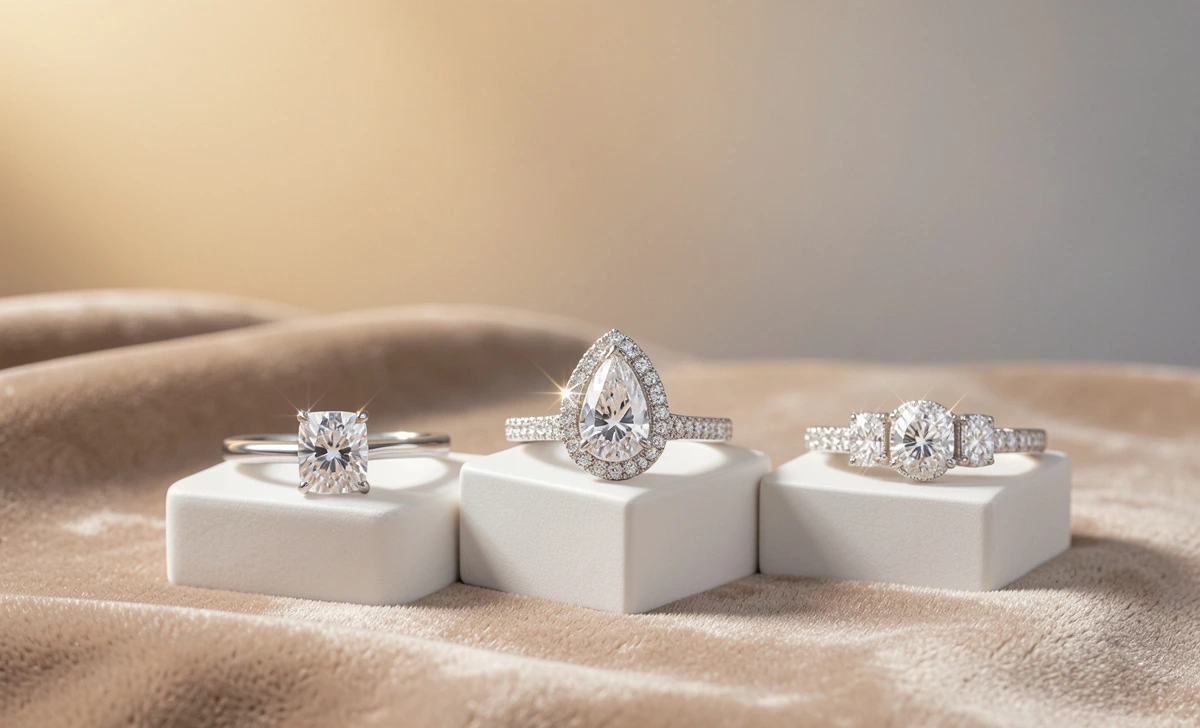
The three-stone ring has remained a classic for good reason. Three diamonds sit side by side, traditionally representing past, present, and future. But many buyers customize the meaning to fit their journey—friendship, love, and affection, or even the birth of children.
Best occasions: Anniversaries, commitment ceremonies, milestone birthdays, or as an upgraded engagement ring years later.
Why people love it: You can adjust stone positions and sizes to create something uniquely yours. It tells a story rather than just sparkling.
Halo Emerald Design: Elegance With a Bold Centerpiece
This design features a prominent diamond at the center surrounded by smaller emerald stones (or other gems) on the sides. The contrast creates a sophisticated, almost vintage feel that captures attention without screaming for it.
Best occasions: Wedding proposals where you want something beyond the traditional solitaire, formal events, and milestone anniversaries.
What buyers should know: The emerald accents require care. Emeralds are softer than diamonds, so this ring isn’t ideal for daily wear if you work with your hands.
Cluster Round Design: Maximum Sparkle on Any Budget
A cluster round design groups several smaller diamonds together to create the appearance of one larger stone. The band can be silver, gold, or rose gold, depending on your preference.
Best occasions: Engagements when working with a modest budget, right-hand rings, birthday gifts, and push presents.
Why it works: You get substantial sparkle and presence without the high cost of a single large diamond. It also offers a modern, contemporary look that appeals to many younger buyers.
Halo Pear Design: Unique Shape, Unforgettable Look
The halo pear design combines a pear-shaped center diamond with a ring of smaller gems encircling it. The shape feels comfortable on the finger while offering a classy, distinctive appearance that stands out from round or princess cuts.
Best occasions: Wedding proposals for someone who loves unique jewelry, anniversary gifts, and engagement rings for non-traditional couples.
Common concern: Some worry the pointed end snags on clothing. A well-set pear shape with protective prongs minimizes this issue.
Solitaire Design: The Timeless Choice for Any Occasion
You simply cannot go wrong with a solitaire design. A single diamond sits alone on a simple band, letting the stone speak for itself. This style works for nearly any occasion because its simplicity adapts to formal and casual settings alike.
Best occasions: Engagements (the classic choice), daily wear rings, graduation gifts, anniversary bands, “just because” presents.
Why it endures: A solitaire never looks dated. It pairs easily with wedding bands and doesn’t compete with other jewelry.
The 4Cs: Your Framework to Choose Diamonds for Occasions
Once you settle on a style, understanding the 4Cs helps you compare diamonds objectively. These four factors determine a diamond’s quality, appearance, and price. Mastering them helps you choose diamonds for occasions with confidence every time.
Diamond Cut: The Most Important Factor
Diamond cut refers to how well a diamond interacts with light—not its shape (round, pear, emerald, etc.). A well-cut diamond reflects light internally and disperses it through the top, creating brilliance and sparkle.
What affects cut quality: Symmetry, proportions, and polish quality.
Cut grades explained:
- Excellent: Maximum light return. The diamond appears bright and fiery.
- Very Good: Strong light return with slightly less brilliance than excellent.
- Good: Solid light return visible to the naked eye.
- Fair/Poor: Noticeable light leakage. The diamond looks dull.
Buyer tip: Prioritize cut over carat if your budget is limited. A smaller diamond with an excellent cut outshines a larger diamond with a poor cut every time.
Carat Weight: Size and Perceived Value
Carat measures a diamond’s weight, not its size directly. Many people confuse carat with visual size, which leads to disappointment when two diamonds of the same carat look different due to cut proportions.
What carat communicates: Larger diamonds are rarer and more expensive. Some buyers also associate higher carat weight with status or wealth.
Real talk: Don’t make carat weight your main factor. A well-cut 0.9 carat diamond often looks larger and brighter than a poorly cut 1.1 carat diamond. Also, diamonds just under full-carat increments (0.9 instead of 1.0) cost significantly less while appearing nearly identical.
Color: The Secret to Brilliance
Diamond color is graded from D (completely colorless) to Z (light yellow or brown). Color affects brilliance because even faint tints can absorb light rather than reflect it.
Color scale simplified:
- D-F: Colorless. Rare and expensive. Best for white gold or platinum settings.
- G-J: Near colorless. Excellent value. Most buyers cannot see the difference without comparing side by side.
- K-M: Faint color. Noticeable warmth. Works well with yellow gold settings.
- N-Z: Very light to light color. Budget-friendly but visibly tinted.
When color matters most: For white metal settings (platinum, white gold, silver), choose G or higher. For yellow or rose gold, you can go down to J or K since the metal masks warmth.
Clarity: Understanding Natural Flaws
No diamond is perfectly flawless under magnification. Clarity measures the visibility of internal inclusions or external blemishes.
Clarity grades from best to most affordable:
- FL (Flawless): No inclusions or blemishes under 10x magnification. Extremely rare.
- IF (Internally Flawless): No inclusions, only surface blemishes.
- VVS1/VVS2: Very, very slight inclusions. Difficult for experts to see.
- VS1/VS2: Very slight inclusions. Visible under magnification but not to the naked eye.
- SI1/SI2: Slightly included. May be visible to the naked eye in some diamonds.
- I1/I2/I3: Included. Flaws visible to the naked eye.
Practical advice: Most people don’t need VS or higher. SI1 clarity with no visible inclusions saves you significant money while looking identical to higher grades in daily wear.
Matching Diamonds to Specific Occasions
Engagement Rings
Prioritize cut (excellent or very good) and durability (avoid sharp corners that chip). Solitaire, three-stone, and halo designs all work well. Set a realistic budget that won’t strain your finances.
Wedding Bands with Diamonds
Look for channel or bezel settings that protect diamonds from daily wear. Smaller diamonds (under 0.25 carat each) in a cluster or pavé design offer sparkle without catching on things.
Anniversary Gifts
Consider upgrading a previous diamond or adding a three-stone design that represents your years together. Many couples choose the same number of years as stones.
Birthday or Graduation Gifts
Solitaire stud earrings or a simple pendant offer versatility. Focus on color and cut since smaller diamonds show tint more obviously.
Everyday Wear (Right-Hand Rings)
Choose durable settings like bezel or flush mount. Cluster round designs and smaller solitaires hold up well. Avoid high-profile settings that snag.
Shopping Tips From Real Experience
Always see diamonds in natural light. Store lighting makes every diamond look amazing. Ask to step outside or near a window.
Ask about certification. GIA and AGS are the most trusted labs. Avoid uncertified diamonds for purchases over $1,000.
Consider lab-grown diamonds. They offer identical physical properties at 30-40% less cost. Perfect for occasions where budget matters more than mining origin.
Don’t skip insurance. Even a modest diamond costs more to replace than most people expect. Jewelry insurance is surprisingly affordable.
Trust your eye more than paperwork. Two diamonds with identical certificates can look different. Choose the one that makes you happy when you see it.
Final Thoughts
Learning to choose diamonds occasions appropriately comes down to balancing your budget, the recipient’s style, and the meaning you want the piece to convey. Start with the occasion, then explore designs that fit. Use the 4Cs to compare apples to apples. And remember—the best diamond isn’t necessarily the most expensive one. It’s the one that feels right for the moment you’re celebrating.
Take your time, ask questions, and enjoy the process. A well-chosen diamond marks a memory that lasts a lifetime.