If you’ve been noticing more hair than usual in your shower drain or on your hairbrush, you’re far from alone. Hair loss and thinning hair affect approximately 80 million people in the United States alone—men and women alike. And if you’ve spent any time searching for natural solutions online, you’ve almost certainly come across CBD oil for hair growth as a suggested remedy.
But does CBD oil for hair growth actually work? Or is it just another wellness trend?
Let’s cut through the noise. In this guide, we’ll explore what current research says about CBD oil for hair growth, how it might work, what real users are experiencing, and—most importantly—whether it’s worth adding to your hair care routine.
What Exactly Is CBD Oil?
Before diving into hair growth, let’s clarify what CBD oil actually is.
CBD stands for cannabidiol. It’s one of over 100 cannabinoids found naturally in the cannabis plant. Unlike its more famous cousin THC (tetrahydrocannabinol), CBD is non-intoxicating—meaning it will not get you high. This key difference has made CBD appealing to people seeking therapeutic benefits without psychoactive effects.
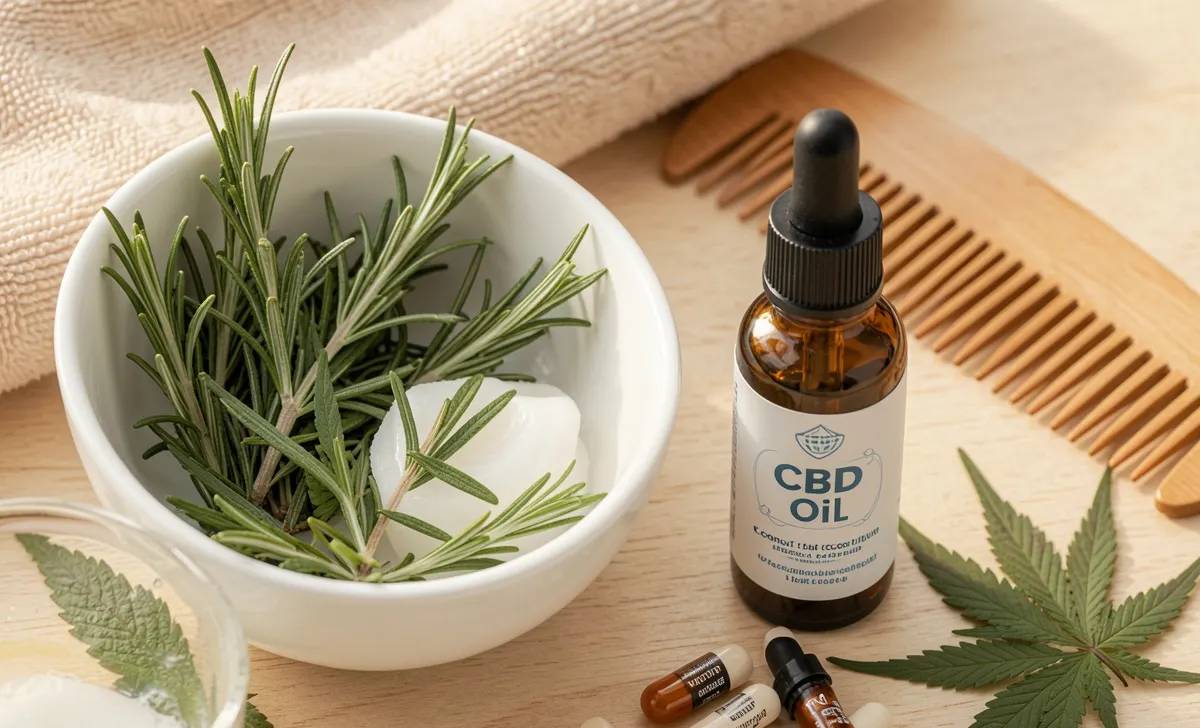
CBD oil is typically extracted from hemp (a variety of cannabis with very low THC) and then mixed with a carrier oil like coconut or MCT oil. In recent years, it has gained attention for potential uses ranging from anxiety relief to pain management—and yes, hair health.
The Connection Between CBD Oil and Hair Growth: How Does It Work?
To understand whether CBD oil for hair growth is effective, we need to look at the endocannabinoid system (ECS).
The ECS is a complex cell-signaling system in your body that helps regulate essential functions like sleep, mood, appetite, and, importantly for this discussion, hair follicle cell growth. Your scalp actually contains ECS receptors.
When you apply CBD oil topically or ingest it orally, CBD can interact with these receptors. The potential benefits for hair come down to three main mechanisms:
- Reducing scalp inflammation – Inflammation can inhibit hair follicles from growing properly.
- Increasing blood circulation – Better blood flow means more oxygen and nutrients reach hair follicles.
- Countering DHT effects – DHT (dihydrotestosterone) is a hormone linked to common pattern baldness.
Let’s explore each of these in detail.
CBD Oil for Inflammation-Driven Hair and Scalp Conditions
One of the most promising areas of early research involves seborrheic dermatitis—a common inflammatory scalp condition characterized by itching, burning, flaking, and redness.
In a clinical study focusing on topical CBD application, patients with seborrheic dermatitis applied CBD oil to their scalps. The results were notable: participants reported reduced symptoms, including less itching, burning, and scalp pain.
Why does this matter for hair growth? Because a chronically inflamed scalp creates a poor environment for hair follicles. By calming that inflammation, CBD may allow hair to grow more freely. Real users in online forums frequently mention that their scalp simply “feels healthier” and less irritated after using CBD-infused hair products.
CBD Oil for Androgenetic Alopecia (AGA): The DHT Connection
Androgenetic alopecia (AGA) is the medical term for male or female pattern baldness. It’s the most common form of hair loss, characterized by a receding hairline in men and a thinning crown region in women. AGA can begin as early as the late teens.
Here’s what’s happening biologically: In people genetically predisposed to AGA, DHT (dihydrotestosterone) —a derivative of testosterone—binds to receptors in hair follicles. Over time, this causes follicles to shrink (a process called miniaturization). The result is progressively thinner, wispiest hair until follicles eventually stop producing new hair altogether.
So where does CBD fit in?
A small but intriguing 2018 study followed patients with AGA who applied a CBD-rich hemp oil to their scalps daily. After six months, over 93% of participants saw an increase in their total hair count.
While this was a small study and more research is needed, the results suggest that CBD may help block DHT from binding to follicle receptors. If confirmed by larger studies, this would position CBD oil for hair growth as a potential natural hair growth remedy for pattern baldness—similar in concept to existing DHT-blocking treatments but with fewer reported side effects.
What About General Thinning Hair and Hair Breakage?
Not all hair loss is pattern baldness. Many people experience general thinning hair, increased shedding, or excessive hair breakage due to factors like:
- Environmental damage (sun, pollution, dry air)
- Heat styling and chemical treatments
- Poor nutrition
- Stress-related hormonal fluctuations
- Natural aging
For these cases, CBD oil may offer supportive benefits through its nutritional profile. CBD oil contains high concentrations of vitamin E, a potent antioxidant that helps enhance blood circulation in the scalp. Improved circulation means more nutrients reach your hair follicles, potentially speeding up healthy growth cycles.
Additionally, the omega fatty acids present in CBD oil help protect your hair’s natural moisture and nourish the hair cuticles. Users frequently report that their hair feels softer, looks shinier, and breaks less easily after incorporating CBD products into their routine.
A Word of Caution: Concentration Matters
Before you rush to buy the strongest CBD oil you can find, here’s an important warning from researchers.
Some studies have found that too high a CBD dose may actually lead to hair follicle cell death and potential hair loss. In one lab study involving rat skin samples, researchers observed that while moderate concentrations stimulated hair growth, excessively high concentrations had the opposite effect.
Finding the optimal levels of CBD is key. This is not a “more is better” situation. Unfortunately, because the CBD industry is still loosely regulated, product potencies vary widely. Starting with a lower concentration and observing how your scalp responds is the wisest approach.
How Real Users Are Incorporating CBD Into Their Hair Routines
Based on real-world discussions and common questions from people who have tried CBD oil for hair growth, here are the most frequently reported methods:
1. CBD-Infused Shampoos and Conditioners
These are the easiest entry points for most people. Look for products that clearly list CBD oil or hemp seed oil on the ingredients label. Massage gently into your scalp and leave on for 2–3 minutes before rinsing. Users typically apply these 3–4 times per week.
2. Direct Topical CBD Oil Application
Using a dropper, apply CBD-rich oil directly to areas of the scalp prone to thinning hair or a receding hairline. This allows for targeted treatment. Gently massage for 60 seconds to stimulate blood flow. Most users do this 2–3 times per week, often leaving the oil on overnight before washing in the morning.
3. CBD Oil Tinctures (Oral)
Some people prefer to address hair loss from the inside out. Ingesting a CBD tincture daily may help reduce systemic inflammation and counter hormonal imbalances that contribute to hair loss. Users report that this method also helps with stress-related shedding, as CBD may lower cortisol levels.
4. DIY CBD Hair Masks
A growing number of people are mixing CBD oil with carrier oils like jojoba or argan oil, sometimes adding essential oils like rosemary (which has its own hair growth research behind it). This allows for customization and tends to be more economical.
What Dose Should You Use for Hair Growth?
This is one of the most common questions—and unfortunately, there is no standard CBD dose for hair growth.
Based on user experiences and general CBD guidelines, a reasonable starting point is 5–10 mg of CBD per day if taken orally. For topical applications, start with a small amount (roughly a dropper half-full) and observe how your scalp feels over two weeks.
Gradually increase every two weeks until you notice desired effects—or until you reach the product’s recommended serving size. Consulting a doctor first is always recommended, especially if you take other medications, as CBD can interact with certain liver-processed drugs.
Can CBD Help With Hormonal Hair Loss?
Hormonal fluctuations and imbalances are a major trigger for hair loss in both men and women. Events like pregnancy, menopause, thyroid disorders, and chronic stress can all disrupt normal hair cycles.
The hormone most frequently implicated in receding hairlines is DHT, as discussed earlier. But broader hormonal imbalances involving cortisol (stress hormone), estrogen, and thyroid hormones also play significant roles.
CBD interacts with several receptors throughout the body that help regulate hormone function. By promoting overall body balance (homeostasis), CBD may indirectly support the hormonal balance required to cope with hair loss. Users experiencing postpartum shedding or menopause-related thinning are among those who report the most noticeable benefits.
Addressing Common Reader Concerns and Questions
How long until I see results?
Most users report waiting 2–4 months of consistent use before noticing visible changes in hair thickness or reduced shedding. Hair grows slowly—about half an inch per month—so patience is essential.
Will CBD oil make my hair greasy?
High-quality CBD oils absorb reasonably well, but using too much can leave hair looking oily. Start with small amounts and focus the application on the scalp rather than the hair shaft.
Can I use CBD oil alongside minoxidil (Rogaine) or finasteride?
There are no known negative interactions, but you should absolutely consult your dermatologist before combining treatments.
Is CBD oil safe for all hair types?
Generally yes. However, people with very oily scalps may want to start with a lighter formulation or use it less frequently. Those with known cannabis allergies should avoid it entirely.
Does it matter if I use full-spectrum, broad-spectrum, or isolate?
Full-spectrum contains trace THC (less than 0.3%), broad-spectrum has no THC but retains other cannabinoids, and isolate is pure CBD. For hair growth, most research has focused on broad-spectrum or isolated products.
Putting It All Together: Is CBD Oil for Hair Growth Worth Trying?
Let’s be honest about where the evidence stands.
The research is still emerging. We don’t yet have large-scale, long-term human clinical trials proving that CBD oil for hair growth reliably treats hair loss. Most existing studies are small, animal-based, or preliminary.
However, the existing evidence—combined with thousands of positive anecdotal reports—suggests that CBD oil shows significant potential in several areas:
- Strengthening hair follicles through improved nutrition and reduced oxidative stress
- Mitigating scalp inflammation that hinders healthy growth
- Countering DHT effects in androgenetic alopecia
- Supporting hormonal balance in stress-related shedding
Importantly, CBD oil appears to have a favorable safety profile when used appropriately. Side effects are generally mild (dry mouth, slight drowsiness in some people taking oral CBD) and far less concerning than those associated with prescription hair loss medications.
The Bottom Line
If you’re struggling with hair loss or thinning hair, incorporating CBD oil for hair growth into a healthy hair care regimen could be a reasonable, low-risk option to explore—especially if you’ve tried conventional products without success or want to avoid pharmaceutical side effects.
Will it work for everyone? No. Hair loss has many causes, and what works for one person may not work for another. But given the growing body of early research and the positive real-world experiences shared by thousands of users, CBD oil for hair growth deserves consideration as part of a comprehensive approach to hair health.
As with any new treatment, start slowly, choose high-quality products from reputable brands that provide third-party lab testing, and give it several months of consistent use before deciding whether it’s working for you.
Your hair didn’t thin overnight—and it won’t regrow overnight either. But with patience and the right approach, healthier, fuller hair may be more achievable than you think.
Disclaimer: This article is for informational purposes only and does not constitute medical advice. Always consult with a qualified healthcare provider before starting any new supplement or treatment for hair loss.