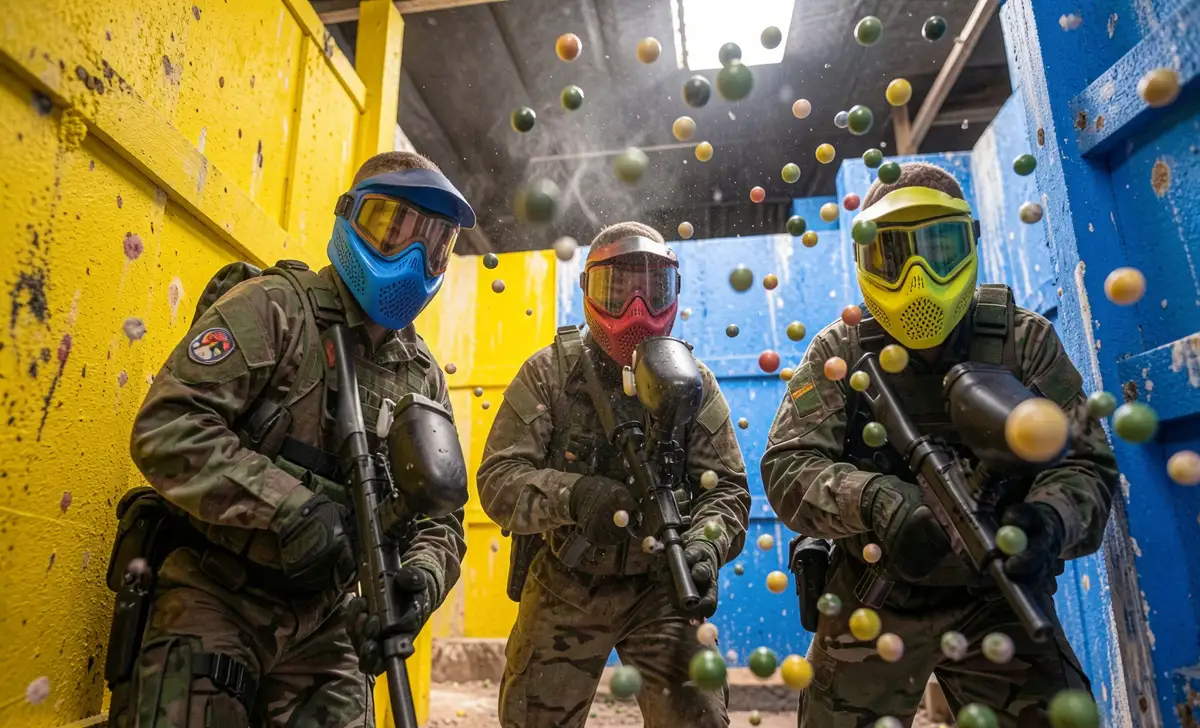
Paintball is one of the most exciting outdoor activities you can try with friends. It’s fast, adrenaline-pumping, and surprisingly strategic. But if you’ve never played before, stepping onto a paintball field for the first time can feel intimidating.
You might be asking yourself: How do I even start? What gear do I need? Does it hurt? What are the basic rules?
This guide answers all those questions. Whether you’re looking for a new hobby, a team-building activity, or just a fun weekend with friends, you’ll learn exactly how to play paintball safely and confidently.

Why Play Paintball? More Than Just Adrenaline
Before diving into rules and gear, let’s talk about why millions of people play paintball regularly.
Paintball is a full-body workout. You’ll run, duck, crawl, and sprint. That kind of movement improves cardiovascular health, builds muscle endurance, and burns calories. But the benefits go beyond physical fitness.
Many players report that paintball helps reduce stress and anxiety. The combination of exercise, teamwork, and focus pulls your mind away from daily worries. Getting out with friends in a competitive but friendly environment also boosts mood and builds stronger social bonds. In short, paintball is good for both your body and your mind.
How to Play Paintball: The Core Objective
At its simplest, paintball is a competitive sport where players use paintball guns (also called markers) to shoot biodegradable gelatin balls filled with water-soluble dye at opponents. When a paintball hits you and breaks, you’re typically “out” for that round or game.
But the real fun comes from the different game modes. You’re not just running around shooting randomly. Every game has a clear objective.
Basic Rules of Paintball Every Beginner Must Know
No matter which game you play, these universal rules always apply:
- If you get hit, you’re out. A visible paint break on your body, clothes, or marker means you’re eliminated. Raise your hand and walk off the field immediately.
- Never remove your mask on the field. This is the most important safety rule. Even if you’re out, keep your mask on until you’re completely outside the playing area.
- Barrel covers are on at all times off the field. When you’re not actively playing, a barrel plug or cover must be on your marker.
- Call your hits honestly. Paintball runs on integrity. If you feel a break but aren’t sure, check yourself. If paint is there, call yourself out.
- No blind firing. Always look where you’re shooting. Firing over or around cover without aiming is dangerous and unsportsmanlike.
Popular Paintball Games for Beginners
If you’re new to paintball for beginners, start with these common game formats. They’re easy to understand and don’t require advanced tactics.
Capture the Flag
This is the most popular paintball game. Two teams start on opposite sides of the field. Each team has a flag at its home base. The goal is to grab the opposing team’s flag and return it to your own base without getting shot. If you’re carrying the flag and get hit, you drop the flag where you were shot.
Elimination
Simple and perfect for learning how to play paintball. Each team tries to eliminate all players on the opposing side within a time limit. The last team standing wins. There’s no flag to capture—just pure survival and teamwork.
Fort Assault
One team defends a fortified position (the fort). The other team attacks. Defenders usually have limited respawns or none at all. Attackers win if they touch a designated objective inside the fort.
Speedball
Speedball is paintball on a smaller, symmetrical field with inflatable bunkers. Games are fast (3–5 minutes), intense, and great for improving your reflexes and communication. It’s not just for pros—beginners can play too, as long as you’re okay with a faster pace.
Paintball Gear: What You Actually Need
You don’t need to buy expensive equipment to start. Most paintball fields rent full sets of gear. But understanding each piece helps you play better and safer.
Paintball Gun (Marker)
The marker is your main tool. For beginners, rental markers are usually reliable semi-automatic guns. They shoot one paintball per trigger pull. As you advance, you can explore electronic markers that shoot faster, but that’s not necessary for your first few visits.
Facemask (Goggles)
This is your most important piece of safety gear. A proper paintball mask covers your eyes, ears, nose, and mouth. Never play with safety glasses alone—they don’t protect your full face. Quality masks have thermal lenses that prevent fogging, so you can actually see what you’re doing.
Hopper
The hopper is the container that sits on top of your marker and feeds paintballs into the gun. Basic gravity-fed hoppers work fine for beginners. Faster hoppers (force-feed) are for advanced play.
Compressed Air Tank
This powers your marker. Most fields use compressed air (HPA) because it’s consistent and works in any weather. CO2 is older and less reliable. Rental packages include a full tank.
Paintballs (Markers)
Paintballs are the ammunition. Field paint is usually sold on-site, and many fields require you to use their paint only. This ensures the paint breaks properly and doesn’t damage rental gear. Never bring outside paint without asking first.
What to Wear
- Long-sleeve shirt and pants – Thick material helps reduce sting and prevents scratches.
- Sturdy shoes or boots – You’ll run on grass, dirt, gravel, or wood chips. No sandals.
- Gloves – Finger hits hurt. Even cheap gardening gloves help.
- Neck protector (optional but smart) – A neck shot is uncomfortable. Padding helps.
Many fields offer padded vests for rent, but for casual play, layered clothing works fine.
Paintball Safety Requirements You Must Follow
Safety isn’t optional. Here’s what experienced players always do.
Protective Gear Rules
- Always wear paintball goggles or a full mask in the playing area. Never lift it for any reason until you’re in a designated safe zone.
- Cover exposed skin with thick, long-sleeve shirts and pants.
- Wear closed-toe shoes with good traction. Twisted ankles happen on uneven terrain.
- Consider neck protection and padded vests if you play often or have low pain tolerance.
Safe Paintball Gun Handling
- Before handling your marker, put on your mask first, then attach a barrel plug or cover.
- Always point your marker down or in a safe direction—even when unloaded.
- Never look down the barrel.
- Keep your finger off the trigger until you’re ready to shoot.
- On the field, don’t shoot at someone’s head from close range. Most fields have a minimum shooting distance (usually 10–15 feet).
Paintball Tips for Beginners (From Real Players)
These tips come from years of watching new players succeed—or struggle.
1. Communicate constantly
Paintball is a team sport. Call out enemy positions. Tell teammates when you’re moving. Ask for cover fire. Silence loses games.
2. Keep moving
Staying in one spot makes you an easy target. Move between bunkers. Even small movements make you harder to hit.
3. Use cover wisely
Don’t just hide behind a bunker—use it to protect your body while peeking out to shoot. Switch shoulders if you’re shooting around the left side of the cover.
4. Work on your aim
New players waste a lot of paintballs by spraying wildly. Aim for the opponent’s hopper, mask, or chest. And don’t be afraid to ask experienced players for aiming tips—most are happy to help.
5. Protect your teammates
When a teammate runs to a new cover, shoot toward the enemy positions to keep their heads down. That’s called cover fire, and it wins matches.
6. Know when you’re hit
If you feel a paintball break, check the spot. If you see paint, raise your hand and walk off immediately. Don’t argue. Don’t wipe it off and keep playing. Honesty keeps the game fun for everyone.
7. Don’t be a poor sport
If you get shot early, walk off, celebrate a good hit, and cheer for your team from the sideline. Bad attitudes ruin the vibe.
FAQs
Does paintball hurt?
Yes, a little. It feels like a firm snap from a rubber band. The sting fades within seconds. Adrenaline helps a lot. Wearing thick clothing reduces the sting further.
Can I wear glasses under a paintball mask?
Most full masks fit over glasses. Some players buy prescription paintball goggles or use contact lenses.
How much does it cost to play paintball?
A typical day costs $30–60, including rental gear, air fills, and 500 paintballs. Buying your own gear costs $150–300 for a good beginner setup.
Is paintball safe for kids?
Yes, with supervision. Many fields allow players aged 10 and up. Lower velocity limits (around 250 fps instead of 280–300) make it gentler for younger players.
What if I’m not fit or athletic?
You can still play. Walk, don’t sprint. Stay in backline defense. Paintball is for all fitness levels.
Learning How to Play Paintball: Your First Day Step by Step
- Book ahead – Call the paintball field to reserve rental gear and check their rules.
- Dress appropriately – Long sleeves, pants, boots, and a change of clothes for after.
- Arrive early – You’ll need time to sign waivers and gear up.
- Listen to the safety briefing – Pay attention. Fields cover their specific rules.
- Chrono your marker – Fields test your gun’s speed (usually 280–300 fps max).
- Play the first game defensively – Hang back, watch, and learn the flow.
- Ask questions between games – Experienced players love helping newcomers.
- Hydrate and rest – Paintball is more tiring than it looks.
Final Thoughts: Get Out on the Field
Learning how to play paintball is easier than you think. The rules are simple. The gear is accessible. And the fun starts the moment you step onto the field with friends.
Start with basic paintball games like Elimination or Capture the Flag. Rent your gear for the first few visits. Keep your mask on, communicate with your team, and play honestly.
Before you know it, you’ll be diving behind bunkers, calling out enemy positions, and grinning through a face full of sweat and paint.
So find a paintball field near you, grab some willing friends, and get out there. The only thing you’ll regret is not trying it sooner.
Disclaimer: The information in this article is for general informational and educational purposes only. Paintball involves physical activity and inherent risks. Always follow the safety rules of your local paintball field, wear proper protective gear, and consult with a professional if you have any health concerns before participating. The author and publisher are not liable for any injuries or damages resulting from the use of this information.