If you live in Spokane, you know how quickly moss, mildew, and road grime can build up on driveways, siding, and decks. A pressure washer seems like the perfect solution—and it is, when used correctly. But without proper technique, that same machine can damage your home or even send you to the emergency room. That’s why learning reliable pressure washing tips for beginners is essential before you even pull the trigger.
This guide walks you through everything you need to know as a beginner. No fluff. Just practical, experience-based advice to help you clean safely and get great results.
What Exactly Is Pressure Washing (and Why Should You Care)?
Pressure washing—sometimes called power washing—uses a mechanical sprayer to blast water at extremely high pressure onto outdoor surfaces. While a garden hose operates at 40–80 PSI, pressure washers range from 750 to 5,000 PSI. That extra force makes pressure washing up to 30 times more effective at removing stubborn dirt, mold, mildew, and grime than a standard hose.
But here’s what many beginners don’t realize: more pressure isn’t always better. In fact, using too much pressure on the wrong surface is one of the fastest ways to ruin your property. Following solid pressure washing tips for beginners helps you avoid costly mistakes from day one.
Essential Pressure Washer Equipment: What You Actually Need
You don’t need a commercial setup to clean your home effectively. Here’s what matters:
Power Source Choices
- Electric pressure washers (1,300–1,800 PSI): Perfect for most homeowners. Quieter, lighter, and less maintenance. Great for siding, decks, and patios.
- Gas-powered pressure washers (2,000–3,500+ PSI): More powerful but louder and heavier. Best for driveways, stripping paint, or cleaning large commercial surfaces.
Must-Have Components
- High-pressure hose: Durable and kink-resistant. Never use a standard garden hose for the high-pressure side.
- Spray wand with trigger: Your main control point. Always engage the safety lock when not spraying.
- Quick-connect nozzles: Color-coded tips that change the spray pattern and force.
Nozzle Color Code (Memorize This)
| Color | Angle | Best For | Risk Level |
|---|---|---|---|
| Red | 0° | Stripping paint, concrete stains | Very high |
| Yellow | 15° | Tough grime on brick or concrete | High |
| Green | 25° | General purpose (most common for beginners) | Moderate |
| White | 40° | Gentle rinsing, applying detergent | Low |
Beginner rule: Start with the white or green nozzle. Only move to yellow or red after you’ve practiced and confirmed the surface can handle it. These basic pressure washing tips for beginners alone can save you hundreds in repair costs.
Pressure Washer Safety: What Can Go Wrong (And How to Prevent It)
Real talk. Pressure washers cause thousands of injuries each year. Here’s what experienced users know that beginners often overlook:
Water Injection Injuries
Pressurized spray can pierce skin at close range. This isn’t like a paper cut. Water injection forces bacteria and debris deep into tissue, often leading to serious infections or even amputation. Never point the wand at people, pets, or yourself. Never.
Surface Damage That Costs More to Fix Than the Washer
A common mistake in Spokane is blasting vinyl siding at 2,500+ PSI with a red nozzle. The result? Cracked panels, water behind the siding, and mold growth inside the walls. Repairs often run into thousands of dollars.
Electrical Hazards
Never point the spray wand at electrical outlets, exterior lights, or overhead power lines. Water conducts electricity. Period.
Ladder Safety
Pressure washers generate kickback. Never operate one while standing on a ladder. Rent or buy extension wands for high areas.
Proper Preparation: The Step Most Beginners Skip
Rushing to start is the number one beginner mistake. Here’s a proven pre-wash checklist:
- Clear the area of toys, furniture, potted plants, and debris
- Cover electrical outlets and light fixtures with plastic and tape
- Close all windows and doors tightly
- Protect delicate plants with damp burlap or plastic sheeting (detergents can harm vegetation)
- Check the weather — never pressure wash before a freeze or during a lightning storm
- Inspect your equipment — look for cracks in the hose or worn fittings
- Test on a hidden area before touching visible surfaces
How to Choose the Right Pressure for Each Surface
Here’s a practical guide based on real-world results:
| Surface | Recommended PSI | Nozzle | Notes |
|---|---|---|---|
| Vinyl siding | 750–1200 | White or green | Work top to bottom |
| Wood deck | 500–1200 | White or green | Never use yellow or red |
| Concrete driveway | 2500–3000 | Yellow or green | Keep the nozzle moving |
| Brick or stucco | 1400–1800 | Green | Avoid direct blasting of mortar |
| Roof (any type) | Hire a pro | — | Too risky for beginners |
| Painted metal | 1800–2000 | Green | Test first to avoid stripping |
Step-by-Step Pressure Washing Technique for Beginners
Step 1: Pre-Rinse
Mist the surface lightly with a wide fan nozzle. This removes loose debris so you’re not blasting dirt deeper into cracks.
Step 2: Apply Detergent (If Needed)
For mold, mildew, or oil stains, use a pressure-washer-safe detergent. Apply from bottom to top to prevent streaking. Let it soak for 5–10 minutes—but don’t let it dry completely.
Important: Never mix bleach with ammonia or acids. Use only cleaners labeled for pressure washers.
Step 3: Start Washing
Hold the nozzle at a slight angle—not straight into the surface. Use smooth, side-to-side sweeping motions. Overlap each pass by about 50% to avoid leaving stripes.
Step 4: Work From Top to Bottom
Always start high and work down. If you wash a wall from bottom to top, dirty water runs down over already-cleaned areas.
Step 5: Rinse Thoroughly
Switch to a wide nozzle (white or green) and rinse from top to bottom. Make sure no detergent residue remains.
Proper Cleaning Sequence for Your Home
Follow this order for the most efficient clean:
- Roof overhangs and eaves (if you have experience—otherwise skip)
- Windows and screens (rinse gently)
- Upper siding (top to bottom)
- Lower siding and doors
- Decks and patios
- Driveways and sidewalks (last, since they get dirty from above)
Common Pressure Washing Mistakes Beginners Make
After helping hundreds of Spokane homeowners, here are the most frequent errors:
Mistake #1: Using a red or yellow nozzle on wood. Result: permanent gouges.
Mistake #2: Holding the nozzle too close to the concrete. Result: etch marks that collect dirt faster.
Mistake #3: Pressure washing on a hot, sunny day. Result: detergent dries before rinsing, leaving streaks.
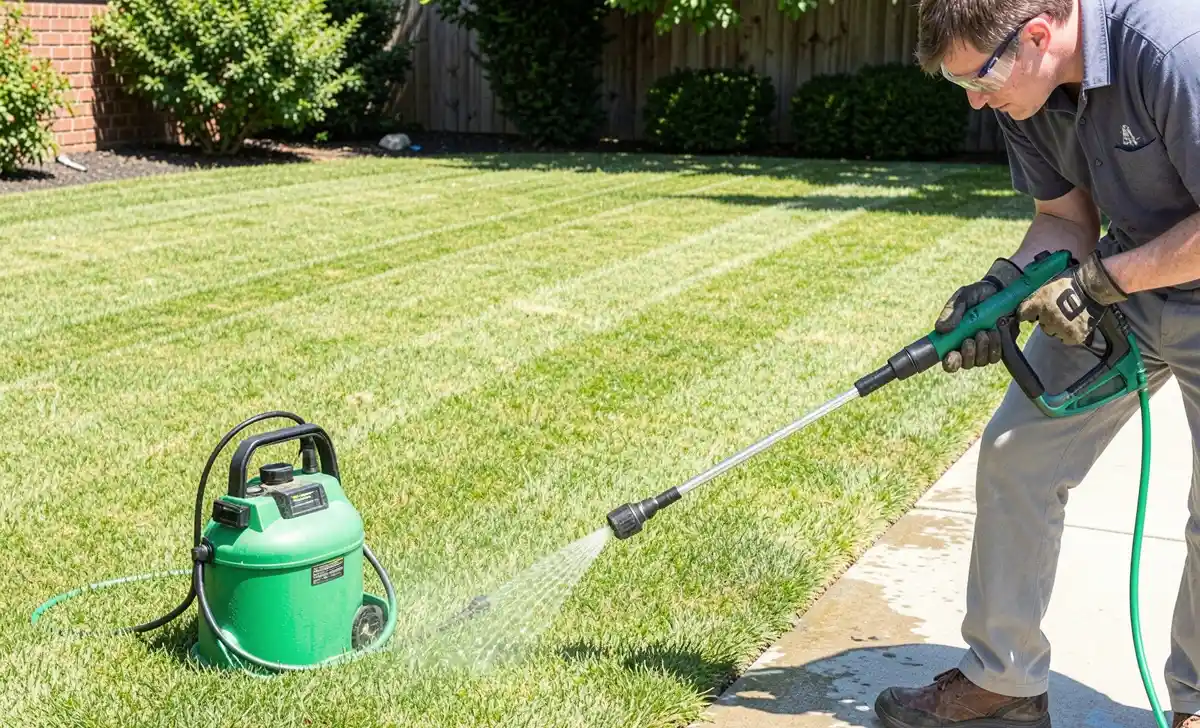
Mistake #4: Skipping protective gear. At minimum: safety glasses, gloves, and closed-toe shoes.
Mistake #5: Assuming more pressure cleans better. It doesn’t. The right pressure and technique do.
Post-Cleaning Maintenance: Protect Your Investment
Once you finish cleaning, don’t just put the pressure washer away. Follow these steps:
- Disconnect the hose and wand
- Run clean water through the system to flush out the detergent
- Remove and rinse the nozzle — mineral buildup ruins spray patterns
- Coil the high-pressure hose loosely (tight kinks damage internal linings)
- Store indoors if possible. Freezing temperatures crack pumps.
- Change the oil (gas models) according to the manual
When to Call a Professional
Some jobs aren’t for beginners. Consider hiring an experienced pressure washing company in Spokane if:
- You need to clean a steep or multi-story roof
- The surface has lead-based paint
- You’re removing industrial stains or heavy paint buildup
You don’t have time to learn proper technique before the job must be done
FAQs
Can I use a pressure washer on my vinyl siding?
Yes, but only at low pressure (750–1200 PSI) with a wide fan nozzle. Too much force can blow water behind the siding or crack the panels.
Do I really need detergent, or is water enough?
For light dirt, water works. But for black mold, oil stains, or heavy mildew, a pressure-washer-safe detergent makes a night-and-day difference.
How close should I hold the nozzle to the surface?
Start at least 12 inches away. Move closer only if needed, and always test on a small hidden area first.
Is it safe to pressure wash my wood deck?
Yes, but use extreme caution. Wood is soft. A narrow nozzle or high pressure will leave permanent grooves and splinters.
Final Thoughts
Pressure washing is a valuable skill that saves money and keeps your home looking great. But respect the tool. Start with a small, low-risk area—maybe a concrete walkway or a small section of fence. Practice your technique. Test pressures and distances. Once you’re comfortable, move on to larger projects like siding or decks. The pressure washing tips for beginners shared here will help you build confidence while avoiding expensive errors.
If you live in Spokane, remember that our wet winters mean moss and mildew grow fast. A spring pressure wash followed by a fall touch-up is usually enough to keep your home looking its best.