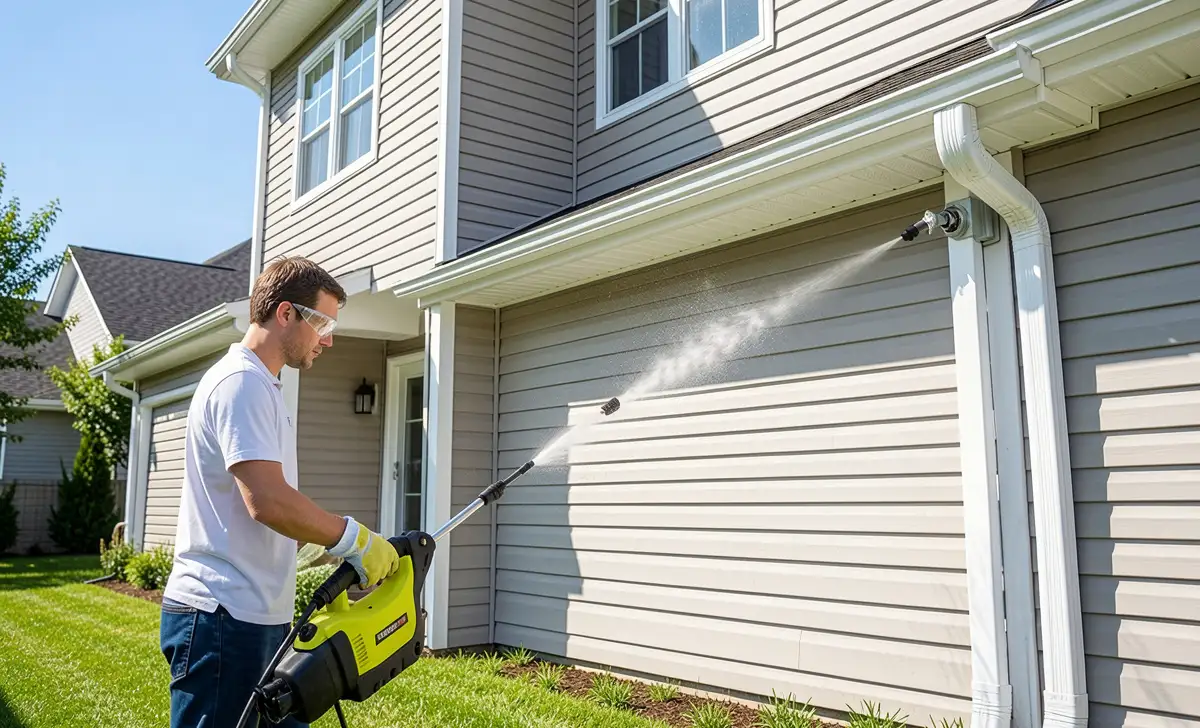
If your home’s exterior looks dull, streaky, or covered in greenish-black mold, chances are your siding and gutters need a deep clean. One of the most effective ways to restore them is to clean gutters pressure washing style using a reliable machine. But if you’ve never used one before, you probably have questions: Is pressure washing safe for siding? Can I damage my gutters? Do I need hot water or will cold work? Should I just hire a professional?
This guide answers all of those common concerns. You’ll learn exactly how to clean siding and gutters with a pressure washer, what mistakes to avoid, and when it makes sense to call in a pressure washing company instead.
Pressure Washing vs. Power Washing: What’s the Difference?
Before you start spraying, it helps to understand the tool in your hands. Many people use the terms “pressure washing” and “power washing” interchangeably, but they are not the same.
- A pressure washer uses highly pressurized cold water to blast away dirt, grime, and loose paint.
- A power washer does the same thing but heats the water. That heat helps dissolve grease, oil, and stubborn mildew faster.
For cleaning siding and gutters, a standard pressure washer is usually sufficient. However, if your siding has years of baked-on grime or algae, a power washer with heated water can save you time and elbow grease.
Types of Pressure Washers: Gas vs. Electric
When people search for how to clean gutters using the pressure washing method, they often overlook one critical decision: choosing the right machine. (Keyword #1)
- Electric pressure washers are lightweight, quieter, and perfect for smaller cleaning jobs like a single-story home or light gutter cleaning. They typically produce 1,300 to 2,000 PSI (pounds per square inch), which is gentle enough for vinyl siding.
- Gas pressure washers are more powerful (2,500–4,000 PSI) and better for larger homes, two-story buildings, or heavy-duty dirt. However, they require more maintenance and can easily damage siding if you’re not careful.
Real-world advice: If you’re a homeowner cleaning your own gutters and siding once a year, a quality electric pressure washer is likely your best bet. It’s safer and easier to control.
What You’ll Need Before You Start
Gathering the right tools and safety gear ahead of time prevents mid-project frustration. Here’s what experienced DIYers and professional pressure washing services recommend:
- Pressure washer (electric for most homes, gas for large or very dirty homes)
- Wide nozzle (40-degree tip is safest for siding)
- Cleaning products specifically labeled for siding or gutters
- Cleaning gloves and safety glasses
- Broom or rake
- Dry towels
- Ladder (if gutters are out of reach)
- Drop cloths or plastic sheeting to cover plants and electrical outlets
Step-by-Step: How to Clean Gutters Pressure Wash Method Properly
1. Inspect the Entire Building First
Walk around your home and look for loose siding, open windows, or damaged gutter sections. Close all windows tightly so water doesn’t get inside. Cover electrical outlets, outdoor furniture, and any fragile decorations near the work area.
One common mistake homeowners make is skipping this inspection. A single open window can flood a room, and loose siding can be torn off by high-pressure spray.
2. Protect Your Belongings and Landscaping
Before you even turn on the pressure washer, move all household appliances, grills, potted plants, and decor away from the house. When you clean gutters pressure washing style, cover any small trees or flower beds below — cleaning chemicals can damage or kill plants. (Keyword #2)
If you’re using a detergent, wet down nearby plants with plain water first and cover them with plastic sheeting. This small step protects your landscaping from chemical runoff.
3. Sweep Out Gutters Before Pressure Washing
This is one of the most overlooked steps. If you spray a pressure washer into gutters filled with leaves, twigs, and dirt, you’ll create a muddy, clogged mess.
Use a broom, rake, or even your hands (with gloves on) to clear out large debris. Once the gutter is free of foliage, you can use the pressure washer on a low setting to flush out remaining dust and fine particles.
4. Select the Right Cleaning Products
Not all cleaning products work on both siding and gutters. Some are too harsh for vinyl or painted wood. Always read product labels carefully. Look for:
- Outdoor siding cleaners (mildew removers)
- Gutter-specific sprays
- Biodegradable, plant-safe detergents
If you’re unsure, browse online for the most suitable cleaning products for your specific siding material (vinyl, wood, fiber cement, or aluminum).
5. Hold the Pressure Washer Correctly
Grip the spray wand firmly with both hands. Stand at a comfortable distance — usually 2 to 3 feet away from the siding — and test a small hidden area first. Keep the spray at a slight downward angle to avoid forcing water up under the siding panels.
Pro tip: Don’t spray upward into gutters or siding edges. Water forced behind siding can cause mold, decay, and structural damage over time.
6. Work in Small Sections
Many first-timers try to clean entire walls at once. That’s a mistake. Spray detergent on one small section at a time (roughly 5×5 feet). Let it sit for a few minutes — but don’t let it dry completely. If the detergent dries on the surface, it leaves white, chalky stains that are hard to remove.
If the weather is sunny or windy, re-wet your workspace occasionally to keep the cleaning product active.
7. Rinse From Top to Bottom
After letting the detergent set in, switch to your wide nozzle (40 degrees) and rinse with clean water. Always start at the top of the siding or gutter and work your way down. This allows dirty water to flow downward without re-staining already cleaned areas.
To properly clean gutters pressure washing techniques require patience and the right nozzle angle. (Keyword #3)
8. Hand-Dry Corners and Problem Spots
Water naturally collects in siding corners, window ledges, and gutter joints. If left to sit, that moisture leads to mold and decay. After rinsing, use a dry towel to hand-dry all the siding corners and gutter seams where water tends to gather.
9. Clean Windows Safely (Without Breaking Them)
Pressure washing windows makes many homeowners nervous — and for good reason. High pressure can crack glass or rip off window screens. Here’s how to do it safely:
- Close windows tightly.
- Remove screens before spraying.
- Fill the pressure washer tank with a window cleaner (not a general detergent).
- Set the pressure to the lowest possible setting.
- Use a wide nozzle and spray at a 45-degree angle.
- Rinse with clean water, still on low pressure.
10. Clear Away Dirt and Debris Afterward
Once you finish pressure washing, you’ll notice dirt, dead leaves, and grime piled up around your foundation. Use a broom or rake to gather everything and dispose of it properly. This final cleanup prevents stains on driveways and keeps your yard looking tidy.
When you clean gutters pressure washing regularly, you prevent long-term damage and costly repairs. (Keyword #4)
When to Hire a Pressure Washing Company Instead
DIY pressure washing is rewarding, but it’s not for everyone. If you:
- Have a two- or three-story home with hard-to-reach gutters
- Own fragile siding like old wood or stucco
- Don’t own a pressure washer and don’t want to buy or rent one
- Have physical limitations that make ladder work unsafe
…then hiring professional pressure washing services is a smart choice.
Benefits of hiring a pressure washing company:
- They use safer, commercial-grade cleaning products matched to your siding type.
- They have extension wands and lifts to reach high gutters safely.
- They know the correct pressure settings for different materials (vinyl, brick, wood, etc.).
- They carry insurance, so accidental damage is covered.
Many homeowners find that paying for a professional cleaning once every year or two is worth the peace of mind — especially when you consider the cost of repairing water-damaged siding or broken windows.
FAQs
Can pressure washing damage vinyl siding?
Yes, if you use too high pressure (over 2,000 PSI) or spray upward. Always use a wide nozzle and keep the spray level or slightly downward.
How often should I clean gutters and siding?
Most homes benefit from a thorough pressure wash once a year. If you live in a humid or wooded area, you may need to do it twice a year.
Do I need to use detergent, or just water?
Water alone removes loose dirt, but detergent is essential for killing mold, mildew, and algae. Without it, growth returns quickly.
Is it safe to pressure wash gutters from a ladder?
It can be dangerous. If you must use a ladder, secure it firmly and never lean too far to the side. Better yet, use a pressure washer with an extension wand designed for gutters.
Final Thoughts
Learning how to clean siding and gutters with a pressure washer is a valuable home maintenance skill. It saves money, improves curb appeal, and prevents long-term damage from mold, rot, and clogged gutters. Whether you choose an electric pressure washer for small jobs or hire a professional pressure washing company for a complete exterior clean, the key is to work carefully, protect your home and landscaping, and always prioritize safety.
Now that you know how to clean gutters pressure wash method properly, you can confidently restore your home’s exterior — or decide when it’s best to call in the experts.