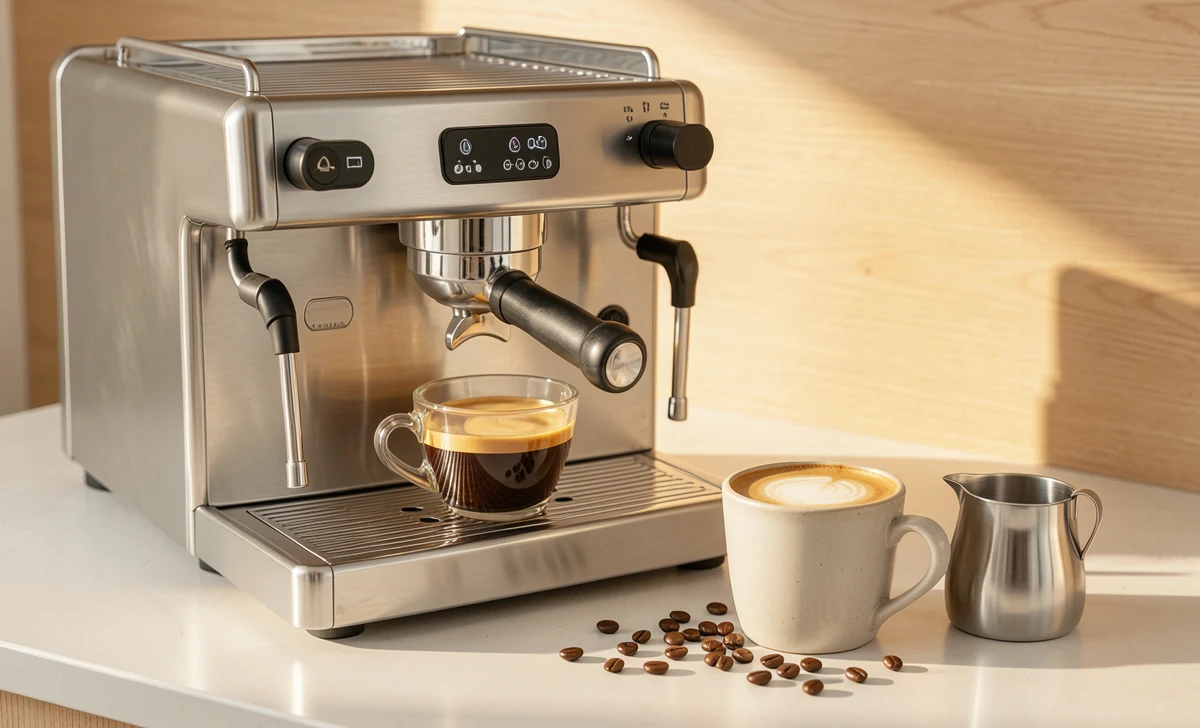
There’s something almost magical about that first sip of espresso in the morning. The rich crema, the bold aroma, that perfect balance of bitterness and smoothness—it wakes you up in a way that regular drip coffee just can’t match.
But here’s the reality most coffee lovers face: getting that café-quality espresso at home isn’t always straightforward. You’ve probably tried using a stovetop moka pot or a basic coffee maker, only to end up with something that tastes burnt, watery, or just… off.
I’ve been there. And after testing over a dozen espresso machines with milk steamers over the past several years, I can tell you this: the right espresso machine with milk steamer makes all the difference.
In this guide, we’ll walk through everything you need to know about choosing the best espresso machine with milk steamer for your home, kitchen, and lifestyle. Whether you’re a latte lover, a cappuccino enthusiast, or someone who just wants a quick, high-quality shot in the morning, you’ll find practical, experience-based advice here.
Let’s dive in.
Why Making Espresso at Home Makes Sense
Before we talk about specific machines, let’s address the big question: why bother making espresso at home at all?
The cost argument is real. A daily latte from your local coffee shop can easily run $4 to $6. Do the math—that’s $1,460 to $2,190 per year. A quality home espresso machine with milk steamer typically pays for itself within three to six months.
Convenience matters too. Waiting in line, dealing with traffic, or adjusting your schedule around café hours becomes unnecessary when you can pull a perfect shot in your own kitchen.
Health is another factor. When you control what goes into your coffee, you avoid hidden sugars, artificial syrups, and low-quality milk. Espresso itself has been studied for potential health benefits—some research suggests it may help with weight management and metabolic health, though it’s always smart to talk with your doctor about any dietary changes.
And let’s be honest: there’s genuine satisfaction in mastering a skill. Learning to tamp properly, steam milk to the right microfoam, and dial in your grind size is rewarding in a way that pressing a button on a pod machine just isn’t.
What Is an Espresso Machine, Really?
An espresso machine forces hot water through finely ground coffee at high pressure—typically 9 bars. That pressure is what creates espresso’s signature crema (that golden-brown foam on top) and concentrates the coffee’s oils and flavors into a small, intense shot.
Not all espresso machines are the same. Here’s a quick breakdown:
| Type | Best For | Pressure Source |
|---|---|---|
| Manual lever | Purists who want full control | Your arm |
| Semi-automatic | Home enthusiasts | Electric pump |
| Automatic | Daily convenience | Electric pump |
| Super-automatic | Minimal effort | Electric pump + built-in grinder |
For most home users, a semi-automatic or automatic machine strikes the right balance between control and convenience.
Why You Need a Milk Steamer (Not Just an Espresso Machine)
If you only drink straight espresso shots, you can skip this section. But if you enjoy lattes, cappuccinos, flat whites, or mochas, a milk steamer or frother is essential.
Here’s what a good milk steamer does that a microwave or stovetop can’t:
Texture. Properly steamed milk has microfoam—tiny bubbles that create a velvety, creamy mouthfeel. You can’t get that by shaking a jar or using a whisk.
Temperature control. Overheated milk loses its natural sweetness and develops a cooked, sometimes burnt flavor. A steamer heats milk to the ideal range (around 150–155°F) without scorching it.
Latte art. Okay, this isn’t essential, but it’s fun. Proper microfoam lets you pour hearts, rosettas, and tulips. It’s a small joy in the morning routine.
Versatility. A good milk steamer isn’t just for coffee. You can steam and froth milk for hot chocolate, matcha lattes, chai tea lattes, and even creamy soups.
Key Features to Look For in an Espresso Machine with Milk Steamer
Let’s break down the features that actually matter—not the marketing hype.
Pressure System
Look for 15 to 20 bars of pump pressure (though 9 bars at the group head is ideal). Cheap machines claiming 15+ bars often use a pressurized basket to compensate for poor grind quality. That’s fine for beginners, but unpressurized baskets produce better espresso.
Milk Steaming Capability
If you make milk-based drinks daily, a professional-style steam wand is worth prioritizing. Some entry-level machines use a “panarello” wand—an auto-frothing attachment that’s easier to use but produces larger, less creamy bubbles. A traditional wand takes practice but yields better results.
Boiler Type
- Single boiler: Heats water for brewing or steaming, but not both at once. You have to wait between steps. Fine for home use, but slower.
- Dual boiler: Brews and steams simultaneously. Faster and more convenient, but more expensive.
- Thermoblock: Heats water on demand. Quick start-up, but can struggle with temperature stability for back-to-back drinks.
Build Quality
Stainless steel construction matters. Plastic components can crack, warp, or absorb coffee oils over time. A heavier machine generally indicates better internal components.
Water Reservoir
A removable reservoir makes filling and cleaning much easier. Look for at least 1 liter (about 4 cups) if you make multiple drinks daily.
Cup Clearance
Measure the space between the portafilter and the drip tray. If you use tall mugs, you need enough clearance—or a machine with a removable drip tray.
Practical Benefits of Owning an Espresso Machine at Home
Let me share what you actually gain from owning an espresso machine with a milk steamer—based on real-world use, not marketing claims.
Time savings. My morning routine went from 20 minutes (driving to a café, waiting in line) to under 5 minutes from bean to cup. That extra time adds up.
Consistent quality. Once you dial in your settings, you get the same great shot every time. No more bad barista days or inconsistent café drinks.
Experimentation freedom. Want to try a different roast? Adjust your brew ratio? Compare single-origin beans side by side? You can do all of that at home without paying café markup.
Entertaining confidence. When guests come over, making café-quality cappuccinos or lattes feels impressive—and it’s genuinely fun to share.
Kitchen aesthetics. A well-designed espresso machine on your counter looks great. Stainless steel, brushed metal, or retro finishes can complement your kitchen’s style.
Understanding Espresso-Based Drinks
If you’re new to this world, here’s a quick reference:
| Drink | Espresso | Milk | Texture |
|---|---|---|---|
| Espresso | 1 shot | None | Straight |
| Macchiato | 1 shot | Small dollop of foam | Marked with milk |
| Cortado | 1 shot | Equal part steamed milk | Minimal foam |
| Flat White | 2 shots | Steamed milk | Thin microfoam |
| Latte | 1–2 shots | Steamed milk | ½-inch foam |
| Cappuccino | 1–2 shots | Steamed milk | Equal parts espresso, milk, foam |
| Mocha | 1–2 shots | Steamed milk + chocolate | Foam on top |
A good milk steamer lets you make all of these at home. Some machines even include recipe guides or preset buttons for common drinks.
What to Avoid When Buying
Not all machines are created equal. Here’s what to steer clear of:
Extremely cheap machines (under $100). These often use low-pressure steam instead of a pump, which produces bitter, over-extracted coffee that resembles espresso in name only.
No-name brands with poor support. When your machine breaks—and eventually, it might—you want replacement parts and customer service. Stick with established brands.
Machines with non-standard portafilter sizes. If you can’t find replacement baskets or accessories, you’re stuck.
Overly complex digital interfaces. More buttons and screens mean more things that can fail. Simple mechanical switches often outlast touch panels.
FAQs
I don’t want to spend a fortune. Can I get something decent under $300?
Yes, but manage your expectations. In the under-$300 range, you’re looking at manual lever machines or entry-level electric models with pressurized baskets. These can produce acceptable espresso, but they won’t match a $1,000 setup. For most beginners, that’s fine—you can learn the basics and upgrade later.
How hard is it to steam milk for the first time?
Honestly? There’s a learning curve. Your first few attempts might produce bubbly, thin foam instead of silky microfoam. But with 10–15 minutes of practice and watching a couple of YouTube tutorials, most people get the hang of it. The key is positioning the steam wand just below the milk’s surface and creating a gentle vortex.
Do I really need a built-in grinder?
Not necessarily. But you absolutely need a quality burr grinder—separate or built-in. Blade grinders create inconsistent particle sizes, which leads to uneven extraction (sour and bitter flavors at the same time). A burr grinder gives you uniform grounds, which is non-negotiable for good espresso.
What about cleaning? I don’t want a high-maintenance machine.
This is a valid concern. Some espresso machines require regular backflushing, descaling, and wand cleaning after every use. Others are more forgiving. Look for models with removable water tanks, dishwasher-safe parts, and automatic cleaning cycles if maintenance feels overwhelming.
Will a home machine really taste as good as my local café?
With practice and fresh beans—yes, it can. Many home setups now rival commercial equipment, especially with machines from brands like Breville, Gaggia, Rancilio, and De’Longhi. The biggest variable is you: your puck prep, your milk technique, your bean freshness. A skilled home barista can outpull a distracted café barista any day.
Final Thoughts: Is It Worth It?
After years of making espresso at home, I can say without hesitation: yes, a quality espresso machine with milk steamer is worth the investment—if you actually enjoy coffee and will use it regularly.
But be honest with yourself. If you’re the kind of person who drinks coffee only occasionally or prefers the simplicity of instant or drip coffee, this might be more machine than you need.
However, if you love the ritual, the taste, and the ability to craft café-quality drinks in your pajamas, you won’t regret the purchase.
Start with a realistic budget. You don’t need a $2,000 machine to make good espresso. A solid entry-level setup (machine + grinder) can be found for $300–$500, especially if you buy during sales.
Invest in fresh beans. Even the best machine can’t fix stale coffee. Buy from local roasters or reputable online sources, and use beans within 2–4 weeks of roasting.
Practice your technique. Your first few shots might be rough. That’s normal. Watch videos, join coffee forums, and keep experimenting. Within a couple of weeks, you’ll be pulling shots that rival your favorite café.
And most importantly: enjoy the process. Making espresso at home isn’t just about caffeine—it’s about starting your day with something made by your own hands, exactly the way you like it.
Disclaimer: The information in this article is for general informational purposes only and reflects personal experience and research. Individual results may vary based on product quality, maintenance, water conditions, and user skill level. Any health-related claims are based on general studies about coffee consumption and should not replace professional medical advice.