If you have a warm-season lawn, chances are you either love St. Augustine grass or you’re struggling to keep it healthy. It’s thick, lush, and beautiful when cared for properly—but it can also be demanding. One of the most common questions homeowners in places like Florida and Texas ask is: What’s the best fertilizer for St. Augustine grass? And more importantly, how often should I actually use it?
In this guide, we’ll walk through everything you need to know about St. Augustine grass fertilizer—from the benefits to the different types (organic, synthetic, and mineral) and even specific product recommendations. Whether you’re a new homeowner or someone tired of battling brown patches, this article is written with your real-world lawn care challenges in mind.
Why St. Augustine Grass Needs Special Attention
St. Augustine grass (Stenotaphrum secundatum) is a dense, long-lived turf grass that thrives in warm, humid climates. You’ll see it everywhere in coastal regions, from Florida to the Gulf Coast and parts of Texas. It spreads quickly through above-ground runners called stolons, which helps it recover from damage—but only if the soil has the right nutrients.
Without proper fertilization, St. Augustine grass becomes thin, pale green or yellow, and vulnerable to pests, diseases, and drought. Many homeowners notice bare spots or thinning turf in late summer and wonder what went wrong. The answer often comes down to soil nutrition and a consistent fertilizer regimen.
Real homeowner concern: “I water regularly and mow on time, but my St. Augustine still looks sad. What am I missing?”
Answer: Water and mowing alone aren’t enough. Grass needs nitrogen for blade growth, phosphorus for root development, and potassium for overall plant health and disease resistance.
Key Benefits of Using St. Augustine Grass Fertilizer
Let’s get specific. Why should you invest time and money into fertilizing your lawn? Here are the real, proven benefits:
1. Deeper, Darker Green Color
Nothing beats the look of a healthy, emerald-green lawn. The right balance of nitrogen and iron enriches color and vitality, turning tired, sparse turf into a thick green carpet.
2. Stronger Root System
Phosphorus encourages roots to grow deeper into the soil. Deeper roots mean better access to water and nutrients—and more resilience during dry spells.
3. Improved Disease and Pest Resistance
Well-fed grass is naturally tougher. It can fight off common St. Augustine issues like gray leaf spot, brown patch, and chinch bugs more effectively than weak, undernourished turf.
4. Better Drought Tolerance
A fertilized lawn retains moisture more efficiently. While no grass is truly “drought-proof,” healthy St. Augustine can survive dry periods much longer than neglected lawns.
5. Faster Recovery From Foot Traffic and Wear
If you have kids, pets, or frequent backyard gatherings, your lawn takes a beating. Proper fertilization helps the grass repair itself, filling bare or thin spots with fresh shoots.
6. Increased Home Curb Appeal and Value
Let’s be honest—a lush, well-maintained lawn looks great and adds real value to your home. It’s one of the first things people notice.
Types of Fertilizer for St. Augustine Grass
Not all fertilizers are created equal. When you walk down the lawn care aisle, you’ll see three main types: organic, synthetic, and mineral. Each has its pros and cons. Let’s break them down in plain language.
Organic Fertilizer
Organic fertilizers come from plant or animal byproducts. Think compost, manure, green manures, bone meal, or seaweed extract. They release nutrients slowly as they break down, which means less risk of burning your lawn.
Pros:
- Safe for people, pets, and the environment
- Improves soil structure over time
- Feeds beneficial soil microbes
Cons:
- Slower results
- Can be more expensive
- May have an odor (especially manure-based)
Best for: Homeowners who want a natural, low-risk approach and don’t mind waiting a bit longer for visible results.
Synthetic Fertilizer
Synthetic fertilizers are manufactured from inorganic materials like ammonium nitrate, urea, and superphosphate. They’re designed for quick, predictable results.
Pros:
- Fast-acting (greening within days)
- Precise nutrient ratios (e.g., 15-0-4)
- Often cheaper than organic options
Cons:
- Risk of burning grass if overapplied
- Doesn’t improve soil biology
- Can run off into waterways if misused
Best for: Homeowners who need quick results or are preparing their lawn for a special event.
Mineral Fertilizers
Mineral fertilizers are made from mined materials like rock phosphate, greensand, or langbeinite. They’re technically natural but not always organic-certified.
Pros:
- Slow, steady release
- Adds trace minerals to soil
- Low risk of burning
Cons:
- Harder to find
- Nutrient ratios are less flexible
Best for: Gardeners looking for a middle ground between organic and synthetic.
Common question: Can I mix organic and synthetic fertilizers?
Yes, many lawn care experts use a “hybrid” approach—synthetic for a quick green-up in spring, followed by organic applications for long-term soil health.
Best Commercial Fertilizers for St. Augustine Grass (Real Product Picks)
After researching what actually works for homeowners (not just what companies want to sell), here are three top-rated St. Augustine grass fertilizers.
1. Ferti-Lome St. Augustine Weed and Feed 15-0-4
This granular product does two jobs at once: it feeds your lawn and controls weeds. The active ingredient is atrazine, a popular broadleaf herbicide that targets common invaders like crabgrass, sedge, and spurge. It’s best applied during the latter half of the growing season.
Best for: Homeowners dealing with both weed problems and nutrient deficiencies.
2. TurfGrassPro Blade Iron 15-0-0
If you prefer a liquid fertilizer, this is a standout choice. It’s high in nitrogen and iron, which means rapid greening without excessive top growth. It’s especially popular in Florida and Texas, where summer heat can stress lawns.
Note: Some product descriptions confuse “fertilizer” with “grass seed.” Be sure you’re buying the liquid fertilizer, not seed—St. Augustine is typically installed as sod or plugs, not seed.
Best for: Quick greening and iron supplementation (great for sandy soils).
3. Ferti-Lome Classic Lawn Food
This is a reliable, balanced fertilizer that greens up St. Augustine grass during any part of the summer. It’s made from natural ingredients and is safe for people and the environment when used as directed.
Best for: General-purpose summer feeding without weed control additives.
How to Apply St. Augustine Grass Fertilizer Correctly
Fertilizer alone won’t save your lawn if applied incorrectly. Follow these practical steps:
Step 1: Test Your Soil
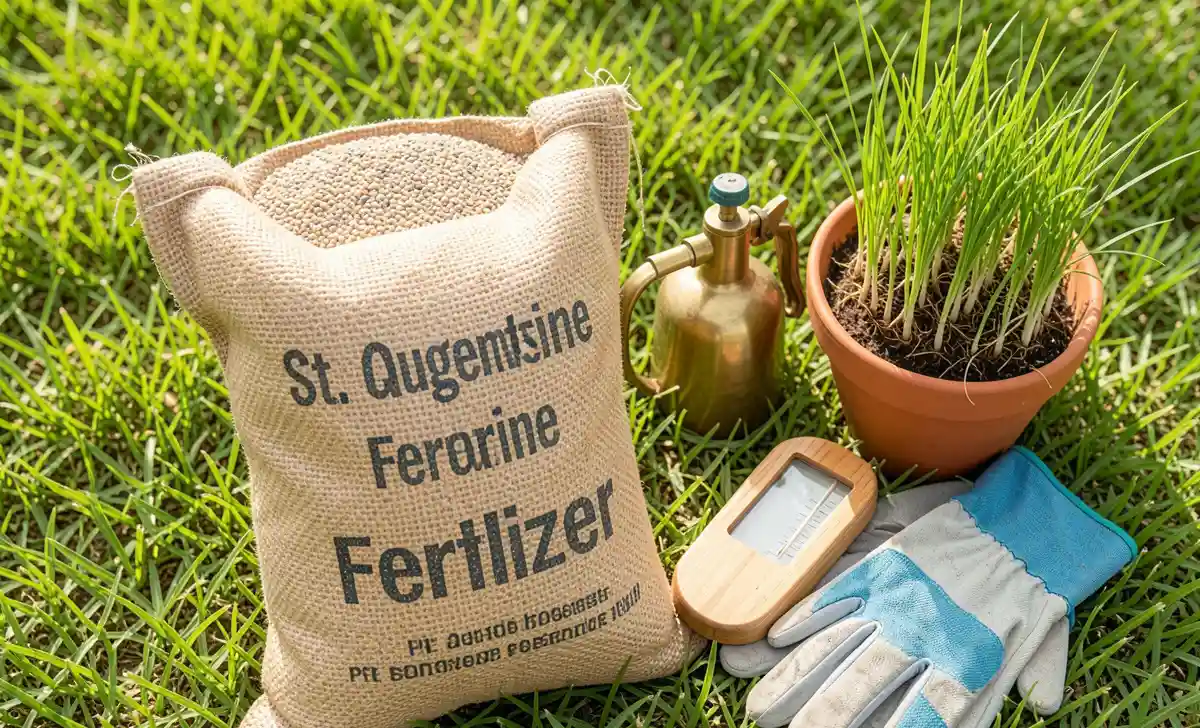
Before buying anything, test your soil pH and nutrient levels. St. Augustine prefers slightly acidic to neutral soil (pH 5.5–7.0). Most county extension offices offer affordable soil testing.
Step 2: Choose the Right NPK Ratio
Look for numbers like 15-0-4, 15-5-10, or 12-4-8. St. Augustine needs more nitrogen (first number) and potassium (third number) than phosphorus (middle number), unless a soil test shows a phosphorus deficiency.
Step 3: Apply at the Right Time
- Spring (March–April): Light application after the last frost
- Summer (May–August): Main feeding period; every 6–8 weeks
- Fall (September–October): One final application before dormancy
Step 4: Water Properly After Application
Granular fertilizer needs water to activate. Sprinkle it on the ground before watering, then water deeply (about ½ inch) to move nutrients into the root zone.
Step 5: Follow Label Instructions Exactly
More fertilizer is not better. Over-fertilizing burns grass, pollutes waterways, and wastes money.
Real mistake to avoid: “I thought if a little was good, more would be better. I ended up with brown, crispy grass within a week.” – Homeowner in Houston, TX
Common St. Augustine Grass Problems Fertilizer Can Solve
| Problem | Likely Cause | Fertilizer Solution |
|---|---|---|
| Pale green or yellow grass | Nitrogen deficiency | High-nitrogen fertilizer (e.g., 15-0-0) |
| Thin, weak growth | Low potassium | Balanced fertilizer with K |
| Bare spots not filling | Poor root development | Phosphorus (if soil is deficient) |
| Frequent disease | General weakness | Complete, balanced feeding |
| Slow spring green-up | Low soil nutrients | Early spring fertilizer |
Frequently Asked Questions
How often should I fertilize St. Augustine grass?
Generally, 3–4 times per year (spring, early summer, late summer, early fall). Avoid fertilizing during winter dormancy.
Is St. Augustine grass fertilizer safe for pets and kids?
Once the fertilizer is watered in and the lawn is dry, it’s safe. Always follow label precautions. Organic options are generally safer for immediate re-entry.
Can I use regular lawn fertilizer on St. Augustine?
Not always. Many all-purpose lawn fertilizers have too much phosphorus or the wrong nitrogen release profile. Look for products specifically labeled for St. Augustine or warm-season grasses.
What’s the difference between granular and liquid fertilizer?
Granular is slow-release and lasts longer. Liquid works faster but requires more frequent application. Both can work well—it depends on your preference and schedule.
Does St. Augustine grass need iron?
Yes. Iron deficiency causes yellowing between leaf veins (chlorosis). Products like TurfGrassPro Blade Iron 15-0-0 are formulated specifically for this issue.
Final Thoughts: Fertilizing for Long-Term Lawn Health
Achieving a lush, verdant lawn isn’t about luck—it’s about proactive nourishment. The right nutrients amplify the vigor and heartiness of St. Augustine grass, enriching its color and density. Well-fed turf not only looks stunning but becomes resilient against pests, disease, and everyday wear-and-tear.
Don’t wait for bald patches to appear. Be preemptive with soil nutrition so your landscape can thrive for years through self-renewal. Test your soil, choose the right fertilizer type (organic, synthetic, or mineral), apply it on a consistent schedule, and water correctly.
With a small time investment toward proper feeding, you’ll be rewarded with enduring emerald appeal—and a lawn that neighbors will envy.