
What is a Garage Door Torsion Spring and How Does It Work?
At the heart of every functional garage door system lies a sophisticated counterbalance mechanism, and for most modern residential and many commercial setups, this mechanism is centered around the garage door torsion spring. Unlike extension springs that stretch along the sides of the door tracks, torsion springs are mounted on a metal shaft directly above the garage door opening. Their primary role is to store and release mechanical energy, effectively offsetting the door’s substantial weight. This ingenious design allows a heavy garage door, which can weigh hundreds of pounds, to be lifted and lowered with relative ease, whether manually or with an electric opener.
The fundamental principle behind a torsion spring’s operation is its ability to generate torque. As the garage door closes, cables attached to the bottom corners of the door wrap around cable drums located at the ends of the torsion shaft. This action causes the shaft to rotate, which in turn twists and winds the torsion springs. The more the springs are wound, the more potential energy they store. When the garage door is opened, the stored energy in the tightly wound springs is released, causing them to unwind and rotate the shaft. This rotation pulls the lift cables, raising the door. Essentially, the springs do the heavy lifting, making the door feel lighter than it truly is and significantly reducing the workload on your garage door opener. This counterbalance system is crucial for the smooth, controlled movement of the door, preventing it from crashing down or requiring excessive force to open.
Key Components of the Torsion System
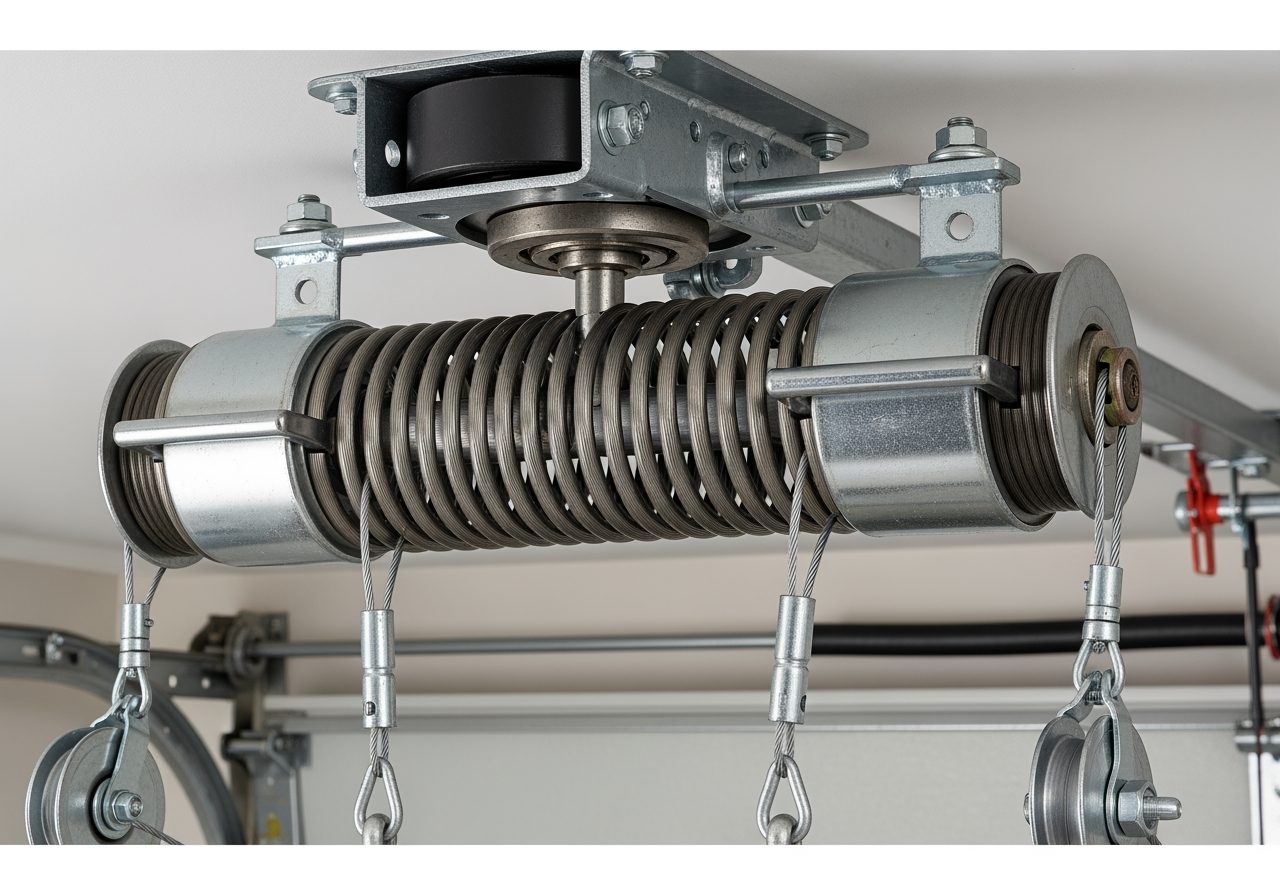
Understanding the torsion spring system requires familiarity with its interconnected components, all working in harmony to ensure reliable door operation:
- Torsion Shaft: This solid or hollow metal bar extends across the top of the garage door opening and rests on bearing plates. The torsion springs, cable drums, and center bracket are all mounted on this shaft.
- Cable Drums: Located at each end of the torsion shaft, these are grooved pulleys where the lift cables wind and unwind. Their diameter and design are critical for the door’s balance and travel.
- Lift Cables: These sturdy steel cables connect the bottom corners of the garage door to the cable drums. As the door moves, they transmit the force from the springs to the door.
- Winding Cones: Inserted into the ends of the torsion springs, these cones have holes for winding bars. They are used to apply and adjust the tension in the springs.
- Stationary Cones: These cones are fixed to the torsion shaft, typically secured by set screws, and prevent the springs from unwinding past a certain point.
- Center Bracket: This bracket supports the middle of the torsion shaft and often houses a bearing to ensure smooth rotation.
- End Bearing Plates: Mounted to the wall at each end of the torsion shaft, these plates support the shaft and contain bearings for smooth operation.
These components, collectively, form a robust system that efficiently transfers the spring’s stored energy to the garage door, enabling controlled, balanced movement.
Torsion Springs vs. Extension Springs
While both torsion and extension springs serve the vital function of counterbalancing a garage door’s weight, they do so through different mechanisms and exhibit distinct characteristics. Understanding these differences is key to appreciating why torsion springs are often preferred in modern installations.
Feature: Torsion Springs Extension Springs Location: Mounted horizontally on a shaft above the garage door. Run parallel to the horizontal tracks, along the sides of the door. Lifting Motion Provide a smoother, more balanced lifting action. Can result in a slightly jerkier, less controlled motion. Safety Contained on a shaft; less likely to cause injury if broken, as pieces remain largely contained. Can snap and fly dangerously if safety cables are not installed or fail. Lifespan Generally designed for a longer cycle life (e.g., 10,000-20,000+ cycles). Typically have a shorter cycle life (e.g., 5,000-10,000 cycles). Maintenance requires specialized tools and expertise for adjustment/replacement due to high tension. Easier to adjust/replace for some DIYers, but still carries risks. Noise Level tends to operate more quietly. It can be noisier due to friction along the tracks. Space Required: Requires less headroom above the door. Requires more side room along the tracks. Torsion springs are widely regarded as superior due to their enhanced safety features and greater durability. Their contained nature means that should a spring break, the fragments are less likely to become dangerous projectiles. Moreover, the balanced force distribution of torsion springs contributes to a smoother door operation and can extend the life of your garage door opener by reducing strain. This makes them the standard choice for most new garage door installations and a popular upgrade for older systems.
Signs of a Broken or Failing Torsion Spring
Recognizing the signs of a broken or failing torsion spring is crucial for both safety and the longevity of your garage door system. A compromised spring can quickly lead to more extensive damage to your opener, cables, or even the door panels themselves. Here are the most common indicators that your torsion spring needs attention:
- Garage Door Won’t Open: This is often the most immediate and frustrating sign. If your garage door opener runs but the door only moves a few inches or not at all, a broken spring is likely the culprit. The opener simply cannot lift the full weight of the door without the spring’s counterbalance.
- Loud Bang: Many homeowners report hearing a sudden, incredibly loud “bang” that sounds like a gunshot coming from the garage. This is the unmistakable sound of a torsion spring snapping under immense pressure.
- Visible Gap in the Spring: After the loud bang, a visual inspection will usually reveal a clear gap of an inch or two in the tightly coiled spring, indicating it has broken. This gap typically appears somewhere in the middle of the spring’s length.
- Crooked or Uneven Door: If one of your two torsion springs has broken, the door may appear crooked or uneven when attempting to open it. One side will be heavier than the other, causing it to sag or lift unevenly.
- Slack Lift Cables: The lift cables, which connect the door to the torsion shaft, rely on spring tension to remain taut. If a spring breaks, you’ll often notice that the cables become loose, frayed, or even come off the cable drums entirely.
- Door Feels Extremely Heavy to Lift Manually: If you try to lift the garage door by hand (after disconnecting the opener), and it feels unusually heavy, almost impossible to move, it’s a strong indication that the springs are no longer providing adequate counterbalance.
- Door Slams Shut When Closing: A door that closes too quickly or “slams” shut suggests that the springs are weak or broken and no longer control the door’s descent. This can be very dangerous and cause damage to the door or anything beneath it.
Understanding Torsion Spring Lifespan
Torsion springs are not designed to last forever. Like any mechanical component under constant stress, they have a finite lifespan, typically measured in “cycles.” A cycle is defined as one complete opening and closing of the garage door.
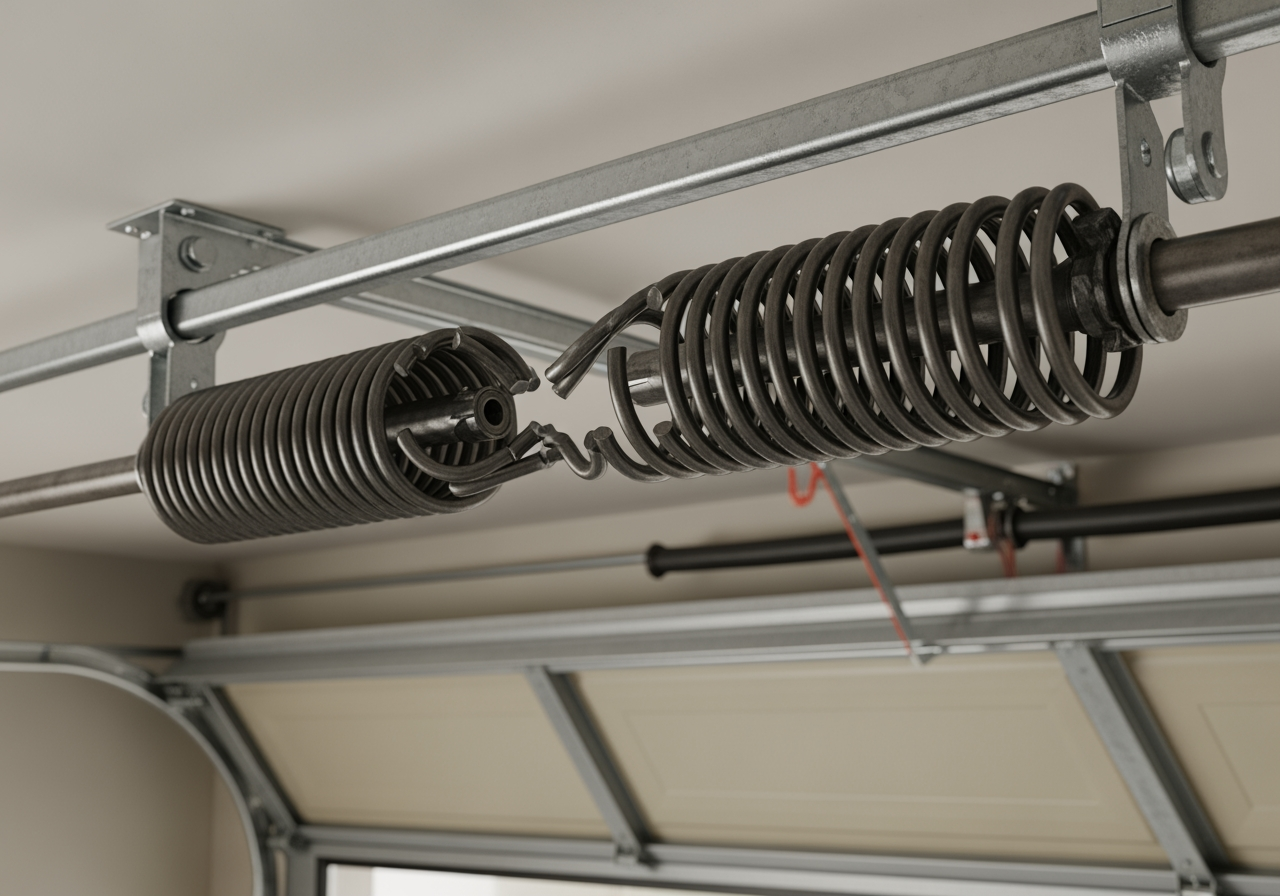
The industry standard for residential garage door torsion springs is 10,000 cycles. This means a standard spring is engineered to perform 10,000 open-and-close operations before it is expected to fail. While 10,000 cycles might sound like a lot, the actual lifespan in years can vary significantly depending on your household’s usage patterns. For instance, a garage door used twice a day (once to open, once to close) would accumulate approximately 730 cycles per year, translating to a lifespan of roughly 13-14 years. However, a busy family that uses their garage door four to six times a day could see their springs wear out in as little as 5-7 years.
It’s worth noting that springs with larger wire sizes generally have a longer lifespan, as they can withstand greater stress. For homeowners seeking extended durability, higher-cycle springs (e.g., 20,000 or even 30,000 cycles) are available, offering a significantly longer operational period. These heavy-duty options are particularly beneficial for high-traffic garages or commercial applications where longevity is a priority.
When one spring breaks, it is generally recommended to replace both torsion springs on a garage door. This is because if they were installed at the same time and have undergone the same amount of work, the remaining spring is likely nearing the end of its life as well. Replacing both simultaneously ensures balanced operation and prevents another repair in the near future. For further reading on the life of torsion springs, including industry standards and common issues, you can refer to this informative resource on garage door mechanics.
How to Choose and Measure a Replacement Torsion Spring
Selecting the correct replacement torsion spring is paramount for the safe, balanced, and efficient operation of your garage door. An incorrectly sized spring can lead to a host of problems, including premature wear on your garage door opener, uneven door movement, and even dangerous malfunctions. It’s a precise science, as the spring’s specifications are carefully calculated to counterbalance the exact weight and dimensions of your specific garage door. This section will guide you through the essential measurements and considerations required to choose the right spring.
Step 1: Determine the Winding Direction
The winding direction of a torsion spring is critical and refers to the direction in which its coils are wound. Springs are either left-hand wound (LHW) or right-hand wound (RHW). This designation is based on the direction the end of the wire points when the spring is viewed from its end.
To determine the winding direction, look at the end of the spring. If the end of the wire points upwards and to the right, it’s a right-hand wound spring. If it points upwards and to the left, it’s a left-hand wound spring. A common mnemonic is to make a fist: if your thumb points up, the direction your fingers curl indicates the winding direction.
On a standard residential garage door with two springs, they are typically installed as a pair: one LHW and one RHW. When standing inside your garage looking out, the spring on the right side of the center bracket is usually left-hand wound (often with a black cone), and the one on the left is typically right-hand wound (often with a red cone). This configuration ensures the forces are balanced across the torsion shaft.
Step 2: Measure the Wire Size, Inside Diameter, and Length
Accuracy in these measurements is non-negotiable. Even slight discrepancies can lead to an unbalanced door. We recommend a detailed guide to ensure precision when measuring your replacement torsion springs. For a highly visual, in-depth explanation, including common pitfalls and expert tips, we suggest consulting this comprehensive guide on measuring torsion springs.
- Wire Size: This is arguably the most critical measurement. It refers to the thickness of the spring wire itself. To measure wire size accurately, do not use calipers on a single coil, as corrosion, paint, and coil curvature can introduce inaccuracies. Instead, count a specific number of coils and measure their combined length.
- Method: Count 10 coils and measure their total length in inches. Divide this measurement by 10 to get the wire size. For greater precision, count 20 coils and divide by 20. Ensure the coils are pressed together tightly with no gaps for an accurate reading. For example, if 10 coils measure 2.5 inches, the wire size is 0.250 inches.
- Significance: The wire size directly correlates with the spring’s strength and the torque it can generate. An incorrect wire size will result in an under-sprung (too weak) or over-sprung (too strong) door.
- Inside Diameter (ID): This is the measurement of the hollow space inside the spring coils.
- Method: The inside diameter is often stamped on the winding cone or the stationary cone of the spring. Look for markings like “P175″ for 1 3/4” ID or “P200″ for 2” ID. If no markings are visible, you can measure the inside diameter with a ruler or tape measure to the nearest 1/16 inch.
- Significance: Residential garage doors commonly have a 1 3/4″ or 2″ inside diameter for torsion springs. The ID must match your existing spring to ensure it fits correctly over the torsion shaft and with the existing winding and stationary cones.
- Length: The total length of the spring coils when unwound and relaxed.
- Method: Measure the entire length of the spring, from the first coil to the last, excluding the winding and stationary cones. If your spring is broken into two pieces, carefully slide the pieces back together until the coils meet, and then measure the combined length. If the spring is still intact but under tension, you’ll need to estimate its unwound length, which can be complex. It’s always best to measure a spring that is completely relaxed or broken.
- Significance: The spring’s length, in conjunction with the wire size and inside diameter, determines the total number of coils and, thus, the spring’s overall strength and cycle life.
Step 3: Select the Right Type of Spring
Beyond the physical dimensions, the material and coating of the spring also play a role in its performance and longevity.
- Oil-Tempered Springs: The most common type of torsion spring, easily identified by their black coating. They are heat-treated during manufacturing, which gives them excellent strength and durability. The oil coating provides a basic level of corrosion resistance. They are the industry standard for most residential and light commercial applications.
- Galvanized Springs: These springs are coated with a zinc layer, giving them a silver appearance. The galvanization process offers superior rust protection, making it a suitable choice for humid environments, coastal regions, or garages where moisture is a concern. However, galvanized springs may lose a small amount of tension over their lifespan compared to oil-tempered springs, potentially requiring more frequent adjustments.
- Specialty Springs: For unique garage door configurations, such as High-Lift or Vertical-Lift doors, specialized torsion springs are required. These systems alter the door’s travel, requiring different spring calculations to ensure proper balance and operation. High-lift doors extend the vertical track to raise the door closer to the ceiling before turning horizontally, while vertical-lift doors move straight up without a horizontal track. If you have such a system, it’s crucial to consult with an expert or provide detailed specifications, as standard spring calculations will not apply.
Choosing the right torsion spring is a meticulous process that demands attention to detail. By accurately measuring the wire size, inside diameter, and length, and selecting the appropriate spring type for your environment and door system, you can ensure a safe, long-lasting repair.
Replacing a Torsion Spring: A Guide to Tools and Safety
Replacing a garage door torsion spring is widely considered one of the most dangerous DIY home repairs. This isn’t an exaggeration; the springs are under immense tension, storing tremendous amounts of energy. If mishandled, this stored energy can be released violently, leading to severe injury, dismemberment, or even death. For this reason, safety must be your absolute top priority if you choose to undertake this task. We cannot overstate the risks involved.
Crucial Safety Precautions and Required Tools
Before even considering touching a torsion spring, it is imperative to understand and implement strict safety protocols. Never underestimate the power of these components.
- Never use substitutes for proper winding bars: This is perhaps the most critical rule. Screwdrivers, pry bars, or any other makeshift tools are insufficient and extremely dangerous. They can bend, slip, or break, causing the spring to unwind uncontrollably and potentially strike you.
- Always clamp the door shut: Before you begin any work on the springs, ensure the garage door is fully closed and securely clamped to the track with C-clamps or locking pliers on both sides. This prevents the door from unexpectedly rising or falling, which could cause further injury or damage.
- Disconnect the garage door opener: Unplug the opener from its power source. This prevents accidental activation of the door during the repair process.
- Wear appropriate personal protective equipment (PPE): Safety glasses are non-negotiable to protect your eyes from flying debris or snapping spring fragments. Heavy-duty work gloves can protect your hands from pinches and cuts.
- Work slowly and deliberately: Rushing through the process increases the risk of mistakes. Take your time, follow instructions carefully, and double-check every step.
- Maintain a clear workspace: Ensure no one else, especially children or pets, is in the garage while you are working on the springs.
- Understand the winding process: Always wind and unwind springs in controlled, incremental steps, keeping a firm grip on the winding bars at all times. Never remove both winding bars simultaneously when the spring is under tension.
Tools Needed:
To safely replace a garage door torsion spring, you will need specific tools designed for the job:
- Two solid steel winding bars: specialized tools with a specific diameter that fit snugly into the winding cones of your springs. They are essential for safely applying and releasing spring tension.
- Wrenches and a socket set: You’ll need these to loosen and tighten the set screws on the winding cones, stationary cones, and center bracket, as well as to remove and reattach the cable drums.
- Sturdy ladder: A stable ladder is crucial for safely reaching the torsion assembly above the door.
- C-clamps or locking pliers: To secure the garage door to the track while you work.
- Safety glasses and gloves: As mentioned, these are vital for personal protection.
- Measuring tape: For verifying measurements and ensuring proper placement of components.
- Permanent marker: To mark cable drums and tracks for proper alignment during reinstallation.
DIY vs. Hiring a Professional
Given the extreme hazards associated with garage door torsion spring replacement, the question of whether to do it yourself or hire a professional is critical. While some mechanically inclined and experienced DIYers might possess the skills and confidence to undertake this repair, the risks are substantial. A single misstep, a moment of distraction, or the use of improper tools can lead to catastrophic consequences, including severe physical injury or even death.
The immense pressure these springs are under makes them inherently dangerous. There is a reason why professional garage door technicians undergo extensive training to perform this task safely. They possess the specialized tools, hands-on experience, and deep understanding of the mechanics required to manage high-tension safely. For guaranteed safety and proper installation, choosing a company with Door Serv Pro torsion spring expertise is recommended for most homeowners. A professional will not only ensure the spring is replaced safely but also that the new springs are correctly sized and balanced for your specific door, optimizing its performance and extending the life of your entire system. They can also identify and address any other underlying issues that might contribute to premature spring failure. When it comes to garage door springs, prioritizing safety and professional expertise is always the wisest decision.
How to Maintain Your Torsion Springs to Prolong Their Life
While torsion springs are robust components designed for thousands of cycles, proper maintenance can significantly extend their lifespan and prevent premature failure. Regular attention can also help you identify potential issues before they escalate into costly or dangerous problems. A few simple steps, performed twice a year, can make a substantial difference in the longevity and smooth operation of your garage door system.
Lubrication and Visual Inspection
One of the easiest and most effective maintenance tasks you can perform is to regularly lubricate and visually inspect your torsion springs and the surrounding hardware.
- Lubrication: Torsion springs benefit from lubrication to reduce friction between the coils as they expand and contract. This not only makes the springs operate more smoothly and quietly but also helps prevent rust and corrosion, which can weaken the spring wire over time.
- What to use: Always use a garage-door-specific lubricant, typically a silicone-based or lithium-based spray. Never use WD-40 or similar penetrating oils, as these are not true lubricants and can attract dirt and grime, leading to more problems.
- How to apply: With the garage door closed and the opener disconnected, spray a light, even coat of lubricant directly onto the spring coils. Avoid overspraying, as excess lubricant can drip onto the door or floor. You can also apply a small amount to the bearings in the end plates and center bracket.
- Visual Inspection: While lubricating, take the opportunity to visually inspect the entire torsion system for signs of wear or damage.
- Springs: Look for any visible gaps in the coils (a sign of a broken spring), excessive rust, or areas where the coating has worn away.
- Cables: Check the lift cables for fraying, kinks, or signs of rust. Damaged cables can snap, causing the door to fall.
- Cable Drums: Ensure the cables are properly seated in the grooves of the drums and not tangled or loose.
- Bearings and Rollers: Check that all bearings are rotating freely and that rollers are not worn or sticking.
- Fasteners: Verify that all nuts, bolts, and set screws are tight and secure. Loose fasteners can cause components to shift and lead to imbalance.
Performing a Balance Test
A periodic balance test is an excellent way to assess the health of your torsion springs and determine if they are providing the correct amount of lift. This test should be performed carefully:
- Disconnect the Opener: Pull the emergency release cord (usually a red handle) to disengage the garage door from the opener. This allows you to manually move the door.
- Manually Lift the Door: Carefully lift the garage door about halfway (to waist or chest height).
- Observe the Door’s Behavior: Balanced Door: A properly balanced door should remain in place when released. It should neither fall downwards nor rise upwards on its own. It should feel relatively light to lift and lower manually.
- Unbalanced Door (Falls): If the door falls downwards when you release it, the springs are likely too weak or have lost tension. This indicates they are not providing enough counterbalance.
- Unbalanced Door (Rises): If the door rises upwards on its own, the springs are too strong or have too much tension. This is known as “over-sprung” and can put undue stress on the opener and hardware.
If your garage door is unbalanced, the springs need adjustment. This task should always be handled by a professional. Attempting to adjust torsion spring tension yourself without the proper tools and expertise is extremely dangerous due to the high forces involved. A professional technician can safely tension or replace the springs to restore proper balance, ensuring your garage door operates safely and efficiently.
FAQs
We often encounter common questions about garage door torsion springs. Here, we address some of the most frequent inquiries to provide clarity and guidance.
Should I replace both springs if only one is broken?
Yes, absolutely. This is a crucial best practice in garage door maintenance. Torsion springs are typically installed as a pair (or sometimes more) at the same time, meaning they have undergone the same number of cycles and experienced the same wear and tear. If one spring has broken, the other is likely very close to the end of its operational lifespan. Replacing only the broken spring leaves you with an old, fatigued spring that will inevitably fail soon, leading to another inconvenient and potentially costly service call. Furthermore, replacing both springs ensures that your garage door remains perfectly balanced. A new spring paired with an old, weaker spring can lead to uneven lifting, putting undue strain on your garage door opener and other components. By replacing both, you ensure uniform performance, extend your system’s lifespan, and avoid a second repair job in the near future.
What is the difference between oil-tempered and galvanized springs?
The primary difference lies in their manufacturing process and corrosion resistance.
- Oil-tempered springs: These are the industry standard and the most common type. They are made from high-carbon steel that undergoes heat treatment, followed by an oil bath (tempering), which gives them their characteristic black finish. This process improves their strength, elasticity, and durability. The oil coating provides a basic level of rust protection. They are known for their consistent performance and long cycle life.
- Galvanized springs: These springs are coated with a zinc layer through a process called galvanization. This zinc coating provides superior rust and corrosion protection, making it an excellent choice for homes in humid climates, coastal areas, or any environment where moisture and corrosive elements are prevalent. While galvanized springs offer improved rust resistance, some experts suggest they may lose a small amount of tension over their lifespan compared to oil-tempered springs, potentially requiring more frequent adjustments to maintain perfect balance. However, the difference is often negligible for residential use. Both types require lubrication to ensure smooth operation and longevity.
Can I use a spring with a different wire size or length?
No, absolutely not. Using a spring with an incorrect wire size, inside diameter, or length is one of the most dangerous mistakes you can make when replacing torsion springs. Each of these specifications is carefully calculated by engineers to precisely counterbalance the unique weight, height, and track system of your specific garage door.
- Incorrect wire size: A spring that is too thin (smaller wire size) will be too weak, making the door heavy and putting excessive strain on your opener. A spring that is too thick (larger wire size) will be too strong, making the door “over-sprung,” causing it to shoot up too quickly and potentially damaging the opener or the top of the door frame.
- Incorrect inside diameter: The inside diameter must match the torsion shaft precisely. An incorrect ID will prevent the spring from fitting properly or sitting securely, leading to dangerous instability.
- Incorrect length: The length, in conjunction with the wire size and ID, determines the total number of coils and the spring’s overall strength. An incorrect length will result in an unbalanced door, just as an incorrect wire size would.
An improperly matched spring will throw the entire door system out of balance. This not only creates an immediate safety hazard (a door that can fall unexpectedly or shoot up violently) but also puts immense, unnecessary strain on your garage door opener, cables, drums, and other hardware, leading to premature wear and costly repairs. Always ensure your replacement springs precisely match the specifications of your original springs.
Conclusion
The garage door torsion spring is a powerful and essential component that demands respect and proper handling. Its intricate design, working in conjunction with the entire counterbalance system, allows for the smooth, safe, and efficient operation of what is often the largest moving object in your home. Understanding how it works, how to identify problems, and when to perform routine maintenance can significantly extend the life of your garage door system and prevent unexpected failures.
While this guide provides extensive information on torsion springs, including their function, identification, measurement, and maintenance, it is crucial to reiterate the extreme danger involved in their replacement. The immense tension stored within these springs makes DIY replacement a high-risk endeavor that can lead to severe injury. For most people, the safest and most effective solution is to contact a qualified professional. Their expertise, specialized tools, and adherence to strict safety protocols ensure that the job is done correctly and safely, giving you peace of mind. If your garage door needs attention, don’t wait until it fails. Proactive inspection and professional intervention can save you from inconvenience, costly repairs, and potential harm.
For expert and safe garage door spring repair in the Frederick, MD area, contact a professional today.