
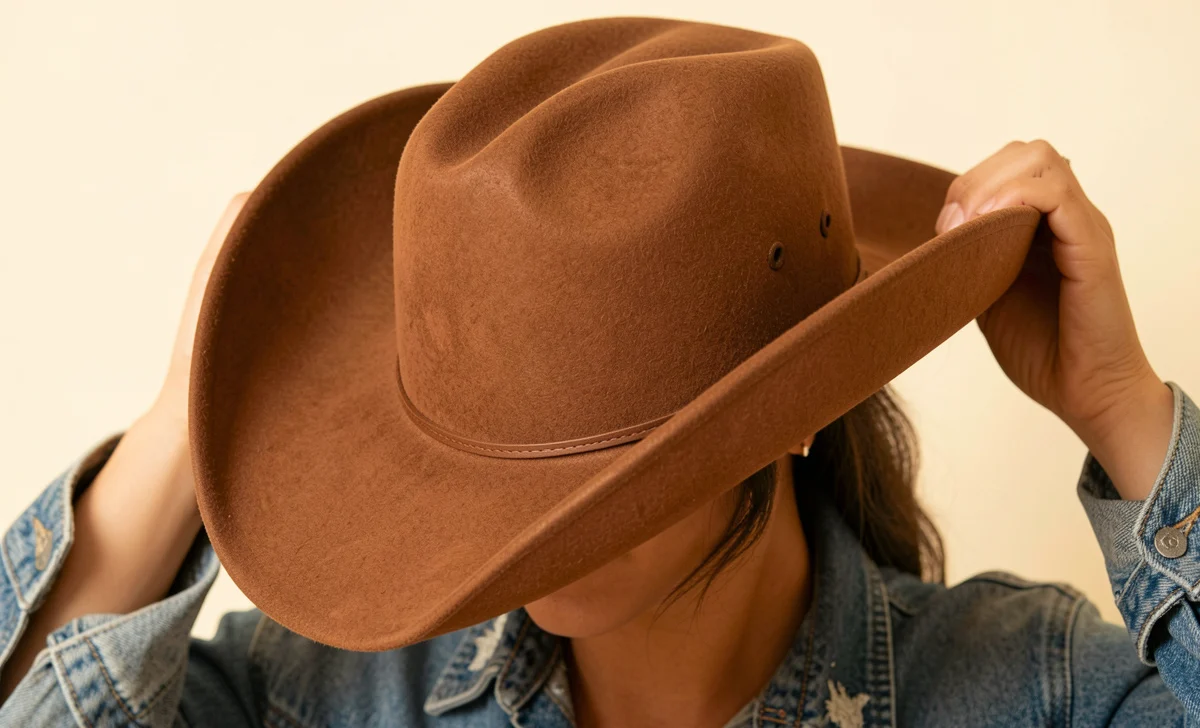
You just got your first cowboy hat—maybe it was a gift, or perhaps you finally decided to buy one for yourself. Either way, you’re excited. But then you put it on, and something feels off. Is it supposed to sit this low? Should it feel this tight? Will it blow off in a stiff breeze?
These are some of the most common questions people have when they get their hands on a Western hat. And honestly? Most first-time buyers get the Western hat fit wrong. They end up with a hat that either pinches their temples, wobbles with every step, or spends most of its time sitting on a shelf instead of on their head.
This guide will walk you through everything you need to know about proper western hat fit—so your hat looks great, feels comfortable, and actually stays put.
Why Getting the Right Fit Matters More Than You Think
A Western hat isn’t just another accessory. It serves real purposes. The right cowboy hat shields your face and eyes from harsh UV rays during long summer days. It keeps your head warm when winter winds roll across open fields. A properly fitted felt cowboy hat can trap heat effectively, while a breathable straw cowboy hat becomes a must-have accessory during scorching summer months.
But here’s what many people don’t realize: a hat that doesn’t fit correctly fails at all of these jobs.
If your hat sits too loosely, a sudden gust of wind will send it tumbling down the street. You’ll find yourself constantly pressing it down, which looks awkward and gets old fast. On the flip side, if your western hat fit is too tight, you might end up with throbbing headaches after just an hour of wear. Some people even report pressure marks on their foreheads.
The sweet spot? A cowboy hat should feel snug but never painful. It should stay put when you nod or turn your head quickly, but it shouldn’t leave red marks on your skin.
How a Western Hat Should Fit on Your Head
Let’s get specific. When you put on your cowboy hat correctly, here’s what to look for:
The front position: The brim should sit approximately three fingers above your eyebrows. Not lower, where it blocks your vision. Not higher, where it looks like the hat is floating on your head.
The back position: The back of the hat should rest about four fingers above the base of your skull. This positioning creates the classic Western look while keeping the hat balanced.
The sides: Your hat shouldn’t pinch your temples. You should be able to wear it for hours without feeling pressure points.
The overall feel: When you shake your head gently from side to side, the hat should move with your head—not lag or shift independently.
One experienced hat fitter once put it simply: “A proper western hat fit feels like a firm handshake, not a vice grip.”
How to Measure Your Head for a Cowboy Hat
Don’t guess your hat size. Guessing almost always leads to returns and frustration. Here’s the right way to measure your head using nothing more than a cloth measuring tape:
- Place two fingers horizontally above your eyebrows. This mimics where the hat will actually sit.
- Wrap the measuring tape around your head, passing just above your ears.
- Keep the tape level all the way around—not tilted up or down.
- Note the measurement where the tape meets the beginning and end.
That number in inches or centimeters is your baseline hat size. Most adult heads fall between 6 ¾ and 8 in hat sizes, which translates to roughly 21 ½ to 25 inches in circumference.
But here’s something many online guides skip: head measurement alone isn’t enough. You also need to know your head shape.
Understanding Head Shapes: Long Oval vs. Round Oval
This is where a lot of people get confused. Two people can have the same head circumference but need completely different hats because their heads are shaped differently.
Long oval head shape: Your head is longer front-to-back compared to side-to-side. If you try on a standard round oval hat, you’ll feel uncomfortable pressure at your forehead and the back of your head, with extra space on the sides.
Round oval head shape: Your head is more circular. A standard hat might pinch at your temples while leaving gaps at the front and back.
Some manufacturers break head shapes into even more categories, but long oval and round oval cover the vast majority of people.
How can you figure out your head shape at home? Try this: ask someone to look at the top of your head while you stand normally. Can they see a clear oval shape? Is it stretched longer front-to-back or more balanced? You can also measure the length and width of your head separately. If the length is noticeably larger than the width, you likely have a long oval shape.
If you already own a hat, examine its interior shape. Look at the sweatband. Is it evenly worn, or are there heavy pressure marks at specific spots? Those wear patterns tell you a lot about your head shape.
Types of Cowboy Hats and Their Unique Fit Characteristics
Not all Western hats fit the same way. The material and style both affect how the hat sits on your head.
Felt Cowboy Hats
Felt hats are the classic cold-weather choice. Made from rabbit fur, beaver fur, or wool felt, these hats hold their shape beautifully and provide serious warmth during the winter months. The downside? They can get hot in summer, and they’re not always breathable.
Felt is somewhat moldable. If your felt cowboy hat feels slightly tight, wearing it for a few hours will often help it conform to your head shape. Some people use gentle steam to help the process—but more on that later.
Straw Cowboy Hats
Straw hats dominate summer wear. They’re lightweight, extremely breathable, and perfect for hot days when you need sun protection without trapping heat. However, straw is less durable than felt and won’t stretch much. What you buy is largely what you get.
Leather Cowboy Hats
Leather offers durability and a distinct look. But here’s a critical fact: leather is not stretchable. According to hat manufacturers like Sew Port, you cannot effectively stretch a leather cowboy hat. If you buy one that’s too tight, you’ll need to exchange it for a larger size. No amount of wearing or steaming will fix it.
Wool Cowboy Hats
Wool sits somewhere between felt and leather. It’s affordable and warm, but can be stiff. Wool does have some give over time, but don’t count on major changes in fit.
Popular Cowboy Hat Styles and Who They Suit Best
Beyond materials, the shape of the crown and brim changes how a hat looks and feels. Here are some common Western hat styles you’ll encounter:
Cattleman Crease: The most traditional cowboy hat shape. A centered crease down the crown with two side creases. This style works well on most face shapes and head sizes.
Gambler: A shorter crown with a wide, flat brim. Gambler hats look great on people with rounder faces because the wide brim adds balance.
Pinched Front: Also called a “fedora-style” cowboy hat. The front of the crown pinches inward on both sides. This style tends to suit longer face shapes.
Open Crown: No creases at all—just a smooth, rounded crown. You can shape an open crown hat yourself, which is perfect if you want a custom look.
Brick: A squared-off crown shape. Brick hats look distinctive but can overwhelm smaller heads.
Montana Mix: A hybrid style with a pinched front and a slightly curved brim. Very versatile.
The best advice? If you’re buying your first cowboy hat, stick with a classic cattleman crease or a simple fedora-style hat. Once you understand how a properly fitted cowboy hat should feel, you can experiment with bolder styles like gamblers or sombreros.
Crown Height and Brim Width: Finding Your Proportions
Fit isn’t just about circumference. The proportions of your hat matter enormously for both comfort and appearance.
Crown height typically ranges from 4 to 7 inches. Taller crowns (6-7 inches) offer better sun protection and look dramatic. Shorter crowns (4-5 inches) appear more modern and casual. A 4-6 inch crown height is versatile enough for almost anyone.
Brim width varies from 3 inches to 5 inches or more. A standard brim measures around 3 inches—safe, classic, and practical. Extra-wide brims (4.5-5+ inches) provide serious shade but can look oversized on people with smaller heads or shorter frames. If you’re unsure, start with a 3.5 to 4-inch brim.
Here’s a real-world tip: stand in front of a mirror and look at your shoulders. Your hat brim should not extend significantly past your shoulders. If it does, the hat will look cartoonishly large.
What to Do If Your Western Hat Doesn’t Fit
Even with careful measuring, sometimes a hat just doesn’t fit right. Don’t panic. You have options.
If Your Cowboy Hat Is Too Loose
A loose hat is actually easier to fix than a tight one. Try these methods:
Foam strips: These are adhesive foam inserts designed specifically for hats. Place them behind the sweatband—usually at the front, back, or sides, depending on where the gap is. Foam strips can reduce the interior circumference by one or two sizes without damaging the hat.
Sweatband adjustments: Some hats have removable or replaceable sweatbands. Thicker replacements can take up slack.
Paper towel trick: In a pinch, stuff folded paper towels behind the sweatband. This isn’t a permanent solution, but it works for a day or two.
If Your Cowboy Hat Is Too Tight
Tight hats are trickier, especially depending on the material.
For felt hats: Wear the hat for 2-3 hours at a time around the house. Felt gradually conforms to your head shape. You can also lightly spray water on the crown until it’s damp, then wear the hat until it dries. The material relaxes slightly as it dries.
For straw hats: Light steaming can help, but go slowly. Too much steam can warp the shape permanently.
For wool hats: Similar to felt—wear it in short sessions. Wool relaxes with body heat.
For leather hats: Do not attempt to stretch leather. Exchange it for a larger size.
Steam method (felt only): Hold the hat crown over steaming water for 20-30 seconds. The heat makes the fibers more pliable. Then wear the hat until it cools completely. Never use this method on wool or leather cowboy hats—it will ruin them.
How to Choose a Western Hat: A Practical Checklist
If you’re shopping for a new cowboy hat, here’s a step-by-step process to get it right:
1. Measure your head. Use the cloth tape method described above. Write down both the measurement and your standard hat size.
2. Determine your head shape. Long oval or round oval? Ask a friend to help or examine the wear pattern on an existing hat.
3. Choose your material based on the climate. Hot summers and mild winters? Go with a straw. Cold winters and moderate summers? Felt is your friend. Need one hat for everything? Consider wool or a lighter-weight felt.
4. Select crown height and brim width. Start moderate (4-5 inch crown, 3.5 inch brim) unless you have strong preferences.
5. Check quality before buying. Look for tight, uniform stitching around the brim and hatband. The brim should feel stiff but have some flex—not flimsy or permanently warped. The felt or straw should feel dense, not thin or papery.
6. Choose a versatile color for your first hat. Black, brown, tan, gray, or ivory work with almost any outfit. Save bold colors for your second or third hat.
7. Try before you commit. If buying online, confirm the return policy. Reputable Western hat stores and online manufacturers both offer exchanges. Don’t settle for a poor fit.
FAQs
Can I wear my cowboy hat in the rain?
Felt hats can handle light rain but should dry naturally away from direct heat. Straw hats are fine in the rain but may lose shape if soaked. Leather hats are the most water-resistant.
How do I clean my cowboy hat?
For dust and dirt, use a soft brush. For stains, consult a professional hat cleaner. Never throw a cowboy hat in a washing machine.
Why does my hat give me a headache?
It’s too tight, or the shape doesn’t match your head shape. Try stretching methods for felt or exchange for a size up or a different oval shape.
My hat blew off. Is it ruined?
Probably not. Inspect the brim for warping. If the brim bent, you can often steam it back into shape. If the crown dented, felt hats can usually be reshaped.
Final Thoughts
A well-fitted cowboy hat becomes part of who you are. It protects you from the elements, completes your outfit, and over time, it molds to your head like a favorite pair of boots molds to your feet.
The key is patience. Don’t rush your purchase. Measure carefully. Understand your head shape. Choose quality materials that match your climate and lifestyle. And remember—a proper western hat fit should feel secure but comfortable, with about three fingers of space above your eyebrows and four fingers above the back of your skull.
If you have more questions about cowboy hat fitting, drop them below. And if you’ve learned something here, share this guide with someone shopping for their first Western hat. They’ll thank you later.