
If you run a fabrication shop, work in manufacturing, or manage a welding department, you’ve likely heard the buzz around welding automation. Maybe you’ve asked yourself: Is automated welding really worth the investment? Will it replace my skilled welders? How does it actually improve quality or save time?
These are fair questions. And the answers aren’t always black and white. But after looking at real-world results from shops that have made the switch—and understanding the genuine concerns of welders and shop owners—welding automation has proven to be a smart choice for many, though not all, operations.
Let’s break down exactly what makes welding automation a good choice, address common worries, and help you decide if it’s right for your business.
What Is Welding Automation, Really?
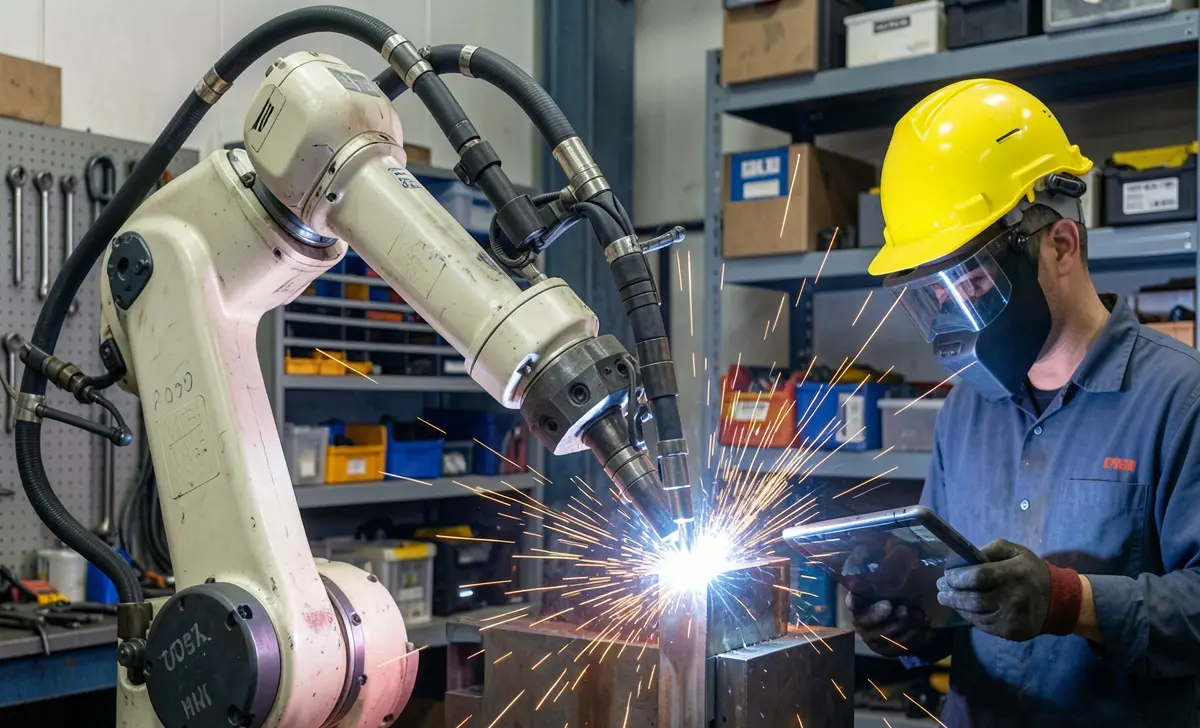
Before diving into benefits, let’s clarify the term. Welding automation refers to using mechanized equipment—often robotic arms or computerized systems—to perform welding tasks with minimal human intervention. Unlike manual welding, where a human operator controls the torch entirely, automated welding follows pre-programmed instructions while adjusting in real time using sensors.
In simple terms, the welder becomes more of a supervisor or programmer than someone holding the torch for hours.
Why Are So Many Shops Switching to Automated Welding?
From small job shops to large automotive and aerospace manufacturers, companies are adopting automated welding for several practical reasons. Let’s go through them one by one.
1. Consistently Better Quality Welds
One of the biggest frustrations in manual welding is inconsistency. Even the best welders have off days. Fatigue, distraction, or simple human error can lead to defects.
With automated welding, you gain precise control over key welding parameters like:
- Current and voltage
- Welding speed
- Arc length
These settings remain consistent across every joint. The result? Higher-quality welds that meet specifications every time.
A real-world example: In the automotive industry, where thousands of identical welds are needed per vehicle, automation ensures each weld is as strong as the last. The same applies to aerospace and oil and gas applications, where weld failure isn’t an option.
Common concern: “But my manual welders produce great quality already.”
That’s true. But even great welders have limits. Automation doesn’t replace skill—it enhances consistency, especially on repetitive or long-run jobs.
2. Significant Time Savings
Time is money in any manufacturing environment. Here’s where welding automation shines.
A welding robot doesn’t need breaks. It doesn’t get tired after welding 50 joints. It doesn’t stop for lunch or shift change. It runs until the job is done.
Compare that to a human welder who needs rest, hydration, and safety checks. Over an 8-hour shift, a robot can weld continuously, often completing 2–3 times more work.
Another hidden time-saver: training. With manual welding, teaching a new hire to produce quality welds on different materials and positions takes weeks or months. With automated welding, you train workers on how to use a computer to control the equipment—not how to hold a torch steady. Switching from one welding process to another becomes a matter of changing a program, not retraining a person.
3. Reduced Worker Fatigue and Better Safety
Welding is physically demanding. Holding a heavy torch, maintaining awkward positions, and dealing with heat and sparks wear down even experienced welders.
Worker fatigue isn’t just uncomfortable—it’s dangerous. Fatigued welders make mistakes, miss defects, and have slower reaction times.
Automated welding directly reduces worker fatigue by removing the physical burden. The welder’s role shifts to monitoring, programming, and quality checks—not brute force.
But there’s more. Modern automated welding equipment comes with sensors that detect environmental changes. For example:
- If humidity rises (which can cause short circuits), the system automatically increases current to compensate.
- If electrical sparks are detected outside the weld zone, the equipment shuts down immediately.
- Some systems even monitor for dangerous gases and trigger ventilation or alarms.
These features directly address safety concerns that welders face daily. Manual welders wear safety gear like helmets, gloves, and flame-resistant clothing—but they can’t detect sparks behind them or sense gas leaks as reliably as a machine can.
4. Excellent Detection Abilities That Manual Welding Lacks
Let’s expand on detection because it’s often overlooked.
In a busy shop, electrical sparks can fly unnoticed. A spark landing on flammable material or near someone not wearing full gear can cause injury or fire.
Automatic welding equipment uses built-in sensors to:
- Detect sparks in real time
- Automatically shut down the welding process if a spark strays
- Monitor arc stability and adjust parameters instantly
Manual welders, even with training and certification, cannot match this speed or precision. That’s not a knock on their skill—it’s simply a capability that machines have.
5. Better Production Tracking and Forecasting
This benefit surprises many shop owners. Automated welding systems often include computers that track:
- How long does each weld take
- How many joints are completed per shift
- When maintenance is due
- Inventory usage (wire, gas, consumables)
You can use this data to identify bottlenecks in your production line, maintain accurate inventory, and forecast future demand more reliably.
Imagine knowing exactly when you’ll run out of welding wire—before you actually do. Or spotting that a certain part takes 20% longer than expected, allowing you to adjust pricing or scheduling.
Manual welding doesn’t offer this level of data without extra tracking steps.
Addressing Real User Concerns About Welding Automation
Let’s tackle some honest concerns that come up in welding forums and shop floor conversations.
“Will automation replace my job?”
This is the #1 fear. The reality? Automation changes roles—it doesn’t eliminate them. Skilled welders are still needed for:
- Complex, one-off fabrications
- Repair work
- Programming and maintaining automated systems
- Quality inspection
In fact, many shops report that after adding automation, they hired more people—not fewer—because overall production increased, creating new positions for technicians, programmers, and supervisors.
“Isn’t automated welding only for high-volume production?”
Not anymore. While it’s true that automotive and aerospace industries adopted it first, smaller shops now use robotic welding for medium and even short runs thanks to easier programming and quicker changeover times.
“What about the upfront cost?”
Yes, automated welding equipment costs more upfront than buying a few manual machines. But shops typically see ROI within 12–24 months through:
- Reduced rework and scrap
- Lower labor costs per part
- Faster production
- Less downtime
Many equipment vendors offer leasing or financing options to ease the initial investment.
Where Welding Automation Might Not Be the Best Choice
To be fair, automation isn’t for everyone. Consider staying with manual welding if:
- Your jobs are highly custom, one-off pieces (e.g., artistic metalwork)
- You have very low volume
- Your shop lacks staff with basic computer skills
But for most manufacturing environments—including construction, oil and gas, aerospace, automotive, and general fabrication—the benefits outweigh the drawbacks.
Final Verdict: Is Welding Automation a Good Choice for You?
If you value consistent weld quality, want to reduce worker fatigue, need to increase production speed, and care about safety, then yes—welding automation is an excellent choice.
It doesn’t replace the skill of a certified welder. Instead, it frees them from repetitive, physically exhausting tasks so they can focus on higher-value work like programming, quality control, and problem-solving.
Start small if you’re unsure. Automate one cell or one repetitive job. Measure the results in quality, time, and worker satisfaction. Most shops that try automation never go back.
Disclaimer: This article is for general informational purposes only and does not constitute professional engineering, safety, or business advice. Welding automation technologies and industry standards vary by application, region, and regulatory requirements. Readers should consult qualified welding engineers, safety officers, and equipment manufacturers before making any purchasing or operational decisions. The author and publisher are not liable for any damages, injuries, or losses arising from the use or misuse of the information provided.