
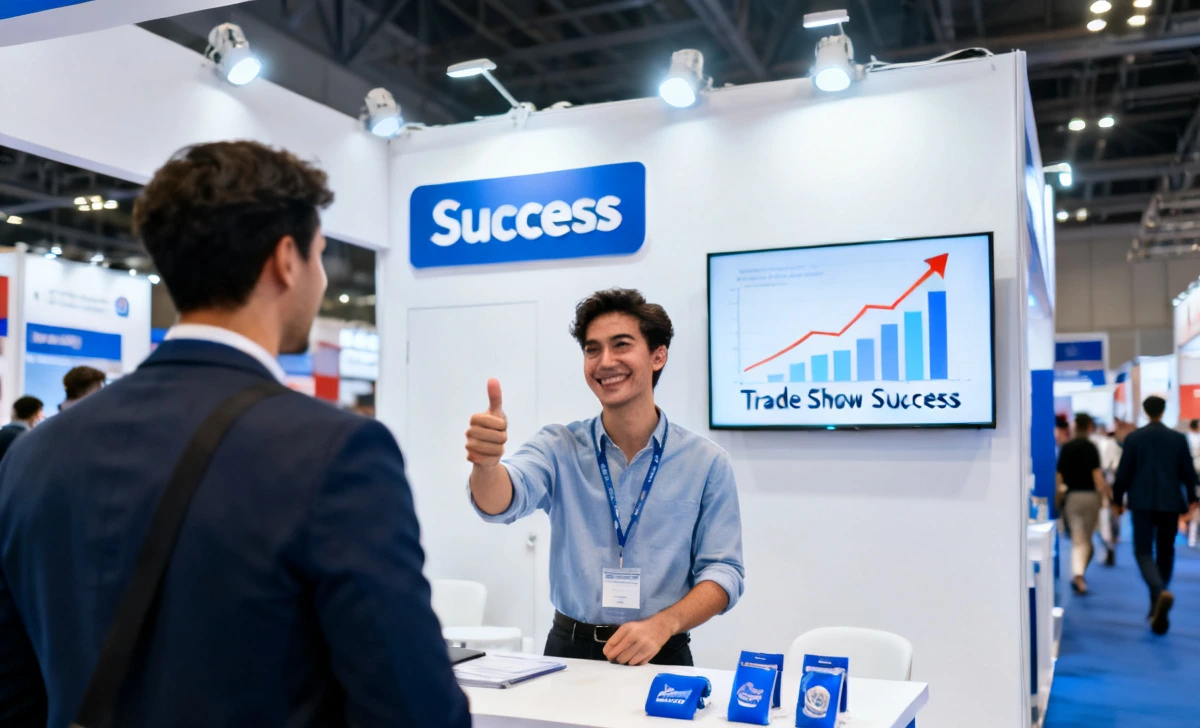
If you’ve ever walked onto a trade show floor, you already know the feeling. Bright lights, busy aisles, the hum of conversations, and booths competing for attention. But behind the buzz, a real question lurks in many business owners’ minds: Are fairs and exhibitions actually worth the time, money, and effort?
The short answer is yes—but only if you approach them strategically. Achieving trade show success doesn’t happen by accident. It requires planning, execution, and follow-through.
Over the years, thousands of small and medium-sized businesses have used trade shows and exhibitions to generate leads, build brand awareness, and even land their biggest clients. However, exhibiting without a plan can lead to wasted budgets and disappointing results.
In this guide, we’ll walk through exactly how to make fairs and exhibitions work for your business. You’ll learn practical tips, real-world strategies, and common pitfalls to avoid. Whether you’re a first-time exhibitor or a seasoned pro, this article is designed to help you get real, measurable trade show success from your next event.
Why Exhibit at Trade Shows and Fairs?
Before diving into the how, let’s quickly cover the why. Many business owners wonder: Can’t I just run online ads or send cold emails instead?
You can. But trade shows offer something digital marketing often lacks: face-to-face human connection.
When you exhibit at a fair or exhibition, you can:
- Meet potential customers in person
- Demonstrate products or services live
- Build trust faster than through a website
- Collect high-quality leads who are already interested
- Learn directly from customer questions and objections
- Network with partners, suppliers, and even competitors
Plus, attendees at trade shows are often further along in their buying journey. They’re not casually browsing—they’re there to find solutions.
But here’s the catch. Simply showing up isn’t enough. Trade show success requires preparation, the right booth design, trained staff, and a solid follow-up plan.
Step 1: Choose the Correct Event
Not all trade shows and exhibitions are created equal. One of the biggest mistakes businesses make is saying yes to every event that comes their way.
Ask These Questions Before Registering:
- Is this event relevant to my industry?
- Will my target market actually attend?
- What’s the attendee-to-exhibitor ratio?
- Have past exhibitors reported good ROI?
- Is the event in-person, virtual, or hybrid?
If you’re a B2B software company, exhibiting at a general consumer fair probably won’t help. Be selective.
Also, research the event’s history. Look up attendee demographics, past speaker lists, and even photos from previous years. Some events look great on paper but have low foot traffic or poor organization.
Pro tip: Register early. Many events offer better booth location options to early birds. A prime spot near the entrance, food court, or main stage can significantly increase foot traffic.
For virtual events, ensure you have an engaging digital presence—this means a polished virtual booth, live demo capabilities, and easy chat functions.
Step 2: Invest in the Right Booth Design
Your exhibition stand is often the first thing a potential customer sees. Within seconds, they decide whether to stop or walk past.
Booth Design Principles That Work:
- Clear branding – Your company name and value proposition should be visible from 10–15 feet away.
- Open layout – Avoid blocking the entrance. An inviting, open design encourages people to step inside.
- Interactive elements – Touchscreens, product demos, or even a small game can draw people in.
- Lighting – Well-lit booths attract more attention than dim ones.
- Professional build – Hiring a professional contractor to build the exhibition stand ensures it’s sturdy, safe, and visually appealing.
Don’t take shortcuts here. A flimsy banner and a folding table won’t cut it unless you’re at a very small, low-cost local fair. Your booth is a reflection of your brand quality.
Also, order your promotional materials well in advance. Brochures, business cards, branded pens, or sample products should be ready at least two weeks before the event. Running out on day one looks unprofessional.
Step 3: Train Your Booth Staff Thoroughly
Your booth staff is the face of your company. Even the best booth design won’t save you if your team is unfriendly, uninformed, or passive.
What Good Training Includes:
- Product knowledge – Staff should answer basic questions without hesitation.
- Engagement techniques – How to start conversations without being pushy. (“Hi, are you familiar with [product]?” works better than “Want to buy something?”)
- Lead capture process – Scanning badges, collecting business cards, or using a tablet to log details.
- Handling objections – If someone says “not interested,” staff should know how to politely disengage without wasting time.
- Special promotions – Staff must know any event-only discounts or deals.
Before the event, run a dry run of your exhibit. Role-play different visitor types—the chatty one, the rushed one, the skeptical one. This reduces stress on the actual event day and builds team confidence.
Real-world example: A small manufacturing company once told me they doubled their leads just by switching from passive staff (sitting behind a table) to active staff (standing, smiling, and greeting every passerby).
Step 4: Promote Your Participation Before the Event
Many exhibitors make a critical mistake: they assume attendees will magically find them. That rarely happens.
You need to promote your participation ahead of time using all available marketing channels.
How to Build Pre-Event Buzz:
- Social media – Post countdowns, teaser photos of your booth, and what visitors can expect.
- Email marketing – Invite your current subscribers to visit your booth, perhaps with an exclusive offer.
- Website banner – Add a section saying “Meet us at [Event Name].”
- Traditional methods – Print ads or direct mail if your audience responds to them.
- Partnerships – Ask your suppliers or partners to share your event participation.
Be specific about what people will get. For example: “Stop by booth #42 for a free demo and a chance to win a $100 gift card.” This gives people a reason to seek you out.
If the event is virtual, update your website and social media channels with the link to your virtual booth. Test the technology beforehand—broken links or laggy video calls kill engagement.
Step 5: Generate Leads the Right Way
Lead generation is the lifeblood of trade show success. But not all leads are equal.
How to Capture High-Quality Leads:
- Use a lead retrieval app or a simple form to note details (company name, pain points, timeline to buy).
- Qualify quickly: Ask “Are you actively looking for a solution like ours?” early in the conversation.
- Avoid the “business card bowl” trap. Collecting hundreds of random cards without context is useless.
Remember: quality beats quantity. Ten solid leads who are ready to buy are better than 200 people who just wanted a free pen.
Also, train staff to differentiate between looky-loos and serious buyers. It’s fine to be polite to everyone, but spend more time with people who have budget, authority, need, and timing (BANT criteria).
Step 6: Follow Up with Your Leads Immediately
This is where most exhibitors fail. They collect leads, go home, rest for a few days, and then… nothing. Or they send a generic “nice to meet you” email weeks later when the person has already forgotten them.
Effective Follow-Up Strategies:
- Within 24–48 hours – Send a personalized email thanking them for their time. Reference something specific from your conversation.
- Segment your leads – Hot leads (ready to buy) get a phone call. Warm leads get more educational content. Cold leads go into a nurture sequence.
- Offer a next step – A demo, a free consultation, a discount code, or a brochure.
- Connect on LinkedIn – This keeps you on their radar professionally.
Example follow-up email snippet:
“Hi Sarah, it was great meeting you at the [Event Name] on Tuesday. You mentioned you’re looking for a CRM that integrates with Slack. Here’s a 10-minute demo video showing exactly how ours works. Would you be free for a quick call next week?”
This approach turns a potential customer into a paying customer much faster.
Step 7: Know About Your Competitors
Walking the show floor isn’t just for networking—it’s for intelligence gathering.
What to Observe About Competitors:
- What does their booth design look like?
- What giveaways or freebies are they offering?
- How are their staff interacting with visitors?
- What unique claims or offers are they making?
Use this information to differentiate your business. If they give away cheap pens, offer a higher-value item like a branded power bank. If they have a closed-off booth, make yours open and inviting. If they focus on price, focus on quality, or service.
But don’t obsess. Spend 80% of your energy on your own game, 20% on watching others.
Step 8: Evaluate Your Performance After the Event
Once the event ends, the work isn’t over. You need to evaluate your performance honestly.
Questions to Ask Your Team:
- Did we reach our goals (number of leads, sales booked, brand awareness)?
- How many leads did we generate, and how many converted?
- What worked well in our booth design and staff training?
- What could we have done better?
- Was the event worth the total cost (booth, travel, staff time, materials)?
Document these answers. They’ll be invaluable when planning future events. Consistent evaluation is what separates random luck from repeatable trade show success.
Also, thank your team publicly and privately. Celebrating wins—even small ones—builds morale for the next event.
Virtual vs. In-Person Exhibitions: What’s Different?
Since the pandemic, virtual and hybrid events have become common. The principles above still apply, but with twists:
| Aspect | In-Person | Virtual |
|---|---|---|
| Booth design | Physical stand | Digital landing page |
| Engagement | Face-to-face conversation | Chat, video call, polls |
| Lead capture | Scanning badges | Form fills, click tracking |
| Follow-up | Business cards | Email automation |
| Promotion | Signage, flyers | Social media, email reminders |
For virtual events, ensure your digital presence is engaging. Pre-recorded product demos, live Q&A sessions, and downloadable resources work well.
FAQs
Isn’t exhibiting expensive?
It can be, but you don’t need a massive budget. Many small businesses start with smaller, regional fairs. The key is to measure your return on investment (ROI), not just the upfront cost.
What if no one visits my booth?
That’s a fair fear. But with proper promotion and booth location strategy, you can drive foot traffic. Also, a well-trained booth staff can engage passersby effectively.
How do I compete with bigger brands?
You don’t outspend them—you outsmart them. Focus on personal interaction, unique giveaways, and a booth design that tells a story rather than just showing a logo.
These questions come up in nearly every business discussion about trade shows. Let’s now dig into the practical steps to make your participation successful.
Final Thoughts: Are Fairs and Exhibitions Worth It?
Trade shows and exhibitions offer a unique chance to promote your business, generate leads, and build relationships that online channels simply can’t replicate. But trade show success doesn’t happen by accident.
Choose the correct event. Design an inviting booth. Train your staff well. Promote beforehand. Capture leads intelligently. Follow up fast. Learn from competitors. And always evaluate your performance.
The businesses that consistently win at trade shows are the ones that treat exhibiting as a strategic channel—not a one-off experiment.
So, if you’re planning on exhibiting at a trade show or fair shortly, congratulations. Now go prepare the right way, and make every booth visit count.
Disclaimer: Results from trade shows and exhibitions vary based on industry, budget, execution, and other factors. The tips in this article are based on general best practices and real-world experience but do not guarantee specific outcomes. Always conduct your own research and budget planning before committing to any event.