
If you own a small business, you already know how hard it can be to get customers to actually see your message. Email inboxes are flooded. Social media algorithms limit your reach. And traditional advertising, like print or TV, is often too expensive.
But there’s one channel that almost everyone checks within minutes: text messages.
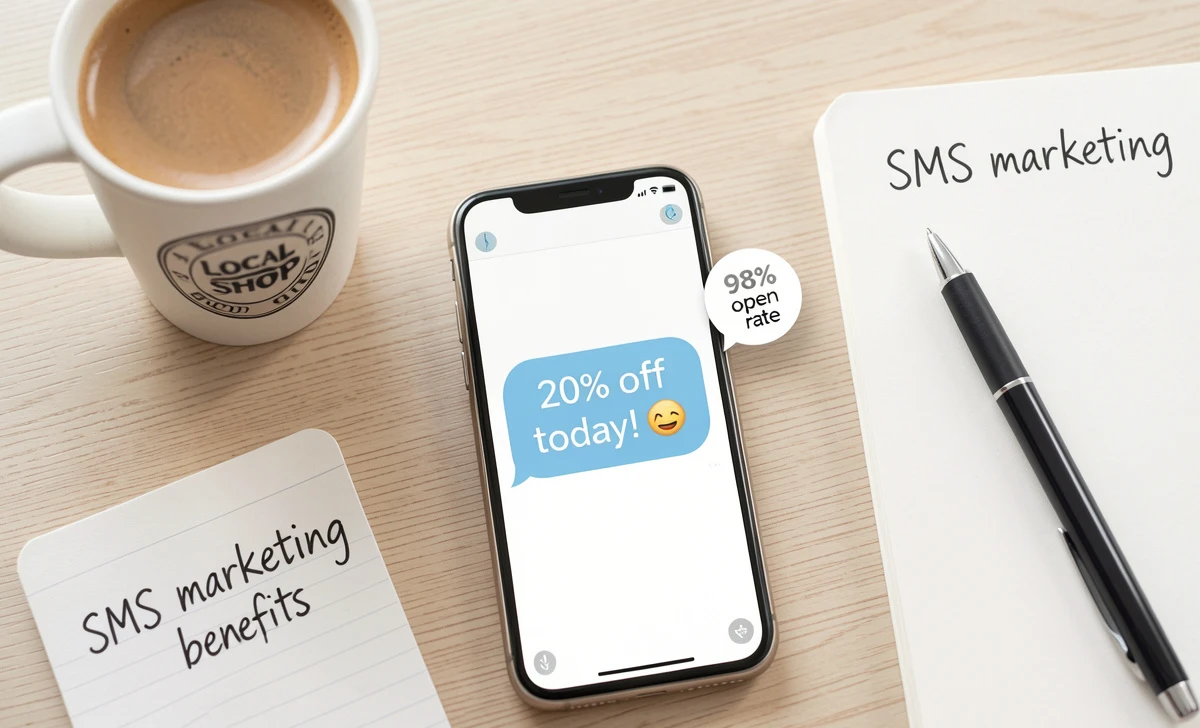
SMS marketing—also called text message marketing—has quietly become one of the most effective ways for small businesses to connect with customers. Not because it’s flashy, but because it works. And when you understand the real SMS marketing benefits, you’ll wonder why you didn’t start sooner. In fact, SMS messages have an open rate of over 98%, compared to barely 20% for email.
But before you start sending mass texts, let’s walk through the real SMS marketing benefits, the practical concerns business owners often have, and how to use SMS advertising the right way.
What Exactly Is SMS Marketing?
SMS marketing is exactly what it sounds like: using text messages to send promotions, updates, reminders, or personalized offers to customers who have permitted you to contact them. It’s not spam. It’s an opt-in marketing strategy where people willingly share their mobile number because they want to hear from you.
And because almost every adult carries their phone everywhere, mobile advertising via SMS lets you reach customers where they already are—at home, at work, commuting, or standing in line for coffee.
Why Business Owners Hesitate (Real Concerns, Addressed)
Let’s be honest. When business owners first hear about SMS marketing, they often have the same questions:
- “Won’t people get annoyed if I text them?”
Only if you text without permission or too often. That’s why opt-in marketing is required. When customers subscribe, they actually want your messages. - “Isn’t SMS expensive?”
No. Compared to print, TV, or even some digital ads, SMS is very cost-effective. You pay per message, and many platforms charge just a few cents per text. - “Can small businesses really compete with big brands using SMS?”
Absolutely. In fact, small businesses often benefit more because SMS feels personal. A text from a local coffee shop or boutique feels like a friendly heads-up, not a corporate ad.
These concerns are valid. But when done correctly, the SMS marketing benefits far outweigh the risks, and trust is built over time.
The Real SMS Marketing Benefits (7 Proven Advantages)
Let’s move beyond the hype and look at the practical, proven SMS marketing benefits that small business owners are actually seeing.
1. You Reach Customers Instantly (Even When They’re Busy)
An email might sit unread for hours. A social media post might never be seen. But an SMS? It’s delivered instantly, and most people read it within three minutes.
That makes SMS perfect for time-sensitive promotions. Running a flash sale? Expecting bad weather and closing early? Have five extra pastries before noon? A single text gets the word out immediately.
Real-world example: A local pizzeria sends a text at 5:30 PM: “Any large pizza for $10 if you order in the next 30 minutes.” Within an hour, they sell 40 pizzas that they might otherwise have discounted later.
2. Your Message Actually Gets Opened (98% Open Rate)
Let that number sink in. 98% of all SMS messages are opened. Compare that to email’s 20–25% average. And unlike email, most SMS messages are read in full, not just skimmed.
Why? Because we’re conditioned to check texts. A notification buzzes, and we look. That’s simply human behavior. High open rates mean your advertising budget isn’t wasted on messages nobody sees.
3. SMS Feels Personal, Not Pushy
There’s a reason people hate robocalls but don’t mind texts from businesses they like. SMS is a personal form of communication. It lives in the same inbox as messages from friends and family.
That means customers are more likely to reply, ask questions, or give feedback. And when you send personalized messages—like “Hey Sarah, your favorite jeans just came back in stock”—customers feel valued, not marketed to.
This personal connection drives customer loyalty in ways that banner ads never can.
4. It’s Surprisingly Affordable for Small Budgets
If you’ve ever priced a newspaper ad or a local TV spot, you know traditional advertising is expensive. SMS flips that model.
Most SMS marketing platforms charge between $0.01 and $0.05 per message. Even sending 10,000 texts costs around $150–$300. That’s less than many businesses spend on a single social media campaign.
Plus, you don’t need a big team. With just a list of phone numbers (collected legally through opt-ins) and 10 minutes, you can launch a campaign and track results immediately.
5. You Can Verify You’re Reaching Real People
One hidden frustration of email and social media marketing is fake or inactive accounts. With SMS, you can use an SMS verification API & SDK to confirm that each phone number is valid and belongs to a real customer.
This is especially useful if you run a loyalty program, appointment-based business, or ecommerce store. Verifying numbers ensures your mobile device targeting is accurate—so you’re not wasting money on dead ends.
6. Higher Conversion Rates Than Most Marketing Channels
Here’s what business owners really care about: do texts actually drive sales?
Yes. Multiple studies show that SMS marketing has high conversion rates—often 2–5x higher than email. Why? Because when you send a text with a clear call to action (like a coupon code or a link to a sale), the reader can act immediately. No logging into email. No searching for your post.
For example, a clothing store sends a text: “Flash sale: 25% off everything. Use code FLASH25 at checkout. Valid for 2 hours.” Customers who see that text while scrolling their phone can tap, shop, and buy in under a minute.
7. You Can Build a Real Relationship Over Time
SMS isn’t just for sales. Smart businesses use it to build customer relationships over the long term. That might mean:
- Sending a birthday discount
- Asking for feedback after a purchase
- Sharing a helpful tip related to a recent purchase
- Letting loyal customers know about an event before the public
Over time, these small touches add up. Customers start to see your texts as valuable, not intrusive. And that’s when customer loyalty turns into repeat business and word-of-mouth referrals.
How to Start With SMS Marketing the Right Way
If you’re ready to try SMS advertising, here’s a simple, safe path forward:
Step 1: Get Explicit Permission
Never add phone numbers without consent. Use a sign-up form on your website, at your checkout counter, or via a keyword (e.g., “Text COFFEE to 12345”). This is not optional—it’s the law in many places and the foundation of trust.
Step 2: Choose a Reputable SMS Platform
Look for platforms that offer easy list management, automated campaigns, and clear analytics. Many are built specifically for small business marketing.
Step 3: Start Small and Test
Send a simple welcome text to new subscribers. Then try a single offer. Track open rates, click-throughs, and replies. Adjust based on what works.
Step 4: Be Useful, Not Annoying
A good rule of thumb: no more than 2–4 texts per month unless customers opt into more. Every message should offer clear value—a discount, useful info, or a time-sensitive opportunity.
Step 5: Always Include an Opt-Out Option
Every text must include simple instructions like “Reply STOP to unsubscribe.” Respecting opt-outs builds long-term trust and keeps your list healthy.
Common Mistakes to Avoid
Even great tools can be misused. Here’s what to watch out for:
- Texting too often – This is the fastest way to get unsubscribes.
- Sending irrelevant messages – Segment your list so coffee drinkers don’t get tea promotions.
- Forgetting the call to action – Every text should tell the customer what to do next.
- Ignoring replies – If someone replies with a question, answer it. That’s relationship building.
Final Thoughts: Is SMS Marketing Worth It for Small Businesses?
The short answer: yes, if you do it thoughtfully.
The SMS marketing benefits we’ve covered aren’t theoretical. Real small business owners are using text message marketing every day to reach more customers, spend less on advertising, and build lasting relationships. It won’t fix a bad product or replace a solid overall marketing strategy. But as a direct and effective way to reach customers, few channels come close. It’s affordable, personal, and—when done right—welcomed by customers who genuinely want to hear from you.
Whether you run a coffee shop, a clothing store, a dental practice, or an auto repair shop, text message marketing deserves a place in your toolkit. Start small, respect your subscribers, and let the results speak for themselves.