
If you’ve ever felt like you’re doing everything right—posting on social media, running ads, optimizing your website—but still struggling to get people to raise their hand and say “I’m interested,” you’re not alone.
In fact, 63% of marketers say lead generation is their single biggest challenge.
Why? Because consumers today are smarter. They’ve seen every pop-up, every “sign up for our newsletter,” and every e-book gate. They don’t fall for traps anymore. They want value, trust, and relevance before they’re willing to share an email address or phone number.
The good news? Lead generation isn’t broken. It’s just evolving.
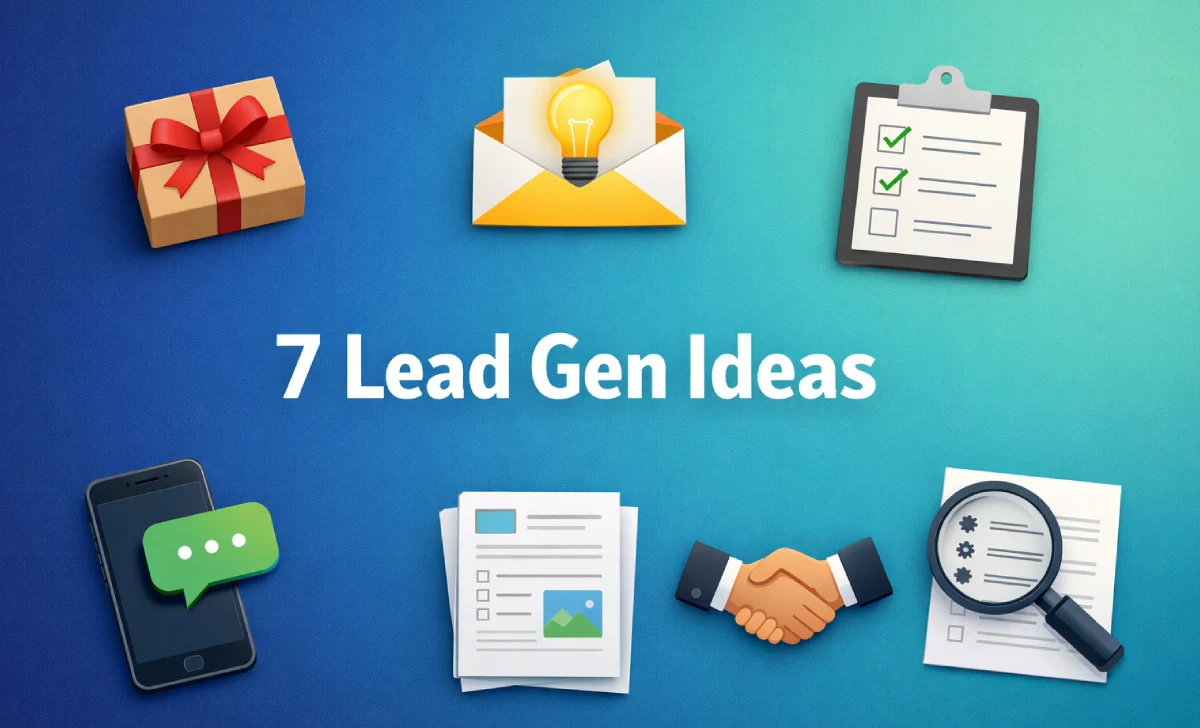
Over the years, working with both B2B and B2C brands across different industries, I’ve seen what still works—and what doesn’t. Below are seven lead generation ideas that are creative, practical, and built around how real people actually behave online.
But first, let’s make sure your foundation is solid.
What You Need in Place Before Generating Leads
Before trying any new tactic, ask yourself: Is my business ready to capture and nurture leads?
Here’s what you need:
1. A Lead Generation Database
You can’t manage what you don’t track. Use a simple CRM or even a spreadsheet to store lead information. The key is to prioritize high-quality leads so you’re not wasting time on people who will never buy.
2. Supporting Content That Actually Helps
Fluff doesn’t convert. Your blog posts, videos, checklists, and guides must solve real problems. And they need to be available across different channels—your website, social media, email, and even YouTube.
3. An Analytics Engine
If you don’t measure, you can’t improve. Use tools like Google Analytics, Hotjar, or your CRM’s reporting to see which lead generation programs are working and which are burning budget.
4. A Marketing Technology Stack
You don’t need expensive tools. But you do need the right ones: an email platform (like Mailchimp or ConvertKit), a form builder, a chat tool, and basic tracking. The right stack saves money and generates more revenue.
Once those are ready, let’s dive into the seven ideas.
1. Share Success Secrets from Industry Leaders (Without Selling)
One of the fastest ways to build trust is to let others do the talking—specifically, respected leaders in your space.
People don’t want more fluff pieces. They want usable advice they can apply today.
How to do it:
- Interview founders or experts in your industry.
- Ask specific, operational questions: “How did you fix your customer retention problem?” or “What tool saved your team 10 hours a week?”
- Publish the answers as a blog post, a mini-series, or even a short video.
Real-world example:
A small SaaS company I worked with started a “Founders Friday” series on their blog. Each post featured a 10-minute Q&A with a non-competing founder. Within two months, their email sign-ups tripled—not because they sold anything, but because they became a hub for real insights.
Pro tip: Don’t just publish and hope. Announce the resource on LinkedIn, in your newsletter, and across your social channels. Make it easy to find.
2. Offer a List of Useful Tools (Even Competitors’)
This sounds counterintuitive, right? Why would you promote other tools?
Because helping first sells later.
If your audience is searching for solutions, and you give them an honest, well-researched list of options—including ones that aren’t yours—they’ll trust you when they’re ready to buy.
How to do it:
- Compile a list of apps, software, or resources your team actually uses.
- Write honest pros and cons for each.
- Publish it as a blog post or downloadable PDF.
Real-world example:
HubSpot does this beautifully. They have their own marketing software suite, yet they regularly publish articles like “Best Email Marketing Tools for Small Business” that include Mailchimp, ActiveCampaign, and others. That generosity builds long-term authority.
You can even turn these resource articles into Google Ads. Offer the list as a downloadable incentive. When someone clicks, you gather their data—and they walk away with something genuinely useful.
3. Put a Twist on Gating Content (Stop Losing Leads)
Let’s be honest: most people hate forms. In fact, around 80% of B2B content marketing assets are hidden behind gates, but that doesn’t mean it’s working.
The problem isn’t gating itself. It’s how you gate.
A better way:
Instead of a wall of form fields before any value, try progressive gating or video embedding.
How one company did it:
A digital experience optimization company tested video forms. As viewers watched a helpful video, a small, non-intrusive form appeared. It encouraged sign-ups but didn’t force them. The result? Higher completion rates and happier visitors.
Other options:
- Let users access the content immediately, then ask for email to “save progress” or “download summary.”
- Gate only the last 20% of a valuable guide.
The goal isn’t to trick people. It’s to offer value first, then ask for permission.
4. Go Old School with Attention-Grabbing Direct Mail
“Direct mail? Seriously?”
Yes. But not the boring kind.
In a world of 24/7 digital noise, a physical package stands out. The key is making it unforgettable.
How to do it:
- Send a small, branded package with a handwritten note.
- Include a QR code or even a video player (yes, it’s possible).
- Make the unboxing experience delightful.
Real-world example:
At a 2019 digital marketing conference, organizers sent direct mail with an embedded video. Viewers who watched until the very end discovered a surprise—a coupon for a sweet treat. People talked about it for weeks.
Does it scale? For high-value B2B leads or local services, absolutely. For mass-market consumer brands, use sparingly.
5. Create an Exciting Quiz (That People Actually Want to Finish)
Quizzes get a bad rap because most are lazy. But a relevant, well-designed quiz can be a lead generation machine.
Why quizzes work:
They’re interactive, personalized, and fun. When done right, users willingly give their email to see results.
How to do it right:
- Make the topic immediately useful. Example: “What’s Your Content Marketing Blind Spot?” not “What Kind of Pizza Are You?”
- Deliver real, actionable results—not vague horoscopes.
- Offer to email the results so users can save them.
What users often ask:
“Will I get spammed after?” Be upfront. Tell them exactly what emails they’ll receive and how often.
“Is this actually free?” Yes. And mean it.
A quiz that remains helpful months later (a “evergreen” quiz) will generate leads long after you publish it.
6. Entice Leads with Free Email Courses
People check their email constantly. In fact, studies show email takes up at least 28% of a professional’s workday.
So instead of begging people to visit your blog, bring the value to their inbox.
How to do it:
- Create a 5–25 day email course around a specific problem.
- Keep each lesson short (300–500 words).
- Make it completely free—the only cost is an opt-in.
Example:
A marketing agency turned a blog post about “how to find profitable products to sell online” into a 7-day email course. Each day, subscribers received one tactic, one template, and one real example.
Results? 40% open rates and 8% conversion to paid consulting.
Pro tip:
Set clear expectations upfront: “You’ll receive one lesson per day for 12 days. Unsubscribe anytime.” This prevents email fatigue and opt-outs.
7. Devise a Template That Simplifies a Painful Task
People go online to solve problems. If you can hand them a ready-made solution to a painful, repetitive task, you’ve earned their gratitude—and their email.
How to do it:
- Identify a task your audience hates doing manually.
- Build a template in Google Sheets, Excel, Notion, or even Canva.
- Offer it for free in exchange for an email address.
Examples:
- Employee onboarding checklist
- Customer data cleaning template
- Social media content calendar
- Monthly budget tracker for freelancers
Why this works:
Templates are low-risk, high-value. They don’t require installation or a credit card. And once someone uses your template and loves it, they associate that positive feeling with your brand.
Bonus: Keep Best Practices in Mind (Even After Leads Opt In)
Generating the lead is only half the battle. Nurturing them is where most businesses drop the ball.
What works long-term:
- Live chat on your website. It reduces bounce-back rates and helps visitors make faster purchasing decisions.
- Multi-channel support. Some people prefer live chat, others email, and many want social media DMs. Be where your audience is.
- Quick responses. Speed matters. A lead who waits 24 hours is often a lead who’s gone.
One warning: Don’t rely on a single method. If your live chat is slow or your email replies take days, you’ll lose trust fast.
Final Thoughts: Lead Generation Is About Helping, Not Trapping
The old way of lead generation—pop-ups, aggressive gates, and spammy follow-ups—is dying. And good riddance.
The new way is simpler: provide real value first. Whether it’s a founder interview, a useful template, a clever quiz, or a surprising piece of direct mail, the brands that win are the ones that genuinely help before they ever ask for anything in return.