
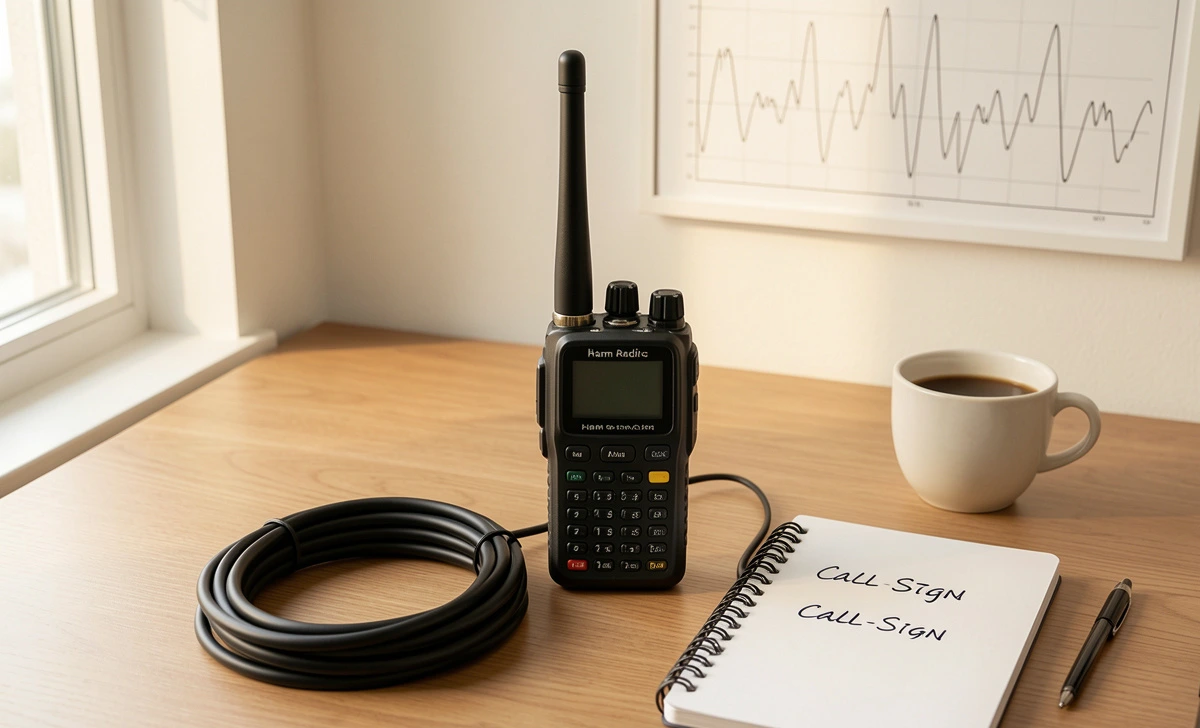
If you’ve ever heard snippets of voice chatter or Morse code crackling through a speaker and wondered, how ham radio works in real life—you’re not alone. Despite living in the age of smartphones, 5G, and instant messaging, amateur radio has not only survived but thrived. Millions of people worldwide still use it for emergency communication, hobbyist conversations, and even space communication.
But how ham radio works in practical, everyday terms is simpler than most people think. Let’s break it down step by step.
What Exactly Is Ham Radio?
At its simplest, ham radio is the use of radio frequencies for non-commercial communication. Unlike commercial radio stations that broadcast music or talk shows to thousands of passive listeners, ham radio is two-way communication—like a conversation rather than a lecture.

You may have seen examples without realizing it. Long-haul truckers chatting about traffic or weather using CB radios? That’s a basic form of two-way radio. Amateur radio operators do the same but across much longer distances, often worldwide, using more advanced equipment and legally allocated frequencies.
The term “ham” originally carried a playful or even mocking meaning among professional telegraphers in the late 1800s, but amateur operators reclaimed it with pride. Today, being a “ham” means you’re a licensed, knowledgeable operator who understands radio signals, frequency etiquette, and technical operation.
How Ham Radio Works in Practice
All radios—whether in your car, your phone, or an air traffic control tower—share the same basic components: a transmitter and a receiver.
- The transmitter sends out a message by converting sound (or data) into radio frequency waves.
- The receiver captures those waves from the air and converts them back into sound or data.
- A transceiver combines both functions in one device, which is what most hams use.
To truly understand how ham radio works, you need to know this key difference: you aren’t just listening to a one-way broadcast. You’re both transmitting and receiving on the same frequency, allowing real-time conversation. When you speak into a handheld transceiver or a desktop unit, your voice travels as electromagnetic waves through the air. Another operator whose receiver is tuned to that exact frequency can hear you—provided you’re within range.
Frequency Bands: The Invisible Highways
Think of ham radio frequencies as invisible highways. Different bands (sections of the radio spectrum) behave differently. Low-frequency bands (like 160 meters) can travel hundreds of miles but require large antennas. High-frequency bands (like 70 centimeters) are shorter-range but work well for local communication and fit in a handheld device.
Some operators enjoy VHF (Very High Frequency) and UHF (Ultra High Frequency) for local conversations via repeaters—towers that receive your signal and rebroadcast it to extend range. Others use HF (High Frequency) bands to bounce signals off the ionosphere and talk to people on the other side of the planet.
Getting Started: What You Actually Need
One of the most common questions from beginners is: “Do I need expensive equipment to start?”
The honest answer is no. You don’t need to spend a fortune buying the best radio. Many operators begin with a simple, affordable handheld transceiver (sometimes called an HT or “handy-talkie”) costing between $30 and $100. Popular starter models from brands like Baofeng, Yaesu, or Kenwood work perfectly for local frequencies.
Another budget-friendly reality: you can use old or broken equipment and get it repaired instead of buying new. Many ham radio enthusiasts enjoy tinkering and repairing gear as part of the hobby. Need a Motorola radio repair? There are countless online communities and local clubs that can help.
The License: Not as Scary as It Sounds
Here’s a concern many potential operators share: “I’m not technical enough to pass a test.”
The truth is, anyone can get licensed. To transmit legally on amateur radio frequencies, you must pass a simple exam that confirms your knowledge of basic electronics, operating procedures, and regulations. You don’t need an engineering degree.
There are three license levels in most countries (in the U.S., they’re Technician, General, and Extra). The entry-level Technician license focuses on local VHF/UHF operation and basic rules. The test has about 35 multiple-choice questions, and study guides are free online.
You can scan or listen to ham radio without a license. But the moment you press that transmit button, you need to identify yourself with your assigned call sign—a unique identifier issued by your country’s communications authority.
Real Operating Basics: What Happens When You Turn It On?
Let’s walk through a real-world scenario so you know exactly what to expect.
Step 1: Set Up Your Station
At a minimum, you need a transmitter and receiver (or a transceiver) and an antenna. Outdoor antennas work best because they’re higher and have fewer obstructions. Many beginners start with a simple “roll-up” J-pole antenna hung from a tree or a window.
Step 2: Choose a Frequency
Different bands exist for different purposes. Your local ham radio club or an online band plan will show which frequencies are used for what. Avoid frequencies already in use—that’s basic courtesy.
Step 3: Listen First
Before you ever transmit, monitor the frequency for at least a minute. Is there an ongoing conversation? If yes, wait for a pause. Interrupting is considered rude in the ham community.
Step 4: Announce Yourself
When you’re ready, announce your call sign clearly. For example: “This is KC3ABC listening.” That lets others know you’re new and available to talk.
To initiate a general call to anyone listening, say “CQ, CQ” (from the French “sécurité,” meaning “anyone listening”) followed by your call sign: “CQ, CQ, this is KC3ABC calling CQ and standing by.”
Step 5: Keep Transmissions Short
Unlike a phone call, where you might talk for minutes, ham conversations are typically broken into short exchanges. Keep transmissions short so others can use the frequency. Say your call sign every 10 minutes or at the end of each transmission.
Step 6: Be Polite
Be respectful in your interactions. Follow band plans (local agreements about which frequencies are used for what). If you hear two operators having a conversation, wait for them to finish before jumping in. If you accidentally interfere with someone, apologize and move to another frequency.
Why Ham Radio Remains Popular (Even in 2026)
A question many people ask: “With the internet and cell phones, why do people still use ham radio?”
Here’s the real-world answer:
Wireless and cheap – Radio only requires enough power for the transmitter and receiver to stay connected. No monthly bills. No data caps. No “signal not found.”
Works when everything else fails – During hurricanes, earthquakes, or wildfires, cell towers and internet lines often go down. Ham radio operators provide emergency communication when no other system works. Organizations like ARES (Amateur Radio Emergency Service) train specifically for this.
No infrastructure needed – You don’t need a fiber optic cable or a 5G tower. Two operators with battery-powered transceivers and wire antennas can talk across a mountain range or across an ocean.
Global community – You can talk to someone in Japan, Brazil, or South Africa without any third-party service. That sense of direct, human connection is powerful.
FAQs
I’m not an electrician. Can I still learn?
Yes. Many hams start with zero electronics background. You’ll learn what you need for the license exam, and experience teaches the rest.
Do I need to learn Morse code?
No. That requirement was dropped years ago. While some operators still love CW (continuous wave/Morse code), it’s completely optional.
Can I use ham radio for family communication during emergencies?
Yes, but every person transmitting needs their own license unless under the direct supervision of a licensed operator.
What if I make a mistake on the air?
Everyone does. You’ll accidentally interrupt someone or forget to say your call sign. Apologize, correct it, and move on. The ham community is generally patient with beginners.
How far can I really communicate?
With a simple handheld transceiver and a repeater, you can talk 20–50 miles. With an HF antenna and a 100-watt radio, you can talk thousands of miles. Some operators bounce signals off the moon or communicate with astronauts on the International Space Station.
Making Your First Contact: A Step-by-Step Script
Let’s make it real. Here’s exactly how a first contact might sound:
You (listening first, then calling):
“CQ, CQ, this is KC3ABC calling CQ and standing by.”
Another operator (replying):
“KC3ABC, this is W1XYZ. You’re 5 by 9 in Boston. Name’s Tom. Over.”
You:
“Tom, thanks for the reply. You’re 5 by 7 here in Richmond. My name is Jamie. Just got my license last week. Over.”
Tom:
“Welcome to ham radio, Jamie! What equipment are you running? Over.”
You:
“Just a small handheld transceiver and a roll-up antenna for now. Hoping to upgrade soon. Over.”
Tom:
“Great start. We all began there. Let me know if you have any questions. I’ll sign now. W1XYZ clear.”
You:
“Thanks, Tom. KC3ABC clear.”
That’s it. Short, polite, and effective.
Conclusion
Now you know exactly how ham radio works—from the basic components to making your first on-air contact. Ham radio has stood the test of time because it works when modern networks fail, it connects people directly without monthly fees, and it offers a genuinely rewarding blend of technical skill and human interaction.
Getting started is easier than you think. A simple transmitter and receiver (or a handheld transceiver), an entry-level amateur radio license, and a willingness to listen first and speak politely are all you need. Repairing old equipment or buying an affordable new radio allows almost anyone to join the global conversation.
The radio spectrum still offers something the internet cannot: direct, infrastructure-free, person-to-person communication across any distance. Whether you’re interested in emergency preparedness, global friendship, or just the magic of wireless communication, ham radio welcomes you.
So go ahead—listen first, get licensed, and make your first CQ call. The airwaves are waiting.