Street Licensing and the Colorado MOST Program
Before embarking on any off-road adventures, every aspiring rider in Colorado must first master the fundamentals and obtain their motorcycle endorsement. The cornerstone of this process is the Basic RiderCourse (BRC). This program, often certified by the Motorcycle Safety Foundation (MSF) or the state’s Motorcycle Operator Safety Training (MOST) program, is widely recognized as the best starting point for new riders in Colorado. It’s designed to equip you with essential riding skills, foundational knowledge, and crucial safety strategies, all within a controlled and supportive environment.
The BRC typically spans about 15 hours, divided between classroom instruction (or an eCourse component) and hands-on riding exercises on a closed course. The curriculum focuses on basic motorcycle operation, including clutch and throttle control, shifting, braking, turning, and obstacle avoidance. More importantly, it instills mental strategies for safe riding, such as risk management and situational awareness. By May 2026, many providers will have fully integrated the updated MSF curriculum, which continues to evolve to meet modern riding challenges. For a comprehensive overview of what the MSF BRC entails, you can visit the official Basic RiderCourse page.
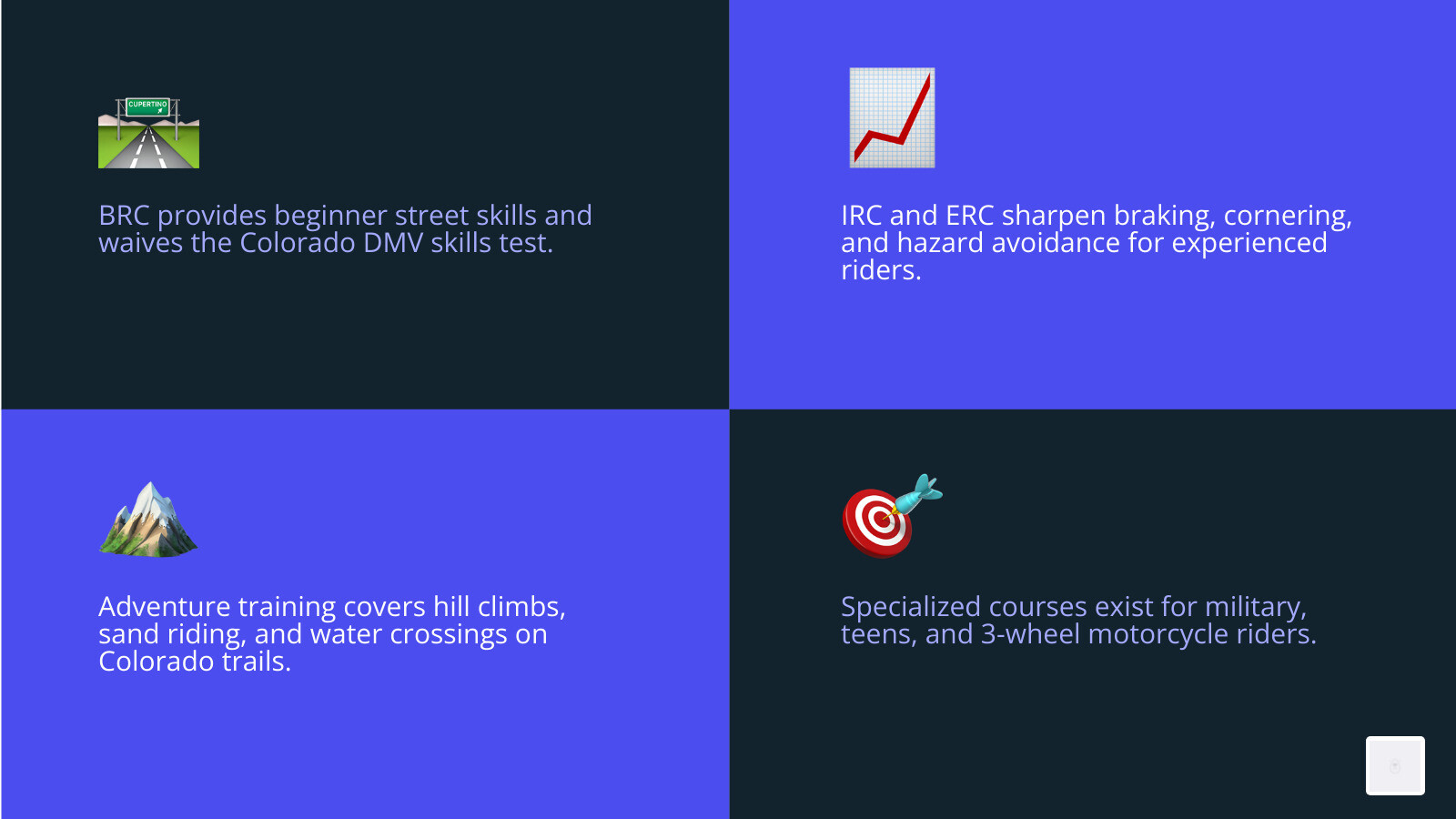
One of the most significant advantages of completing a MOST or MSF-certified motorcycle course in Colorado is the waiver of DMV testing requirements for a motorcycle endorsement. Upon successful completion of the BRC (or an approved equivalent), you’ll receive a completion card that, when presented at the Colorado DMV, waives both the written knowledge test and the on-cycle skills test. This streamlines the licensing process, allowing you to focus on learning to ride rather than preparing for separate DMV examinations. The Colorado State Patrol oversees the Motorcycle Operator Safety Training program, ensuring certified courses meet rigorous safety standards and qualify for this waiver. This program is critical, especially when considering that lack of training is a recognized factor in Colorado’s fatal motorcycle crashes.
Typical costs for a Basic RiderCourse in Colorado generally range from $295 to $425 as of May 2026. The duration is usually two days, often structured as a full weekend (e.g., Saturday 8 AM-4 PM and Sunday 8 AM-3 PM), though some providers might offer weekday options. This format allows for intensive learning and practice, ensuring skills are built progressively. Many schools provide motorcycles and helmets for student use, eliminating the need for new riders to invest in equipment before they’re sure riding is for them.
Motorcycle training schools operate across Colorado, serving communities throughout the state. In major metropolitan areas, you’ll find several reputable providers:
- Denver Metro Area: Schools like the Motorcycle Rider Training Center (located near 6th and Kipling in Lakewood), Iron Buffalo Motorcycle Training (offering multiple ranges), and Ride On Motorcycle Training (known for small class sizes and personalized instruction) are popular choices.
- Northern Colorado (e.g., Loveland): Clutch Motorcycle School in Loveland is a notable option, offering year-round classes and a focus on inclusivity.
- Other Areas: Providers like Ace Rider Motorcycle School in Montrose and Colorado Motorcycle Academy also offer BRCs, ensuring accessibility across the state.
Before enrolling, riders must meet certain prerequisites. Generally, you need to be at least 15 years old (with specific requirements for minors, often involving parental consent and a PR code from the DMV). A valid driver’s license or learner’s permit is usually required. Crucially, all beginner courses require the ability to balance and ride a bicycle, as this demonstrates the fundamental balance skills required for riding a motorcycle. Most courses also require completion of an online eCourse component (typically 3-5 hours) before the hands-on riding sessions, and a certificate of completion must be presented on the first day.
Safety is paramount, and all motorcycle training courses in Colorado require specific protective gear. This typically includes:
- A DOT-compliant helmet (often provided by the school if you don’t have one).
- Eye protection (glasses, sunglasses, or a helmet visor).
- Full-finger gloves (leather is recommended for better grip and protection).
- A long-sleeved shirt or jacket.
- Long pants (heavy denim or dedicated riding pants, no holes).
- Sturdy, over-the-ankle footwear (boots are ideal, non-canvas, no steel toes unless specifically allowed).
When registering, it’s also important to understand the common rescheduling, refund, and cancellation policies. These vary by school but generally require a minimum notice (e.g., 48 or 72 hours) to avoid forfeiture of fees or to incur a rescheduling charge (which can range from $25 to $250). Always review a school’s specific policies before committing.
To find and register for upcoming classes, most schools offer online scheduling through their websites. Providers like Iron Buffalo, Ride On, and Clutch often stand out for their dedicated facilities, experienced instructors, and commitment to student success. For instance, Ride On Motorcycle Training emphasizes small class sizes (eight students or fewer) and provides motorcycles and helmets, making it an ideal low-commitment entry point. Iron Buffalo boasts multiple dedicated training ranges and instructors with extensive experience, while Clutch Motorcycle School is recognized for its inclusive approach, accommodating riders with disabilities.
It’s also worth noting some sobering statistics that underscore the importance of this training. Motorcycle riders were found to be at fault in 7 out of 10 fatal crashes in Colorado. Nationally, 25% of motorcyclists involved in fatal crashes in 2016 had a BAC over the legal limit. Furthermore, nearly two-thirds of the riders killed in Colorado in 2016 were not wearing a helmet or were wearing it incorrectly. While motorcyclist fatalities were down 5.6% in 2017, the continued emphasis on training, proper gear, and sober riding remains critical for rider safety in May 2026 and beyond.
Transitioning to Adventure Motorcycle Training
Once you’ve secured your street endorsement and gained confidence on paved roads, a whole new world of riding opens up: adventure motorcycling. Colorado, with its vast network of national forests, mountain passes, and scenic backcountry routes, is an unparalleled destination for off-road exploration. However, transitioning from street riding to adventure motorcycling requires a distinct set of skills and a different approach to bike control.
Off-road dynamics differ significantly from street riding. Traction management becomes more nuanced on loose surfaces like gravel, dirt, and sand. The standing position on the pegs, a hallmark of adventure riding, is crucial for absorbing bumps, maintaining balance, and controlling the bike over uneven terrain. This technique shifts your center of gravity, allowing the motorcycle to move more freely beneath you and enhancing control while reducing rider fatigue.
Specialized training is not just beneficial; it’s essential for safely and confidently tackling Colorado’s diverse off-road terrain. Programs like those offered for RawHyde adventure training Colorado are specifically designed to bridge the gap between street riding and true off-road capability. They focus on teaching techniques that are unique to dirt, such as proper body positioning, throttle and clutch modulation for traction, and effective braking on low-traction surfaces. By May 2026, the emphasis on dedicated adventure training has grown significantly, recognizing the specific demands of these powerful, yet versatile, machines.

Core Skills in Adventure Motorcycle Training
Adventure motorcycle training delves into specific techniques that are less critical on pavement but vital off-road. Mastering these core skills will significantly enhance your safety and enjoyment:
- Clutch Control and Friction Zone: Off-road, the clutch’s friction zone is used extensively to manage power delivery, especially at low speeds or when navigating technical terrain. This allows for precise control over traction, preventing stalls and maintaining momentum over obstacles.
- Dual-Sport Braking: Effective off-road braking requires a delicate balance between front and rear brakes, often involving engine braking and maintaining control on loose surfaces without locking a wheel.
- Obstacle Crossing: Learning to navigate rocks, logs, ruts, and other trail hazards requires specific techniques for weight transfer, body positioning, and throttle application. This is where the standing position truly shines.
For riders looking to build these foundational adventure skills, a dedicated course is invaluable. Events like the Intro to Adventure Colorado provide a structured environment to learn and practice these techniques under expert guidance, preparing you for real-world trail challenges.
Advanced Techniques in Adventure Motorcycle Training
Once you’ve mastered the core skills, advanced adventure motorcycle training takes your capabilities to the next level, enabling you to tackle more challenging terrain and situations confidently. These techniques are crucial for exploring Colorado’s more remote and rugged areas.
- Hill Climbs and Descents: Managing traction, momentum, and braking on steep inclines and declines requires precise throttle and brake control, coupled with dynamic body positioning.
- Sand Riding: Sand is notoriously difficult, requiring specific techniques for speed, weight distribution, and steering to maintain stability and avoid bogging down.
- Water Crossings: Safely navigating streams and shallow rivers involves assessing depth, understanding current, and maintaining a steady throttle and balance to prevent stalls or falls.
These advanced skills transform a competent street rider into a confident off-road explorer. Courses like The Next Step Colorado are designed to push your boundaries in a safe, controlled setting, allowing you to practice these complex maneuvers. This continuous learning approach is what defines a truly prepared adventure rider.

Specialized Training and Licensing for Diverse Riders
Beyond the foundational Basic RiderCourse, Colorado offers a variety of specialized training options catering to different skill levels, motorcycle types, and rider demographics. These courses provide opportunities for lifelong learning and skill refinement, ensuring that all riders can find appropriate training.
For experienced riders who want to sharpen their skills or refresh their knowledge without the beginner curriculum, the Experienced Rider Course (ERC), also known as the Basic Rider Course 2 (BRC2) or the Intermediate Riding Clinic (IRC), is ideal. These courses typically focus on advanced braking, cornering, swerving, and hazard avoidance, often allowing riders to use their own motorcycles. The Intermediate Riding Clinic offered by schools like Iron Buffalo, for example, is a single-day program designed for active riders to hone their skills and build confidence. Many of these intermediate courses also incorporate the “Total Control” curriculum, a scientifically-backed methodology that emphasizes precise control inputs for enhanced safety and performance. Some IRCs even offer a licensing option for experienced but unlicensed riders to obtain their M endorsement.
For those interested in three-wheeled vehicles, the 3-Wheel Basic RiderCourse (3WBRC) is available. This course is specifically designed for three-wheeled motorcycles (like Can-Am Spyders or trikes) and, upon successful completion, also waives the DMV testing requirements for a 3-wheel endorsement in Colorado.
Colorado’s motorcycle training programs also cater to specific groups:
- Military Personnel: Active-duty military members stationed in Colorado often have specific requirements for motorcycle training to ride on base. MSF-certified courses are widely accepted for this purpose. Some schools also offer specialized “Level 2” or “Refresher” training that is mandatory for various branches of the US military, such as the Total Control Intermediate Riding Clinic.
- Teen Riders: Individuals as young as 14 can take the BRC in Colorado, though specific DMV requirements for minors, such as obtaining a Pre-Registration (PR) code, must be met.
- Out-of-State Riders: While a Colorado BRC completion card can waive DMV tests for a Colorado endorsement, out-of-state riders may need to check with their home state’s DMV regarding reciprocity if they wish to transfer the endorsement. Out-of-state students may also need a PR code from the Colorado DMV to register for certain courses.
Understanding the different course offerings can help you choose the right path for your riding journey. Here’s a quick comparison:
Frequently Asked Questions About Colorado Motorcycle Courses
Navigating motorcycle training and licensing can bring up many questions. Here, we address some of the most common inquiries riders have about Colorado motorcycle courses.
How does a motorcycle course waive the Colorado DMV test?
Completing a MOST or MSF-certified Basic Rider Course (BRC) in Colorado provides a waiver for both the written knowledge test and the on-cycle skills test normally required by the Department of Motor Vehicles (DMV) for a motorcycle (M) endorsement. Upon passing the course, you will receive a completion card or certificate. You then take this card to the DMV, along with your driver’s license and any other required documentation, to obtain your M endorsement. This means the comprehensive training you receive in the course replaces the need for separate DMV examinations, recognizing that the course adequately assesses your knowledge and riding proficiency.
What gear is mandatory for a motorcycle course in Colorado?
For your safety and in compliance with course regulations, all hands-on riding sessions in Colorado motorcycle courses require specific protective gear. This includes:
- DOT-Compliant Helmet: A helmet that meets Department of Transportation (DOT) standards is required. Many schools provide loaner helmets if you don’t have your own.
- Full-Finger Gloves: Leather gloves are highly recommended for protection and grip.
- Over-the-Ankle Boots: Sturdy boots that cover your ankles are essential. They should not be canvas or have steel toes unless explicitly permitted by the school. New boots are often discouraged on the first day to ensure comfort and fit.
- Long Pants: Heavy denim jeans or dedicated riding pants without holes are required.
- Long-Sleeved Shirt or Jacket: This protects against abrasion and sun exposure.
- Eye Protection: Glasses, sunglasses, or a helmet visor are necessary to protect your eyes from wind, dust, and debris.
Always confirm the exact gear requirements with your chosen training provider before your class date.
Can out-of-state riders or military personnel take these courses?
Yes, out-of-state riders and military personnel can absolutely take motorcycle courses in Colorado.
- Out-of-State Riders: If you are an out-of-state resident, you may still enroll in a Colorado course. However, depending on your age and the specific course, you might need to obtain a Pre-Registration (PR) code from the Colorado DMV before registering. It’s crucial to check with your home state’s DMV regarding their reciprocity policies if you intend to transfer your Colorado course completion for an endorsement in your state of residence.
- Military Personnel: Active-duty military members stationed in Colorado are often encouraged or required to take MSF-certified courses for riding on military installations. These courses are generally accepted for fulfilling military base requirements. If you have an out-of-state license, completing a Colorado course can help you obtain a Colorado M endorsement or fulfill your base’s training mandates. Some schools also offer specialized courses that meet the “Level 2” or refresher training requirements for various branches of the US military. Always communicate your military status and specific needs to the training provider during registration.
Conclusion
Embarking on your motorcycle journey in Colorado, whether on the street or off-road, is an exhilarating experience that promises unparalleled adventure. From the foundational skills learned in the Basic RiderCourse to the advanced techniques mastered in adventure training, the path to becoming a skilled and confident rider is one of continuous learning and growth.
By May 2026, the resources available for motorcycle training in Colorado will be more comprehensive than ever, designed to ensure safety, foster confidence, and unlock the full potential of two-wheeled exploration. Rider safety is a lifelong commitment, and investing in ongoing training not only protects you but also enhances your enjoyment of every ride.
So, gear up, get trained, and prepare to discover the breathtaking beauty of Colorado’s trails and scenic routes. The open road and the challenging paths beyond await your confident command.