
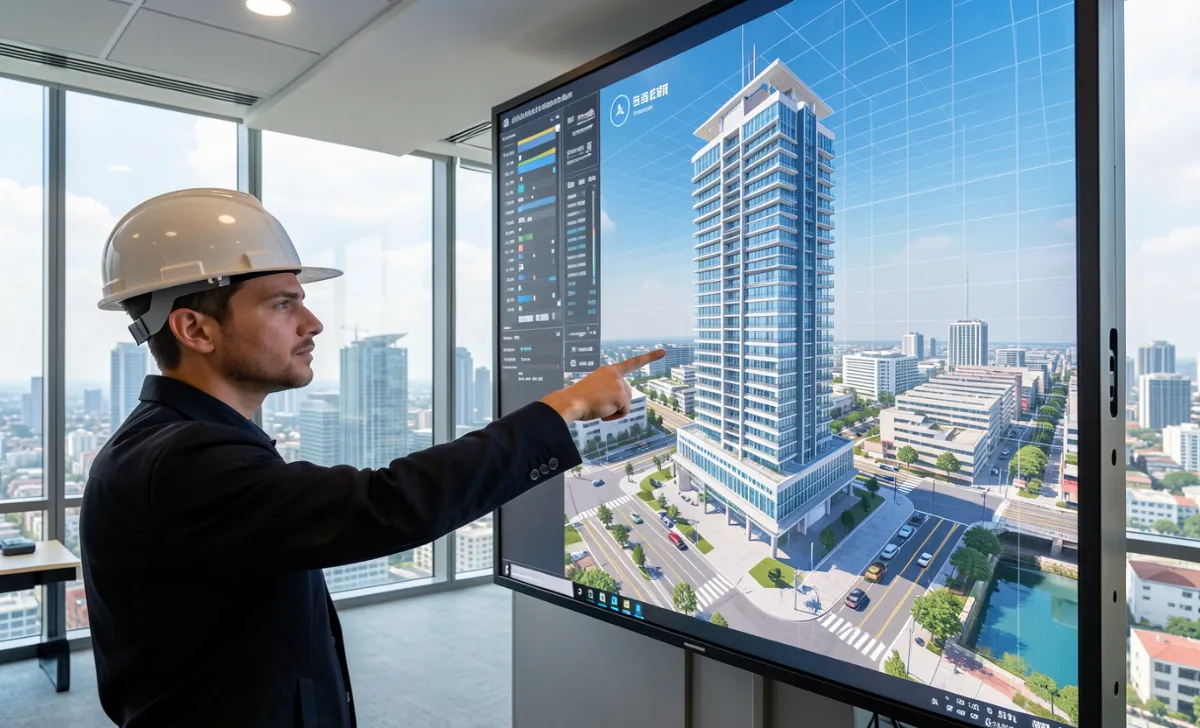
Technology has changed how structural engineers design, analyze, and build. Tools like Building Information Modeling (BIM) and artificial intelligence now handle tasks that once took weeks of manual work, reducing errors and shortening project timelines. Engineers who adopt these tools produce more accurate designs, catch structural problems earlier, and collaborate more effectively across disciplines.
The shift is not limited to software. Digital tools now connect every phase of a project — from early concept modeling to post-construction monitoring. That connectivity creates real efficiency gains, but it also introduces new demands: stronger data security practices, updated technical skills, and a clearer understanding of where these tools help and where human judgment still leads.
Digital Tools Reshaping the Industry
Building Information Modeling (BIM)
BIM has become a standard workflow tool across architecture, engineering, and construction. Rather than passing static drawings between teams, BIM gives every stakeholder — architects, structural engineers, contractors — access to a shared 3D model that updates in real time.

When a contractor identifies a conflict between a structural beam and a mechanical duct, they flag it directly in the model. The structural engineer sees it, adjusts the design, and the updated version is available to the entire team within minutes. That kind of immediate feedback loop used to require back-and-forth emails, meeting delays, and costly rework.
BIM also supports lifecycle management. Facility managers use the same model post-construction to plan maintenance, track material specifications, and prepare for future renovations. The CAD library New York is one example of a resource engineers use to access pre-built components that integrate directly into BIM workflows, reducing repetitive modeling work.
Artificial Intelligence and Machine Learning
AI and machine learning now play a direct role in structural analysis. These systems process large datasets — load conditions, material properties, site-specific environmental data — to identify patterns that inform better design decisions.
One practical application is structural performance prediction. AI models trained on historical project data can flag potential failure points in a design before construction begins. This reduces the number of physical prototypes and expensive load tests required. On active construction sites, AI-assisted monitoring systems track structural stress in real time, alerting engineers when readings deviate from expected ranges.
Machine learning also assists with material optimization. Given a set of load requirements and budget constraints, these systems can suggest the most efficient material combinations — saving cost without compromising performance. The impact of science and technology on engineering workflows continues to accelerate, particularly in how quickly AI tools move from research settings into standard practice.
Impact on Design and Construction
Digital tools have shifted the design process from linear to iterative. Engineers now run dozens of design variations simultaneously, testing each against structural, environmental, and cost criteria before committing to a final direction.
That speed changes how projects get scoped. Clients can see rendered models and performance simulations early in the process, which reduces scope changes later — a consistent source of cost overruns in traditional workflows. Engineers also spend less time on repetitive drafting tasks, which frees up capacity for more complex problem-solving.
Construction timelines have shortened in projects where digital tools are fully integrated. Prefabricated components designed with precise digital models arrive on site ready to install, with fewer fit-up problems. That accuracy reduces waste and labor hours during installation.
Challenges Worth Addressing
Data Security and Privacy
Every connected digital tool creates a potential entry point for unauthorized access. Structural engineering projects involve sensitive data — proprietary designs, client information, site specifications — that carry real value and real risk if exposed.
Firms working across multiple projects simultaneously need standardized data security protocols, not just antivirus software. That means access controls, encrypted file sharing, regular security audits, and clear policies for how project data gets stored and deleted. A breach mid-project can delay timelines, expose proprietary designs, and damage client relationships.
The shift toward cloud-based BIM platforms increases this risk. Engineers need to understand what data their platforms store, where it lives, and who can access it — particularly on projects with government contracts or confidentiality requirements.
Skill Development and Education
The gap between what engineering schools teach and what firms need has grown. Most undergraduate programs still cover foundational structural theory, but many graduates arrive in firms without hands-on experience in BIM, AI-assisted analysis tools, or digital fabrication workflows.
Firms are responding by running internal training programs and partnering with software vendors for certification tracks. Engineers who invest in learning these tools early move into more complex project roles faster. Those who delay find themselves repeating entry-level tasks longer than necessary.
Educational institutions are updating curricula, but adoption is uneven. Engineers in the field right now cannot wait for programs to catch up — continuous self-directed learning is the more practical path.
Where the Results Show Up
Modern High-Rise Construction
High-rise construction offers a clear example of what these tools make possible. Structural engineers on tall building projects now use AI-assisted wind load simulations, real-time sensor data from construction phases, and BIM coordination across mechanical, electrical, and structural systems simultaneously.
Projects that previously required years of iterative manual calculations now complete design phases in months. Smart technology for energy efficiency is also built into structural planning earlier, reducing the retrofitting costs that came with older sequential design workflows.
Sustainable Urban Development
Urban infrastructure projects face a specific challenge: balancing density, cost, and environmental impact across projects that affect thousands of residents. Digital tools give engineers better data to make those tradeoffs explicit and measurable.
Structural engineers working on urban transit systems use simulation tools to model ground movement and load distribution across existing infrastructure — before a single foundation is poured. That reduces the risk of unexpected structural interactions with adjacent buildings and underground utilities. Cities that have adopted these workflows report fewer mid-project design changes and lower overall material waste.
What Engineers Need to Focus On Now
The tools available in 2026 are more capable than most firms fully use. The common bottleneck is not the software — it is the workflow integration. Engineers who get the most out of BIM and AI tools are those who involve them early in the design process, not as a final check before submission.
Start with the basics: if your firm is still relying on 2D drawings as the primary coordination document, that is the first workflow to update. BIM adoption does not require overhauling everything at once, but delaying it creates compounding inefficiencies as project complexity increases.
On the security side, treat your project data with the same discipline you apply to structural calculations. A structural failure gets investigated. A data breach at your firm may never make the news, but it will cost you clients.
For skill development, identify one tool that your current projects would benefit from most — whether that is AI-assisted load analysis, digital fabrication modeling, or real-time structural monitoring — and build competency there before spreading attention across multiple platforms.
The Road Ahead
Structural engineering’s next five years will be defined less by which tools exist and more by how consistently firms integrate them. AI and BIM will continue to develop, but the engineers who get ahead will not be those who wait for the tools to mature further — they will be those who build systematic workflows now.
The profession’s core challenge remains unchanged: design structures that are safe, durable, and economically viable. Digital tools do not change that responsibility. They change how precisely and efficiently engineers can meet it.
What matters is not whether your firm uses the latest software. What matters is whether the tools you use make your designs more accurate, your coordination more reliable, and your project delivery more consistent. That is a question worth asking at the start of every project.