
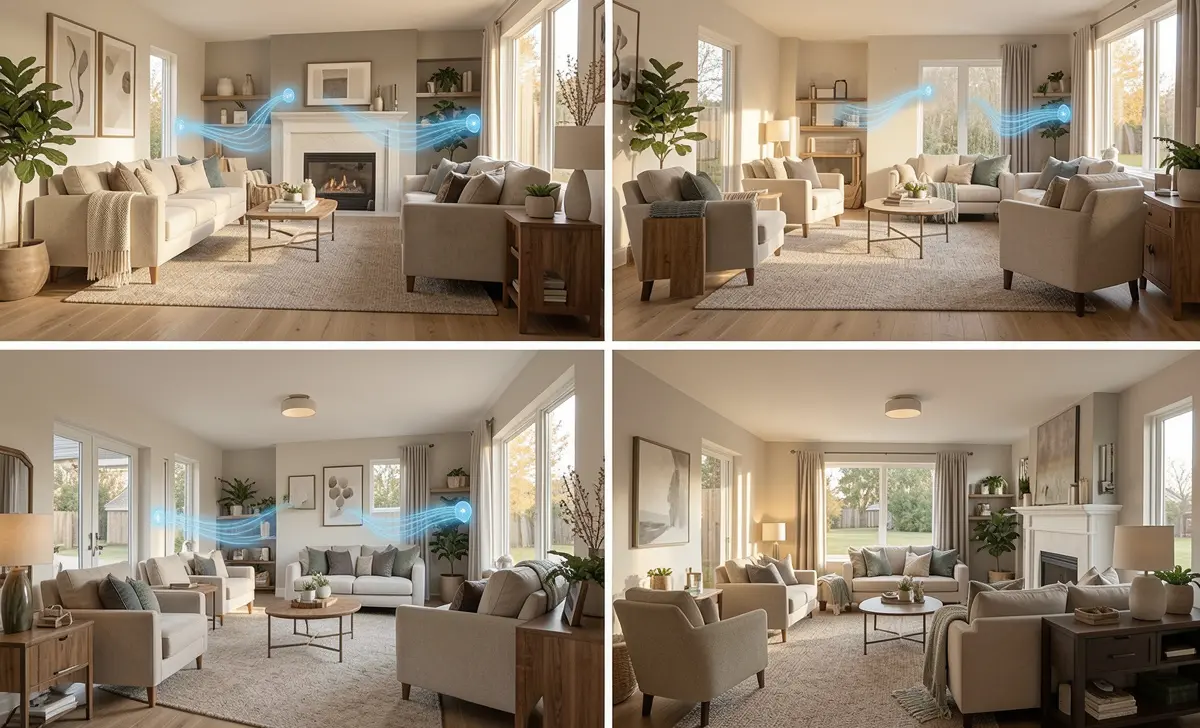
Few things disrupt home comfort quite like battling over the thermostat. You know the scenario—someone upstairs is sweating while someone downstairs reaches for a sweater. If this sounds familiar, you’ve likely wondered if there’s a better way to cool your home. There is, and it’s called zoned air conditioning.
I’ve spent over a decade helping homeowners understand their cooling options, and I can tell you that zoning systems consistently rank among the most misunderstood yet valuable investments you can make. Let’s change that today.
Understanding Zoned Air Conditioning: Beyond the Basic Thermostat
Zoned air conditioning (also called HVAC zoning) is exactly what it sounds like—a system that divides your home into separate areas or “zones,” each with independent temperature control. Think of it as moving from one-size-fits-all cooling to custom comfort for every room.


Unlike conventional central air systems that blast the same temperature throughout your entire house based on a single thermostat, zoned systems treat different areas according to their specific needs. Your south-facing home office that bakes in the afternoon sun can stay comfortably cool, while your finished basement, which stays naturally chilly, isn’t freezing unnecessarily.
The magic happens through a combination of smart components working together seamlessly.
How Zoned Air Conditioners Actually Work
Let me walk you through the process in plain English.
The Basic Setup
Your home gets divided into zones—anywhere from two to eight or more, depending on your needs and layout. Each zone has its own thermostat, which connects to a central control panel. The brain of the operation constantly monitors temperature readings from every zone and directs airflow accordingly.
The Role of Dampers
Here’s where the actual work gets done. Inside your ductwork, you’ll find dampers—movable plates that open and close to regulate airflow to specific areas. When your upstairs thermostat signals it needs cooling, the dampers for the upstairs zones open while dampers for unoccupied or satisfied zones close partially or completely.
Think of dampers as smart valves for your air ducts. They redirect conditioned air exactly where it’s needed, when it’s needed.
Ductless Systems: A Different Approach
If you have a ductless mini-split system, zoning works slightly differently. Instead of dampers inside ducts, you have individual air handlers mounted on walls or ceilings in each zone. Each air handler connects to an outdoor unit and operates independently based on its built-in thermostat.
This setup works particularly well for homes without existing ductwork, room additions, or spaces where running ducts would be impractical.
Real Questions Homeowners Ask About Zoned AC
Over the years, I’ve heard just about every question you can imagine about zoned cooling. Here are the ones that come up most often:
Will zoning really save me money on electricity?
Generally, yes—but with some important caveats. Zoned systems use energy more efficiently by cooling only occupied spaces. You’re not paying to keep your guest bedroom at 72 degrees when nobody’s used it in weeks. However, the savings depend on your lifestyle, home size, and how diligently you use the zone controls.
Can I add zoning to my existing AC system?
Often, yes. This is called retrofit zoning, and it’s a common project for homeowners with uneven cooling issues. An HVAC professional can install dampers in your existing ductwork and add the necessary control panels and thermostats. That said, not every system is a good candidate—older systems or those with undersized ducts may need upgrades.
How many zones should I have?
There’s no one-size-fits-all answer, but smart zoning follows natural divisions in your home. Common zone separations include:
- Different floors (upstairs/downstairs)
- Areas with different sun exposure
- Spaces with different usage patterns (bedrooms vs. living areas)
- Rooms above garages or with large windows
Is it worth it for a small home?
Absolutely. Even in smaller homes, zoning addresses the fundamental problem of uneven temperatures. A 1,500-square-foot ranch with large west-facing windows can benefit tremendously from having the living areas zoned separately from bedrooms.
Key Factors to Consider Before Installing Zoned AC
Before you call an HVAC contractor, take some time to evaluate your home’s specific characteristics. These factors will influence both the feasibility and effectiveness of zoning:
Your Home’s Layout and Square Footage
The size and flow of your home matter enormously. Open floor plans with few interior walls present different challenges than traditional layouts with separate rooms. An experienced HVAC professional will evaluate how air naturally moves through your space and design zones that work with your home’s architecture, not against it.
Window Placement and Quality
Windows significantly impact cooling needs. Large picture windows facing west will create dramatically different cooling requirements than north-facing windows shaded by trees. Your zoning plan should account for these variations, possibly grouping rooms with similar sun exposure together.
Insulation Levels
Good insulation makes zoning more effective. If your home leaks conditioned air like a sieve, no amount of sophisticated zoning will maintain comfortable temperatures efficiently. Consider having an energy audit before investing in zoning—you might find that insulation upgrades offer better bang for your buck.
Existing Ductwork Condition
For forced-air systems, your ducts need to be properly sized and in good condition. Leaky ducts waste conditioned air before it reaches your zones, compromising both comfort and efficiency. Your contractor should perform a duct leakage test as part of the assessment.
Components of a Complete Zoned System
Understanding the parts helps you make informed decisions when discussing options with contractors.
Indoor Unit
The indoor unit houses the evaporator coil, blower fan, and filters. In a zoned system, this equipment must be properly sized to handle the varying demands of different zones. Oversizing is surprisingly common and leads to short cycling—a frequent on-off operation that wastes energy and reduces dehumidification.
Outdoor Unit
The condenser and compressor live outside, releasing the heat removed from your home. In zoning applications, variable-speed compressors offer significant advantages because they can adjust output to match whatever combination of zones is calling for cooling at any given moment.
Thermostats and Controls
Modern zone control panels and thermostats have come a long way. Today’s systems often include:
- Wi-Fi connectivity for smartphone control
- Occupancy sensors that detect when rooms are in use
- Learning capabilities that adapt to your schedule
- Integration with smart home platforms
Sensors for Precision Control
Quality zoning systems incorporate various sensors beyond basic thermostats:
- Temperature sensors in each zone
- Humidity sensors to manage moisture levels
- Pressure sensors to protect equipment
- Sometimes occupancy sensors for automatic setback
Dampers (Zone Motors)
These workhorses of zoning come in different styles—round dampers for round ducts, rectangular dampers for rectangular ducts. They should close tightly when required and open fully when zones call for air.
The Real Benefits of Zoned Air Conditioning
Let’s talk honestly about what zoning does for homeowners who invest.
Elimination of Hot and Cold Spots
If you’ve lived with one thermostat, you know the struggle. Rooms closest to the thermostat get what they want while distant rooms suffer. Zoning solves this by giving each area its own voice in the system.
Lower Energy Consumption
The math is simple: cooling less space uses less energy. When you’re at work during the day, your bedroom zone can drift warmer while your home office stays comfortable. When you’re asleep, the living areas don’t need the same level of cooling as bedrooms.
Reduced Utility Bills
Lower energy consumption translates directly to lower bills. Many homeowners see 20-30% savings after properly implementing zoning, though results vary based on climate, home characteristics, and usage patterns.
Personalized Comfort
Different people prefer different temperatures. Rather than fighting over the thermostat setting, each person can adjust their zone to their preference. This alone resolves countless household disputes.
Extended Equipment Life
When your HVAC system runs more efficiently and cycles less frequently, components last longer. Zoning reduces wear and tear by matching output more precisely to demand.
Installation Costs: What to Expect
Let’s address the elephant in the room—cost. Zoned air conditioning requires more components and a more complex installation than conventional systems, so it costs more upfront.
For a typical single-family home, expect to invest:
- Basic two-zone system installation: $3,000–$5,000
- Multi-zone system (3-4 zones): $5,000–$8,000
- Complex whole-home zoning: $8,000–$15,000+
These figures include equipment, labor, and necessary modifications to existing ductwork. New construction zoning typically costs less than retrofitting an existing home.
Remember that cost estimates should always come from licensed HVAC contractors who can assess your specific situation. Online averages provide ballpark figures only—your actual quote depends on local labor rates, equipment choices, and your home’s unique characteristics.
Making the Right Decision for Your Home
Zoned air conditioning isn’t for everyone, but for many homeowners, it transforms the living experience. Before making a decision:
- Identify your specific comfort problems—where and when does your home feel uncomfortable?
- Get multiple quotes from experienced HVAC contractors
- Ask about variable-speed equipment designed for zoning
- Consider your long-term plans—will you be in the home long enough to recoup the investment through energy savings?
- Check for utility rebates that might offset some costs
The best approach combines professional expertise with your own understanding of how your family uses your home. When these align, zoning delivers comfort that single-thermostat systems simply cannot match.
Whether you’re building new or retrofitting an existing home, zoned air conditioning represents the evolution of home comfort—moving from one-size-fits-all to personalized, efficient cooling that works with your life, not against it.