Planning a trip to the United States to visit family or explore new places? With dozens of major cities and countless attractions, choosing where to go can feel overwhelming. This guide covers seven cities worth adding to your itinerary, each offering something different for travelers.
You’ll find a mix of beach destinations, mountain retreats, and urban experiences. Whether you want outdoor adventures or city sights, these locations give you a solid starting point for your US visit.
Jacksonville, Florida
Jacksonville offers 22 miles of beaches along Florida’s Atlantic coast. The city stays warm year-round, with average temperatures between 65°F and 90°F depending on the season.


The beaches are the main draw here. Jacksonville Beach and Neptune Beach provide easy access to swimming, surfing, and beachside dining. You can rent equipment for water sports or simply relax on the sand.
Beyond beaches, the city has a growing food scene and several historic neighborhoods worth exploring. The Riverside and Avondale areas feature local shops and restaurants in early 20th-century buildings.
Best time to visit: March through May offers pleasant weather beforethe summer heat and humidity peak. September and October work well if you want to avoid crowds.
Colorado Springs, Colorado
Colorado Springs sits at the base of Pikes Peak in the Rocky Mountains. The elevation is 6,035 feet, so you may need a day or two to adjust if you’re coming from sea level.
Garden of the Gods is the signature attraction. This public park features massive red rock formations you can view from paved walking paths or more challenging hiking trails. Entry is free.
Pikes Peak reaches 14,115 feet. You can drive to the summit, take a cog railway, or hike if you’re experienced with high-altitude trails. The views extend across several mountain ranges on clear days.
The city also has the US Olympic & Paralympic Training Center, which offers public tours, and several museums focused on Western history.
Best time to visit: June through September provides the most accessible weather for outdoor activities. Winter brings snow and cold temperatures, limiting some attractions.
Seattle, Washington
Seattle’s coffee culture runs deep. The city launched Starbucks, but you’ll find dozens of independent roasters and cafes throughout neighborhoods like Capitol Hill and Fremont.
Pike Place Market operates year-round as one of the oldest farmers’ markets in the country. You can watch fishmongers throw salmon, buy fresh flowers, and eat your way through various food stalls.
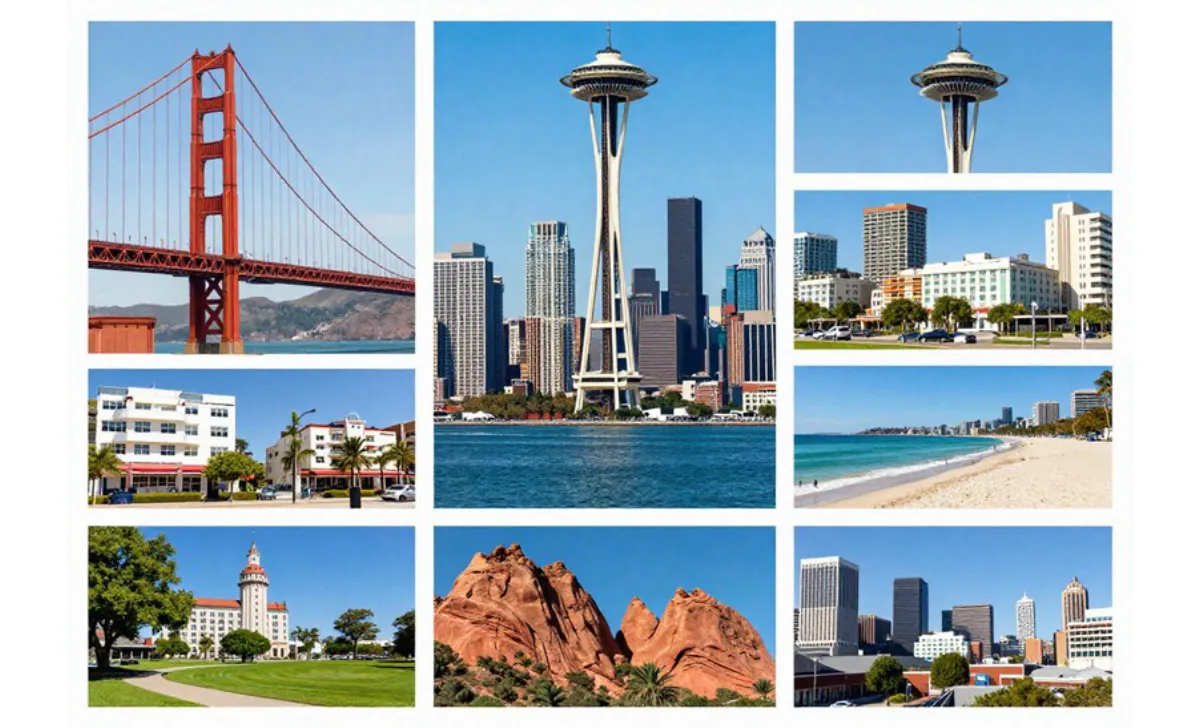
The Space Needle offers 360-degree views from 520 feet up. The observation deck has floor-to-ceiling windows and a rotating glass floor section.
Seattle gets rain, but less than you might expect. The city averages 38 inches annually, which is less than New York or Miami. Rain typically falls as drizzle rather than in heavy storms.
Best time to visit: July through September brings the driest, warmest weather. Spring (April to June) works if you don’t mind occasional rain and want to avoid peak tourist season.
Portland, Oregon
Portland built its reputation on independent businesses, craft beer, and environmental consciousness. The city has more breweries per capita than any other US city.
Food carts are everywhere. You’ll find over 500 mobile vendors serving everything from Thai cuisine to artisan donuts. Many cluster in “pods” where multiple carts gather in parking lots.
Forest Park covers 5,200 acres within city limits. The Wildwood Trail runs 30 miles through Douglas fir forest, offering quick access to nature without leaving town.
The city encourages biking with over 350 miles of bike lanes and paths. You can rent bikes easily if you want to explore neighborhoods like the Pearl District or Alberta Arts District.
Best time to visit: June through August offers warm, dry weather perfect for outdoor activities. May and September can work well if you want fewer tourists and don’t mind some rain.
Los Angeles, California
Los Angeles sprawls across 500 square miles. You’ll need a car or rideshare to get around effectively, as public transit doesn’t cover most areas tourists want to visit.
Beaches run along the entire western edge. Santa Monica, Venice, and Manhattan Beach each have distinct personalities. Santa Monica Pier has an amusement park and aquarium. Venice Beach is known for its boardwalk performers and Muscle Beach gym.
Hollywood draws many first-time visitors. You can see the Hollywood Sign from several viewpoints, walk the star-covered sidewalks on Hollywood Boulevard, or tour studios like Warner Bros. or Universal.
The city has world-class museums. The Getty Center offers free admission (parking costs $20) and combines art galleries with architecture and gardens overlooking the city.
Best time to visit: March through May and September through November provide comfortable temperatures and clearer skies. Summer brings crowds and occasional heat waves. Winter is mild but can be rainy.
Chicago, Illinois
Chicago sits on Lake Michigan’s southwestern shore. The lakefront includes 26 miles of public beaches and parks connected by a continuous path for walking, running, or biking.
Architecture defines the city’s identity. Chicago pioneered the skyscraper and continues to showcase bold designs. You can take architecture boat tours along the Chicago River or simply walk through the Loop to see buildings up close.
Millennium Park anchors downtown. Cloud Gate (the reflective “Bean” sculpture) draws millions of visitors annually. The park also hosts free concerts and events throughout the summer.
Deep-dish pizza originated here. Lou Malnati’s, Giordano’s, and Pequod’s are popular spots, though locals debate which is best. The pizza requires a knife and fork and takes 30-45 minutes to bake.
Best time to visit: May through September offers the warmest weather and most outdoor events. Summer can get humid. Fall (September to October) brings pleasant temperatures and beautiful foliage. Winter is harsh, with temperatures often below freezing.
San Francisco, California
San Francisco compresses steep hills, Victorian houses, and waterfront views into 49 square miles. The city feels compact compared to other major US cities.
The Golden Gate Bridge stretches 1.7 miles across the bay entrance. You can walk or bike across it. Bring layers as wind and fog are common, even in summer.
Alcatraz Island requires booking. The former federal prison sits in the bay and offers audio tours narrated by former guards and inmates. Ferries run from Pier 33.
Cable cars still operate on three lines. They’re functional transit but also a tourist experience. Expect lines at popular stops like Powell and Market.
The city has distinct microclimates. It can be sunny in the Mission District while foggy at Ocean Beach, even on the same day. Temperatures rarely exceed 75°F or drop below 45°F.
Best time to visit: September and October typically bring the warmest, clearest weather. Summer is often foggy and cool along the coast. Spring works well if you can handle unpredictable weather.
Miami, Florida
Miami blends Latin American culture, Art Deco architecture, and beach life. Over 70% of residents speak Spanish at home, giving the city a distinct international feel.
South Beach features pastel-colored Art Deco buildings from the 1930s and 1940s. Ocean Drive runs parallel to the beach, lined with outdoor cafes and hotels. The beach itself has white sand and clear water.
Little Havana offers Cuban food, cigars, and live music. Calle Ocho (8th Street) is the main strip. You can watch cigar rollers at work and eat authentic Cuban sandwiches.
Wynwood Walls transformed a warehouse district into an outdoor street art museum. Dozens of murals cover building exteriors. The neighborhood also has breweries, restaurants, and galleries.
Best time to visit: December through April provides warm, dry weather. Summer brings heat, humidity, and afternoon thunderstorms. Hurricane season runs from June through November, with September being the peak month.
Planning Your Visit
Each city on this list offers something different. Beach lovers should consider Jacksonville or Miami. Outdoor enthusiasts will prefer Colorado Springs, Seattle, or Portland. Those wanting classic urban experiences should look at Los Angeles, Chicago, or San Francisco.
Consider your travel dates carefully. Peak season means higher prices and larger crowds, but also better weather and more events. Shoulder season (just before or after peak) often provides the best balance.
Most international travelers will need proper documentation to enter the United States. Check current visa requirements for your country well before your planned travel dates.
Budget accordingly for each destination. Cities like San Francisco, Seattle, and Los Angeles tend to cost more for accommodation and dining than Jacksonville or Colorado Springs. Daily expenses can vary significantly between destinations.