
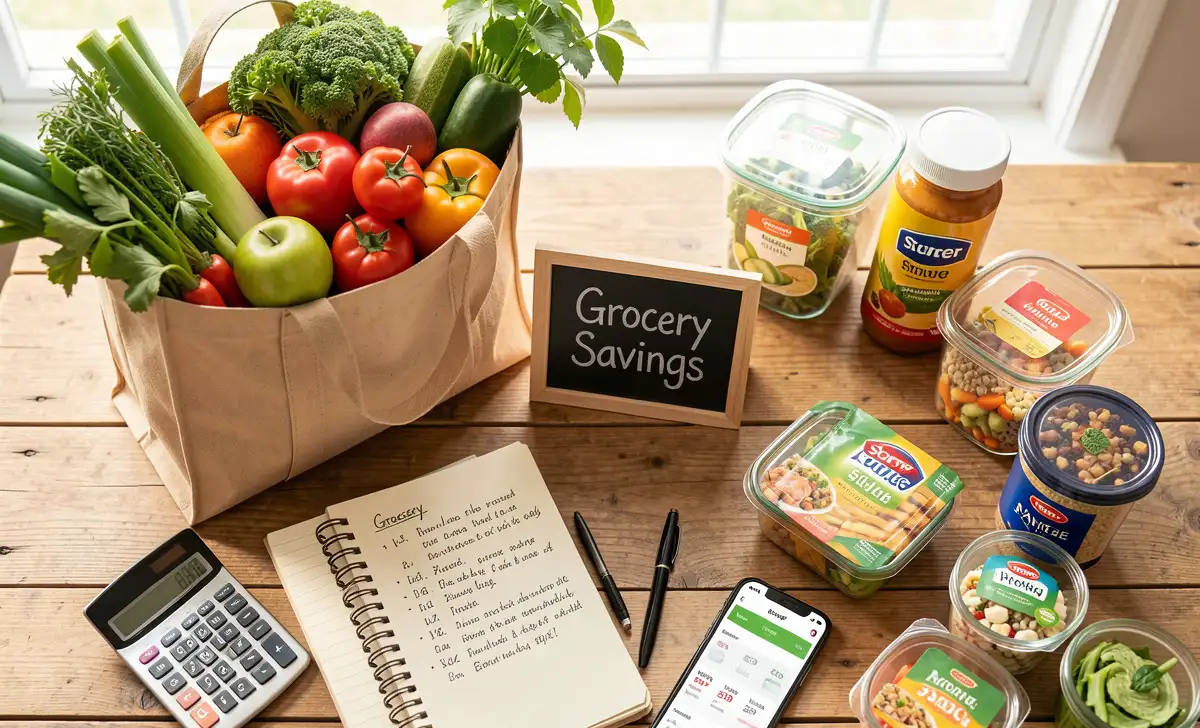
If you’ve walked into a grocery store lately, you’ve probably noticed something unsettling: your cart fills up faster while your wallet empties quicker. According to the USDA, food prices at home increased by more than 5% in recent years, and many households are feeling the pinch. The good news? You don’t need to survive on instant noodles or give up your favorite foods to stay within budget. After years of testing every money-saving trick imaginable—and talking with budget-conscious families, meal prep enthusiasts, and even grocery store employees—I’ve gathered the strategies that actually work to save money on groceries.
Here are ten practical ways to slash your grocery bill while still eating well.
1: Plan Your Meals Ahead of Time
Meal planning might sound like something only organized Pinterest moms do, but it’s truly the foundation of grocery savings. When you plan meals for the upcoming week, you’re essentially creating a roadmap that prevents those aimless wanderings through store aisles where impulse purchases happen.


Start by taking inventory of what you already have. That half-used jar of pasta sauce in the pantry? Those chicken breasts hiding in the freezer? Build meals around these items first. Then, sketch out 4-5 dinners for the week, keeping lunches and breakfasts simple with repeat items.
The magic happens at the intersection of planning and proper food storage. Investing in good-quality airtight containers extends the life of your prepared meals significantly. I’ve found that meals stored properly in quality refrigerators with consistent temperature control stay fresh 2-3 days longer than those in containers that let air circulate. This means less food waste and more money in your pocket.
One reader recently shared, “I used to throw away at least $50 worth of spoiled produce every month. Now that I plan my meals and store everything properly, I’m saving close to $600 a year just on food I used to toss.”
2: Compare Prices Between Stores
Here’s a hard truth: Loyalty to a single grocery store is costing you money. Different retailers have different pricing strategies, and what’s cheap at one store might be significantly marked up at another.
The key is strategic comparison shopping, not driving to five different stores every week. Focus your comparisons on high-ticket items like meat, dairy, and produce. For example, I’ve noticed that in my area, Aldi consistently beats other stores on produce and staples, while a local chain has better meat prices on weekends.
To compare prices effectively without losing your mind:
- Use price comparison websites and apps: Platforms like Google Shopping, PriceGrabber, and Shopzilla let you quickly scan prices across multiple retailers. Just remember that these sites occasionally show outdated information, so always verify before heading out.
- Pay attention to unit pricing: That small print on shelf tags showing price per ounce or per pound is your best friend. Sometimes the “sale” price on a smaller package is actually higher per unit than the regular price on the larger size.
- Factor in the whole picture: A store with slightly higher prices might offer double coupons or a loyalty program that makes up the difference. Consider the reputation of the seller too—customer reviews and ratings often reveal whether that “great deal” comes with expired products or unpleasant shopping experiences.
- Set price alerts: Many comparison tools now let you set alerts for specific items. When your favorite coffee or that particular brand of almond milk drops in price, you’ll know immediately.
3: Buy in Bulk When Possible
Walking into a warehouse club for the first time can be overwhelming—giant containers of ketchup, mayonnaise by the gallon, enough toilet paper to survive a zombie apocalypse. But buying in bulk truly saves money when done strategically.
The savings come from two places: lower per-unit costs and reduced packaging. That 5-pound bag of rice costs significantly less per serving than the 1-pound boxes. Same with oats, flour, sugar, and other pantry staples you use regularly.
However, bulk buying has a trap: waste. That massive bag of spinach will turn into slime before you finish it unless you have a plan. Here’s how to make bulk work:
- Focus on non-perishables first—canned goods, dried beans, pasta, rice, cleaning supplies
- For perishables, only buy bulk if you can freeze portions or split with a friend
- Invest in proper storage containers to keep bulk items fresh longer
- Calculate your actual usage before committing to giant sizes
One savvy shopper told me, “My sister and I split a warehouse membership and divide bulk purchases. We each save about $40 a month on staples, and nothing goes to waste.”
4: Choose Store Brands Over Name Brands
Let’s address the elephant in the room: yes, sometimes name brands taste slightly different. But “different” doesn’t mean “worse,” and in blind taste tests, most people can’t reliably tell the difference between store-brand and name-brand products.
Store brands save you anywhere from 15% to 30% compared to national brands. For a family spending $600 monthly on groceries, that’s $90-180 in savings every single month—over $1,000 annually.
Where store brands really shine:
- Basic pantry items like flour, sugar, salt, and oils
- Canned vegetables and fruits
- Dairy products like milk, butter, and yogurt
- Paper goods and cleaning supplies
- Frozen vegetables and fruits
For items where brand truly matters to you—maybe your morning coffee or that specific hot sauce—splurge on the name brand. But for everything else, give the store brand a chance. Most stores even have satisfaction guarantees, so if you genuinely don’t like it, you can get your money back.
5: Make Your Own Snacks
Walk down the snack aisle lately? A box of granola bars costs around $4-5 for maybe eight bars. That’s 50-60 cents per snack. Now consider that you can make a batch of homemade granola bars for roughly $3 that yields 12-15 bars, and you control exactly what goes into them.
Making your own snacks isn’t just about money—it’s about knowing exactly what you’re eating. Those packaged snacks often contain preservatives, added sugars, and ingredients you can’t pronounce. Homemade versions let you tailor flavors to your preferences and dietary needs.
Here are some reader-favorite homemade snacks that are surprisingly simple:
- Zucchini pizza bites – Slice zucchini into rounds, top with sauce and cheese, bake until bubbly
- Edamame hummus – Swap chickpeas for edamame for a protein-packed dip
- Carrot cake energy balls – Dates, carrots, walnuts, and spices rolled into bite-sized treats
- Air fryer chickpeas – Toss with olive oil and spices, air fry until crispy
- Plain Greek yogurt with fruit and honey – Cheaper than flavored yogurts and far less sugar
- Apple “cookies” – Apple slices topped with peanut butter and granola
One mom told me, “My kids actually prefer the snacks we make together. They feel proud eating something they helped create, and I feel good knowing exactly what’s in their food.”
6: Clip and Use Coupons Strategically
Couponing has a reputation problem. Thanks to extreme couponing TV shows, people imagine spending 40 hours a week clipping and organizing, only to buy 87 bottles of mustard they’ll never use.
Realistic couponing looks different. It means:
- Only clipping coupons for products you actually buy
- Using digital coupons through store apps (no scissors required)
- Stacking manufacturer coupons with store sales when possible
- Checking coupon policies at your regular stores
The mistake most people make is clipping coupons first, then trying to find ways to use them. Flip that approach: know what you need, then look for coupons. Apps like Ibotta and Checkout 51 offer cashback on everyday purchases without the clutter of paper coupons.
A working parent shared, “I spend maybe 10 minutes on Sunday loading digital coupons to my store card. Last week, I saved $23 on groceries I was already buying. That’s about $100 a month for almost no effort.”
7: Buy Frozen Produce
Fresh produce has undeniable appeal—those colorful displays, the satisfying crunch. But frozen fruits and vegetables deserve a place in your shopping cart too, and not just as a backup.
Frozen produce is typically harvested at peak ripeness and flash-frozen within hours, locking in nutrients. Studies have shown that frozen vegetables can actually retain more vitamins than fresh produce that’s traveled long distances and sat on store shelves for days.
The financial argument is even stronger. Frozen vegetables cost 20-30% less than fresh, and since they don’t spoil, you use every single dollar you spend. No more throwing away slimy spinach or moldy berries.
Smart ways to use frozen produce:
- Smoothies (frozen fruit eliminates the need for ice)
- Stir-fries and soups (add frozen vegetables directly to the pot)
- Roasting (toss frozen veggies with oil and seasonings, roast at high heat)
- Oatmeal and yogurt toppings (thaw frozen berries overnight)
Just read labels carefully—some frozen products add sauces, sugars, or sodium. Plain frozen vegetables with no additions are your healthiest and most versatile choice.
8: Plan Meals Around What’s on Sale
Weekly sales circulars aren’t just junk mail—they’re your roadmap to savings. When you build meals around sale items rather than deciding what you want and hoping it’s on sale, your grocery budget naturally shrinks. This is a powerful way to save money on groceries without feeling restricted.
This approach requires some flexibility. If chicken breasts are on sale but you were craving fish, consider switching. If bell peppers are half price this week, plan several meals using them.
To make this work without feeling restricted:
- Keep a collection of “backup recipes” that use common ingredients
- Stock your pantry with versatile basics so you can build meals around sale proteins and produce
- Use apps like Recipe Keeper or OrganizEat to store and organize recipes you can search by ingredient
One cook explained, “I check the sales flyer Thursday night, then spend Friday morning planning. If pork shoulder is on sale, I’ll plan pulled pork sandwiches, tacos later in the week, and freeze the rest for soup. One sale item becomes three meals.”
Speaking of backup recipes, having them organized makes spontaneous cooking possible. Tools like Dropbox or Cook’n Cloud let you sync recipes across devices, so whether you’re at the store or in the kitchen, your recipe collection is always accessible.
9: Cook from Scratch
There’s a misconception that cooking from scratch requires hours in the kitchen and advanced culinary skills. In reality, “from scratch” simply means using basic ingredients rather than pre-made packages.
Consider the cost difference:
- A box of macaroni and cheese: $1.50 for about 2 servings
- Homemade mac and cheese: $2.50 for 6 servings using pasta, cheese, milk, and butter
- Jarred pasta sauce: $3.50 for 4 servings
- Homemade sauce: $4 for 8 servings using canned tomatoes, onions, and seasonings
The savings compound when you realize homemade versions typically yield more food for less money, and you’re not paying for packaging, marketing, and processing.
Start small. Make your own salad dressing this week (oil, vinegar, mustard, honey—done). Next week, try homemade pizza instead of delivery or frozen. Gradually, you’ll build a repertoire of from-scratch meals that cost a fraction of their prepared counterparts.
10: Always Use a Grocery List
This tip sounds almost too simple to matter, but it might be the most powerful tool in your savings arsenal. Studies show that shoppers who use lists spend significantly less than those who don’t.
A list serves two purposes: it ensures you buy what you need, and it creates a barrier to buying what you don’t. When you’re standing in the cookie aisle, and a package calls your name, your list permits you to say, “Not today.”
Make your list based on your meal plan, and organize it by store sections—produce, dairy, meat, pantry, frozen. This prevents backtracking across the store, which saves time and reduces exposure to tempting displays.
Digital lists on your phone work well and are hard to lose, but paper lists have one advantage: you can’t delete items impulsively. Find what works for you, but use something.
Putting It All Together
Learning to save money on groceries isn’t about deprivation or extreme measures. It’s about small, consistent choices that add up over time. Maybe you start with just two or three of these strategies—using a list, choosing store brands, checking the sales flyer. As those become habits, add another.
Remember that everyone’s situation is different. A single person in a city apartment will approach grocery savings differently than a family of five in the suburbs. Adapt these tips to your life, your kitchen, and your tastes.
The goal isn’t perfection—it’s progress. Start where you are, use what you have, and do what you can. Your grocery bill (and your bank account) will thank you.