
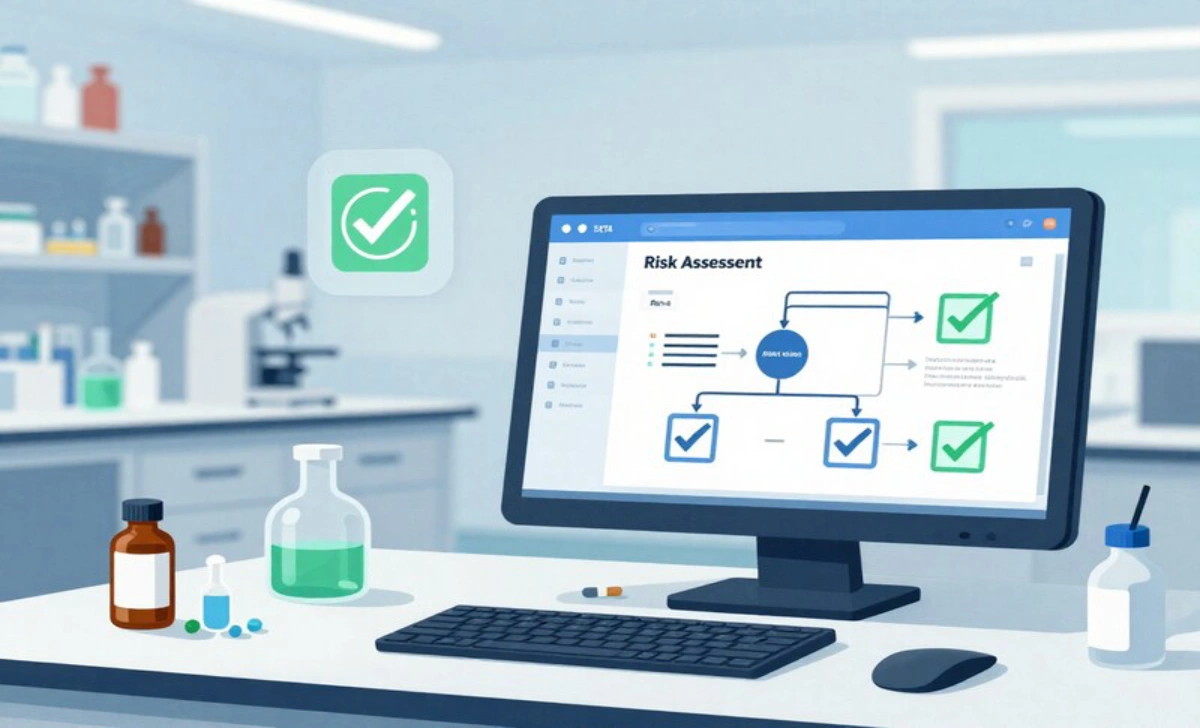
Computer system validation ensures that software and hardware used in pharmaceutical, clinical, and medical device manufacturing consistently produce accurate, reliable results. With laboratory and production systems now integral to quality and compliance, poor validation creates regulatory risk and threatens product safety.
A risk-based approach focuses validation effort where it matters most. You test critical functionalities rigorously while applying lighter controls to low-risk features. This reduces validation costs and timelines without compromising compliance or data integrity.
Building Your Validation Strategy
Computer system validation confirms that your systems work as intended and meet regulatory requirements. You start during the concept phase with a User Requirement Specification (URS). This document defines what your system must do, maps business processes, and identifies necessary controls.


Your URS feeds directly into your validation strategy. This strategy outlines your approach, resources, timeline, and initial risk assessment. You determine which systems require full validation versus lighter documentation based on their impact on product quality and patient safety.
The FDA’s Computer Software Assurance (CSA) guidance, finalized in 2022, supports this risk-based thinking. It builds on GAMP 5 (Good Automated Manufacturing Practice) principles: understand your product and processes, apply quality risk management, and use supplier documentation effectively. The guidance also acknowledges modern realities like cloud systems with frequent updates.
Risk level depends on several factors:
- Likelihood and impact of system failure
- Type of data the system handles (raw data, calculations, reports)
- Supplier validation documentation available
- Standard operating procedures that mitigate risk
- Effect on product quality and patient safety
You validate all GxP systems. The difference is how much testing you perform and how thoroughly you document it.
Conducting Your Risk Assessment
Laboratory systems control instruments, evaluate data, and manage documentation. Manufacturing systems handle batch records, environmental monitoring, and quality data. All require validation in regulated environments.
Your risk assessment determines testing scope. Start by assembling a cross-functional team with representatives from quality, manufacturing, IT, and the departments using the system. Each perspective helps identify risks you might otherwise miss.
Choose a risk analysis method that fits your project size and available resources. Simple scoring matrices work well for straightforward systems. Complex or high-risk systems may require Failure Modes and Effects Analysis (FMEA).
Review supplier documentation early. Software vendors often provide qualification protocols, test results, and risk assessments. GAMP 5 categorizes software by complexity and configurability, helping you determine how much supplier work you can use. Standard spreadsheet software requires less validation effort than custom manufacturing execution systems.
Create a traceability matrix linking user requirements to design specifications and test cases. This ensures you verify every requirement and provides clear audit trails. Your matrix becomes your roadmap for testing and your evidence for regulators.
Applying FMEA to System Design
Failure Modes and Effects Analysis (FMEA) identifies what could go wrong and prioritizes risks. You examine each system function and ask: What happens if this fails? How likely is failure? How severe would the impact be?
Calculate a Risk Priority Number (RPN) for each potential failure by multiplying three scores:
- Severity (impact on product quality or patient safety)
- Occurrence (likelihood of the failure happening)
- Detection (ability to catch the failure before it causes harm)
High RPN values indicate where to focus testing. You test these functions thoroughly with multiple scenarios. Medium-risk items receive standard testing. Low-risk functions may need only basic checks or benefit from supplier testing.
This analysis shapes your testing strategy. Critical data calculations require extensive testing with edge cases. User interface elements that don’t affect data integrity need less scrutiny. Configuration settings that control GxP functions need verification, while cosmetic preferences don’t.
Any software update, configuration change, or hardware modification triggers a new risk assessment. Not every change requires full re-validation. Minor updates with no GxP impact may only need change control documentation and targeted testing. Major functionality changes or infrastructure upgrades typically require comprehensive re-validation.
Document your rationale clearly. Inspectors will review your risk assessments and want to understand why you tested what you did.
Maintaining Validation Over Time
Risk-based validation reduces costs while maintaining compliance. You focus resources on high-risk areas instead of treating every system feature identically. This approach enables you to adopt modern software without excessive validation overhead.
Many regulated companies still use outdated systems because traditional validation approaches made upgrades prohibitively expensive. Risk-based methods lower these barriers. You can implement cloud systems, automated workflows, and data analytics tools that improve quality and productivity.
Ongoing maintenance requires clear procedures. Your change control system documents all modifications and triggers appropriate re-validation. Periodic reviews confirm your systems still meet requirements as processes evolve. Routine assessments catch configuration drift before it becomes a compliance issue.
Supplier relationships matter throughout the system lifecycle. Vendors provide updates, security patches, and enhanced functionality. Open communication helps you understand changes and assess their impact. Good suppliers share validation documentation, test results, and risk analyses that reduce your workload.
Request detailed release notes for every update. Evaluate whether changes affect validated functionality. Minor bug fixes in non-GxP areas rarely need extensive testing. New features or calculation changes require careful assessment.
Clear documentation supports your validation approach. Auditors need to see your risk assessment logic, testing rationale, and ongoing monitoring. Well-organized records demonstrate control and make inspections straightforward.
Your validation strategy should align with business needs and regulatory expectations. Systems that directly affect product quality or patient safety demand rigorous validation. Administrative systems with no GxP impact require lighter controls. Risk-based thinking lets you make these distinctions confidently and defend them during audits.