
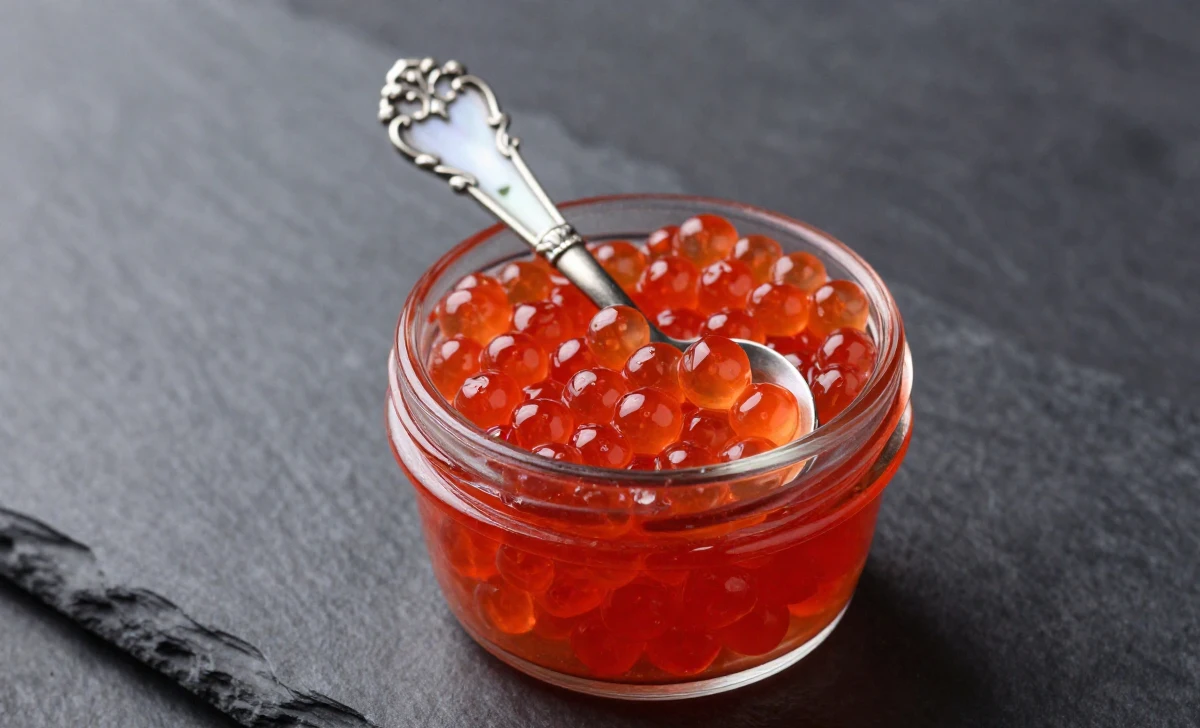
Red caviar — often called “red gold” — holds a special place at tables around the world. Whether you’ve enjoyed it on buttered toast at a celebration or spotted those vibrant orange pearls at a fancy market, there’s something undeniably luxurious about salmon caviar.
But here’s the thing: many of us know it tastes wonderful, but few understand what makes it so prized, why prices vary so dramatically, or whether that jar in your hand is actually worth the splurge.
Let’s change that. Whether you’re a curious foodie, someone looking to buy their first jar, or just trying to understand what makes Russian and Japanese cultures go crazy for these little eggs, this guide covers everything.


What Exactly Is Red Caviar?
Red caviar, simply put, is the roe (eggs) harvested from salmon species. Unlike black caviar, which comes from sturgeon, red caviar comes from fish like:
- Pink salmon
- Chum salmon
- Sockeye salmon
- Coho salmon
- Chinook salmon
- Trout
In Japan, you’ll hear it called ikura — a word that actually comes from Russian, which tells you something about how deeply connected these cultures are when it comes to this food. In Western countries, it’s often simply labeled “salmon roe” or “red caviar.”
The color ranges from deep orange to bright ruby red, depending on the specific fish. The eggs are typically medium-sized, pop gently when you bite them, and release that unmistakable briny, ocean-fresh flavor.
Why Do We Call It “Red Gold”?
The nickname isn’t just marketing. Red caviar has genuinely earned its “gold” status for several reasons.
First, there’s history. For centuries, salmon caviar was everyday food for Indigenous peoples of Russia’s Far East and parts of North America. Families would catch salmon during the spawning season and preserve the eggs for winter. It was practical, nutritious sustenance — not luxury.
Everything changed in the early 1900s when someone figured out that salting caviar preserved it beautifully and made it taste even better. Once that happened, demand exploded. What was once everyday food became a sought-after delicacy. Prices climbed. And they’ve never come down.
Today, that jar of “red gold” represents tradition, craftsmanship, and a taste of something genuinely special.
A Look Inside Andrey Germash’s Operation
To understand what quality red caviar looks like, it helps to see how the best producers operate. Take Andrey Germash, founder of Vostochny Bereg (East Coast) in Russia’s Kamchatka Territory. His company has spent over two decades refining how salmon caviar is harvested and processed.
What makes their approach different?
They handle everything right where the fish are caught — on the East coast of Kamchatka. That matters because caviar is perishable. The sooner eggs are processed after the fish is caught, the fresher and better they’ll taste.
Most importantly, Germash’s team invested heavily in freezing technology that actually works. For years, people insisted you couldn’t freeze caviar without ruining it. That’s true if you do it carelessly. But with the right equipment and techniques? You can freeze red caviar, thaw it months later, and have it taste nearly identical to fresh.
That’s the kind of expertise that separates premium producers from everyone else.
Is Red Caviar Actually Good for You?
Short answer: Yes, remarkably so.
Red caviar isn’t just tasty — it’s genuinely one of the most nutrient-dense foods you can eat. Here’s what makes it special from a health perspective.
Protein that’s easy to digest. Unlike meat or dairy, the proteins in salmon caviar break down quickly in your body. That means you get the benefits without the heavy feeling.
Healthy fats. Red caviar contains omega-3 fatty acids — the good fats that support brain health, reduce inflammation, and keep your heart happy.
Vitamins and minerals. We’re talking vitamin D, vitamin B12, selenium, and more. These little eggs pack a surprising nutritional punch.
Low in carbs. For anyone watching carbohydrate intake, red caviar fits perfectly. It contains virtually no carbs.
No artificial anything. Quality red caviar needs just two things: eggs and salt. No preservatives required when it’s handled properly.
Of course, moderation matters. Caviar is high in sodium, and it’s expensive enough that you probably won’t eat it every day anyway.
Why Do Different Jars Look and Taste Different?
Anyone who’s bought red caviar more than once has noticed something: jars vary. A lot.
Sometimes the eggs are small and deep red. Other times, they’re larger and more orange. The texture might be firm in one jar and softer in another. Flavor ranges from mildly briny to intensely oceanic.
The reason comes down to one thing: fish species.
Different salmon produce different eggs.
- Pink salmon caviar: Most common, medium-sized eggs, mild flavor
- Chum salmon caviar: Larger eggs, firm texture, popular for presentations
- Sockeye salmon caviar: Deep red color, intense flavor
- Coho salmon caviar: Smaller eggs, delicate taste
- Chinook salmon caviar: Largest eggs, buttery texture, rarest and most expensive
- Trout caviar: Smallest eggs, often more affordable
None is “better” than another — they’re just different. Personal preference plays a huge role. Some people love the big, dramatic eggs of chum salmon. Others prefer the intense flavor of sockeye.
How Is Red Caviar Made?
The basic process sounds simple enough.
First, the eggs are removed from the salmon. They come surrounded by a membrane called the skein, which must be removed carefully. Break too many eggs, and you’ve ruined the batch.
Next comes sorting. Eggs pass through screens that separate them by size. Consistency matters — customers expect eggs of roughly the same size in each jar.
Then salting. This can be done with dry salt or a brine solution. The salt preserves the eggs and enhances their natural flavor.
Finally, packing. Quality producers pack caviar promptly and keep it cold.
But simple doesn’t mean easy. The difference between ordinary caviar and exceptional caviar lies in execution. Speed matters — every minute counts after the fish is caught. Temperature control matters. Salt ratios matter. Experience matters.
That’s why producers like Andrey Germash’s Vostochny Bereg invest so heavily in doing it right. When you buy from people who’ve spent decades perfecting their craft, you taste the difference.
Why Is Red Caviar So Expensive?
Let’s address the question everyone wonders but feels awkward asking: Why does this stuff cost so much?
Several factors explain the price tag.
Labor-intensive harvesting. Collecting caviar requires skilled hands. You can’t machine-harvest these eggs without damaging them. Every single egg in that jar was handled by someone who knew what they were doing.
Limited supply. Salmon run during specific seasons. You can’t just decide to produce more caviar whenever you want. Nature sets the schedule.
Processing complexity. From sorting to salting to quality control, every step requires expertise and careful attention.
Storage and shipping. Caviar must stay cold from the moment it’s packed until it reaches your table. That cold chain costs money.
Global demand. People everywhere want red caviar — from luxury restaurants in Paris to home cooks in Tokyo to food lovers in New York. High demand + limited supply = premium prices.
Fish variability. Not all salmon are equal. Some species produce better caviar than others. The best stuff costs more because it’s rarer.
When you understand what goes into that jar, the price starts making more sense.
Red Caviar vs. Black Caviar vs. Golden Caviar
If you’ve ever wondered how different caviars compare, here’s a straightforward breakdown.
| Factor | Red Caviar | Black Caviar | Golden Caviar |
|---|---|---|---|
| Color | Vibrant red to orange | Dark to black | Bright golden-yellow |
| Source | Salmon species | Sturgeon species | Sturgeon species (rare albino) |
| Egg Size | Small to medium | Small to large | Small to medium |
| Flavor | Mild, slightly briny | Rich, buttery, briny | Buttery, delicate, mild |
| Texture | Smooth, slightly firm | Smooth, delicate | Smooth, tender |
| Price | Moderate to expensive | Very expensive | Extremely expensive |
| Rarity | More common | Prized | Exceptionally rare |
| Best Uses | Garnish, standalone | Standalone delicacy | Special occasion luxury |
Red caviar is the most approachable of the three, both in price and flavor. It’s a wonderful entry point if you’re new to caviar, and it remains a favorite even among experienced connoisseurs.
What’s the Most Affordable Caviar Option?
Not everyone can splurge on top-tier sturgeon caviar, and that’s perfectly fine. Several delicious options cost significantly less while still delivering that satisfying caviar experience.
Salmon roe (red caviar itself) is often the most budget-friendly choice among true caviars. It’s widely available and consistently good.
Trout roe costs even less. The eggs are smaller than salmon caviar, but the flavor is pleasant and briny. It’s an excellent choice for everyday enjoyment or for experimenting with recipes.
Paddlefish caviar comes from American paddlefish. The eggs resemble sturgeon caviar in appearance — small and dark — but cost much less. Flavor is mild with a nutty note.
Bowfin caviar is another American option. The eggs are black and slightly firm, with a bolder flavor than you might expect at this price point.
These alternatives won’t replace top-tier beluga for a special occasion, but they’re perfect for casual enjoyment, for mixing into dishes, or for anyone who simply loves roe and wants to eat it more often.
How to Choose Quality Red Caviar
Walking into a store or browsing online can feel overwhelming when you’re faced with multiple jars at wildly different prices. Here’s what to look for.
Check the ingredients list. Quality red caviar contains two things: salmon eggs and salt. That’s it. If you see long lists of preservatives or additives, keep looking.
Look at the eggs. They should be mostly whole, not mushy, and relatively uniform in size and color. A few broken eggs are normal, but the jar shouldn’t look like a disaster.
Consider the source. Producers with direct control over their supply chain — like Vostochny Bereg, harvesting in Kamchatka — typically deliver better quality than companies buying from unknown sources.
Read about freezing. Some producers now freeze caviar successfully. Don’t automatically avoid frozen — just ensure the producer knows what they’re doing. Quality frozen caviar thaws beautifully.
Start small. If you’re trying a new brand or type, buy a small jar first. You’ll learn whether you like it before committing to something larger.
Storing and Serving Red Caviar
You’ve bought good caviar. Now what?
Keep it cold. Caviar belongs in the coldest part of your refrigerator — usually near the back, not in the door. The ideal temperature is around 28-32°F (-2 to 0°C).
Don’t freeze at home. Unless you have commercial-grade equipment, freezing caviar at home will damage the eggs. Buy frozen if you need long-term storage; otherwise, keep it refrigerated.
Use non-metal utensils. Metal can react with caviar and impart a metallic taste. Use mother-of-pearl, horn, wood, or plastic spoons instead.
Serve simply. Good caviar needs little accompaniment. Blini (small pancakes), toast points, or plain crackers work beautifully. Crème fraîche, minced onion, and chopped egg are traditional garnishes. But honestly? Sometimes a small spoon and nothing else is perfect.
Eat it soon. Caviar doesn’t improve with age. Eat it within a few days of opening for the best experience.
Common Questions About Red Caviar
Does red caviar need to be refrigerated?
Yes, always. It’s a perishable product and must stay cold from production until serving.
Can you cook with red caviar?
You can, but gently. Add caviar to dishes at the very end — heat damages the eggs and changes the texture.
Is red caviar pasteurized worth buying?
Pasteurized caviar lasts longer but has a different texture — firmer, less delicate. It’s acceptable for certain uses, but not comparable to fresh.
How long does opened caviar last?
Two to three days, maximum, if kept tightly covered and very cold.
Why is some caviar mushy?
Mushy eggs indicate poor handling — either the fish wasn’t fresh when harvested, or processing was too slow, or the caviar was temperature-abused somewhere along the way.
The Bottom Line on Red Caviar
Red caviar deserves its “red gold” nickname. It’s nutritious, delicious, and connects us to culinary traditions stretching back centuries. Whether you’re enjoying affordable trout roe on a weekday or splurging on premium chum salmon caviar for a celebration, you’re participating in something special.
The key is knowing what you’re buying and why. Now you do.
Next time you see that jar of vibrant orange pearls, you’ll understand the work behind it, the fish it came from, and exactly how to enjoy it. That knowledge makes every bite better.
Disclaimer: The information provided in this article is for general informational and educational purposes only. It is not intended as medical advice, a dietary guideline, or a substitute for professional consultation. While we strive to provide accurate and up-to-date information regarding red caviar and its nutritional profile, individual health needs and dietary restrictions vary. Please consult with a qualified healthcare professional or nutritionist before making significant changes to your diet. Prices, product availability, and company details mentioned are subject to change.