
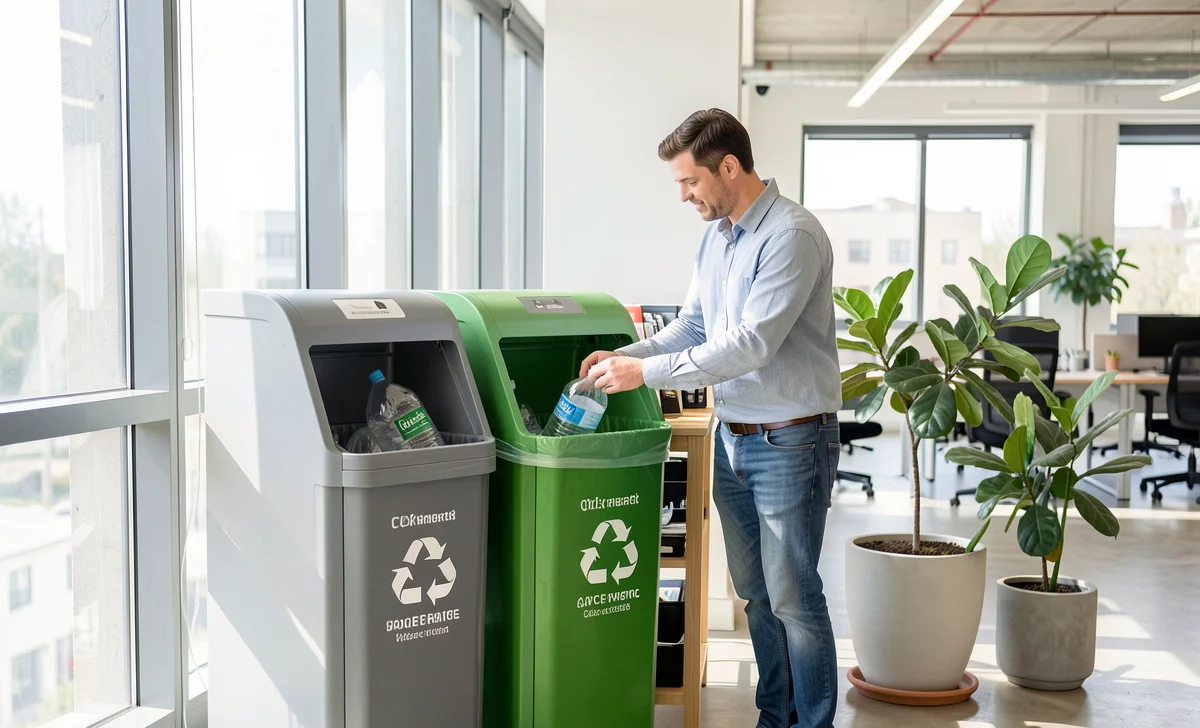
Let’s be honest—creating a workplace that genuinely embraces recycling is rarely as simple as ordering a few blue bins and calling it a day. If you’ve tried launching a Recycling-Friendly Workplace program only to watch it fizzle out, you’re not alone. Many business owners, office managers, and sustainability champions face the same frustrating reality: good intentions don’t always translate into lasting habits.
The good news? The obstacles standing in your way are entirely surmountable. Drawing from real-world experience working with businesses of all sizes, this guide walks through the practical steps to build a recycling program that actually works—not just for the planet, but for your bottom line and your people.
Why Workplace Recycling Deserves Your Attention
Before diving into solutions, let’s acknowledge why this matters beyond the obvious environmental benefits. A well-executed recycling program touches multiple aspects of your business operations:


Financially, reducing waste can lower your disposal costs significantly. Those dumpster pickups add up, and every item recycled is one less you’re paying to haul to a landfill.
Operationally, many businesses discover inefficiencies in their purchasing and waste streams during the process, leading to smarter procurement decisions.
Culturally, employees increasingly expect their employers to demonstrate environmental responsibility. A visible commitment to sustainability can boost morale and even influence hiring and retention.
Legally, depending on your location and industry, specific recycling requirements may already apply to your business, with penalties for non-compliance.
Understanding these interconnected benefits helps frame recycling not as an isolated initiative but as an integrated business strategy.
The Real Obstacles (And How to Overcome Them)
When Employees Just Don’t Seem to Care
You’ve announced the new recycling program. You’ve placed the bins. Yet weeks later, you spot recyclables in the trash and trash in the recycling. Frustrating? Absolutely. Unfixable? Not at all.
The disconnect usually isn’t malice—it’s that recycling hasn’t become part of the daily workflow. People are busy, distracted, and operating on autopilot. Adding one more decision point to their day without reinforcement rarely sticks.
What actually works: Stop treating recycling as a standalone initiative and start integrating it into how work gets done. During team meetings, take two minutes to acknowledge something recycling-related—maybe a visual reminder of what’s been accomplished. When onboarding new hires, include recycling protocols alongside other workplace expectations. Share specific, tangible outcomes: “Last month, our office recycling saved the equivalent of 15 trees.” Lands differently from generic environmental messaging.
Some businesses find success with friendly competitions between departments. Others appoint “recycling champions” within teams who serve as go-to resources. The key is making the topic visible without making it feel like a lecture.
The Problem of Non-Recyclable Products Flowing In
Here’s a reality check: you can have the most engaged employees in the world, but if your purchasing decisions stock the office with non-recyclable materials, you’re fighting an uphill battle. Those individually wrapped snack items, disposable coffee pods, and non-recyclable shipping materials undermine everything else.
A more effective approach: Conduct an honest audit of what actually comes into your workplace over a typical week. Walk through your supply closet, break room, and shipping area. You’ll likely spot patterns—specific items that consistently generate waste with no recycling pathway.
From there, explore alternatives systematically. Can you switch to bulk snack options? Are there vendors who use recyclable packaging? Does your office need paper towels, or could air dryers serve the same purpose? The goal isn’t perfection but progress—replacing the biggest offenders first.
One practical step many businesses overlook: include sustainability criteria in your procurement policies. When reviewing vendor contracts or supply orders, ask whether more sustainable alternatives exist at comparable price points. You might be surprised how many suppliers have eco-friendly options they simply don’t promote aggressively.
When Recycling Simply Isn’t Convenient Enough
This obstacle often explains why seemingly good programs fail. If recycling requires extra steps—walking across the office, figuring out which bin accepts what, cleaning containers—most people will eventually default to the path of least resistance.
The fix requires honest assessment: Where does waste actually accumulate in your workplace? Near printers? In break rooms? At individual desks? Place recycling containers accordingly, and ensure they’re as accessible as trash cans.
Clear signage matters tremendously, but keep it simple. Overly complex sorting instructions confuse people and increase contamination. A straightforward visual showing what belongs in each bin—using actual photos of items relevant to your workplace—works better than text-heavy lists.
For multi-stream recycling (paper, containers, etc.), consider whether your waste hauler offers single-stream options that simplify the process. If not, explore whether the volume of specific materials justifies dedicated collection points only in high-traffic areas.
Building a Program That Lasts
Start With a Waste Assessment
Before changing anything, understand what you’re working with. A formal waste audit sounds intimidating, but it can be surprisingly straightforward. For one week, track what fills your trash and recycling containers. Better yet, ask your waste hauler if they offer audit services—many do as part of their commercial accounts.
Look for patterns: Are certain departments generating more waste? Are specific materials dominating your landfill-bound containers? Is contamination visible in your recycling? This baseline data helps you target efforts where they’ll matter most.
Invest in the Right Infrastructure
Quality matters when it comes to recycling containers. Flimsy bins that tip over, fill quickly, or look indistinguishable from trash cans undermine your efforts. Consider:
- Placement: Every trash can should have a recycling partner beside it. If someone has to search for the right bin, convenience disappears.
- Size: Containers that fill by midday lead to overflow and frustration. Right-size based on your audit findings.
- Appearance: Professional-looking containers signal that recycling matters. Improvised cardboard boxes suggest otherwise.
For businesses generating significant volumes of specific materials—cardboard from shipping, for instance—explore whether balers or compactors make financial sense. Equipment like recycling balers can transform loose cardboard into manageable, often sellable, bales while freeing up floor space.
Address the Contamination Challenge
Contamination—non-recyclable items mixed with recyclables—represents one of the costliest problems in workplace recycling. A single contaminated load can mean entire batches heading to landfill despite everyone’s best efforts.
Practical solutions include:
- Clear visual guides placed directly above bins, not buried in handbooks
- Regular feedback loops—when contamination appears, address it promptly with the affected team
- Simpler sorting where possible. If your hauler accepts mixed recycling, use it. Complicated separation invites errors
Maintain Momentum
Unlike a one-time project, effective recycling requires ongoing attention. Set calendar reminders to check bins monthly for contamination patterns. When you spot issues, address them immediately with the relevant team members—not punitively, but as problem-solving.
Celebrate wins visibly. When you hit a milestone—a month without contamination, a reduction in waste hauler fees, a successful switch to reusable service ware—acknowledge it. People respond to progress they can see.
Addressing Common Questions and Concerns
Does recycling actually make financial sense for small businesses?
It depends on your volume and local hauling rates, but many small businesses find that reduced disposal fees offset program costs within months. The breakeven point comes faster when you also reduce the purchase of disposable items. Start with a simple calculation: what are you currently paying for waste removal, and how much of that waste could be diverted?
What about items our hauler doesn’t accept?
This is where specialty recyclers come in. Batteries, electronics, certain plastics—many communities have drop-off locations or mail-in programs for materials outside standard curbside collection. Designate a central collection point in your office and schedule regular drop-offs. Employees often appreciate having workplace access to these services.
How do we handle confidential document destruction with recycling?
Secure shredding services that recycle the resulting paper are widely available and often cost-competitive with standard disposal. Many providers offer locked collection bins and scheduled pickups, maintaining security while ensuring materials are recycled.
Our office is in a leased space—can we really control waste?
Lease agreements sometimes limit waste management options, but tenants generally retain control over internal sorting and purchasing. Even if you can’t change haulers, you can influence what leaves your space. Engage your building management—many are actively seeking ways to improve sustainability metrics and welcome tenant cooperation.
Measuring What Matters
Track metrics that actually reflect your goals:
- Waste diversion rate: What percentage of your total waste is recycled rather than landfilled?
- Contamination rate: How much non-recyclable material appears in your recycling containers?
- Disposal costs: Are your waste hauling fees trending downward?
- Procurement shifts: How many disposable items have you replaced with reusable or recyclable alternatives?
Review these metrics quarterly, not just annually. Regular review helps you spot problems before they become entrenched and adjust course as needed.
The Bottom Line
Building a genuinely recycling-friendly workplace isn’t about perfection—it’s about continuous improvement. Some weeks will go smoothly. Others will reveal new challenges. That’s normal.
The workplaces that succeed long-term share common traits: they make recycling convenient rather than virtuous, they integrate it into normal operations rather than treating it as special, and they stay engaged with the process rather than assuming it runs itself.
Your recycling program will evolve as your business grows, as haulers change their requirements, and as new materials enter your waste stream. That’s fine. The goal isn’t to build something static but to create systems flexible enough to adapt while maintaining momentum.
Start where you are. Pick one obstacle from this guide that resonates with your current situation, and address it this month. Then tackle the next. Small, consistent steps compound into meaningful change—for your business, your people, and the planet you all share.
Disclaimer: The information provided in this article is for general informational purposes only and does not constitute professional legal, financial, or environmental compliance advice. While we strive to keep the information accurate and up-to-date, recycling regulations, waste management policies, and tax incentives vary by location and industry. Readers should consult with qualified professionals or local authorities to ensure compliance with applicable laws and requirements specific to their business.