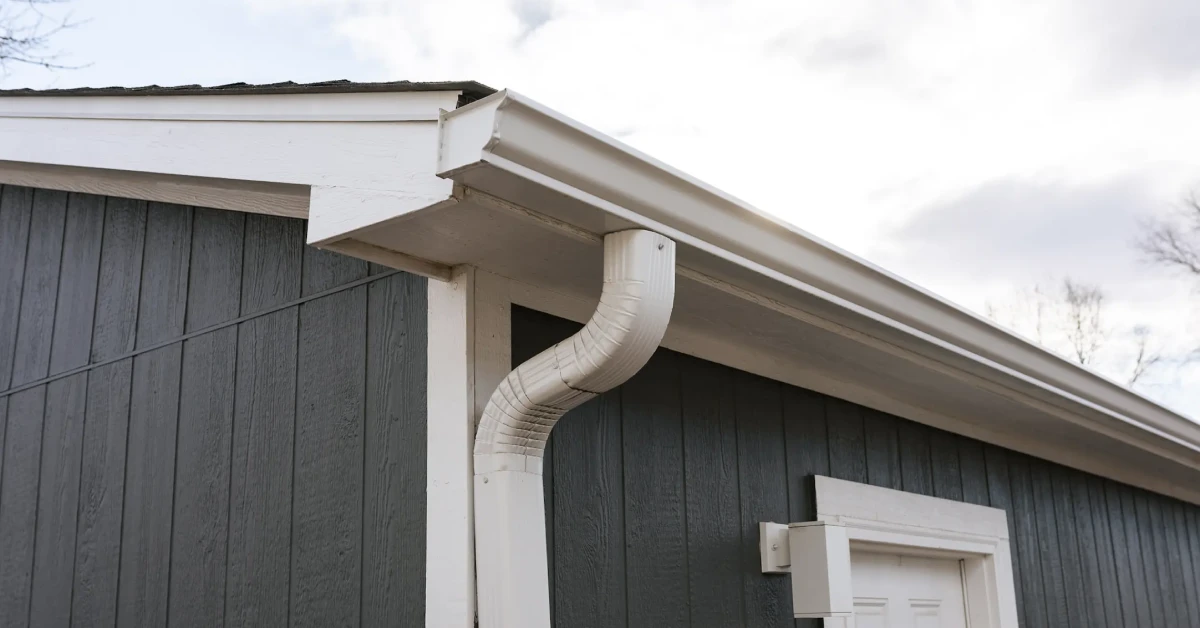
Properly installed downspouts protect your home by directing water away from the foundation, preventing basement flooding, soil erosion, and structural damage. They extend roof and gutter lifespan, reduce exterior staining, and maintain balanced drainage flow. Professional installation ensures correct sizing, positioning, and slope to handle rainfall efficiently and preserve your home’s integrity.
A well-functioning roof system does more than just keep rain out—it directs water safely away from your home. Downspouts play a quiet yet powerful role in that process, carrying gallons of runoff away from the structure every time it rains. For homeowners searching for roof contractors or me in Huntsville, AL, properly installed downspouts can mean the difference between a solid foundation and years of costly water damage.
Prevents Soil Erosion
Heavy rainfall pools near your foundation when downspouts discharge too close to the house. This gradually washes away the soil that supports your structure. Over time, the ground becomes uneven, causing walkways to crack and patios to sink.
Professional roof contractors extend downspouts at least 4–6 feet from your foundation or connect them to underground drainage pipes. This maintains soil stability and protects your landscaping. The cost of proper extension is minimal compared to foundation repair, which can run into thousands of dollars.
Reduces Basement Flooding Risks
Water that collects against exterior walls seeps through cracks and foundation gaps. Your basement becomes damp, musty, or completely flooded during heavy storms. In regions with high seasonal rainfall, this is the leading cause of recurring water intrusion.
Contractors inspect the slope and grade around your home before placing downspouts. They ensure water flows toward safe drainage zones—away from basement walls and foundation edges. This single step prevents mold growth, protects stored items, and eliminates the need for costly waterproofing repairs.
Protects Exterior Walls
Downspouts that discharge too close cause splashing against siding or brick. Mineral deposits leave streaks that are difficult to remove. Repeated moisture exposure deteriorates paint, rots wood trim around windows, and damages masonry surfaces.
A skilled team of roof contractors in Huntsville, AL, angles and positions downspouts to carry water far enough away. They install splash blocks or underground extensions to eliminate backsplash. Your exterior stays cleaner and requires less maintenance over the years.
Extends Roof and Gutter Lifespan
Gutters and downspouts work as a single drainage system. When downspouts are undersized or misaligned, water backs up into the gutters. This adds weight that causes gutters to sag, pull away from fascia boards, or leak at seams.
Reliable contractors calculate drainage capacity based on your roof’s pitch, surface area, and local rainfall intensity. They match downspout size to gutter capacity—typically one downspout per 20–30 feet of gutter. Proper flow prevents premature wear and protects the roof edge from water damage.
Structural Water Damage
Water that isn’t channeled away travels into your home’s framing and foundation. It enters beneath siding or at wall bases where damage stays hidden for years. Moisture weakens wood framing, corrodes metal fasteners, and ruins insulation.
Contractors ensure precise downspout placement with sealant checks and directional adjustments. For multi-level roofs, they account for varying runoff volumes from upper and lower sections. Correct water management protects your home’s structure and avoids repair bills that often exceed $10,000.
Balanced Roof Drainage Flow
Your drainage system needs balance. Downspouts must be positioned to distribute runoff evenly across multiple points. Without this, certain areas overflow during storms while others stay dry. This creates uneven wear on roofing materials and shortens their lifespan.
Professional roof contractors in Huntsville, AL, measure and align gutter gradients to maintain consistent flow. They place downspouts where water naturally converges, reducing pressure on specific roof sections. This protects shingles, underlayment, and flashing from premature deterioration.
Preserves Landscaping Integrity
Water discharge near garden beds, walkways, or decorative stonework causes puddling and soil displacement. Plants drown from oversaturation. Topsoil washes away, leaving bare patches and eroded areas.
Experienced contractors account for both drainage needs and landscape layout. They install extensions or underground piping to direct water toward swales, dry wells, or street drainage. Your lawn and gardens stay intact without constant replanting or soil replacement.
Prevents Ice Dams and Winter Damage
In cold climates, clogged or improperly positioned downspouts trap water that freezes. Ice builds up in gutters and backs onto your roof. This creates ice dams that force water under shingles, damaging insulation and ceilings.
Properly installed downspouts with the correct slope prevent water from pooling and freezing. Contractors may add heat cables or ensure downspouts remain clear of debris. This protects your roof during the winter months when damage is hardest to detect.
Conclusion
A well-designed drainage system distributes water where it can safely drain—protecting your home, yard, and foundation simultaneously. Properly installed downspouts handle rainfall volume based on your roof’s size and local weather patterns.
Homeowners who partner with roofing near me specialists benefit from customized solutions. Contractors assess roof pitch, rainfall data, and yard slope to create a system that performs in every season. For expert installation that maintains both structure and aesthetics, trusted professionals like Yellow Hammer make sure your roof’s drainage system works exactly as it should.