
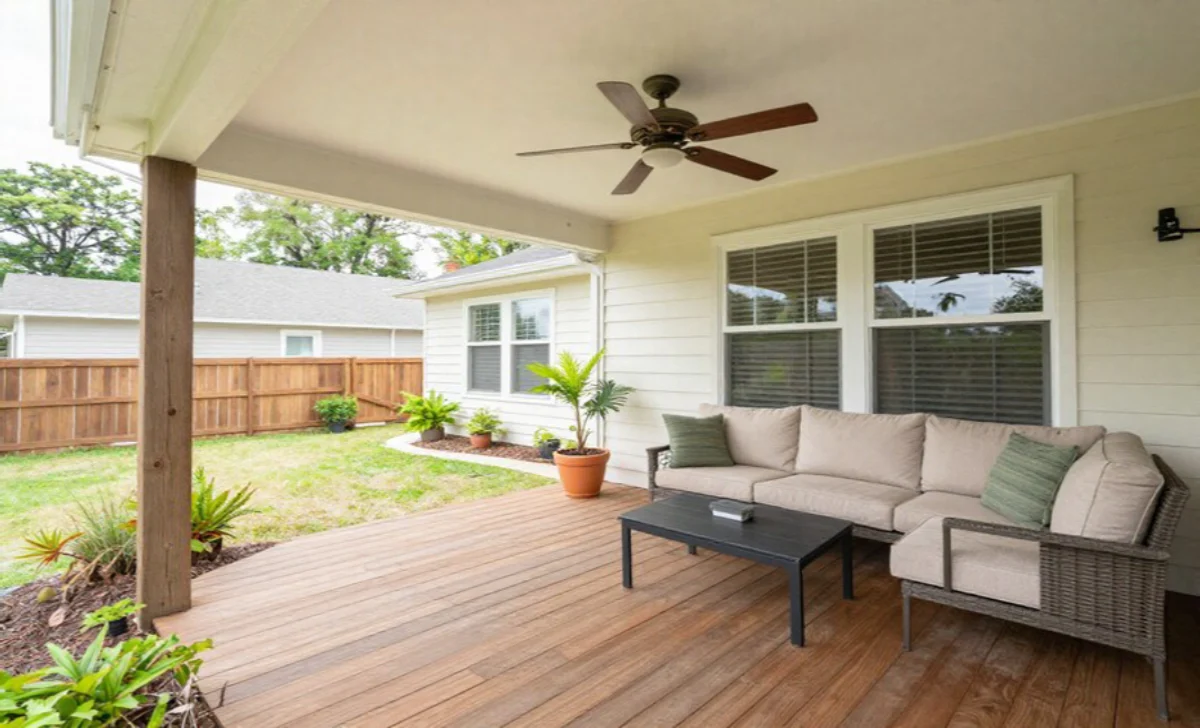
Outdoor living areas extend your home’s comfort into nature, and porches serve as the key connection between indoor and outdoor spaces. A well-designed porch provides a spot for reading, relaxing, or hosting gatherings.
This guide covers how to plan your porch design, choose durable materials, select essential features, and maintain the space for long-term enjoyment.
The Art of Designing Your Dream Porch
Start your porch design by defining how you’ll actually use the space. Will it serve as a quiet retreat for morning coffee, a social area for entertaining, or a play space for children?
Your answer shapes every decision that follows. A reading nook needs comfortable seating and good lighting. An entertainment area requires more square footage and flexible furniture arrangements.
Consider your home’s orientation when planning. South-facing porches get full sun, which provides warmth but may require shade solutions. North-facing porches stay cooler and need less sun protection. This affects where you place seating and how you design shade elements.
Essential Features of a Comforting Porch
A covered porch needs comfortable seating as its foundation. Choose between plush sofas for lounging, rocking chairs for traditional appeal, or built-in benches that save space.
For year-round use, add climate control options. Ceiling fans keep air moving in summer. Outdoor heaters extend the season into cooler months. Both make the space more functional beyond peak weather.
Privacy creates a sense of retreat. Screens block insects while maintaining airflow. Strategic greenery provides natural barriers. Lattice panels offer partial screening without complete enclosure.
Think of your porch as an outdoor room. It should balance exposure to nature with the comfort you expect indoors.
Material Matters: Choosing the Right Elements
Your material choices affect both appearance and long-term maintenance needs.
Wood offers natural charm and warmth. Pressure-treated pine costs less but requires regular sealing. Cedar and redwood resist decay naturally but carry higher price tags. All wood needs periodic refinishing.
Composite materials resist rot, insects, and warping. They require minimal maintenance beyond occasional cleaning. Initial costs run higher than wood, but you save on long-term upkeep.
Stone or tile provides durability and weather resistance. These work well for flooring in covered areas. They add elegance but cost more to install and feel cold underfoot in winter.
Match your material choice to your home’s architectural style. Traditional homes suit wood. Modern designs pair well with composite or metal elements. Consider your climate and how much maintenance you’re willing to handle.
Decorating with Style and Functionality
Choose weather-resistant furniture built for outdoor use. Look for rust-proof frames, fade-resistant fabrics, and cushions that resist moisture and mildew.
Add outdoor cushions and rugs to introduce color and comfort. These soften hard surfaces and tie your design together. Select patterns and colors that complement your home’s exterior.
Lighting sets the mood after dark. String lights create casual ambiance. Solar-powered lamps offer flexibility without wiring. Wall sconces provide task lighting near seating areas.
Your porch should reflect your personal style while remaining practical for daily use. Balance visual appeal with durability and easy care.
The Role of Landscaping in Porch Design
Landscaping frames your porch and connects it to the surrounding yard. Choose plants suited to your climate to reduce maintenance and ensure they thrive.
Layer plants at different heights for visual interest. Tall shrubs provide privacy and background. Medium perennials add seasonal color. Low ground covers soften edges.
Container gardens offer flexibility. You can rearrange them as needed and bring tender plants indoors during cold weather. They work especially well on smaller porches where ground planting isn’t possible.
Select plants that provide year-round interest. Evergreens maintain structure in winter. Flowering perennials add seasonal color. Ornamental grasses provide movement and texture.
Maintenance Tips for Longevity
Regular maintenance keeps your porch looking good and prevents costly repairs.
Cleaning tasks:
- Sweep debris weekly to prevent staining and decay
- Wash furniture monthly during active use
- Clean flooring every few months with appropriate products
Periodic checks:
- Inspect structural posts and railings for rot or damage
- Check floor boards for warping or loose nails
- Look for signs of insect activity or water intrusion
Seasonal care:
- Seal wood surfaces as needed based on your climate
- Store or cover furniture during harsh weather
- Clear gutters and drainage to prevent water pooling
Weather protection:
- Apply protective treatments to wood before winter
- Use furniture covers during extended non-use periods
- Address any water damage immediately to prevent spreading
Simple, consistent upkeep extends your porch’s life and maintains its appeal. Set a regular schedule rather than waiting for obvious problems to appear.
Creating Your Outdoor Sanctuary
A thoughtfully designed porch adds functional living space to your home. It provides a place for relaxation, socializing, or quiet solitude while connecting you to the outdoors.
The right combination of materials, features, and landscaping creates a space you’ll use throughout the year. Regular maintenance protects your investment and keeps the area inviting for years to come.