
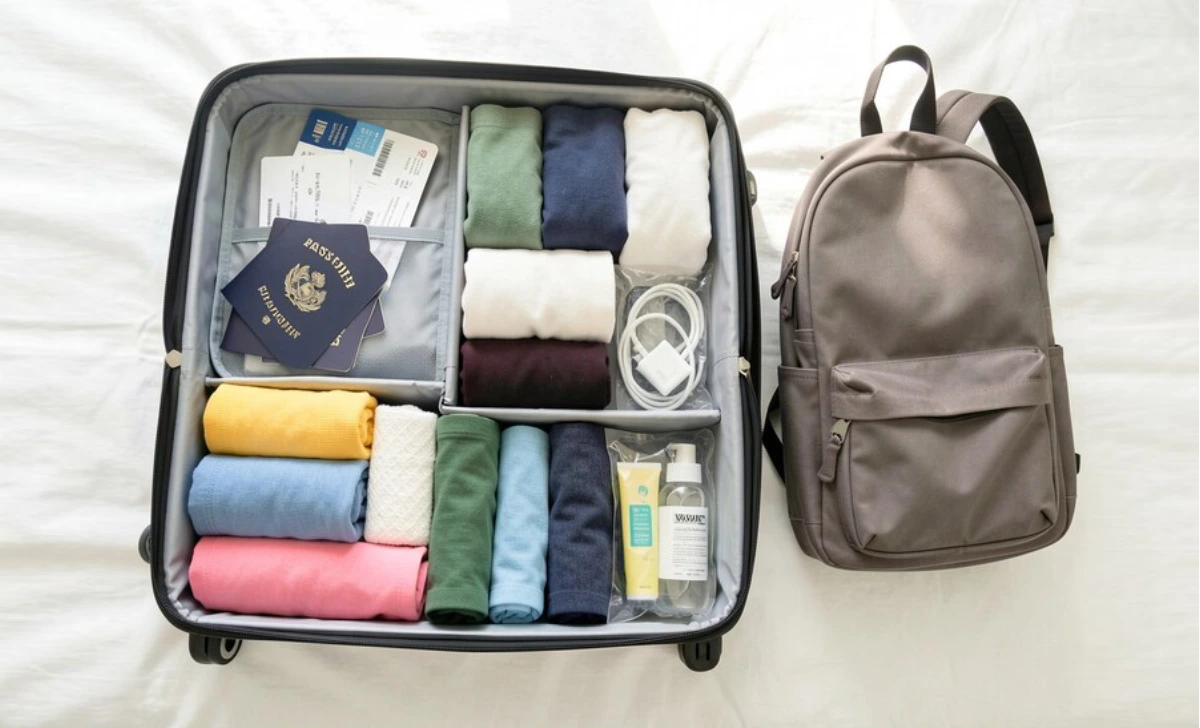
Packing for an international flight requires a strategy to maximize space and avoid extra fees. The most important rule is to pack only what you need and leave unnecessary items behind. Rolling clothes saves space and prevents wrinkles, while using a backpack as your personal item gives you easy access to essentials during your journey.
Start by making a packing list to ensure you bring critical items like your passport, boarding pass, and phone charger. Check your airline’s baggage fee policy before you pack, as fees vary by carrier. Choose versatile footwear, travel-size toiletries, and packing aids to stay organized. Wearing bulkier items during check-in can help you avoid heavy baggage fees.
Roll Your Clothes Instead of Folding
Rolling your clothes is the most efficient way to pack a suitcase. This method saves space and prevents wrinkles better than folding. It works especially well if you’re traveling with only a carry-on bag.


Rolling is particularly important for international flights because you’ll likely pack adapters, converters, and other travel essentials. You probably won’t have access to an iron when you arrive at your destination. Rolling keeps your clothes compact and ready to wear.
Use a Backpack as Your Personal Item
Choose a backpack as your personal item when packing for an international flight. This gives you easy access to your belongings throughout your journey. You won’t need to wrestle with a large bag in the airport or on the plane.
Your backpack should fit under the seat in front of you while holding everything you need during the flight. Select one with multiple compartments so you can organize items quickly. Check your airline’s personal item size requirements before you travel.
A backpack also provides secure storage for valuables and electronics during transit. You can keep important items within reach at all times.
Make a Complete Packing List
Create a packing list before you start filling your suitcase. This prevents you from forgetting critical items. Your list should include essential documents like your passport, boarding pass, and any required visas.
Pack practical items you’ll need immediately: phone charger, small amount of local currency, sunglasses, and necessary medications. Include any adapters or converters for international power outlets. This keeps you organized and helps you pack only what’s necessary.
Remember that you’ll carry your luggage through airports and potentially onto public transportation. Pack light to make travel easier.
Know Your Airline’s Baggage Fee Policy
Every airline handles baggage fees differently. Some charge per bag, while others base fees on weight or size. Research your carrier’s policy before you start packing to avoid surprise charges at the airport.
Find out the restrictions for both carry-on and checked baggage. This information determines how you distribute items between bags. Most airlines post current policies on their websites.
If you’re bringing electronics, pack all necessary chargers and cords. International destinations use different power outlets than you might be used to. Without the right adapters, your laptop, tablet, or camera will run out of battery during your trip.
General Baggage Restrictions
Carry-on bags typically have these restrictions:
- Maximum size of 22 x 14 x 9 inches (including handles and wheels)
- Must fit in overhead bins or under the seat
- The weight limit is usually around 35 pounds
Checked bags have varying restrictions by airline:
- Size limits differ from carry-on allowances
- Weight limits typically range from 50 to 70 pounds
- Some international carriers have stricter limits
Check your specific airline’s current baggage allowances before traveling. Policies change regularly and vary by destination.
Certain items cannot be packed in either carry-on or checked bags, including knives, firearms, and aerosol insecticides. You can bring liquids in your carry-on if they’re in containers of 3.4 ounces (100 milliliters) or less, placed in a single quart-sized clear bag.
Use Packing Aids for Organization
Packing aids help you organize your luggage and compress clothing. These products include packing cubes, compression bags, and garment folders. If you have extra space in your suitcase, these tools help you fit more items efficiently.
Choose packing aids made from durable materials with multiple compartments. This keeps everything organized and easy to find. Remember that you’ll carry your luggage through airport security. Select lightweight aids that don’t add significant weight to your bag.
Pack Travel-Size Toiletries
Think carefully about which toiletries you actually need. Travel-size versions of shampoo, conditioner, soap, and toothpaste are sufficient for most trips. Many hotels provide basic toiletries, so you may not need to pack everything.
Don’t forget a small razor and deodorant. The last thing you want is to feel unprepared on a long international flight. Keep your toiletry bag compact and within airline liquid restrictions.
Choose Versatile Footwear
Be selective about shoes when packing for an international flight. Too many pairs means you’ll likely need to check a bag and pay extra fees. Pack versatile shoes that work for multiple occasions.
A practical selection includes comfortable sneakers for walking, one dressier pair for evenings out, and sandals for warm-weather destinations. Each pair should serve multiple purposes. Wear your bulkiest shoes during travel to save suitcase space.
Choose shoes that are easy to remove during airport security checks. This speeds up the screening process and makes travel less stressful.
Wear Bulky Items During Check-In
Don’t waste luggage space on items you can wear during check-in. Wear your heaviest jacket, bulkiest sweater, or largest shoes while traveling. This frees up significant room in your suitcase.
Choose comfortable layers that you can easily remove during the flight. Slip-on shoes make security screening faster and simpler. The more you wear during check-in, the less you need to pack.
This strategy also helps you avoid or reduce baggage fees. Airlines charge based on luggage weight and size, not what you’re wearing.
Final Thoughts
These eight tips make packing for an international flight more efficient and less stressful. Planning and staying organized ensures you bring everything you need without overpacking. Check airline policies, create a thorough packing list, and use space-saving techniques like rolling clothes.
Focus on versatile items that serve multiple purposes. This approach keeps your luggage light and manageable. With proper preparation, packing becomes straightforward rather than overwhelming.