
Have you ever wondered why some products just feel better in your hand? Why do certain medical devices not slip during procedures? Or how delicate electronics survive drops, splashes, and extreme temperatures?
The answer often lies in micro overmolding.
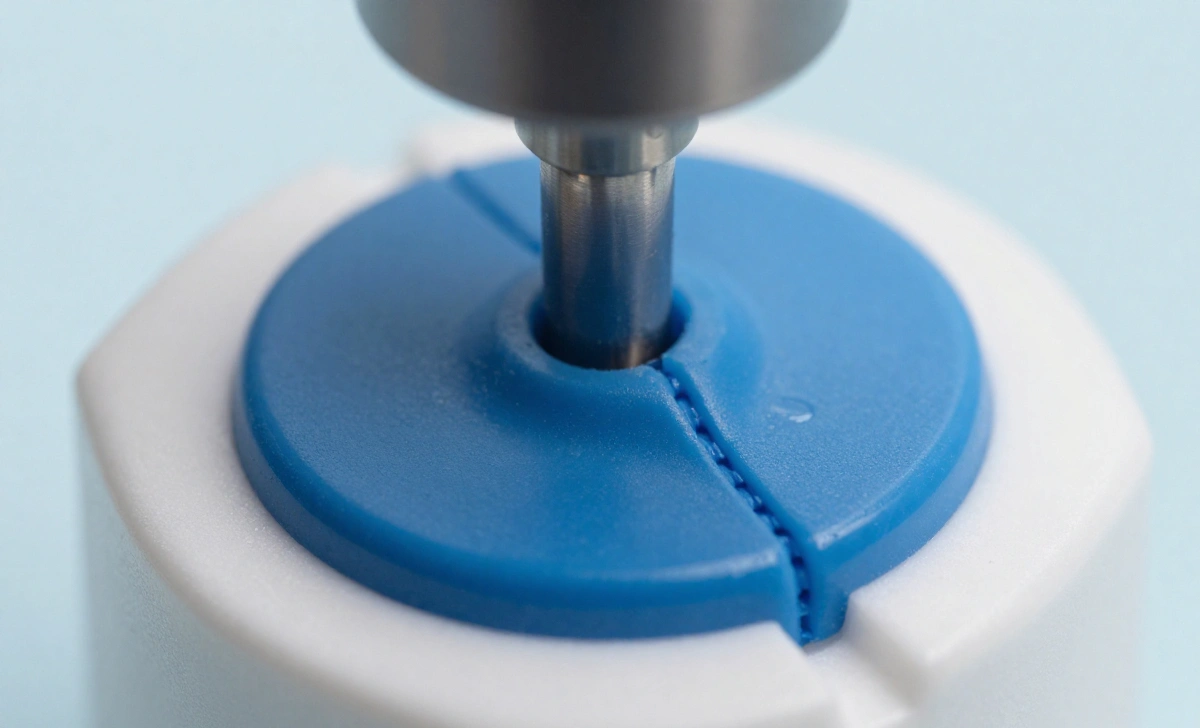
Micro overmolding is a specialized injection molding process where a single component is manufactured using two or more materials combined into one integrated part. Think of it as creating a product with layers—a rigid base material (called the substrate) covered by a second material (the overmold) that adds functionality, protection, or improved ergonomics.

The substrate typically provides structural strength, while the overmold—usually a thermoplastic elastomer (TPE) or soft thermoplastic—offers benefits like shock absorption, waterproofing, or simply a better grip. What makes micro overmolding distinct is the scale: we’re talking about components measured in microns, with tolerances that would have seemed impossible just a decade ago.
Instead of assembling multiple separate components with adhesives or fasteners, manufacturers can now create finished parts in a single integrated process. The result? Products that are more reliable, longer-lasting, and often less expensive to produce.
Why Micro Overmolding Matters: The Core Benefits
Before diving into the technical details, let’s understand why manufacturers invest in this technology:
Protection of sensitive components – Micro overmolding creates a protective barrier around fragile electronics, sensors, and delicate mechanical parts. This shielding guards against moisture, dust, chemicals, and physical impact.
Enhanced user experience – That soft-touch finish on your electric toothbrush or the non-slip grip on your favorite screwdriver comes from overmolding. It makes products more comfortable and easier to use.
Reduced assembly costs – When you combine multiple components into one overmolded part, you eliminate secondary assembly operations, reduce labor costs, and minimize the risk of assembly errors.
Improved product durability – Overmolded components resist vibration, absorb shock, and maintain their integrity in harsh environments. They simply last longer.
Design freedom – Engineers can combine materials with completely different properties—rigid and flexible, conductive and insulating, transparent and opaque—in ways that weren’t possible with traditional assembly methods.
Three Key Technologies for Micro Overmolding
When manufacturers need to combine materials at a microscopic scale, they typically choose from three primary technologies.
1. Insert Molding (Single-Shot Molding)
Insert molding is the most widely used approach for micro overmolding applications. Here’s how it works: a pre-formed insert—which could be a metal component, a circuit board, or even another plastic part—is placed into a mold. Then, the overmold material (often TPE) is injected around or through it.
What makes insert molding particularly valuable is its speed and cost-effectiveness. Because the process allows for simultaneous molding of two materials, it’s faster than traditional multi-step assembly methods. Tooling costs are also lower compared to more complex multi-shot systems.
Real-world example: Imagine a tiny medical sensor that needs protection from bodily fluids. The sensitive electronic components serve as the insert, and a biocompatible polymer is molded around them, creating a watertight seal without adding bulk.
2. Two-Shot (Multi-Shot) Molding
Two-shot molding takes complexity up a notch. In this process, specialized molding machines with two or more barrels inject different materials during the same molding cycle. The first material forms the basic shape, then the part rotates or moves to a second cavity where the overmold material is applied.
The advantage? Superior bonding between materials and lower labor costs since the entire process happens automatically without manual insert placement. Parts produced through two-shot molding typically show better quality and more consistent material adhesion.
This is the technology behind those dual-color automotive interior buttons or the soft-touch grips on high-end toothbrushes. The bond between materials is so strong that they’ll never separate during normal use.
3. Low-Pressure Molding
Here’s a technology that’s gaining tremendous traction, particularly in electronics. Low-pressure molding was developed specifically to protect fragile components without damaging them during the manufacturing process.
Traditional potting—encapsulating electronics in epoxy—subjects components to high temperatures and pressures. Low-pressure molding, by contrast, uses significantly lower temperature and pressure, making it ideal for delicate sensors, circuit boards, and other heat-sensitive components.
The process uses specialized hot melt materials that flow easily at low pressures, completely encapsulating the component while causing no damage. It’s faster than traditional potting, too—parts can be handled almost immediately after molding.
Industry Applications and Real-World Use Cases
Walk through any modern hospital, drive any new car, or simply look around your home, and you’ll find micro overmolded components everywhere.
Medical Industry: Where Precision Meets Patient Safety
The medical field demands components that are both highly precise and absolutely reliable. Medical devices produced through overmolding combine the rigidity needed for structural integrity with soft, ergonomic surfaces that improve patient comfort and clinician control.
Common medical applications include:
- Syringe components with soft thumb pads for better control during injections
- Surgical instrument handles that reduce clinician fatigue during lengthy procedures
- Catheter tips with ultra-thin walls (as thin as 0.005 inches) that maintain flexibility while providing structural integrity
- Implantable devices requiring biocompatible materials that won’t trigger immune responses
What’s particularly exciting is the emergence of autoclavable overmolding technology. Some manufacturers now offer overmolded sensors and electronics that can withstand repeated steam sterilization at 134°C—essential for reusable medical devices.
The medical molded components sector was valued at $1.38 billion and is projected to grow at 8.2% annually through 2027.
Automotive Industry: Lighter, Stronger, More Durable
Modern vehicles are rolling computers with hundreds of sensors, connectors, and control modules. Micro overmolding helps protect these components from the harsh automotive environment—temperature extremes, vibration, moisture, and chemical exposure.
Automotive applications include:
- Connectors and sensors protected from moisture and corrosion
- Dashboard components with soft-touch surfaces and integrated backlighting
- Under-hood modules that withstand extreme temperatures and vibration
- Handle assemblies with ergonomic grips and integrated electronics
The Thermoplastic Overmolding for Structural Composite Automotive (TOSCAA) project, involving partners like Jaguar, Land Rover, and the University of Nottingham, is pushing this technology even further. This consortium aims to make vehicles lighter, faster, and more durable through advanced overmolding techniques.
The global automotive molded components market reached $3.29 billion by 2025, up from $1.67 billion in 2016.
Electronics: Protection at the Micro Scale
Electronics manufacturers face a constant challenge: how to protect sensitive components while making devices smaller and more capable. Micro overmolding provides answers.
Wire overmolding is particularly significant. Cables and connectors subjected to repeated flexing, harsh cleaning chemicals, or extreme environments benefit enormously from overmolded strain relief and sealing.
Electronics applications include:
- Printed circuit board (PCB) encapsulation protects against moisture and physical damage
- Connector backshells providing strain relief and environmental sealing
- Sensor modules for industrial and consumer applications
- Battery contacts and interconnects require both conductivity and protection
One fascinating development is electronic silicon overmolding, which combines the protective benefits of overmolding with the unique properties of silicone materials. This opens new possibilities for flexible, wearable electronics.
Market projections suggest the electronics molded components sector will reach $1.11 billion by 2029.
Consumer Products and Toys
While medical and automotive applications get most of the attention, consumer products represent a massive market for overmolding technology.
Toy manufacturers rely heavily on overmolded components to create safe, durable products. The soft outer layer on action figures, the comfortable grip on toy tools, and the protective coating on electronic toys all come from overmolding processes.
Toothbrushes, kitchen tools, power tools, and personal care items all benefit from overmolding. That non-slip grip on your razor? Overmolded. The comfortable handle on your favorite kitchen knife? Also overmolded.
Material Selection and Compatibility
If there’s one factor that determines success in micro overmolding, it’s material selection.
Common Overmolding Polymers
Rigid Substrate Materials:
- ABS: General-purpose, good impact resistance
- Polycarbonate (PC): High impact strength, optical clarity
- Nylon (PA): Excellent wear resistance, toughness
- PEEK: High-performance, exceptional chemical and heat resistance
- LCP (Liquid Crystal Polymer): Excellent for ultra-thin walls
Overmold Materials (typically elastomers):
- TPE (Thermoplastic Elastomer): The most common choice, good grip and flexibility
- TPU: Abrasion-resistant, good for rugged applications
- LSR (Liquid Silicone Rubber): Biocompatible, heat-resistant
What Can You Overmold Around?
The list of substrates is surprisingly extensive: metal inserts, plastic parts, tubing and catheters, fabric and mesh, delicate electronics and PCBs, batteries, microfluidic chips, glass, optical elements, and ceramic components.
Material Compatibility Considerations
Material compatibility isn’t just about chemical adhesion. Sometimes you need mechanical locking features—undercuts, holes, or textured surfaces—that physically lock the materials together.
Thermal expansion is another critical factor. If your substrate and overmold expand at different rates when heated, you’ll encounter warping or stress cracks.
For medical applications, biocompatibility adds another layer of complexity. Materials must not only bond well but also meet stringent regulatory requirements.
Common Challenges and How to Avoid Them
Bonding Failures and Delamination
The most common failure mode is poor adhesion between materials. When the overmold separates from the substrate, the part fails.
Prevention strategies:
- Ensure material compatibility before finalizing designs
- Design mechanical interlocks for additional security
- Control processing temperatures precisely
- Keep inserts clean—oils and contaminants prevent bonding
Flow-Related Defects
Micro-scale features create unique flow challenges. Common defects include short shots (incomplete filling), jetting (snake-like flow patterns), flow lines, weld lines, burn marks, and sink marks.
These issues often trace back to improper gate design, insufficient temperature, or incorrect material viscosity.
Dimensional Challenges
Thin-wall overmolding pushes the boundaries of what’s possible. Some medical devices require wall thicknesses as low as 0.002 inches—about the thickness of a human hair.
Maintaining consistent dimensions at this scale requires extremely precise tooling, tight control over material temperature, consistent insert positioning, and advanced process monitoring.
The Future of Micro Overmolding
Industry 4.0 Integration
Smart manufacturing is transforming overmolding. Real-time monitoring systems track every parameter—temperature, pressure, flow rate—and adjust automatically to maintain optimal conditions.
Advanced Materials
New materials are expanding what’s possible. High-performance plastics like PEEK and LCP enable applications that would have been impossible with traditional materials. Biocompatible materials are opening new frontiers in medical devices.
Automation and Robotics
Automated insert placement systems reduce labor costs and improve consistency. Vision-guided robots position tiny inserts with micron-level accuracy.
Miniaturization
The trend toward smaller, more capable devices shows no signs of slowing. Overmolding technology must keep pace, enabling ever-smaller features with ever-tighter tolerances.
Frequently Asked Questions
What’s the difference between insert molding and two-shot molding?
A: Insert molding places a pre-formed insert into a mold, then overmolds around it. Two-shot molding injects both materials sequentially in the same machine cycle, typically with better bonding but higher equipment costs.
How thin can overmolded walls be?
A: With optimal materials like LCP, walls as thin as 0.002 inches are possible. More challenging materials like PEEK might be limited to 0.005 inches or thicker.
Can overmolding make devices waterproof?
A: Absolutely. Properly designed overmolding creates watertight seals that protect internal components. Some overmolded electronics achieve IP68 ratings.
What materials bond well together?
A: Common compatible pairs include polycarbonate with TPE, ABS with TPU, and nylon with various elastomers.
Is overmolding cost-effective for small production runs?
A: For very small runs (under a few thousand parts), traditional assembly might be more economical. As volumes increase, overmolding becomes increasingly cost-effective.
Conclusion: Why Micro Overmolding Matters
Micro overmolding has evolved from a specialized niche to a fundamental manufacturing technology. Its ability to combine materials with different properties into single, reliable components makes it indispensable across medical, automotive, electronics, and consumer industries.
The technology continues to advance. Smaller features, tighter tolerances, smarter processes, and better materials are expanding what’s possible. For manufacturers designing products that must survive harsh environments, provide exceptional user experiences, or achieve previously impossible combinations of properties, micro overmolding offers answers.
Whether you’re protecting delicate electronics, creating comfortable surgical instruments, or developing the next generation of connected devices, understanding micro overmolding opens design possibilities that simply weren’t available a generation ago.
The key to success? Start early. Engage with experienced molders while your design is still conceptual. Discuss material options, manufacturing constraints, and cost drivers before committing to final designs. With the right approach, micro overmolding can transform how your products perform—and how your customers experience them.
Disclaimer: The information provided in this article is for general informational and educational purposes only. While we strive to keep the information accurate and up-to-date, we make no representations or warranties of any kind, express or implied, about the completeness, accuracy, reliability, suitability, or availability of the information contained herein.