
If you’re reading this, chances are you’re in the market for an industrial air blower, or perhaps you’re just trying to understand what these machines actually do. Maybe you’ve been tasked with upgrading your facility’s ventilation system, or you’re dealing with overheating machinery on the production line. Whatever brought you here, you’ve come to the right place.
I’ve spent years working with industrial ventilation systems, and if there’s one thing I’ve learned, it’s that choosing the wrong air blower can cost you dearly—not just in dollars, but in downtime, energy bills, and frustration. Let’s walk through everything you need to know about industrial air blowers, from the basic types to the nitty-gritty details that actually matter when you’re making a purchase decision.
What Exactly Is an Industrial Air Blower and Why Should You Care?
Before we dive into the technical weeds, let’s get one thing straight: an industrial air blower isn’t your everyday house fan. We’re talking about serious machinery designed to move massive volumes of air at specific pressures for industrial applications.


Think of it this way—if your manufacturing process, warehouse, or processing facility were a living organism, air blowers would be the lungs. They keep things breathing, cooling, drying, and moving. Without them, production lines would overheat, products wouldn’t dry properly, and workers might be breathing in harmful fumes.
The fundamental purpose of these devices is simple: move air from point A to point B with enough force to accomplish a specific task. But here’s where it gets interesting—different tasks require completely different types of air movement, and that’s why we have so many varieties to choose from.
The Four Main Types of Industrial Air Blowers Explained
1. Centrifugal Air Blowers: The Workhorses of Industry
If you visit any manufacturing facility, chances are you’ll spot a centrifugal air blower within the first few minutes. These are the most common type you’ll encounter, and for good reason.
Centrifugal air blowers work by drawing air into the center of a rotating impeller and then flinging it outward at high speeds using centrifugal force. The air gets compressed as it moves through the blower housing, creating consistent, high-pressure airflow.
Here’s what makes them special:
- They excel at moving large volumes of air at moderate to high pressures
- Perfect for applications requiring steady, continuous airflow
- Available in various configurations to match specific needs
Single-Stage vs. Double-Stage: What’s the Difference?
This is where many people get confused, so let me break it down simply.
A single-stage centrifugal blower has one impeller doing all the work. Air enters, hits that impeller once, and gets pushed out. These work great for smaller applications—think localized cooling on a production line or ventilating a small workshop area.
Double-stage centrifugal blowers, on the other hand, have two impellers working in sequence. The first impeller draws air in and accelerates it toward the second impeller, which then compresses it further to create significantly more pressure. If you’re dealing with larger industrial applications or need to push air through ductwork over long distances, this is typically your better option.
One question I hear constantly: “Should I always go with double-stage just to be safe?” Not necessarily. If your application doesn’t require high pressure, a double-stage unit might be overkill—and overpaying for equipment you don’t need is never smart. Match the blower to your actual requirements, not hypothetical future needs.
2. Axial Air Blowers: When You Need to Move Massive Air Volumes
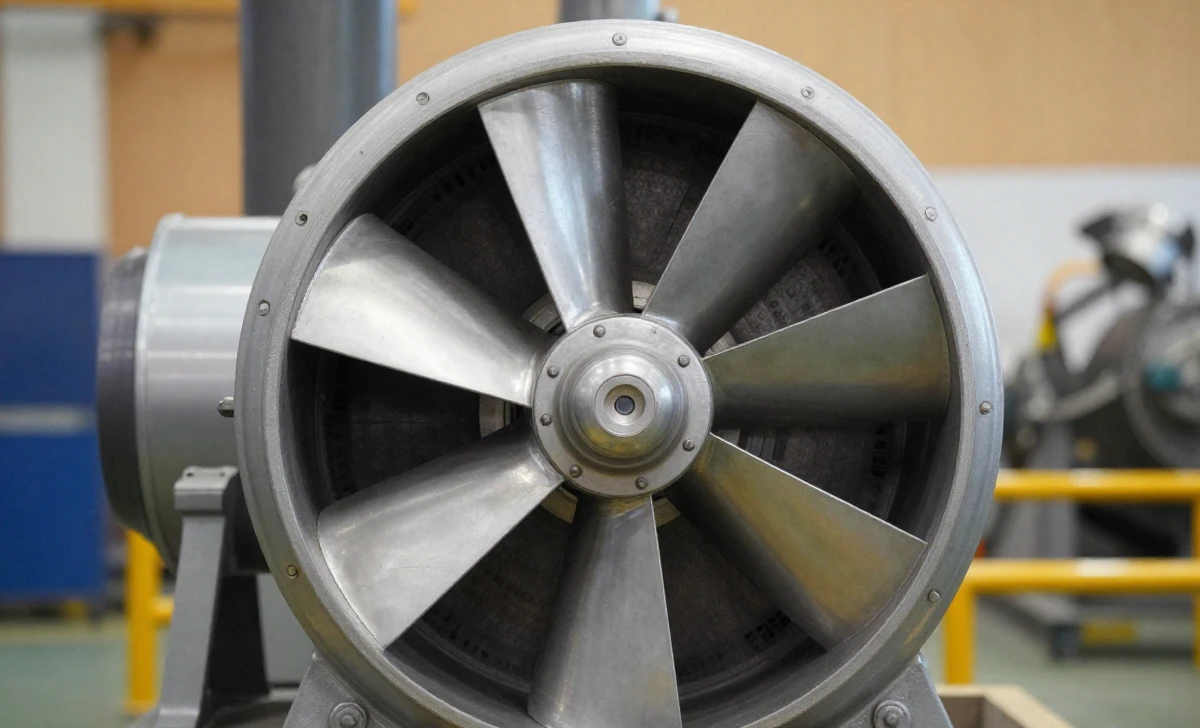
Remember those massive fans you see in tunnels or large warehouses? Those are axial air blowers in action. Unlike centrifugal blowers that change the direction of airflow, axial blowers move air straight through along the axis of the fan—hence the name.
Picture a propeller inside a tube. That’s essentially what you’re looking at with an axial blower. The fan wheel, equipped with multiple blades, spins around a central rod, drawing air in from one end and pushing it out the other with considerable force.
Where axial blowers truly shine:
- Moving enormous volumes of air with relatively low resistance
- Ventilating large open spaces like warehouses or factories
- Cooling applications where air needs to be pushed across a wide area
You’ll find both single-stage and multi-stage configurations here too. Single-stage axial blowers have one set of blades and work perfectly for general ventilation. Multi-stage versions stack multiple blade sets, creating more pressure—useful when you need to push air through ductwork or against some resistance.
One thing worth noting: axial blowers can get loud. Really loud. If noise is a concern in your facility (and it should be, for your workers’ sake), you’ll want to look into models with sound-dampening features or consider whether a centrifugal blower might serve your needs with less noise pollution.
3. Vortex Tube Air Blowers: Precision Cooling Without Moving Parts
This is where things get fascinating. Vortex tube air blowers are almost magical in how they work—and I don’t use that term lightly.
These devices take compressed air and spin it inside a specially designed tube at incredible speeds. Through physics that still amazes me (it’s called the Ranque-Hilsch effect, if you’re curious), the spinning air separates into two streams: one intensely hot and one surprisingly cold. The cold air stream can be up to 100°F colder than the incoming compressed air.
Practical applications you’ll actually care about:
- Cooling overheated machinery during continuous operation
- Keeping electrical control panels from frying in hot environments
- Spot-cooling parts during machining operations
- Cooling materials in processing lines
What makes vortex tube blowers particularly attractive is their simplicity. No moving parts means nothing to break down. They’re inexpensive to purchase, cheap to maintain, and dead simple to operate. If you’re dealing with localized overheating issues, these little wonders might be exactly what you need.
One caveat: they require a reliable source of compressed air, and they can be air-hungry. Make sure your compressor system can handle the additional demand before investing.
4. Pelton Wheel Air Blowers: When Only High Pressure Will Do
Named after Lester Pelton, who revolutionized water turbine design in the late 1800s, Pelton wheel air blowers are the heavy hitters of the air movement world. These aren’t your everyday blowers—they’re specialized equipment for demanding applications.
The design features curved blades mounted on a wheel. As the wheel rotates, these blades capture and accelerate air, creating focused blasts of high-pressure airflow that can be directed precisely where needed.
Typical applications you’ll find Pelton wheels in:
- Drying products immediately after manufacturing
- High-capacity cooling systems for large industrial processes
- Forcing exhaust fumes and contaminants out of large buildings
- Pneumatic conveying systems move materials through pipes
Here’s the truth about Pelton wheel blowers: they’re incredibly effective at what they do, but they’re also expensive. We’re talking serious investment territory. You only need one if your application genuinely demands that level of pressure and precision. For most standard industrial applications, a quality centrifugal or axial blower will serve you just fine at a fraction of the cost.
How to Actually Choose the Right Industrial Air Blower
I’ve seen too many companies make expensive mistakes by rushing this decision. Let me walk you through the factors that actually matter when you’re selecting an industrial air blower.
Start With Your Airflow Requirements
This is non-negotiable. You need to know exactly how much air your application requires, measured in cubic feet per minute (CFM). Underestimate, and your process won’t work properly. Overestimate significantly, and you’re wasting energy and money every single day.
Calculate your requirements based on:
- The volume of space needing ventilation or cooling
- The specific demands of your industrial processes
- Any future expansion plans that might increase demand
Don’t Ignore Pressure Considerations
Airflow gets all the attention, but pressure is equally important. Different industrial processes need different pressure levels. Some applications require high pressure to push air through ducts or against resistance. Others just need volume without much pressure.
Match the blower’s pressure capabilities to your system’s actual requirements. This is where understanding the difference between single-stage and multi-stage blowers becomes crucial.
Take a Hard Look at Your Facility
I can’t tell you how many times I’ve seen companies buy perfect blowers that simply don’t fit their space. Measure your installation area carefully. Consider:
- Available floor space or mounting options
- Clearance for maintenance access
- Ventilation requirements for the blower itself
- Proximity to power sources and control systems
Energy Efficiency Isn’t Optional Anymore
With energy costs where they are today, running an inefficient blower is like burning money. Look for energy-efficient models with high-efficiency motors and designs that minimize power consumption while meeting your airflow needs.
Yes, efficient blowers often cost more upfront. But calculate the payback period—you might be surprised how quickly the energy savings cover the initial investment.
Consider What the Blower Will Handle
Material compatibility matters more than most people realize. If your blower will handle air containing moisture, chemicals, or particulate matter, standard materials might corrode or erode quickly. Stainless steel or coated options might cost more but last significantly longer in harsh environments.
Don’t Forget About Noise
Workplace noise regulations exist for good reason. Excessive noise causes hearing damage, increases stress, and reduces productivity. Check noise level specifications and consider whether your chosen blower will need sound enclosures or silencers to meet workplace safety standards.
Plan for Maintenance
Every blower needs maintenance eventually. Choose equipment with accessible components that make routine upkeep straightforward. Complicated maintenance requirements often get ignored, leading to premature failure and unexpected downtime.
Common Questions People Ask About Industrial Air Blowers
How long should an industrial air blower last?
With proper maintenance, quality industrial blowers typically run 10-15 years or more. The key phrase there is “proper maintenance.” Regular bearing lubrication, belt checks, and cleaning make a huge difference in lifespan.
Can I use the same blower for cooling and exhaust?
Sometimes, but not always. Cooling applications typically require high volume at lower pressures. Exhaust applications might need higher pressure to overcome duct resistance. One blower can handle both if the requirements are similar, but it’s worth verifying with a professional.
What’s the biggest mistake people make when buying blowers?
Buying based on price alone. The cheapest option almost always costs more in the long run through higher energy bills, more frequent repairs, and shorter lifespan. Focus on the total cost of ownership, not just the purchase price.
Do I really need to follow industry standards and regulations?
Absolutely. Standards exist for good reasons—safety, performance, and compatibility. Ignoring them exposes you to liability, potential shutdowns, and safety risks. Work with reputable manufacturers who build to recognized standards.
Making Your Final Decision
Choosing the right industrial air blower comes down to understanding your specific needs and matching them to the right technology. Start with your airflow and pressure requirements. Consider your facility constraints and energy goals. Factor in maintenance capabilities and noise concerns.
If you’re still unsure, talk to manufacturers or distributors who specialize in industrial ventilation. Good ones will ask detailed questions about your application and help you avoid costly mistakes. They’ve seen what works and what doesn’t across countless installations.
Remember that the blower you choose will likely run for thousands of hours over many years. Taking the time to make the right choice now pays dividends in reliability, efficiency, and peace of mind down the road.
Whether you end up with a centrifugal workhorse, an axial volume mover, a vortex tube for precision cooling, or a high-pressure Pelton wheel, matching the equipment to your actual needs is the key to satisfaction. Your facility—and your bottom line—will thank you.
Disclaimer: The information provided in this article is for general informational and educational purposes only. While we strive to keep the information accurate and up-to-date, industrial applications, safety standards, and equipment specifications can vary significantly. We recommend consulting with a qualified engineer or industrial ventilation specialist to assess your specific operational needs and local regulations before purchasing or installing any equipment. Reliance on any information provided in this article is solely at your own risk.