The magic of movies has captivated audiences for over a century. But the way that magic is created has changed dramatically, especially in the last two decades. If you’ve ever wondered how the films you watch on the big screen (or from your couch) come to life, you’re in the right place.
Walk into any movie theater today, and you’re witnessing the result of a quiet revolution. The whirring of film projectors has been replaced by digital servers. The grainy texture of classic cinema has given way to crystal-clear 4K resolution. But these changes go far deeper than just picture quality—they’ve transformed every aspect of how stories are told on screen.
Whether you’re an aspiring Digital Filmmaker, a film student, or simply a curious movie fan, understanding these changes gives you a deeper appreciation for the art form. Let’s explore how digital technology has reshaped Digital FilmMaking and what it means for the future of cinema.


What Does “Digital Era” Really Mean in Filmmaking?
When people talk about the digital era in film, they’re usually referring to two major shifts. The first and most obvious is how movies are captured. The second, arguably more significant, is how they’re finished and distributed.
In the early 2000s, the transition began. Filmmakers started swapping heavy film magazines for memory cards and magnetic tape. But the true digital revolution came when the entire post-production pipeline went digital. Today, from the moment a scene is shot until it appears on your screen, the entire process happens in the digital domain.
This means that editing, color grading, visual effects, and sound design are all handled by powerful computer software. Films like “Avatar” or “The Avengers” simply couldn’t exist without these digital workflows. They’ve given filmmakers tools that were science fiction just thirty years ago.
1. The Death of Film Stock (And What We Lost and Gained)
Remember walking into a video rental store and seeing those plastic clamshell cases? Behind those DVDs and Blu-rays was a physical medium that had dominated cinema for over a century: celluloid film stock.
For generations, movies were captured on strips of plastic coated with light-sensitive emulsion. It was messy, expensive, and unforgiving. A single mistake meant wasting precious footage. Directors couldn’t review takes instantly—they had to wait for the film to be developed in a darkroom, often hours or days later.
Today, film stock has virtually disappeared from mainstream production. Kodak, once an industry giant, filed for bankruptcy in 2012, largely due to this seismic shift. Most studios now shoot entirely on digital cameras, with footage saved directly to solid-state drives or memory cards.
What Did We Lose?
There’s something magical about film that digital hasn’t quite replicated. The organic grain structure, the way highlights roll off gently, the unique color rendition—these qualities gave movies a timeless feel. Directors like Christopher Nolan and Quentin Tarantino have fought to keep film alive, arguing that it offers a visual warmth that digital can’t match.
What Did We Gain?
But digital brought undeniable advantages. Instant playback means directors can review performances immediately. No more waiting for dailies. The removal of film costs has also democratized Digital FilmMaking. Independent creators can now shoot high-quality footage without breaking the bank on film stock and development.
Perhaps most importantly, digital storage is compact and reliable. A single hard drive can hold footage that would have required an entire room full of film canisters just twenty years ago.
2. The Rise of Digital Cameras: More Than Just Convenience
Walk onto any film set today, and you’ll see cameras that look familiar but work completely differently. Companies like RED, ARRI, and Sony have developed cinema cameras that capture images with astonishing detail and flexibility.
Why Filmmakers Love Digital
The creative control is unparalleled. When shooting in RAW format, cinematographers capture enormous amounts of image data. This gives them incredible latitude in post-production. They can adjust exposure, recover shadows, and tweak colors without degrading image quality. It’s like having a second chance to get the shot right, every single time.
Digital cameras have also revolutionized special effects. Because the footage is already in a digital format, visual effects artists can seamlessly integrate computer-generated elements. Those massive battle scenes in “Game of Thrones” or the breathtaking worlds of “Dune”? They’re built frame by frame around the digital footage captured on set.
The Challenges Nobody Talks About
But going digital isn’t all smooth sailing. Ask any cinematographer, and they’ll share war stories about the headaches digital brings.
File management nightmares are real. A single feature film can generate hundreds of terabytes of data. Organizing, backing up, and archiving that much footage requires serious infrastructure and expertise. Lose a hard drive, and you’ve lost weeks of work.
Battery anxiety is another daily reality. Digital cameras are power-hungry beasts. A typical shoot requires dozens of batteries, with crew members constantly swapping and charging packs. In remote locations, this becomes a logistical puzzle.
And then there’s the obsolescence problem. Film cameras from the 1960s still work perfectly. But a digital camera from just five years ago might already feel dated, with newer models offering better dynamic range and resolution.
3. The End of Physical Film and the Death of the Cinema Experience?
Here’s a fact that might surprise you: the last time Hollywood widely distributed films on physical reels was around 2013. Today, movies are delivered to theaters digitally—either on hard drives or via satellite transmission.
This shift has transformed distribution. Independent filmmakers can now release their work on platforms like iTunes, Amazon Prime, or VOD services without ever printing a single DVD. Your favorite Netflix original? It went from the editing suite straight to your screen, bypassing theaters entirely.
Is the Movie Theater Dying?
This convenience has raised uncomfortable questions about the future of cinemas. When you can watch a stunning 4K HDR film on your home theater system, why bother with overpriced popcorn and sticky floors?
The numbers tell a concerning story. Theater attendance has declined steadily in Western markets. The pandemic accelerated this trend, forcing studios to experiment with day-and-date releases—films hitting streaming services simultaneously with their theatrical debut.
But reports of cinema’s death are exaggerated. What’s changing is the type of films that succeed in theaters. Spectacle-driven blockbusters, superhero epics, and immersive experiences still draw crowds. People crave the shared experience of gasping, laughing, and crying together. Mid-budget dramas, however, have increasingly migrated to streaming platforms where they can find dedicated audiences without the pressure of opening weekend box office numbers.
4. The Digital Post-Production Workflow: Where the Magic Really Happens
If you think filming is where movies come to life, think again. The real magic happens in post-production—and digital technology has transformed this stage more than any other.
Editing Without Limits
Gone are the days of physically cutting and splicing film strips. Modern editors work in software like Avid Media Composer or Adobe Premiere. They can rearrange scenes, delete entire subplots, and experiment with different cuts instantly. Directors can test multiple versions of a scene without committing to expensive reshoots.
The Art of Color Grading
Color grading has evolved from a technical necessity into a creative art form. Tools like DaVinci Resolve give colorists god-like control over every pixel. That teal-and-orange look dominating action movies? It’s a deliberate choice, applied digitally to make skin tones pop against cool backgrounds.
Films like “Mad Max: Fury Road” or “Blade Runner 2049” showcase what’s possible. Color becomes a storytelling tool, conveying emotion and atmosphere in ways that weren’t achievable with photochemical processes.
Sound Design in the Digital Age
Sound mixing has undergone a similar revolution. Dolby Atmos and other immersive formats allow sound designers to place audio precisely in three-dimensional space. When you hear a helicopter circling overhead in a theater, that’s digital technology creating an experience physical media never could.
The Visual Effects Revolution
Perhaps the most visible change is in visual effects. Computer-generated imagery (CGI) has advanced to the point where audiences genuinely struggle to distinguish real from digital. Films like “The Lion King” (2019) blurred the line entirely, creating photorealistic animals that don’t exist outside computers.
But this power comes with responsibility. Audiences have grown skeptical of overused CGI. When every action sequence feels weightless and artificial, viewers check out. The best modern films blend practical effects with digital enhancements, using technology to serve the story rather than overshadow it.
Digital vs. Film: A Balanced Look at the Debate
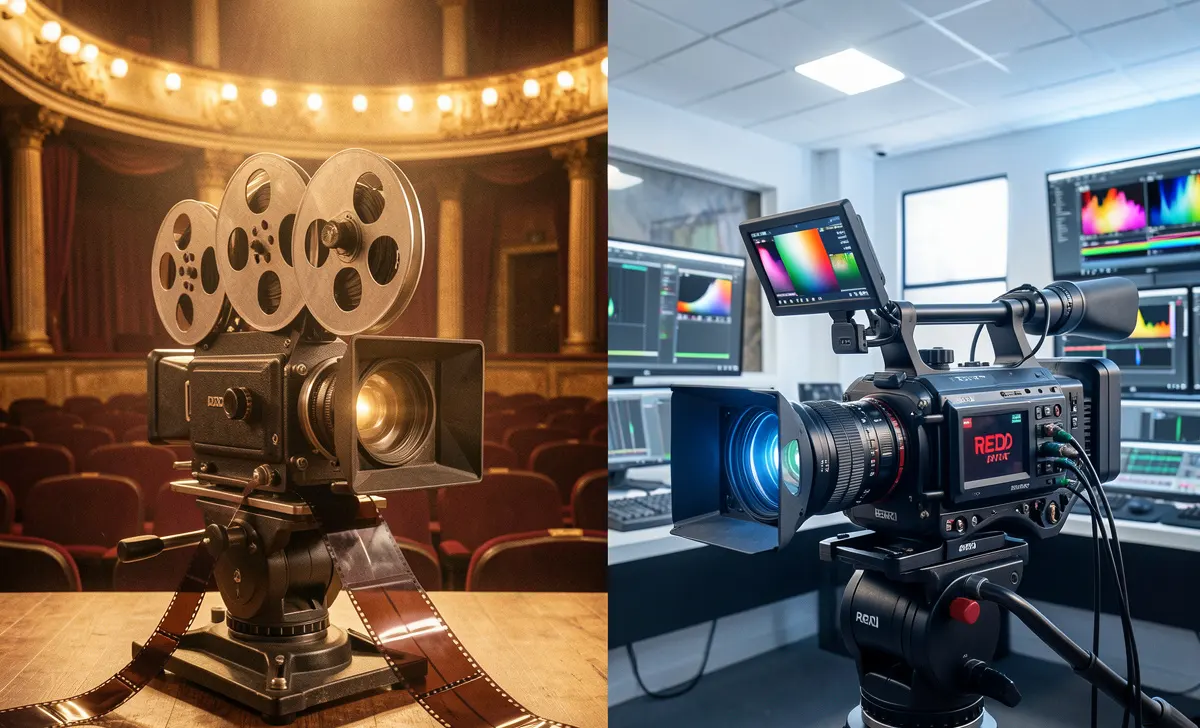
The film versus digital debate continues to spark passionate discussions among cinephiles. Let’s break down what each approach offers:
Film’s defenders argue for its organic quality. The grain structure, the way it handles motion, the inherent limitations that force creative solutions—these intangibles contribute to a film’s soul. Movies shot on film often feel more timeless, less tied to a specific technological moment.
Digital’s advocates point to practicality and creative freedom. The ability to shoot endlessly without worrying about film costs encourages experimentation. The post-production flexibility saves productions that might otherwise require expensive reshoots. And let’s be honest—digital is simply more accessible to the next generation of filmmakers.
The truth? Both are valid tools. The best filmmakers choose their medium based on the story they’re telling, not ideology.
What’s Next? The Future of Digital Filmmaking
Standing here in 2024, we can glimpse where the technology is heading. Virtual production, popularized by “The Mandalorian,” replaces green screens with massive LED walls that display real-time backgrounds. Actors perform in immersive environments, and the camera captures final images directly—no post-production compositing required.
Artificial intelligence is beginning to influence workflows, too. From automated rotoscoping to AI-assisted editing, machine learning tools are handling tedious tasks, freeing creatives to focus on artistry.
And as streaming platforms continue investing billions in original content, the demand for high-quality digital productions shows no signs of slowing.
Final Thoughts: Embracing the Change
The shift from celluloid to pixels hasn’t been without growing pains. We’ve lost something—the tangible magic of film, the discipline it imposed, the distinctive look that defined cinema for a century.
But we’ve gained so much more. More stories can be told. More voices can be heard. More filmmakers can access the tools they need to share their visions.
Ultimately, technology serves story. Whether a film is shot on vintage 35mm stock or the latest digital sensor, what matters is whether it moves us, challenges us, and transports us. The medium evolves, but the magic remains.
What do you think about these changes? Are you nostalgic for the film era, or do you embrace the digital revolution? Share your thoughts in the comments below.