
The Role of Specialized Insurance Solutions in Modern Farming
 Farming is more than a business for many. It’s a family legacy and a cornerstone of our communities. Yet, it constantly faces unique risks. Think of a beautiful sunrise over a New York apple orchard – a symbol of hope. But lurking are unpredictable weather patterns, volatile markets, and natural disasters. These can quickly threaten a season’s hard work and a family’s financial stability. Protecting your harvest is crucial for long-term success.
This is where crop insurance steps in. It acts as a vital safety net against these uncertainties. However, navigating the intricate world of agricultural insurance can be complex. Understanding policy details, deadlines, and state-specific regulations requires expert guidance. (See our infographic below outlining the annual crop insurance timeline, from application to harvest.)
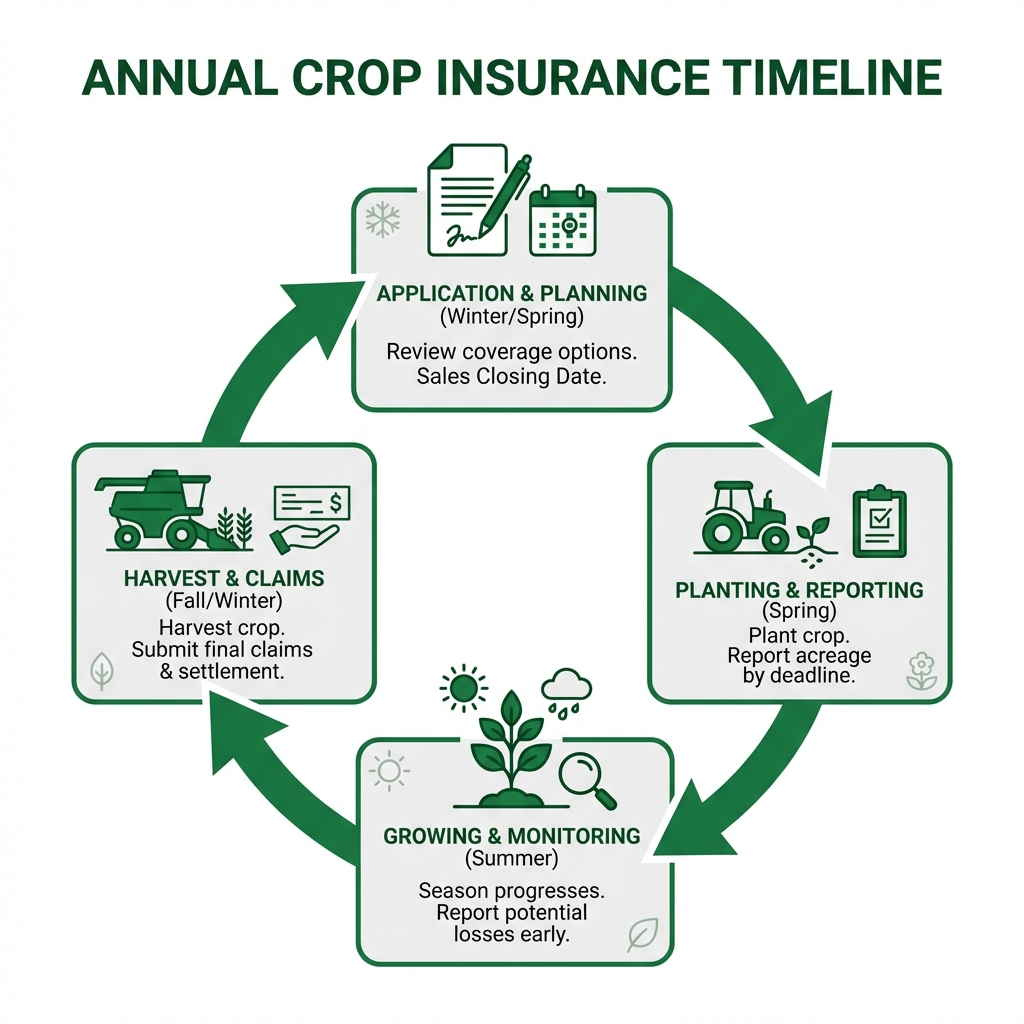


That’s why a knowledgeable crop insurance agent is so important. They are more than just policy providers. They are trusted advisors. They help farmers mitigate risks and secure their future. For instance, finding a Specialized crop insurance agent who truly understands the nuances of your region and operation can make all the difference.
In this extensive guide, we will explore the essential role of these agents. We will delve into their qualifications, key responsibilities, and how they help farmers make informed decisions. We will also examine different types of crop insurance coverage and walk through the claims process. Our goal is to empower you with the knowledge needed to ensure the resilience and success of your agribusiness.
Modern farming operates within a complex web of variables, from global market fluctuations to the immediate impact of local weather. This inherent agricultural volatility necessitates highly specialized insurance solutions that go beyond standard business coverage. These solutions are designed for comprehensive asset protection, ensuring that investments in land, equipment, and labor are safeguarded. Crucially, they also aim for revenue stability, providing a financial buffer when unforeseen events threaten expected yields or market prices. With climate change introducing more extreme and unpredictable weather patterns, the ability to adapt and protect against these evolving risks is paramount for any agribusiness. Specialized insurance helps farmers weather these storms, literally and figuratively, allowing them to plan for the future with greater confidence.
Implementing Specialized Insurance Solutions for Diverse Crop Cycles
Effective crop insurance isn’t a one-size-fits-all solution; it’s meticulously tailored to each farm’s unique profile. A key part of this customization involves detailed acreage reports, which document the specific crops planted on a farm. This information, combined with historical production history—often spanning several years—allows agents to establish accurate yield guarantees. These guarantees are the foundation of many policies, setting the benchmark for expected production. Through careful risk assessment, agents evaluate factors like soil type, irrigation methods, and past weather events to fine-tune coverage. For New York, this means understanding the specific needs of its diverse commodities, from apples and grapes in the Finger Lakes to dairy and corn in the central plains, and vegetables across the state. Each crop and region presents distinct risks that specialized solutions must address.
Why Specialized Insurance Solutions Require Local Expertise
The highly localized nature of agriculture makes local expertise indispensable for crop insurance agents. General knowledge isn’t enough; an agent must understand the specific soil conditions that impact crop health and yield in a given area. They need to be intimately familiar with regional weather patterns, including microclimates and common localized perils such such as late spring frosts, specific pest outbreaks, or periods of drought that can vary significantly even within a few miles. For instance, an agent serving farmers near Batavia might focus on different risks than one in Geneva, Hudson, or Riverhead. This granular understanding allows them to recommend policies that truly protect against the most probable and damaging threats, ensuring farmers aren’t over- or under-insured. It’s this deep local insight that transforms an insurance policy from a generic product into a precise risk management tool.

Understanding the Expertise of a Crop Insurance Agent
A crop insurance agent serves as a crucial intermediary between farmers and the complex world of agricultural risk management. Their role extends far beyond simply selling policies; they are trusted advisors who help farmers navigate intricate regulations and make informed decisions to protect their livelihoods. They are specialists in policy customization, translating a farm’s unique operational needs and risk exposure into suitable coverage options. This requires a strong foundation in agribusiness education, understanding not just insurance principles but also agronomy, market dynamics, and farm management practices. To operate, agents must hold state licensing, which ensures they meet professional standards and are qualified to advise on insurance products. This licensing is maintained through ongoing continuing education, keeping agents updated on the latest policy changes, agricultural practices, and regulatory updates from bodies like the USDA.
Core Responsibilities and Qualifications
The path to becoming a crop insurance agent typically begins with a bachelor’s degree, often in agribusiness, finance, or a related field. This academic background provides the necessary foundation in financial knowledge, which is critical for understanding policy structures, premium calculations, and claims valuations. Day-to-day responsibilities are diverse, encompassing everything from meticulous data entry and record organization to providing detailed policy recommendations tailored to a farmer’s specific operation. When a loss occurs, agents play a vital role in damage estimation, working with adjusters to assess the extent of crop damage or revenue loss due to covered events. They must also stay rigorously updated on USDA regulations and federal program changes, ensuring that farmers remain compliant and benefit from all available subsidies and protections. As highlighted by AgCareers.com, this role demands a blend of administrative skill, agricultural insight, and regulatory expertise.
Ongoing Support and Policy Maintenance
The relationship between a farmer and their crop insurance agent is not transactional; it’s a long-term partnership built on trust and continuous support. Agents provide invaluable ongoing support through annual reviews of policies, ensuring that coverage remains aligned with the farm’s evolving needs, changing crop rotations, and updated financial goals. They proactively communicate about legislative changes, such as those arising from new Farm Bills, which can significantly impact insurance options and subsidies. Staying abreast of market trends is also critical, as fluctuating commodity prices can alter the optimal level of revenue protection a farmer needs. Effective communication is key, with agents often serving as a primary point of contact for questions, concerns, and claims assistance. This relationship building is further enhanced when agents understand how crop insurance integrates with other financial services, such as those provided by Farm Credit systems, offering a holistic approach to farm financial stability.
Navigating the Claims Process and Coverage Options
When a farmer experiences a loss, the claims process is where the value of crop insurance truly becomes apparent. The first critical step is filing a notice of loss with the agent, typically within a specified timeframe after the damage occurs. This triggers an adjuster inspection, where a qualified professional assesses the extent and cause of the damage in the field. The agent often assists in coordinating this inspection and gathering necessary documentation. The goal is a fair claim settlement, which can cover various types of losses: production loss (when yields are lower than guaranteed), quality downgrades (when the harvested crop doesn’t meet market standards), prevented planting (when adverse weather prevents a crop from being planted), and even replanting payments (to cover the cost of reseeding a damaged crop). Understanding these nuances is crucial for farmers to maximize their protection.
Types of Coverage for New York Agribusinesses
New York agribusinesses can access a variety of crop insurance products designed to address different risks. Revenue Protection (RP) is one of the most popular, safeguarding against both yield losses and price declines. Yield Protection (YP) focuses solely on protecting against a decline in actual yields below a historical average. For livestock producers, Livestock Risk Protection (LRP) offers protection against declining market prices for cattle, hogs, and lambs. Whole-Farm Revenue Protection (WFRP) provides a safety net for all commodities on a farm under one policy, making it ideal for diversified operations, including those growing specialty crops like fruits, vegetables, and nursery plants, or those engaged in organic farming. These specialized options ensure that whether you’re a dairy farmer, an apple grower, or a vegetable producer, there’s a tailored solution to manage your specific risks.
How the Claims Process Works with an Agent
When a loss occurs, your crop insurance agent becomes an invaluable ally in navigating the claims process. Their role begins with ensuring timely reporting of the loss, guiding you through the necessary paperwork and deadlines. They assist in evidence collection, helping you document the damage with photos, yield records, and other crucial information. The agent acts as a liaison between you and the crop insurance company’s appraiser, ensuring that all relevant details are communicated accurately. During the loss adjustment phase, they can help clarify any questions about the appraisal and ensure that the assessment aligns with your policy terms. Should disputes arise, agents can also advise on appeal rights, advocating on your behalf to ensure a fair final indemnity. Their expertise can significantly streamline what can often be a stressful and complex process.
Comparative Risk Management: US and Canadian Frameworks
While both the United States and Canada are major agricultural nations, their crop insurance frameworks, though sharing common goals, operate under distinct structures. In the US, the Federal Crop Insurance Corporation (FCIC), managed by the Risk Management Agency (RMA) within the USDA, oversees the federal crop insurance program. This program is delivered through Approved Insurance Providers (AIPs), which are private insurance companies that sell and service policies, with the government reinsuring a portion of their risk. This creates a public-private partnership. Canada, on the other hand, primarily utilizes AgriInsurance, a federal-provincial initiative. While the federal government contributes significantly, the programs are administered at the provincial level by provincial agencies. Both systems aim to provide essential risk management tools to farmers, but their administrative and delivery mechanisms differ significantly, reflecting each country’s unique governance and agricultural policies.
Differences in Program Administration
The administrative differences between the US and Canadian crop insurance programs are notable. In the US, USDA oversight via the RMA sets the national standards and policies, which AIPs then implement through Standard Reinsurance Agreements. These agreements outline the terms under which the federal government shares risk with private insurers. This centralized federal oversight ensures a relatively uniform program across states, though specific policy options can vary by region. In Canada, provincial agencies have greater autonomy in designing and delivering their AgriInsurance programs. This means coverage levels, eligible crops, and specific program features can vary significantly from province to province. For instance, Alberta’s program, administered by AFSC, might have different specifics than Ontario’s, managed by Agricorp. However, both countries feature substantial government cost-sharing, making policies more affordable for farmers. In many Canadian provinces, farmers only pay about 40% of the crop insurance premium, with federal and provincial governments covering the rest, a statistic that underscores the significant public investment in agricultural stability. This is similar to US programs, where subsidies also reduce farmer premiums.
Frequently Asked Questions about Agricultural Insurance
What qualifications should I look for in a New York agent?
When choosing a crop insurance agent in New York, look for someone with genuine farming experience or a deep understanding of agricultural practices. This ensures they grasp the unique challenges and cycles of your operation. Crucially, they should possess local knowledge of New York counties, understanding specific soil types, weather patterns, and common perils affecting crops in your area. Verify they hold a valid state insurance license and inquire about their continuing education to ensure they’re up-to-date on federal and state regulations. Finally, seek an agent with a strong reputation among local growers, as word-of-mouth recommendations often speak volumes about their reliability and expertise.
How are crop insurance premiums calculated?
Crop insurance premiums are determined by a combination of factors. Your farm’s historical yields play a significant role, as they provide a baseline for expected production. Current market prices for your commodities also influence premium costs, especially for revenue-based policies. The selected coverage levels, which dictate how much protection you choose, directly impact the premium. Your farm’s location is critical, as different regions carry varying levels of risk due to weather patterns and specific perils. Finally, both federal and provincial subsidies (in Canada) significantly reduce the out-of-pocket cost for farmers, making policies more accessible and affordable.
When is the deadline to apply for coverage?
The deadline to apply for crop insurance coverage, known as the sales closing date, varies significantly by crop and geographic region. For many spring-seeded crops in New York, for example, the deadline often falls in March. Fall-seeded crops, conversely, will have different application periods. It is absolutely essential to consult with a crop insurance agent to determine the specific sales closing dates relevant to your crops and location. Missing these deadlines can result in being unable to secure coverage for the upcoming growing season, leaving your operation vulnerable. We encourage you to reach out to an agent well in advance of planting to ensure timely application.
Conclusion
In the unpredictable world of agriculture, strategic planning and robust risk management are not just good practices—they are essential for survival and prosperity. Crop insurance, facilitated by a knowledgeable and experienced agent, forms a critical component of this strategy. It provides the operational resilience needed to withstand the inevitable challenges, safeguarding your investments and ensuring the long-term viability of your farm. Beyond financial protection, working with a dedicated agent brings peace of mind, allowing you to focus on what you do best: growing healthy crops and contributing to our food supply. Don’t leave your family’s legacy to chance; explore your options with a trusted agricultural insurance specialist.