There’s something special about a leather bag. It’s more than an accessory; it’s a companion that carries your essentials, gains character with every scratch, and elevates any outfit. Whether it’s a trusted daily tote or a prized designer handbag, that beautiful leather needs care to last for years, not just seasons. The thought of cleaning it yourself, however, can be daunting. Visions of ruined finishes and permanent water stains are enough to make anyone reach for the professional cleaner’s number.
But what if you could achieve a professional-level clean in the comfort of your home? With the right knowledge and a gentle touch, you absolutely can. This isn’t about quick hacks; it’s about understanding the material and using a meticulous, safe process. As someone who has restored everything from vintage satchels to modern crossbody bags, I’m here to guide you through a proven, step-by-step method that prioritizes your bag’s longevity. Let’s transform your leather care from a point of anxiety into a simple, satisfying ritual.
Understanding Your Leather: The Non-Negotiable First Step
Before you touch a drop of water, you must become a detective. The single biggest mistake in leather bag cleaning is using a one-size-fits-all approach. The method we’ll use is designed for common finished leathers (like those used in most handbags and purses), but a crucial first step is identification.


Is Your Bag Genuine Leather? Check for a genuine leather stamp or label. Feel the material: real leather has subtle imperfections, a unique grain, and a distinctive, rich smell. Synthetic materials (PU or vinyl) often feel perfectly uniform, plasticky, and may have a chemical odor. Cleaning fake leather often requires different, milder solutions to avoid cracking the coating.
What Type of Leather Is It?
- Finished/Protected Leather: This is the most common type for everyday bags. It has a protective coating that makes it resistant to stains. It can handle gentle, soapy water.
- Suede or Nubuck: These have a velvety, nap surface. NEVER use the wet cleaning method below on suede. It requires a specialized suede brush and eraser only.
- Aniline or Unfinished Leather: This is porous, absorbs liquids easily, and is very delicate. It’s best left to professionals.
A Real User Concern: “I’m terrified of trying a ‘hack’ and damaging my favorite bag. How can I be sure it’s safe?” The answer is always: Test First. Find a small, hidden area—like inside a strap attachment or a corner of the interior gusset. Apply your chosen cleaner with a cotton swab, let it dry, and check for any discoloration, raising of the grain, or texture change. If all is well, proceed.
The Essential Toolkit: Gathering Your Materials
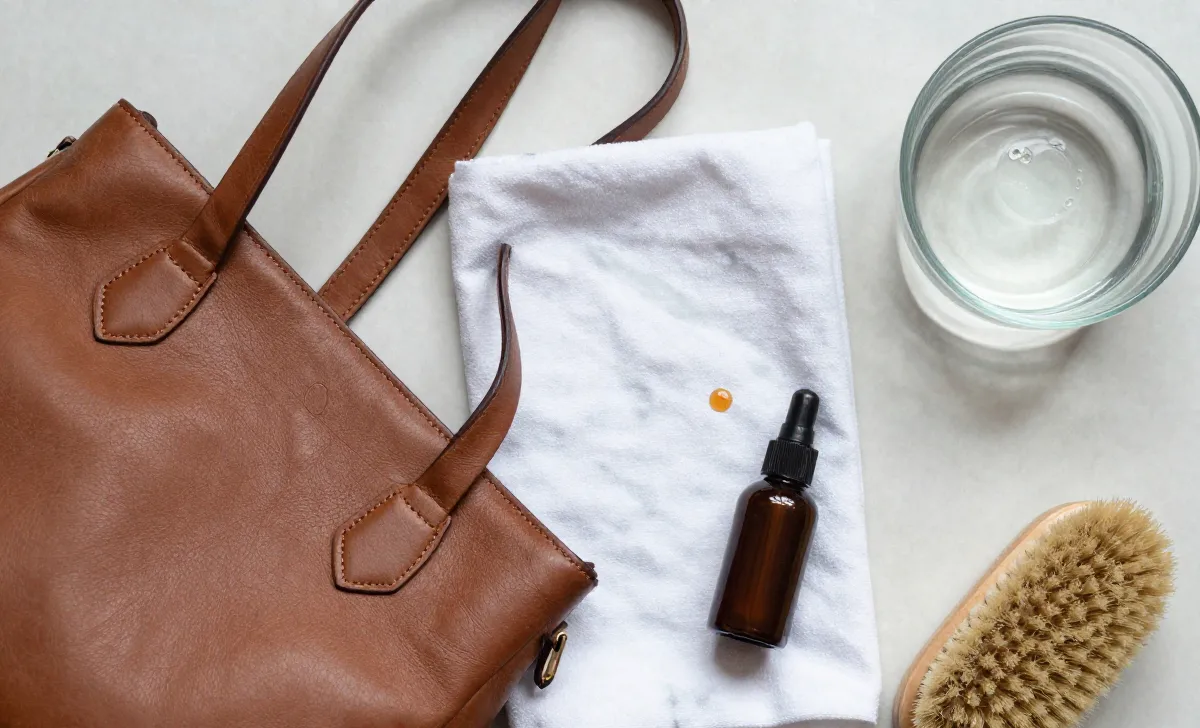
You don’t need expensive specialty products for a basic, effective clean. Here’s your DIY leather cleaning arsenal:
- Soft, Lint-Free Cloths: Several white or light-colored microfiber cloths are ideal. Avoid colored clothes that may bleed dye.
- A Soft-Bristled Brush: A dedicated suede brush (with both brass and rubber bristles) is excellent for surface dust, even on smooth leather. For tougher grime, a clean, soft-bristle toothbrush is perfect for nooks and crannies.
- The Right Cleaner: This is critical. Use a mild soap like pure castile soap, saddle soap, or a specialized leather cleaner. For a homemade solution, a single drop of dishwashing liquid (the clear, fragrance-free kind) in a bowl of lukewarm water works. Avoid products with alcohol, bleach, ammonia, or heavy fragrance.
- Leather Conditioner: This is not optional; it’s the final, vital step. It replenishes the natural oils lost during cleaning. Use a dedicated leather conditioner. In a pinch, a tiny amount of pure, white Vaseline (petroleum jelly) can work on very dry leather, but test it first, as it can darken the material.
- Lukewarm Water: Never use hot water, as it can strip natural oils and cause leather to crack.
- A Clean Towel: For drying.
The Step-by-Step Process: How to Clean Your Leather Bag Like a Pro
Phase 1: The Preliminary Dry Clean. Never start wet. Your first goal is to remove dry, loose debris that could scratch the surface during washing.
- Empty the bag completely and gently shake it out over a trash can.
- Using your soft brush or the rubber side of a suede brush, gently brush the entire exterior, paying special attention to seams, corners, and hardware crevices. This removes surface dirt effectively.
Phase 2: The Gentle Was.h This is where patience is key.
- Prepare Your Solution: In a small bowl, mix a quart of lukewarm water with literally one or two drops of your clear, mild soap. Swirl to create a light foam.
- Clean, Don’t Soak: Dampen one of your soft cloths in the solution and wring it out until it’s only slightly damp—never dripping wet. The mantra is “less is more.”
- Work in Sections: Gently wipe the leather in small, circular motions, focusing on one area (like one side panel) at a time. You’ll see the dirt transfer to the cloth. For stubborn spots or stained areas, use your soft-bristled toothbrush dipped lightly in the solution to gently agitate the spot.
- Immediate Rinse: This step is often missed and leads to soap residue. Dampen a second clean cloth with plain lukewarm water, wring it out well, and wipe over the area you just cleaned to remove any soapy residue.
- Dry Immediately: Using a dry section of your towel, gently blot the area dry. Never rub harshly.
Important Discussion Point: The original article suggested soaking the bag. I strongly advise against this for most leather bags. Soaking can saturate the leather, weaken its fibers, dissolve adhesives in the construction, and cause irreversible warping or color bleeding. Spot cleaning and section-by-section washing is the safer, more controlled methods.
Phase 3: The All-Important Drying Process. Rushing this will ruin all your hard work.
- Wipe the entire bag with a dry towel to absorb excess moisture.
- Stuff the bag loosely with clean, white tissue paper or a dry towel to help it hold its shape. Do not usea newspaper, as the ink can transfer.
- Place it in a well-ventilated room, away from direct sunlight, heaters, or hair dryers. Let it air-dry thoroughly. This may take 24-48 hours. Patience here prevents mold and stiffness.
Phase 4: Conditioning – Bringing Life Back to the Leather Cleaning strips natural oils. Conditioning puts them back. This is how you preserve leather and prevent cracking.
- Once the bag is completely dry, apply a small amount of leather conditioner to a fresh, soft cloth.
- Using gentle circular motions, work the conditioner into the leather. Let it absorb fully. You may apply a second thin layer if the leather is very dry or old.
- Buff gently with a clean, dry cloth to remove any excess. Your bag should now have a soft, healthy sheen, not a greasy feel.
Addressing Common Concerns & FAQs
What’s the absolute best detergent for cleaning a leather bag?
For most people, the safest bet is a commercial leather cleaner formulated for your bag’s type of leather. For a cost-effective DIY solution, a single drop of clear, fragrance-free dishwashing liquid in lukewarm water is a mild and effective option. The key is gentleness.
Can I use Vaseline instead of leather conditioner?
While Vaseline (petroleum jelly) can moisturize in a pinch, it’s a petroleum product that can clog leather pores over time and may darken the color. It’s a temporary fix. A quality, pH-balanced leather conditioner is a better long-term investment for the health of your bag.
How do I handle specific stains like ink or oil?
For ink, sometimes a dab of rubbing alcohol on a cotton swab (tested first!) can lift it. For oil-based stains, sprinkling cornstarch or talc on the spot to absorb the oil overnight before brushing it off can help. For persistent or unknown stains, consulting a professional is the wisest course.
How often should I clean and condition my bag?
For regular maintenance, a light dusting and conditioning every 3-6 months is sufficient. Perform a full clean only when visibly soiled. Over-cleaning can be as harmful as neglect.
Final Thoughts: The Art of Leather Care
Cleaning your leather bag at home is an act of preservation. It’s about respecting a quality material and ensuring it ages with grace. By following this detailed, cautious approach—prioritizing identification, gentle cleaning, thorough drying, and essential conditioning—you’re not just removing dirt; you’re extending the life and story of a beloved item.
Remember, the goal isn’t perfection. It’s about maintaining the character and integrity of your leather. With this knowledge, you can confidently tackle grime and keep your bag looking impeccable, proving that with the right care, the best accessories truly do get better with time.