
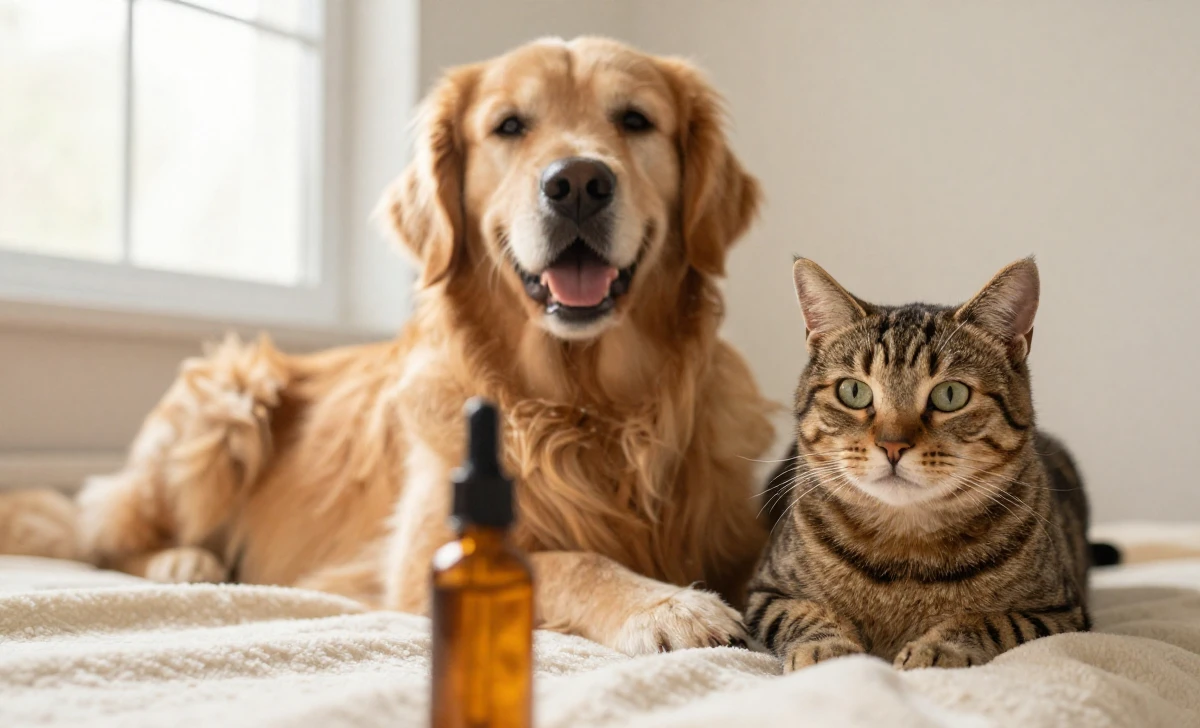
If you’ve spent any time in pet owner communities lately, you’ve probably noticed more people talking about CBD for their animals. Maybe your neighbor gives it to her anxious Labrador during thunderstorms. Perhaps your cousin mentioned trying CBD oil for his aging cat with arthritis. Or maybe you’re just curious after seeing CBD products for pets at your local shop.
Whatever brought you here, you likely have one main question: How much CBD should I actually give my pet?
It’s the most common question veterinarians hear about CBD, and unfortunately, it doesn’t have a one-size-fits-all answer. The right dosage depends on your pet’s size, their specific health concerns, and even the product you’re using.


I’ve spent time researching this topic and talking with pet owners who’ve used CBD successfully. Here’s what I’ve learned about finding the right CBD Dosage for Pets, along with practical advice to help you get started safely.
Why Pet Owners Are Turning to CBD
Before jumping into numbers and measurements, it helps to understand why CBD has become such a popular topic in pet care. Cannabidiol (CBD) is a compound derived from hemp plants. Unlike THC, it won’t get your pet “high.” Instead, it interacts with your animal’s endocannabinoid system – a network of receptors that helps regulate things like mood, pain sensation, and inflammation.
Pet owners commonly explore CBD for:
- Situational anxiety (fireworks, vet visits, separation)
- Joint discomfort and mobility issues in older animals
- General relaxation and calmness
- Support during medical treatment (always with vet guidance)
- Appetite stimulation in picky eaters or recovering pets
The interest makes sense. Many people want natural options for their furry family members, especially when conventional medications come with significant side effects.
That said, CBD isn’t magic, and it’s not risk-free. Let’s talk about how to approach it thoughtfully.
Starting Points: The Golden Rule of Pet CBD
If you take nothing else from this guide, remember this: start low and go slow.
This isn’t just cautious advice – it’s essential for your pet’s safety and for figuring out what actually works for them.
The Baseline Formula
Most veterinary resources suggest a starting range of 0.1 to 0.2 milligrams of CBD per pound of body weight. This gives you a safe foundation.
Here’s what that looks like for different-sized pets:
- Small dog or cat (10–20 lbs): 1–4 mg of CBD per serving
- Medium dog (20–50 lbs): 4–10 mg of CBD per serving
- Large dog (50–100 lbs): 10–20 mg of CBD per serving
- Extra large dog (100+ lbs): 20+ mg of CBD per serving
But here’s the important part: these numbers represent where you might end up, not where you should start.
The “First-Time” Approach
When giving your pet CBD for the very first time, consider starting with roughly half the minimum recommended dose. For a 60-pound dog, that might mean beginning with around 3 mg rather than 6 mg.
Why? Every animal responds differently. Some are more sensitive to CBD than others. Starting smaller lets you observe how your individual pet reacts without overwhelming their system.
Give this initial dose and watch your pet closely over the next few hours. Are they acting normally? Is there any unusual drowsiness or digestive upset? Most pets handle CBD just fine, but this observation period gives you valuable information.
If everything looks good after a day or two, you can gradually increase toward the standard starting dose.
Reading Your Pet’s Response
Here’s something that surprises many pet owners: the right CBD dose isn’t just about weight. It’s about finding the amount where you notice a positive difference.
After a week at the baseline dose, ask yourself:
- Is my dog calmer during previously stressful situations?
- Does my cat seem more comfortable moving around?
- Has my pet’s appetite improved?
- Am I seeing any unwanted effects?
If you’re not seeing the results you hoped for, you can slowly increase the dose. Many pet owners find success at 0.3 to 0.5 mg per pound for more significant concerns like arthritis discomfort or severe anxiety.
The keyword is slowly. Increase in small increments and give it several days between adjustments. This isn’t like pain medication, where you feel immediate effects. CBD often works subtly in the background.
When Pets Need Higher Doses
Some situations call for a more robust approach. Through conversations with pet owners, I’ve heard stories of animals with chronic conditions requiring noticeably higher amounts.
Chronic pain and inflammation often need more CBD than situational anxiety. A dog with arthritis might need 0.5 mg per pound or more to experience comfortable mobility. Similarly, pets with seizure disorders sometimes use higher doses under veterinary supervision.
One dog owner I spoke with has a 70-pound golden retriever with significant arthritis. After trying 5 mg with minimal results, she gradually worked up to 20 mg per serving (about 0.3 mg per pound) and finally saw her dog moving more comfortably.
The takeaway? Your pet’s condition matters just as much as their weight. Temporary issues often respond to smaller amounts, while chronic conditions may require more support.
Factors That Influence CBD Dosage
Weight and health conditions are the big factors, but they’re not the only ones.
Individual Body Chemistry
Just like people, some animals seem more sensitive to CBD than others. I’ve heard from owners with two similar-sized dogs where one needed twice as much as the other for the same effect. This is normal. Pay attention to your pet, not what worked for your friend’s dog.
Age and Metabolism
Younger animals with faster metabolisms may process CBD more quickly, potentially requiring more frequent dosing. Senior pets might be more sensitive, sometimes doing well with lower amounts.
Severity and Type of Symptoms
A dog who panics during thunderstorms might need a different approach than a cat with chronic digestive issues. The anxiety might respond well to a moderate dose given right before a storm, while digestive support might work better with smaller, more consistent amounts.
Product Quality and Formulation
Not all CBD products are created equal. A high-quality oil from a reputable company will be more effective than a low-quality product, even at the same milligram amount. We’ll talk more about this in the product section.
CBD Side Effects: What Pet Owners Should Watch For
Let’s be honest about potential downsides. While CBD is generally well-tolerated, side effects can happen.
The most commonly reported effects include:
Temporary drowsiness or sedation. This often happens when starting CBD or after a dose increase. It usually improves as your pet adjusts. If it doesn’t, the dose might be too high.
Dry mouth. CBD can temporarily reduce saliva production. You might notice your pet drinking more water. Always ensure fresh water is available.
Digestive changes. Some pets experience mild diarrhea or appetite changes when starting CBD. Starting with a lower dose and introducing it gradually minimizes this risk.
Drug interactions. This is worth repeating: CBD can interact with certain medications, particularly those processed by the liver. If your pet takes prescription medications, talk with your veterinarian before adding CBD.
Serious side effects are rare when using appropriate doses from quality sources. Still, it’s wise to keep your veterinarian informed about everything your pet receives.
Decoding Product Labels: Finding the Right CBD Product
Here’s where many well-meaning pet owners get confused. You buy a bottle of CBD oil, read the label, and have no idea how much to actually give.
Understanding Potency
CBD products vary dramatically in concentration. A 30 ml bottle might contain anywhere from 50 mg of CBD to over 3000 mg. That means one dropper could deliver 1.5 mg or 100 mg, depending on what you bought.
When choosing a product, you want a potency appropriate for your pet’s size and needs:
- Lower potency (under 10 mg per ml) works well for small pets or those needing minimal support
- Medium potency (10–25 mg per ml) suits most medium to large dogs
- High potency (25+ mg per ml) is typically for large dogs with significant health concerns
Doing the Math
Let’s walk through a real example. You have a 40-pound dog with mild anxiety. You’ve decided to try 0.2 mg per pound as a starting dose.
40 lbs × 0.2 mg = 8 mg of CBD per serving
Now look at your product label. If it says “500 mg CBD” and the bottle is 30 ml, you can calculate:
500 mg ÷ 30 ml = approximately 16.7 mg of CBD per ml
To get 8 mg, you’d give about 0.5 ml (half a dropper).
This math matters. Without it, you’re guessing – and guessing leads to inconsistent results.
Forms of CBD for Pets
CBD comes in several forms, each with practical considerations for pet owners.
Oils and tinctures are the most popular choice. They’re easy to adjust dose-by-dose and can be given directly or added to food. The dropper makes measurement simple once you’ve done the math.
CBD treats and chews offer convenience. Each piece has a set amount, so there’s no measuring. The trade-off is less flexibility in dosing. Treats also take longer to work since they must be digested first.
Topical products like balms can be applied directly to sore joints or irritated skin. While some CBD absorbs locally, these work best alongside oral products for internal issues.
Capsules provide precise dosing but can’t be easily adjusted. They’re sometimes preferred by owners whose pets won’t touch oils.
Real Questions From Pet Owners
Over time, certain questions come up repeatedly. Here are answers to some of the most common ones.
How long until I see results?
For acute issues like situational anxiety, you might notice a difference within 30–60 minutes. For chronic concerns like arthritis, give it at least two weeks of consistent use before evaluating.
Can I give CBD with my pet’s regular food?
Yes. In fact, giving CBD with a meal that contains some fat can improve absorption. Just be consistent – if you usually give it with food, keep giving it with food.
What if I miss a dose?
Don’t double up. Just give the next regularly scheduled dose and continue as normal. CBD works best with consistency, but missing one dose won’t cause problems.
“My cat is picky. How do I give CBD oil?
Look for unflavored oils or those with natural flavors cats enjoy (like salmon or chicken). Mixing into a small amount of canned food or tuna juice often works well.
Can I give human CBD products to my pet?”
Technically, yes, but it’s not recommended. Pet-specific products account for appropriate concentrations and avoid ingredients that might be problematic for animals, like xylitol or essential oils.
Building a Routine That Works
Consistency matters more than perfect dosing. Find a rhythm that works for you and your pet.
For daily support (like joint health or general anxiety), giving CBD at the same times each day helps maintain steady levels. Many owners add it to morning and evening meals.
For predictable stressful events (fireworks, vet visits), giving CBD 30–60 minutes beforehand works well.
Keep a simple log when starting. Note the date, dose, and any observations. This helps you track what’s working and provides useful information if you consult your veterinarian.
Talking With Your Veterinarian
This deserves its own section because it’s genuinely important. Your veterinarian should know about any supplements your pet receives, including CBD.
Some vets are knowledgeable about CBD and happy to discuss it. Others may have limited information or practice restrictions. If your vet isn’t familiar, consider consulting a veterinary specialist with training in cannabinoid therapy.
At minimum, your vet needs to know about CBD use because of potential medication interactions and because they need the full picture of your pet’s health.
Final Thoughts on CBD for Pets
CBD offers real potential for supporting pet health, particularly for anxiety, joint comfort, and overall well-being. The key is approaching it thoughtfully – starting with appropriate doses, choosing quality products, and paying attention to your individual animal’s response.
Remember that CBD isn’t a replacement for veterinary care. It’s a tool that some pet owners find helpful as part of a broader approach to keeping their furry friends comfortable and happy.
The right dose is the one that helps your pet without causing unwanted effects. For most animals, that sweet spot exists – it just takes a little patience and observation to find it.