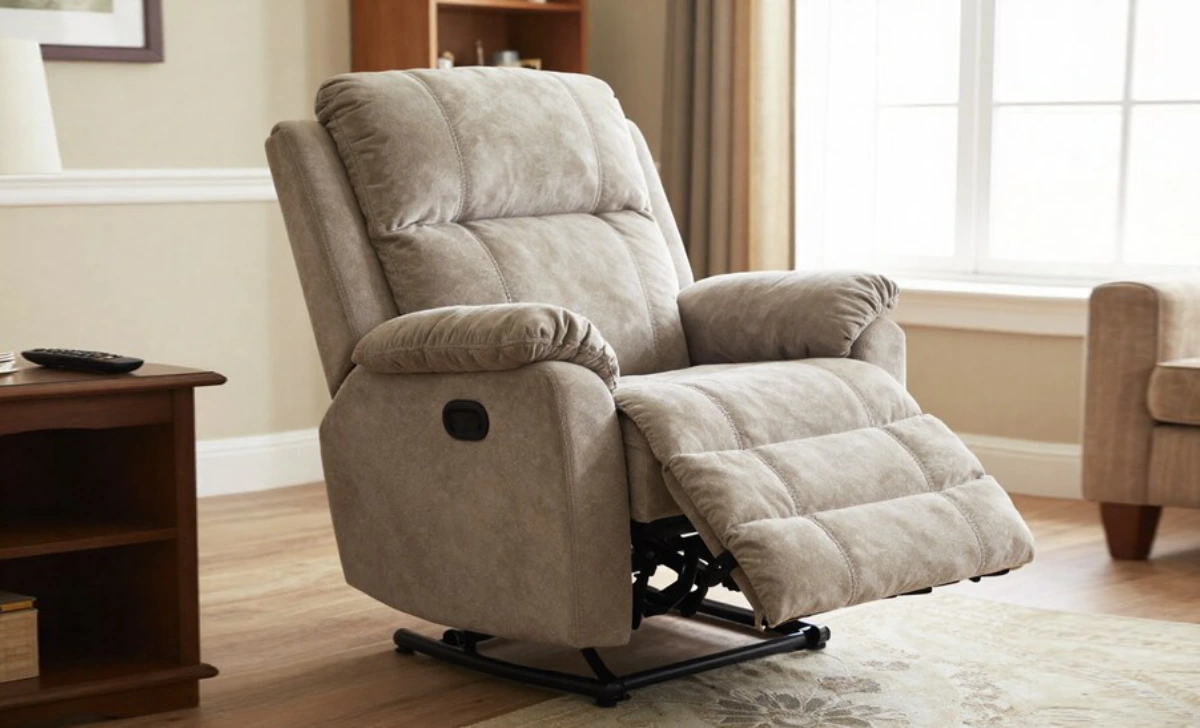
The best recliner for a senior provides more than comfort. It supports independence, reduces injury risk, and creates a safe place to rest. The right chair helps with standing, sitting, and finding positions that ease pain and improve daily comfort.
Simple armchairs often fall short for seniors with mobility concerns. Modern recliners offer power lift functions, therapeutic features, and adjustable positions. This guide covers the key features, types, and models you need to consider when choosing a recliner.
Key Benefits of a Recliner for Seniors
A quality recliner offers practical advantages for daily living.

- Mobility Assistance: Power lift recliners help users stand and sit with less physical strain. This supports independence and reduces the need for caregiver assistance during routine movements.
- Fall Prevention: The tilt-forward lift function reduces fall risk during transfers. The controlled motion provides stability when moving from sitting to standing positions.
- Leg Elevation: Raising your legs can reduce swelling in the ankles and feet. This position may help with discomfort from prolonged sitting.
- Posture Support: Recliners designed with proper lumbar support help maintain spinal alignment. This can reduce strain on your back and joints during extended sitting.
- Targeted Relief: Models with heating and massage functions focus on specific areas like the lower back. These features may help ease muscle tension.
- Caregiver Support: When seniors can adjust their chairs and stand independently, caregivers gain time for other care tasks.
What to Consider When Buying a Recliner
Selecting the right recliner requires evaluating several practical factors.
Recliner Type: Manual vs. Power
Choose between manual operation and power assistance based on mobility needs.
Manual Recliners: These use a side lever and require you to push back with body weight. They cost less and don’t need electrical outlets, but they demand sufficient arm and leg strength to operate.
Power Recliners: A button controls the reclining motion. The motor handles all movement, making these ideal for users with limited strength or dexterity. Most require a nearby electrical outlet.
Power Lift Recliners: These combine reclining with a forward-tilt lift function. The entire chair rises and tilts to help you stand from a seated position. This design addresses severe mobility limitations.
Motor Type: Single vs. Dual
Motor configuration affects positioning options.
Single-Motor Recliners: One motor moves the backrest and footrest together. This limits positioning flexibility but reduces cost.
Dual-Motor Recliners: Separate motors control the backrest and footrest independently. You can adjust each section to find your preferred angle. This configuration offers more positioning options.
Size, Fit, and Space
The chair must fit both the user and the room.
User Fit: Choose a chair proportionate to your body size. Check seat width, depth, and backrest height. Your feet should rest flat on the floor when sitting upright.
Room Space: Measure your available space carefully. Most recliners need clearance behind them to recline fully. Wall-hugger recliners slide forward instead of backward, requiring less rear clearance.
Key Features for Comfort and Convenience
Consider which features address your specific needs.
Lumbar Support: Maintains the natural curve of your lower spine. This feature helps prevent back discomfort during extended sitting.
Heating and Massage: These functions may help ease muscle tension. Heat can feel soothing on sore areas.
Zero Gravity Position: Elevates your legs above heart level, creating a weightless feeling. This position distributes body weight evenly across the chair.
Convenience Features: USB chargers, cup holders, side pockets, and remote controls add functionality to your chair.
Upholstery and Ease of Cleaning
Fabric choice affects maintenance and comfort.
| Material | Pros | Cons |
|---|---|---|
| Real Leather | Durable, easy to wipe clean, ages well with care | Can feel warm in heat, shows scratches, higher cost |
| Faux Leather (PU) | Soft texture, water-resistant, easier to clean, lower cost | It may not last as long as real leather, can feel warm |
| Fabric | Soft feel, breathable, variety of colors | Absorbs spills, requires more cleaning attention |
Top Recliner Recommendations for Seniors
These models represent different priorities and price points.
1. MCombo Electric Power Lift Recliner
A balanced option combining core features at a reasonable price. Includes power lift, vibration massage, lumbar heating, USB ports, and cup holders. The faux leather wipes clean easily for daily use.
2. RESTREAL Dual Motor Lay Flat Recliner
Dual motors allow independent adjustment of the backrest and footrest. The chair reclines completely flat for sleeping. Features include massage, heat, wireless charging, and a tray table.
3. FLEXISPOT XL31 Power Lift Recliner
Designed for smaller spaces without sacrificing key functions. Offers power lift assistance, massage, lumbar heating, and cup holders in a compact frame.
4. Pride Mobility VivaLift! Premier
This FDA Class II Medical Device may qualify for partial Medicare reimbursement. Features zero-gravity positioning, advanced massage and heat systems, and wireless phone charging.
5. COLAMY Power Lift Recliner
A straightforward design with simple controls. The remote uses basic up and down buttons. Features comfortable padding, quiet motor operation, and easy-to-clean faux leather.
Pros and Cons of Recliners for the Elderly
Understanding both benefits and limitations helps you make an informed choice.
Pros:
- Targeted Support: Provides relief to areas experiencing discomfort, like the back, neck, and legs.
- Alternative Sleeping Position: Some users find sleeping slightly elevated more comfortable than lying flat, particularly those with breathing concerns.
- Safer Transfers: Power lift functions reduce fall risk during standing and sitting transitions.
Cons:
- Extended Sitting Risks: Remaining seated for very long periods without movement can affect circulation. Regular position changes remain important.
- Activity Balance: Over-reliance on lift assistance may reduce your use of personal strength over time. Continue using your own mobility when safely possible.
Will Medicare or Insurance Pay for a Recliner?
Understanding coverage helps you plan costs.
- Medicare Coverage: Recliners qualify as durable medical equipment (DME). Medicare Part B may cover up to 80% of the seat lift mechanism cost when a doctor prescribes it as medically necessary. Medicare does not cover the chair frame, fabric, or cushions.
- Requirements: You need a doctor’s prescription, purchase from a Medicare-approved supplier, and submission of required forms, including the Certificate of Medical Necessity.
- Other Insurance: Contact your private insurance or Veterans Insurance provider directly to learn their specific coverage policies.
Choosing a recliner for a senior affects daily comfort, safety, and independence. Focus on the user’s mobility level, required features, and available space. Consider potential insurance coverage to manage costs. The right chair becomes a trusted place for rest and recovery.
Compare features against your specific needs rather than choosing based solely on price or appearance. Test chairs when possible to assess comfort and ease of operation.
FAQs
What is the best type of recliner for a senior with back pain?
A power lift recliner with adjustable lumbar support addresses multiple needs. The lift function reduces strain during standing, while lumbar support maintains spinal alignment. Massage and heat features may provide additional comfort.
Are power lift chairs bad for your legs?
When used appropriately, they can be helpful. Elevating your legs may reduce swelling. Staying in one position for extended periods without movement requires attention. Change positions regularly and walk when possible.
How much should I spend on a good recliner for a senior?
Quality recliners range from $400 to over $3,000. Basic manual recliners start at the lower end. Power lift recliners with features like massage, heat, and dual motors cost more. Expect to spend around $800 and up for a quality power lift chair.
Can you sleep in a recliner every night?
While some find it more comfortable, sleeping in a recliner every night presents considerations. Prolonged sitting creates concerns about pressure points and circulation. If you need to sleep in a recliner, choose a model that reclines completely flat.