Injection molding is a manufacturing process where heated material — most often plastic — gets forced under high pressure into a pre-made mold cavity. Once the material cools and solidifies, it takes the exact shape of that cavity. The mold then opens, the part ejects, and the cycle repeats.
This method lets manufacturers produce thousands — sometimes millions — of near-identical parts at scale, with consistent dimensions and surface quality across every piece. If you’ve ever held a plastic syringe, a Lego brick, or a car dashboard vent, you’ve held an injection-molded part.
A Brief History of Injection Molding
The first injection molding machine was patented in 1872, originally designed for mass-producing Britannia metal dinnerware. By 1885, an improved version of the machine could work with glass, clay, porcelain, and papier-mache.
Before injection molding, manufacturers relied on hand-finishing to shape uniform products. Injection molding eliminated that step — parts came out of the mold already finished, consistent in shape and color. That single shift made mass production of identical goods practical for the first time.
For most of the 20th century, injection molding remained an industrial tool. Over the past decade, 3D printing has expanded its reach. Artists, architects, and product designers now use injection-molded prototypes and parts without needing advanced CAD training or traditional clay-modeling skills.
How the Injection Molding Process Works
The process starts with raw plastic in the form of small granules or pellets. These go into a hopper, which feeds them by gravity into a heated barrel. Heating bands around the barrel melt the plastic until it reaches the right flow consistency. A rotating screw inside the barrel pushes the melted plastic forward and builds up enough injection pressure.
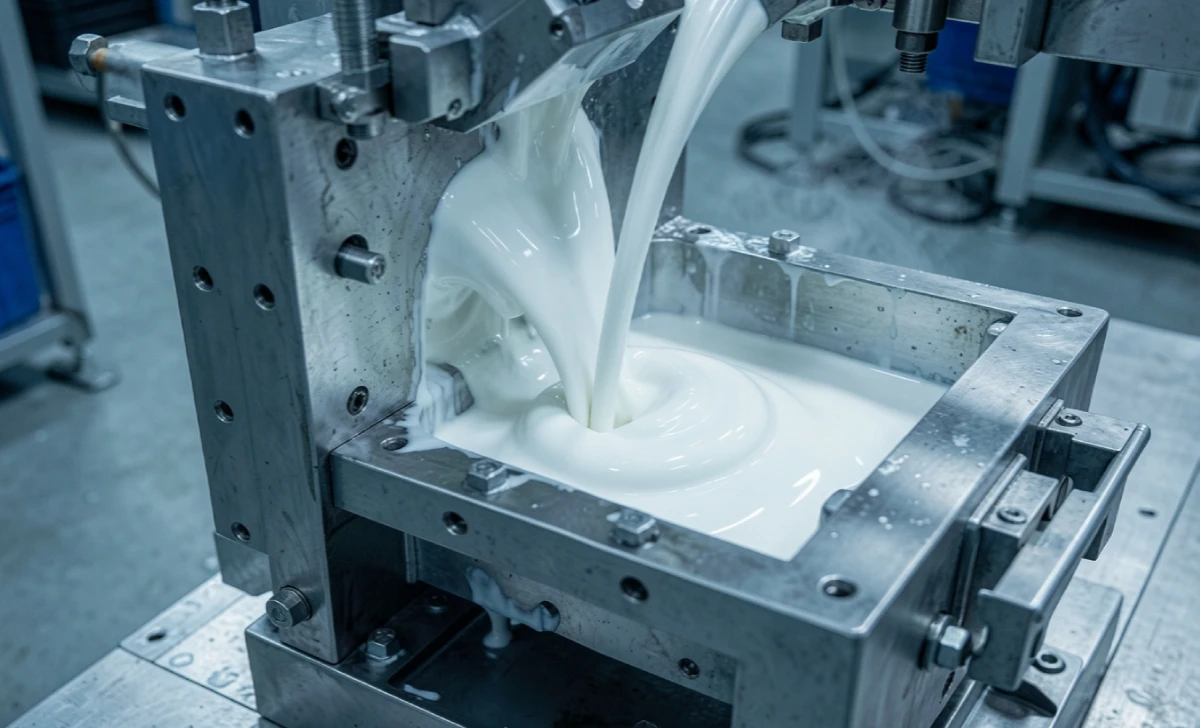
When the screw reaches the front of the barrel, it drives the molten plastic through a gate and into the mold cavity. The mold itself — typically made from machined steel or aluminum — is already closed and clamped shut under high force to resist the injection pressure.
Inside the mold, the plastic begins cooling immediately. Cooling channels built into the mold carry water or another coolant to speed up this process. Once the material has solidified enough to hold its shape, the clamping unit releases, the mold opens, and ejector pins push the finished part out. The mold closes again, and the next shot begins.
Cycle times vary by part size and material, but most standard parts complete a full cycle in 15 to 60 seconds.
Insert Molding: Adding Complexity in One Step
A widely-used variation of the standard process is insert molding. Before the plastic gets injected, a pre-formed component — often a metal thread, pin, or electrical contact — gets placed directly into the mold. The injected plastic then forms around it, bonding the two materials into a single part.
This approach is common in medical devices, electrical connectors, and threaded fasteners, where you need metal’s strength in a specific area and plastic’s weight and formability everywhere else.
Benefits of Injection Molding
The primary reason manufacturers choose injection molding over other methods is volume cost. The mold itself is expensive to produce — tooling for a steel mold can run from a few thousand to over a hundred thousand dollars, depending on complexity. But once the mold exists, the per-unit cost drops sharply as volume increases. At high quantities, it becomes one of the most cost-effective production methods available.
Beyond cost, injection molding offers several practical advantages:
- Consistency: Every part produced from the same mold carries the same dimensions, wall thickness, and surface finish. This matters most in regulated industries like medical devices, where tolerances are tight.
- Material efficiency: Waste in injection molding is relatively low. The main sources of scrap are the runners (channels that carry plastic to the cavity), gates, and any overflow at the mold seams. Many facilities grind and reuse this material.
- Part complexity: A single injection-molded shot can produce parts with undercuts, internal features, threads, snap-fit clips, and thin walls — features that would require multiple machining steps to achieve otherwise.
- Speed: Once a mold is qualified, production runs continuously with minimal human intervention. Automated part removal and quality inspection systems can keep presses running around the clock.
One trade-off worth knowing: injection molding is not suitable for very early-stage design work. Once a steel mold is cut, making major geometry changes is expensive or impossible. Designers typically prototype with 3D printing or soft aluminum tooling before committing to a production-grade steel mold.
What Materials Are Used in Injection Molding?
Most injection molding uses thermoplastics — materials that melt when heated and solidify when cooled. Common choices include:
- ABS (Acrylonitrile Butadiene Styrene): Lightweight, impact-resistant, easy to machine. Used in Lego bricks, consumer electronics housings, and automotive interior parts.
- Polypropylene (PP): Flexible, fatigue-resistant, and chemically inert. Common in medical devices, food containers, and living hinges.
- Polyethylene (PE): Soft, low-cost, and moisture-resistant. Used in caps, bottles, and packaging.
- PVC (Polyvinyl Chloride): Durable and flame-resistant. Found in wire insulation and plumbing components.
- Silicone: Used when parts must withstand heat or require biocompatibility, such as in medical implants and seals.
The material you choose affects the mold design, the processing temperature, the cooling time, and the mechanical properties of the finished part. Each material has a recommended melt temperature range, and running outside that range degrades the material or causes defects like warping, sink marks, or short shots.
What Products Does Injection Molding Make?
Injection molding produces parts across nearly every industry. If a consumer or industrial product has plastic components, there’s a good chance those parts were injection molded.
Medical: Syringes, IV connectors, orthopedic device housings, and surgical instrument handles. The medical industry demands materials that can withstand sterilization and meet strict biocompatibility standards.
Automotive: Dashboard knobs, air vents, door panel clips, and steering column covers. Automakers typically use ABS, PP, and PVC because these materials handle temperature swings and UV exposure without cracking or fading.
Consumer electronics: USB drive housings, charger cable strain reliefs, remote control casings, and power adapter shells. These parts require thin walls, precise fits, and surfaces that accept paint or texturing.
Toys: Lego bricks are the clearest example of what precision injection molding can achieve. Each brick must meet tolerances tight enough that any brick from any production year still snaps together with any other. ABS makes this possible because it holds dimensions accurately and resists the stress of repeated assembly.
Industrial and commercial: Pipe fittings, tool handles, conveyor components, storage bins, and equipment housings all come from injection molding presses.
How Injection Molding Compares to 3D Printing
The two processes serve different stages of a product’s life.
3D printing is the right choice when you’re still refining a design. It requires no tooling investment, accepts geometry changes overnight, and produces a functional part from a digital file within hours. The per-unit cost is relatively flat, though — printing 10,000 parts costs roughly 10,000 times more than printing one.
Injection molding flips that model. The upfront tooling cost is fixed regardless of how many parts you make. Once the mold is paid for, each additional unit costs very little. At volumes above a few thousand parts, injection molding almost always wins on cost.
A practical workflow for most products: prototype and validate with 3D printing, then transition to injection molding when you’re ready for volume production.
Some manufacturers use 3D-printed molds for very short production runs — a few hundred parts or less — where the lower durability of a printed mold is acceptable and steel tooling can’t be justified. This is a reasonable middle ground, not a replacement for either approach at scale.
When Injection Molding Makes Sense for Your Project
Injection molding is worth the tooling investment when your production volumes justify it, your design is finalized or close to it, and you need consistent, repeatable parts with defined tolerances.
If you’re producing fewer than a few hundred units, still iterating on geometry, or working with materials that don’t mold well under pressure, other methods will serve you better. But for high-volume plastic parts — especially those with tight specs — few manufacturing processes can match what injection molding delivers per unit at scale.