
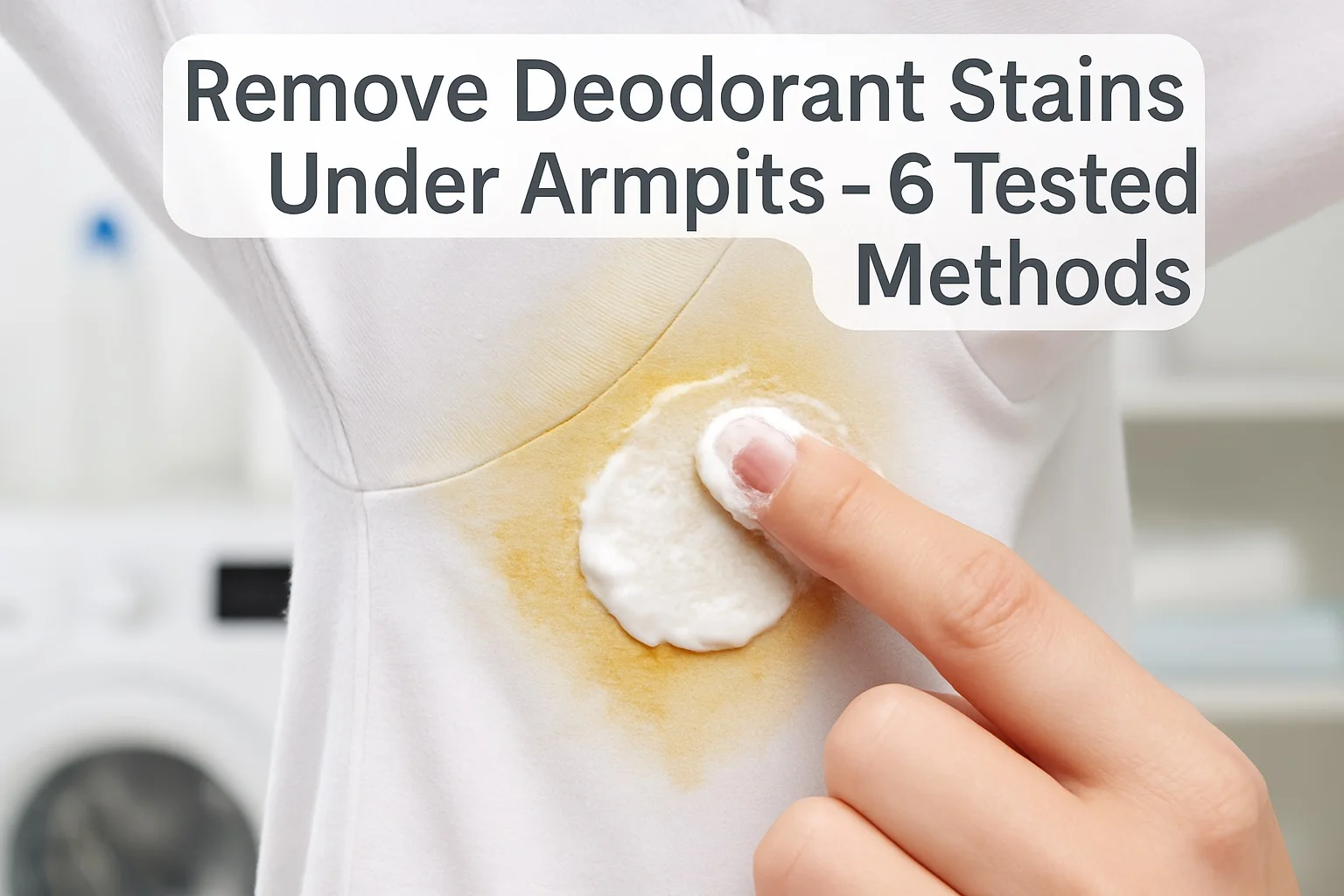
Removing underarm deodorant stains from your clothes doesn’t have to be a losing battle. Chemicals in many deodorants and antiperspirants (especially aluminum salts) react with sweat and laundry additives, leaving yellowish rings or white streaks on shirts. The key is to tackle stains quickly and use the right treatment. In this guide, we’ll explain why armpit stains happen and share 6 easy, proven methods – using items you likely have at home – to lift those stubborn spots and keep your shirts looking fresh.
Why Do Deodorant Stains Occur?
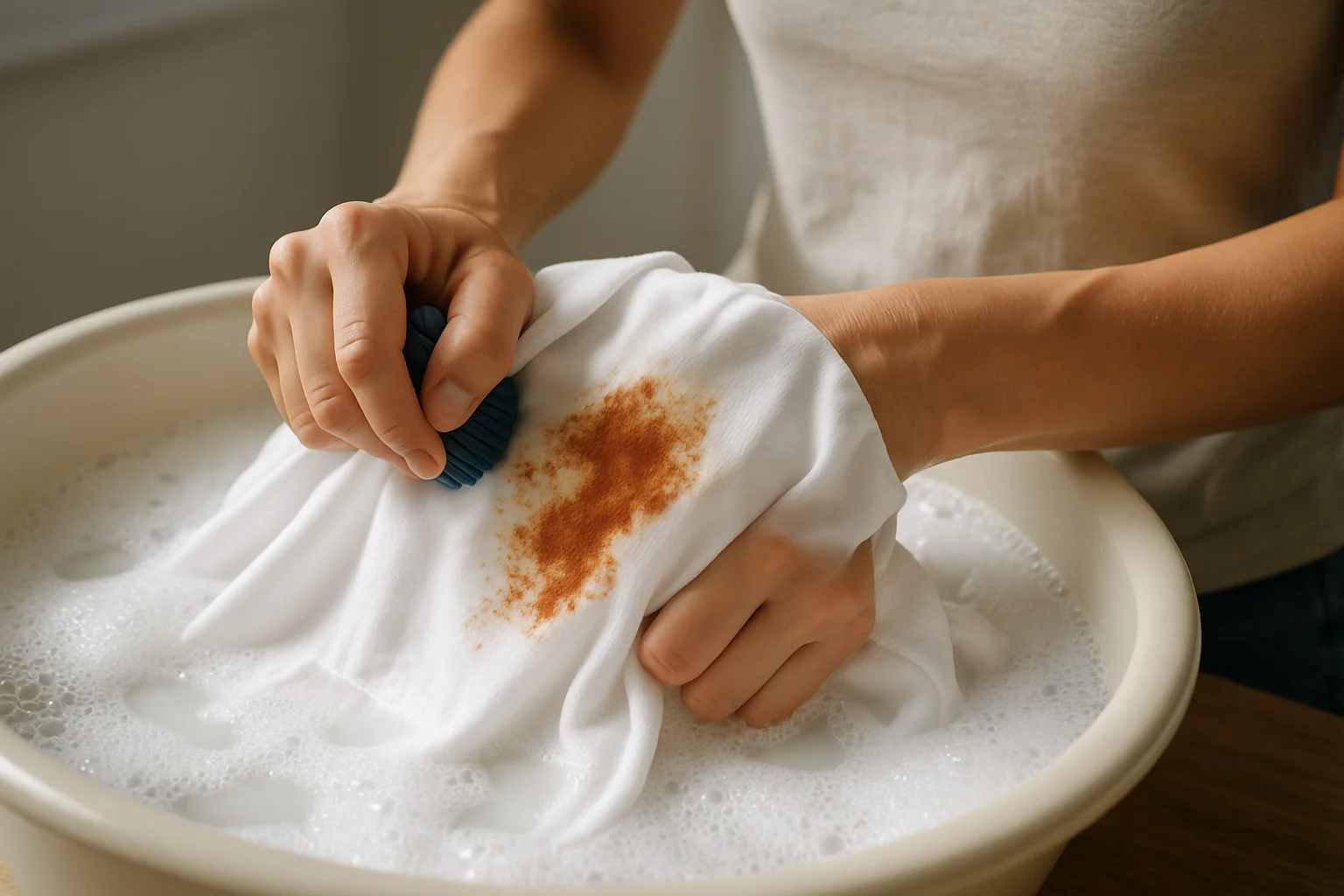
Deodorant and antiperspirant formulas contain ingredients (like aluminum compounds and oils) that interact with sweat. When these chemicals mix with salt in your sweat or residue from fabric softener, they can chemically bond to fibers. This reaction often produces yellow or white marks in the underarm area of garments. Gel and spray deodorants often leave chalky white deposits, while antiperspirants with aluminum can produce yellow rings over time. The buildup happens faster if you wear dark fabrics or use too much product. Preventing stains (for example by letting deodorant dry before dressing) is ideal, but once a stain is on your shirt, these cleaning methods can remove it.

1. Baking Soda Paste
What you need: Baking soda, warm water.
Baking soda is a gentle abrasive and pH neutralizer. It reacts with oily or sweat-based stains and helps lift them out of fabric. Follow these steps:
- Make a paste: Mix 4 tablespoons of baking soda with ¼ cup warm water until it forms a thick paste.
- Apply to the stain: Spread the paste directly onto the underarm stain. Gently work it into the fibers with a soft brush or your finger.
- Let it sit: Allow the paste to sit on the stain for 30 minutes to 1 hour so it can break down the residue.
- Rinse and wash: Rinse out the paste with cold water, then wash the garment normally. The stain should lift out.
Baking soda is safe on most fabrics and can even help remove odors. It’s especially effective on fresh or mildly set-in antiperspirant stains.
2. White Vinegar Soak
What you need: Distilled white vinegar, warm water.
White vinegar is acidic, making it great for dissolving aluminum salts and mineral deposits. It also helps break down body oils. To use vinegar:
- Mix solution: Combine 1 cup white vinegar with 4 cups warm water.
- Soak the stained area: Submerge just the stained armpit area in the vinegar solution. Let it soak for 30 minutes to an hour.
- Gently agitate: Rub or brush the fabric lightly while it soaks to help lift the stain.
- Rinse and launder: Rinse thoroughly, then wash the garment as usual.
This method can often make stains nearly disappear. Whirlpool’s laundry experts recommend this vinegar soak for deodorant stains. Just be sure to test an inside seam first if the fabric is delicate or colored.
3. Lemon Juice & Salt (for Whites)
What you need: Lemon juice, table salt.
Lemon juice contains citric acid, a natural bleach. When combined with salt and sunlight, it can brighten white fabrics and fade yellow stains. Use this on white or very light-colored garments only:
- Soak in lemon: Squeeze enough lemon juice (about ½ cup) to soak the stain. Wet the area thoroughly.
- Add salt: Sprinkle a tablespoon of salt onto the lemon-soaked stain.
- Rub and sun: Gently rub the salt and lemon into the fabric. Lay the garment flat in direct sunlight for about 1 hour. The sun will help bleach the stain further.
- Rinse and wash: Rinse out the lemon and salt, then launder the shirt as normal.
This method often makes yellow underarm stains fade right out. Caution: Lemon is a natural bleach – avoid using on dark or colored fabrics, as it can remove dye.
4. Rubbing Alcohol Spot Clean
What you need: 70–100% rubbing (isopropyl) alcohol, cotton ball or cloth.
Rubbing alcohol is excellent for dissolving oily deodorant residues (especially from clear gel or spray formulas). Use it as a quick spot treatment:
- Apply alcohol: Moisten a cotton ball or clean cloth with rubbing alcohol. Dab it directly onto the deodorant stain.
- Gently rub: Work the alcohol into the fabric with light pressure, focusing on the stained area.
- Let it sit briefly: Allow the alcohol to penetrate for a minute or two.
- Wash garment: Rinse with cold water, then wash the item normally.
This single-step treatment can remove fresh, oily buildup on dark or delicate fabrics without washing the whole garment immediately.
5. Hydrogen Peroxide + Dish Soap
What you need: 3% hydrogen peroxide, liquid dish soap.
A mixture of hydrogen peroxide and dish soap creates a mild bleaching solution that targets protein-based stains from sweat and aluminum-based stains on white fabrics. To use:
- Mix solution: In a bowl, combine 6 tablespoons hydrogen peroxide with 3 tablespoons dish soap.
- Apply to stain: Using a soft brush or cloth, scrub this solution into the stain. Cover the affected area thoroughly.
- Let it sit: Leave the mixture on the stain for about 30–60 minutes.
- Rinse and wash: Rinse out with cold water, then launder the garment.
This works best on whites and will lighten stains in the process. Always test on a hidden seam first if the fabric is colored, to ensure no fading occurs.
6. Laundry Booster (Oxygen Bleach or Enzymes)
What you need: Color-safe oxygen bleach (e.g. OxiClean) or enzyme-based detergent.
For set-in deodorant stains, a strong laundry booster can help. Oxygen-based bleach powders are safe for colors and whites and work on many stains. Enzyme detergents contain stain-fighting enzymes that break down body oils and proteins. Try this:
- Pretreat or soak: Follow package instructions to make a soak. For oxygen bleach: dissolve the booster in warm water and soak the garment for a few hours or overnight. For enzyme detergent: apply it directly to the stain and let sit 30 minutes.
- Wash hot: After soaking, wash the garment in the hottest water safe for the fabric with your regular detergent and added stain remover.
- Air dry: Do not machine-dry until the stain is gone—heat can set stains.
These products are often the last line of defense and can remove tough, old stains effectively.
Preventing Future Deodorant Stains
After getting your clothes clean, use a few habits to keep armpit stains away:
- Let deodorant dry: Wait 1–2 minutes after applying deodorant before dressing. This prevents transfer.
- Use undershirts: A cotton tee or sweat pad under your shirt can catch residue before it reaches the fabric.
- Apply less product: More isn’t always better. Use a light swipe and reapply only if needed.
- Choose no-mark formulas: Clear gel or aerosol deodorants often leave fewer stains than solid sticks with aluminum.
These simple habits will help your shirts stay fresh and stain-free.
FAQs
How do I get rid of yellow armpit stains on shirts?
Yellow pit stains are often caused by antiperspirant and sweat. Try soaking the stained area in a 1:4 mix of white vinegar and water for an hour, then laundering normally. Baking soda paste and sunlight (for whites) can also bleach yellow rings.
Can I use household items to remove deodorant stains?
Yes. Common pantry items like baking soda, white vinegar, lemon, and salt all work. For example, make a paste of baking soda and water, rub it on the stain, let sit, then wash. These natural options are affordable and non-toxic.
Will regular laundry detergent remove deodorant stains?
Regular detergent alone often won’t remove set-in stains. However, washing stained garments in hot water with a good detergent (especially those with enzymes) after pretreating can help lift remaining residue. You can also make a quick laundry scrub by mixing detergent with water and rubbing it into the stain before washing.
Is oxygen bleach safe for colored clothes?
Color-safe (oxygen) bleach is designed to work on colors without fading them. It can be effective for deep-set deodorant stains on both white and colored clothes. Always follow the product instructions and test if you’re unsure.
Can I prevent deodorant stains altogether?
You can minimize them. Let deodorant fully dry before putting on clothes, wear an undershirt or sweat shield, and opt for deodorants formulated to leave less residue. These steps reduce how much product transfers onto fabric.
Conclusion
Deodorant stains under the arms are frustrating, but with a little patience and the right approach, your favorite shirts can look clean again. Try the method that best fits the stain and fabric: a baking soda paste for general stains, a vinegar soak for sweat-based rings, lemon and salt in the sun for whites, rubbing alcohol for quick spot fixes, or a hydrogen peroxide mix for tough white stains. For stubborn cases, oxygen bleach or enzyme detergents can clear the rest. By treating stains promptly and using these tested cleaning tricks, you’ll keep your shirts bright and fresh.
Ready to tackle more cleaning challenges? Check out our Laundry Tips or browse Home Cleaning Hacks to learn how to care for your fabrics and home. With the right methods, those stains won’t stand a chance!