
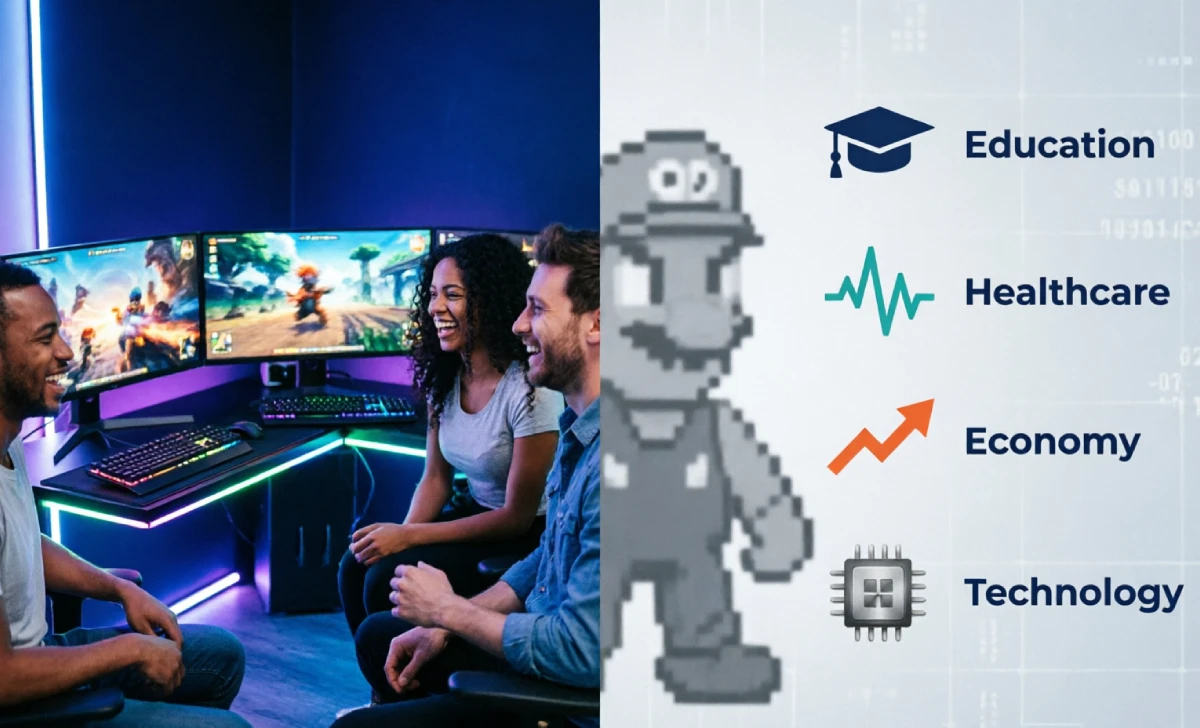
If you have ever picked up a controller, clicked a mouse, or swiped a screen to guide a character through a virtual world, you already know the pull of computer games. What started as simple blips on a screen—like the tennis game Pong—has grown into something far bigger. Today, computer games influence how we work, learn, connect with others, and even take care of our health.
But with that influence comes real questions. Are video games good for us? Do they harm social life? Can they actually teach something useful? Parents worry about screen time. Young adults wonder about gaming addiction. Educators ask whether game-based learning works. This article answers those questions by exploring the real, multi-dimensional impact of computer games on society—without hype or fearmongering.
1. Entertainment and Leisure: Why We Love to Play
At its heart, the gaming industry exists to entertain. And it does that exceptionally well. Computer games offer something for nearly everyone: fast-paced action, deep storytelling, strategic puzzles, or simply a relaxing way to unwind.

What makes modern gaming different is choice. You can escape into richly detailed virtual worlds, build entire cities, solve mysteries with friends, or compete in online multiplayer games against players from across the globe. For many, gaming is not just a hobby—it is a primary form of leisure, much like watching movies or reading books.
A note on real-world concerns: Some people worry that gaming replaces outdoor activities or face-to-face time. And yes, balance matters. But entertainment itself is not the enemy. The key is mindful play—enjoying games without letting them push out other important parts of life.
Common user question: “Is it okay to play computer games every day?”
Answer: Yes, in moderation. The problem is not daily play but losing control over time and responsibilities.
2. Economic Powerhouse: How Gaming Became Big Business
The video games industry is no longer a niche market. It rivals—and sometimes beats—the film and music industries combined. Think about that for a moment. Game development studios, hardware manufacturers, streaming platforms, and massive e-sports tournaments all contribute to billions in revenue.
Mobile gaming has exploded in recent years. In-app purchases and subscription services mean players can access games for free while companies earn through optional upgrades. This model has made gaming more accessible but also raised questions about spending habits.
Another economic shift is the rise of online casino sites. While not traditional computer games, they borrow game-like mechanics—bonuses, free spins, and immersive design—to attract users. Some people enjoy this as entertainment, but experts warn about the risks of gambling mechanics mixing with gaming culture.
Real-world perspective: If you are a parent, you might notice your child asking for in-game currency. That is normal today. The best approach is open conversation about money, value, and limits.
3. Technological Advancements: Games Drive Innovation
Here is something many people do not realize: computer games have pushed technology forward for decades. The demand for better graphics, smoother performance, and more realistic physics led directly to the development of high-performance gaming computers and consoles.
Take graphics processing units (GPUs). These powerful chips were originally designed to render game visuals. Today, GPUs are essential for machine learning, scientific simulations, and artificial intelligence research. Hospitals use them for medical imaging. Scientists use them to model climate change.
Virtual reality (VR) is another example. VR games were once a futuristic dream. Now, they are used not only for play but also for physical therapy, rehabilitation, and treating phobias. The same technology that lets you swing a sword in a fantasy world can help a patient recover from a stroke.
User concern: “Does gaming rot your brain?”
Fact: Gaming actually improves certain cognitive skills—reaction time, hand-eye coordination, and problem-solving—when done in balance.
4. Education and Learning: Game-Based Learning Works
Ask any teacher: keeping students engaged is hard. That is why many classrooms now use educational games. Game-based learning turns subjects like math, science, history, and languages into interactive challenges.
Why does this work? Because games naturally encourage critical thinking, problem-solving, and creativity. When a student plays a history game where they must manage a civilization, they are not memorizing dates—they are making decisions, facing consequences, and learning organically.
Even outside school, computer games teach valuable skills. Strategy games improve planning. Puzzle games boost logic. Multiplayer games teach teamwork and communication.
Real question from readers: “Can my teenager learn anything useful from gaming?”
Yes—but it depends on the game. A well-designed simulation or strategy game is very different from a mindless shooter. The key is choosing quality content and discussing what they learned.
5. Social Interaction: Building Friendships Across Borders
One of the biggest changes in the last twenty years is social gaming. Online multiplayer games have turned gaming from a solitary activity into a shared experience. Millions of people play together every day—cooperating, competing, and chatting.
For many, especially introverts or those in isolated areas, gaming provides a genuine social connection. Friendships formed in virtual worlds can be as real as any other. E-sports has taken this further, with professional gamers competing in stadiums and streaming to millions online.
However, there is also a darker side. Gaming addiction is real. When someone invests excessive time in virtual worlds at the expense of real relationships, marriages can suffer, friendships fade, and work performance drops.
Balanced take: Social gaming is a tool, not good or bad by itself. Healthy boundaries and self-discipline make all the difference.
Common fear: “My partner spends more time gaming than with me.”
Advice: Have an honest, non-judgmental conversation. Set agreed limits. Use gaming together as a bonding activity sometimes.
6. Cultural Influence: From Pixels to Pop Culture
Walk down any street, and you will see gaming culture everywhere. T-shirts with Mario, Lara Croft, or Master Chief. Game music played by orchestras. Movies and TV shows based on popular game franchises.
Video games have produced genuine cultural icons. Characters like Sonic, Link, and Cloud Strife are recognized worldwide. Game soundtracks are celebrated as art. And gaming slang—words like “noob,” “grind,” and “respawn”—has entered everyday language.
This cultural influence also raises expectations. When a game adaptation to film fails, fans notice. When a sequel disappoints, social media lights up. Gaming is no longer a subculture; it is mainstream.
7. Health and Well-Being: Can Games Be Good for You?
Here is the most surprising area: health. While excessive gaming can lead to sedentary behavior, eye strain, or sleep loss, controlled and purposeful gaming offers real benefits.
Physical health: Gamification—using game mechanics in non-game settings—encourages physical activity. Fitness apps reward steps. VR games make you move. Some physical therapy programs use virtual reality games to help patients recover mobility after injuries.
Mental well-being: Games help manage chronic ailments like chronic pain by distracting and engaging the brain. They reduce stress for many people. Therapeutic games are being developed for anxiety, depression, and PTSD.
But caution is real: Gaming addiction brings significant social repercussions. Strained marriages, neglected work, and lost sleep are not rare. The difference between healthy gaming and harmful gaming is self-regulation.
Reader question: “How do I know if I have a gaming problem?”
Signs: Missing meals, lying about playtime, ignoring hygiene, declining grades or work performance, and failed attempts to cut back.
Conclusion: A Force for Good—When Used Wisely
The impact of computer games on society is profound. They are an economic powerhouse, a driver of technological advancements, a new medium for education and learning, and a platform for social interaction. They shape popular culture and even contribute to health and well-being.
But none of this is automatic. The same game that teaches critical thinking can become an obsession if unchecked. The same virtual world that builds friendships can replace real ones.
As the gaming industry continues to evolve, society must also evolve its understanding of balance, self-discipline, and mindful play. The future of computer games promises even more immersive experiences, greater social integration, and innovative applications in education, healthcare, and beyond. Whether that future helps or harms depends on how we choose to play.
Frequently Asked Questions
How do computer games affect society positively?
They boost the economy, drive technological innovation, improve cognitive skills, enable global social connections, and provide therapeutic benefits.
What are the negative effects of gaming on social life?
Gaming addiction can lead to neglected relationships, reduced face-to-face interaction, and in extreme cases, broken marriages or lost friendships.
Can computer games improve real-world skills?
Yes. Strategy games improve planning. Puzzle games boost problem-solving. Multiplayer games teach teamwork. Simulation games build resource management skills.
How much gaming is too much?
There is no universal number, but warning signs include loss of control, lying about playtime, harm to relationships or work, and physical health issues.
Are educational games effective?
Research shows that game-based learning increases engagement, knowledge retention, and motivation—especially for children and young adults.
What is the future of the gaming industry?
Expect more virtual reality integration, growth in mobile gaming, expansion of e-sports, and new applications in therapy, education, and professional training.