
As a business owner or HR manager, you’ve probably asked yourself at some point: “Are we really paying people for the exact hours they work?” It’s a fair question. Small leaks in attendance tracking can quietly drain thousands of dollars from your bottom line every year.
Maybe you’ve tried paper timesheets, but they get lost or “forgotten.” Maybe you switched to card-swiping or PIN-code machines, only to discover that employees still find ways to clock in for each other. If this sounds familiar, you’re not alone.
In this guide, we’ll explore how biometric attendance monitoring systems solve these everyday problems. We’ll cover what they are, how they work, and—most importantly—the real, practical advantages they bring to workplaces like yours. No hype, no jargon. Just helpful, experience-based insights.
What Exactly Is a Biometric Attendance Monitoring System?
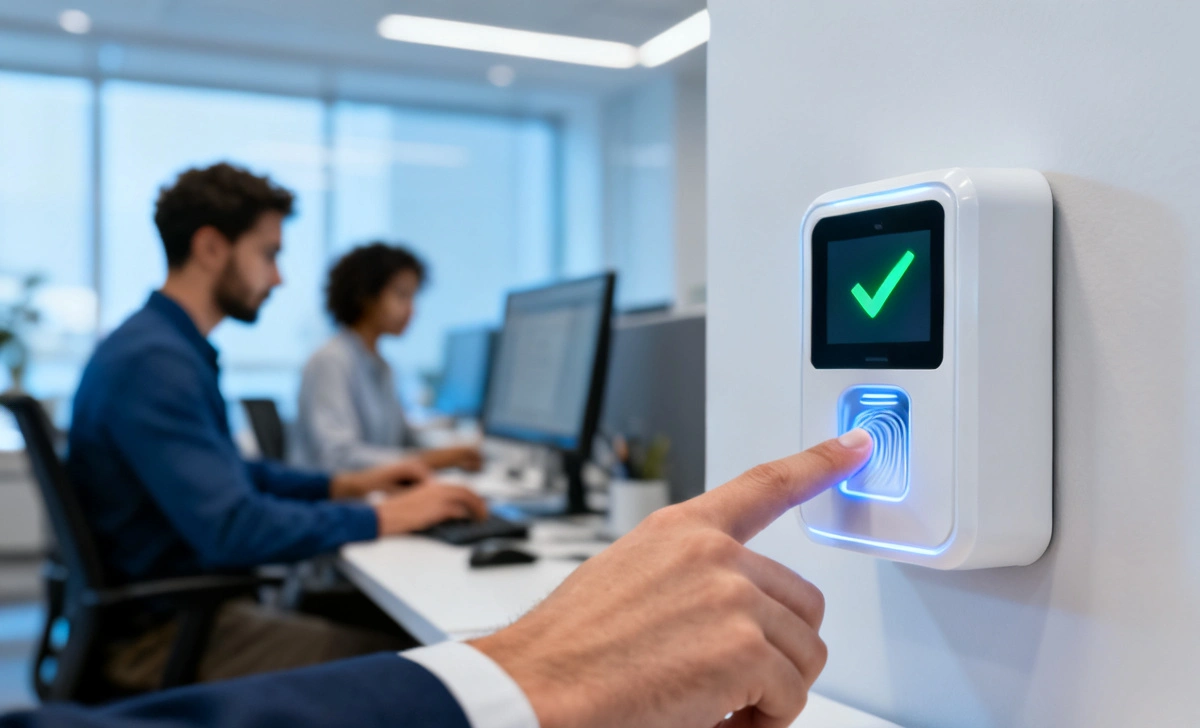
A biometric attendance monitoring system uses unique physical characteristics—such as fingerprints, facial features, or iris patterns—to verify an employee’s identity when they clock in or out. Unlike older methods (paper logs, swipe cards, or numeric codes), biometrics cannot be borrowed, stolen, or shared.
Think of it this way: a password can be texted to a friend. A badge can be left on a desk for someone else to grab. But your fingerprint? That stays with you.
Modern systems use advanced algorithms and high-resolution sensors. Some can even identify a person standing in a group or wearing a face mask—a feature that became unexpectedly valuable in recent years.
The Old Problems: Why Traditional Attendance Methods Fail
Before we dive into the advantages, let’s quickly acknowledge the frustrations many businesses face with older systems.
- Paper timesheets rely on honesty and memory. They’re easy to manipulate and hard to verify.
- Card or code-based clock-in machines reduce some errors but introduce a major loophole: buddy punching.
- Manual payroll processing becomes a nightmare when attendance records are inconsistent or incomplete.
What Is Buddy Punching, and Why Does It Matter?
Buddy punching occurs when one employee clocks in or out for another. For example, Sarah arrives late, but her coworker Mike swipes her card for her. The record shows Sarah was on time, but she wasn’t.
At first glance, this might seem harmless. But over weeks and months, buddy punching can lead to significant employee time theft. One study suggests that time theft (including buddy punching, long breaks, and leaving early) costs U.S. businesses billions annually. Worse, it erodes trust and creates a culture where accountability becomes optional.
How Biometric Systems Are Different and Superior
Biometric attendance systems eliminate buddy punching entirely because they require biometric identification—something that cannot be transferred. To clock in, an employee must physically present their face, finger, or iris to the scanner. The system matches the live scan against a stored template. No match means no entry.
This simple technological shift has ripple effects across payroll, productivity, and workplace culture.
6 Key Advantages of Biometric Attendance Monitoring Systems (With Real-World Examples)
1. Eliminates Buddy Punching Completely
Let’s start with the most obvious benefit. Since biometric markers are unique to each individual, no one can fake attendance on behalf of a coworker. This immediately increases accountability and responsibility in the workplace.
Real example: A retail store manager told me they used to find “mystery shifts” on their weekly reports—employees clocked in when they weren’t scheduled. After switching to fingerprint scanning, those ghost entries disappeared. Employees stopped asking each other to cover late arrivals.
2. Highly Accurate Time Tracking
Human error is unavoidable with manual logs. Even with swipe cards, someone might forget their badge or use the wrong one. Biometric systems, by contrast, are highly accurate. The system records the exact moment of clock-in and clock-out, tied directly to a verified identity.
Modern biometric markers are so sophisticated that they work even in challenging conditions. For example, some facial recognition systems can identify employees wearing masks, glasses, or hats. Fingerprint scanners can read through minor dirt or moisture.
Common user concern: “What if my hands are wet or dirty?”
Most quality systems are designed to handle real-world conditions. They use multispectral sensors that read below the skin’s surface, so surface moisture or light grime doesn’t block recognition.
3. Simplifies Payroll Processing
One of the most time-consuming tasks in any business is verifying payroll. With old systems, someone has to manually check timesheets, investigate discrepancies, and correct buddy-punching incidents.
Biometric time attendance systems automate this. They generate clean, reliable reports showing exactly when each employee started and ended their shift. Many systems integrate directly with popular payroll software like QuickBooks, Intuit, or Tally ERP. This means data flows automatically from the clock-in machine to your payroll provider—no manual entry, no spreadsheet juggling, no math errors.
Practical benefit: Payroll processing time can drop from several hours to just minutes. For a small business owner, that’s a few extra evenings back with family.
4. Enables Strong ROI by Preventing Time Theft
Time theft isn’t just about buddy punching. It also includes:
- Leaving 10 minutes early every day
- Taking 40-minute lunch breaks instead of 30
- Arriving late but clocking in on time (if the system allows manual overrides)
Biometric systems capture actual worked hours with no wiggle room. When employees know the system tracks them accurately, most stop testing the boundaries. The result? You pay only for the time people actually work.
ROI example: A 20-person office where each employee “loses” just 15 minutes per day to unlogged late arrivals or early departures adds up to 5 hours of lost productivity daily. Over a year, that’s over 1,200 hours—equivalent to more than half a full-time salary. A biometric system typically pays for itself within a few months just from reclaimed hours.
5. Boosts Workplace Accountability and Culture
This advantage is less technical but equally important. When everyone is held to the same standard—and the standard is enforced fairly and automatically—resentment decreases. No more whispered complaints about “that one person who always gets away with coming in late.”
Biometric systems remove ambiguity. The machine doesn’t play favorites. Over time, this transparency builds a performance-driven culture where people take responsibility for their own schedules.
6. Provides Actionable Data for Better Management
Beyond tracking attendance, these systems generate reports that help you spot patterns. For example:
- Which shifts have the highest rate of tardiness?
- Are certain departments consistently leaving early on Fridays?
- How much overtime is really being worked?
This data supports smarter scheduling, fairer workload distribution, and more honest conversations during performance reviews.
FAQs
Isn’t biometric technology expensive?
Upfront costs vary, but prices have dropped significantly over the past five years. Basic fingerprint scanners start around $150–$300, while advanced facial recognition units may cost $500–$1,000. When you calculate the savings from reduced time theft and faster payroll processing, most businesses see payback within 6–12 months.
What about privacy? Are employees uncomfortable?
This is a fair concern. Some employees worry about how their biometric data is stored. Reputable systems do not store actual fingerprints or face images. Instead, they store encrypted mathematical templates that cannot be reverse-engineered into a usable biometric. Be transparent with your team about what data is collected, how it’s protected, and who has access. Most employees accept the system once they understand it saves everyone from unfair buddy-punching accusations.
What if someone’s fingerprint changes due to injury or skin condition?
Good systems allow multiple biometric registrations per employee (e.g., two different fingers). Many also offer a backup PIN or card option for rare exceptions, though those should be logged and audited.
Does it work with remote or hybrid teams?
Yes. Cloud-based biometric systems now offer mobile apps that use phone cameras for facial recognition. Remote employees can clock in from home, and you get the same verified data as on-site staff.
Industries That Benefit Most
While any business can use biometric attendance monitoring, certain industries see exceptional results:
- Manufacturing and warehouses – large teams, shift work, high risk of buddy punching
- Retail – multiple locations, part-time staff, variable schedules
- Healthcare – compliance with labor laws and overtime tracking
- Construction – verifying on-site hours for project costing
- Offices – hybrid teams, remote clock-ins, payroll integration
Final Verdict: Is a Biometric Attendance System Right for You?
If you’re still using paper timesheets or basic card-swiping machines, you’re leaving money on the table. Biometric attendance monitoring systems solve the oldest problems in workforce management—buddy punching, time theft, and payroll errors—with technology that is now affordable, reliable, and easy to use.
The shift to biometrics isn’t just about catching dishonesty. It’s about building a fairer, more accountable workplace where people are paid accurately for the time they actually work. It’s about giving managers back hours spent reconciling messy timesheets. And yes, it’s about improving your ROI by making sure every dollar of payroll delivers real value.
Start small: test a single fingerprint scanner with one team. Track your time savings and payroll accuracy for 90 days. Chances are, you’ll wonder why you didn’t switch sooner.