
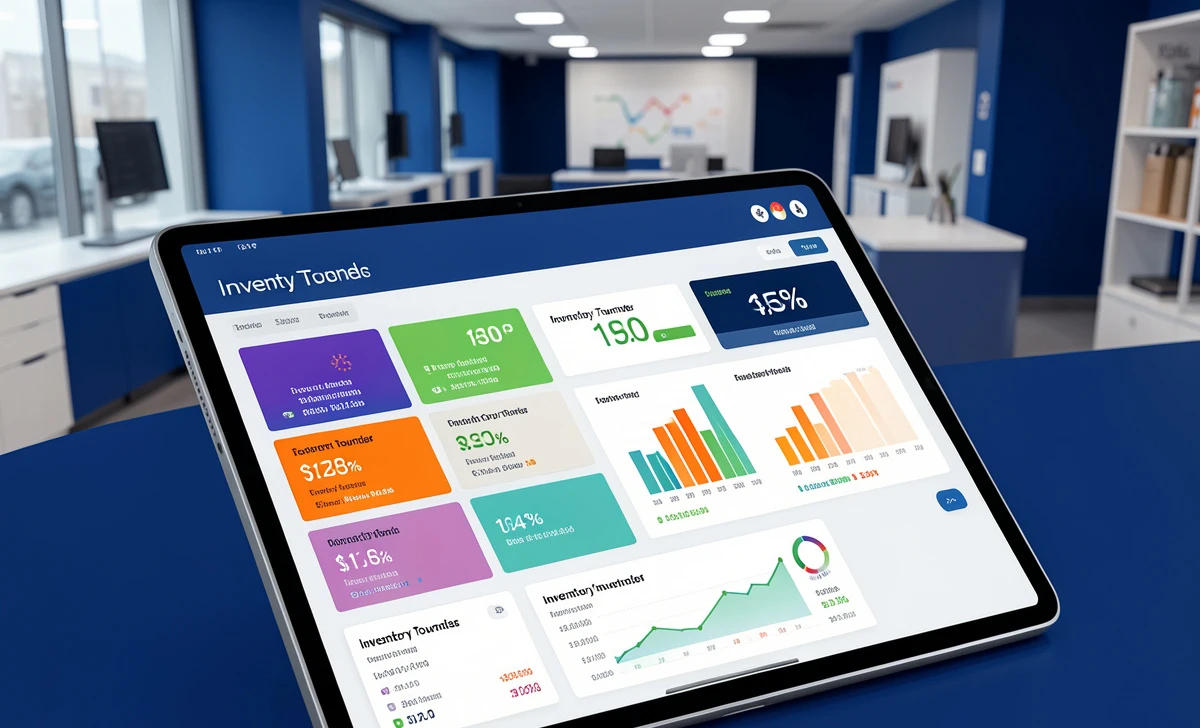
If you run an auto dealership, you already know that customer relationships can make or break your business. But here’s something many dealers overlook: your CRM (Customer Relationship Management) system isn’t just a digital address book. When used correctly, it becomes a powerful lens into your dealership’s health, efficiency, and future growth potential. Tracking the right auto dealership CRM metrics separates high-performing dealerships from those that struggle to move inventory.
The challenge is that most dealerships collect data without truly understanding which metrics matter. You might see numbers on a dashboard, but do you know what your inventory turn rate is telling you? Or why is your average sales cycle driving customers away?
This guide walks you through the most important auto dealership CRM metrics, explains what they mean, and shows you how to act on them. Whether you’re a dealership owner, general manager, or sales director, you’ll walk away with practical steps to improve profitability and customer experience.
Why Auto Dealership CRM Metrics Matter More Than Ever
Car buying has changed dramatically. Customers now research online for weeks before stepping onto your lot. They compare prices, read reviews, and expect a seamless experience. Your CRM ties together online behavior with in-person interactions.
But here’s what many dealers miss: a CRM is only as good as the metrics you track. Without the right auto dealership CRM metrics, you’re flying blind. With them, you can spot problems early, identify top-performing sales reps, and even predict which leads are ready to buy.
Let’s break down the metrics that actually move the needle.
1. Inventory Turn Rate: The Health Check for Your Stock
What it is:
Inventory turn rate measures how quickly you sell through your vehicle inventory. It’s calculated by dividing the cost of goods sold by the average value of your inventory.
Why it matters:
A low turn rate means cars are sitting on your lot for too long. That ties up capital, increases holding costs, and often forces you to discount heavily later. A high turn rate indicates strong demand and efficient stock management. This is one of the most overlooked auto dealership CRM metrics, yet it directly impacts your cash flow.
What a good number looks like:
Auto dealerships should aim for an inventory turn rate of around 12 percent annually. In practical terms, that means selling your entire inventory every 30 days or less. Some high-volume dealers turn inventory even faster.
How to improve it:
Use your CRM to track how long each vehicle has been in stock. Flag units that exceed 45 days. Adjust pricing, increase digital ad spend, or bundle incentives for slow movers. Tools like VinSolutions can help monitor these trends and suggest pricing adjustments based on real-time local market data.
Real question dealers ask:
“My inventory turn rate looks fine overall, but some models sit for months. What do I do?”
Focus on model-level reporting. Your CRM should break down the turn rate by vehicle category, trim level, and even color. If certain configurations consistently underperform, reduce future orders or run targeted promotions.
2. Average Sales Cycle: Where Customers Get Frustrated
What it is:
The average sales cycle is the total time from a customer’s first inquiry to the final signed contract. This includes test drives, negotiations, financing, and paperwork.
Why it matters:
Car shoppers consistently rank the long, painful sales process as their biggest frustration. Industry data shows the average dealership sales cycle runs between two and four hours. Some dealers report cycles stretching to five hours or more.
Here’s the kicker: 85% of dealers say they wish the sales process would take less than two hours. Yet only 18% list total vehicle pricing upfront. Lack of transparency is a major drag on customer satisfaction.
How to shorten it:
Your CRM can track time spent at each stage of the sales process. Look for bottlenecks. Are customers waiting too long for financing approval? Are salespeople juggling too many prospects at once?
Consider assigning a dedicated service-to-sales manager. This person identifies customers already in your service bay who might be ready to upgrade or buy another vehicle. Because these customers already trust your dealership, the sales cycle is often much shorter.
Real question dealers ask:
“Some salespeople close deals in 90 minutes. Others take four hours. How do I fix the gap?”
Use your CRM to compare individual sales rep performance. Share best practices. The faster reps might be better at pre-qualifying leads or using digital tools to handle paperwork. Create a simple checklist based on what works and train the whole team.
3. Average Sales Per Sales Rep: Compensation and Performance
What it is:
This metric tracks the average number of vehicles sold by each sales representative over a given period (monthly, quarterly, annually). It can also be measured in total revenue generated per rep.
Why it matters:
Your sales team is your frontline. If average sales per rep are low, you either have too many salespeople or your current team isn’t performing. Both scenarios hurt profitability.
Compensation’s role:
Unlike pure commission structures that pay only per vehicle sold, base compensation gives each rep a fixed percentage of their total sales. This approach tends to create a more collaborative, team-like environment. Reps are more willing to help each other close deals because everyone benefits from overall dealership success.
Regional differences:
Pay and performance vary significantly by location. California consistently tops the list for average dealer sales rep salary. Santa Rosa, CA, ranks second, followed by Cambridge, MA. However, salary ranges shift based on skills, years of experience, and local cost of living. Higher salaries generally correlate with higher expected profit per rep.
Real question dealers ask:
“One rep sells 20 cars a month. Another sells 8. Should I fire the low performer?”
Not necessarily. Look deeper. The 8-car rep might handle more commercial accounts or spend extra time with difficult financing cases. Your CRM should track not just volume but also profit per sale, customer satisfaction scores, and repeat business. Sometimes a lower-volume rep brings higher lifetime value.
4. Average Sales Per Region: Understanding Your Local Market
What it is:
This metric breaks down vehicle sales by geographic region. It helps you see which areas are thriving and which need more marketing support.
Why it matters:
Auto markets are rarely uniform. In metro Houston, for example, suburban dealers accounted for only 25.4 percent of new vehicle sales, while dealerships in Harris County sold 74.6 percent. That’s a massive difference within the same metropolitan area.
Nationally, the auto market splits roughly 50/50 between domestic and import brands, with foreign cars holding a slight edge at 57.3 percent. But those numbers vary widely by region.
How to use regional data:
Your CRM should show you sales performance by ZIP code, city, or even neighborhood. If one region is underperforming, increase digital ad spend there. If another is overperforming, consider opening a satellite service center or pop-up location.
Real question dealers ask:
“My CRM shows average sales per region at $264,000 last month. But a competitor in the same city did $6 million. How is that possible?”
That extreme difference (based on actual metro Houston data) usually comes down to location type. High-volume dealerships on major thoroughfares or near highway interchanges naturally sell more. Use your CRM to compare against dealerships with similar traffic patterns, not just anyone in your city.
The Future of CRM in the Automotive Industry
CRM technology is evolving fast. Here’s what forward-thinking dealerships need to know.
Personalized marketing at scale
Automotive companies are now leveraging customer data to deliver tailored recommendations. Instead of blasting the same email to everyone, your CRM will help you send the right offer to the right person at the right time.
AI and predictive analytics
Artificial intelligence is moving beyond hype. Modern CRM systems use predictive analytics to score leads automatically. The software learns which behaviors (website visits, test drive requests, service appointments) indicate purchase readiness. Then it routes hot leads to your best closers.
Digitizing the car buying journey
Customers want to complete more steps online before ever visiting your dealership. The future CRM will link online research directly to the dealership visit. Imagine a customer building their payment online, getting approved for financing, and walking in only to sign papers and drive away.
Loyalty and retention
The old model focused on one-time sales. The new model focuses on lifetime customer value. Connected cars and past service history allow your CRM to predict maintenance needs automatically. You can send a tire rotation reminder just when it’s due, or offer a trade-in incentive exactly when the customer’s lease is ending.
What’s Happening in the European Automotive Market
European trends often reach North America a few years later. Right now, five major forces are reshaping Europe’s auto industry:
- Real customer focus (putting buyer needs above dealer convenience)
- Autonomous driving (self-driving technology)
- Connectivity (cars as internet-connected devices)
- Digitalization (paperless, online-first processes)
- Electric powertrains (EVs replacing combustion engines)
- Shared mobility (subscriptions and car-sharing)
A recent study published by Bain found that auto dealers who embrace these trends can not only retain profitability but actually increase their return on sales (ROS). New revenue streams include subscription services, over-the-air updates, and usage-based insurance.
Putting It All Together: Your Next Steps
Tracking auto dealership CRM metrics isn’t about collecting numbers. It’s about making better decisions. Whether you’re just starting or looking to refine your existing approach, focusing on the right data will transform how you manage your dealership.
Start with these four metrics: inventory turn rate, average sales cycle, average sales per rep, and average sales per region. Review them monthly. Look for changes over time. When a metric moves in the wrong direction, investigate immediately.
Most importantly, involve your team. Share the data openly. Celebrate improvements. When salespeople understand why a metric matters, they’ll help you move it.
Your CRM is one of the most powerful tools in your dealership. But like any tool, it only works if you use it correctly. Focus on these auto dealership CRM metrics, act on what you learn, and you’ll build a dealership that’s more efficient, more profitable, and more trusted by your community.